Loading…
← All schools
Southern University Law Center
Baton Rouge, LApublicwww.sulc.edu/
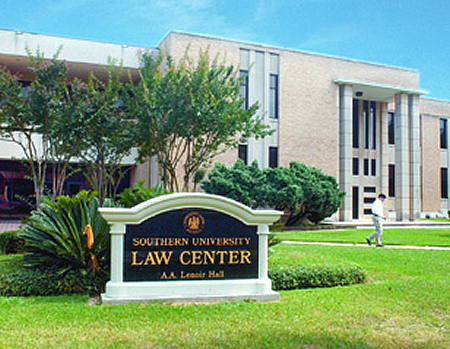
Southern University Law Center (SULC) is a public, historically black law school in Baton Rouge, Louisiana, that operates with a distinct mission of access and equity. It is the most affordable law school in the state and one of the most affordable in the nation, offering a pragmatic, family-like environment for students who are often older and from diverse socioeconomic backgrounds. The school is known for its strong focus on Louisiana civil law and its role in expanding the legal profession to underrepresented communities, though its outcomes reflect the challenges of its open-access model.
More details
- Undergrad enrollment
- 607
- Median LSAT
- 147
- Average Student Debt
- $29,251
- Student-Faculty Ratio
- 21:1
- Median Earnings (10yr)
- $43,371
- Six-Year Graduation Rate
- 32%
- Two-Year Bar Pass Rate (2023)
- 59.5%
Outcomes & value
Outcomes & value
- Median earnings (10 yr)
- $43,371
- Median debt at graduation
- $29,251
- First-year retention
- 60%
- Reducing loan balance (3 yr)
- 53%
- First-gen share (among federal-aid recipients)
- 40%
- Endowment / student
- $3,253
Earnings = median of students working ~10 years after entry; debt = median of graduates. Value divides 10-yr earnings by one year’s net price — read it as earnings per dollar of annual cost, not a full lifetime ROI; it favors lower-cost schools. Source: U.S. Dept. of Education College Scorecard. Figures lag ~2 years and reflect all students, not your intended major.
Top-earning majors
Median earnings by field of study (highest credential), ~2 years after completion.
- Registered Nursing, Nursing Administration, Nursing Research and Clinical Nursing$62,064
- Electrical, Electronics, and Communications Engineering$52,107
- Mechanical Engineering$51,187
- Civil Engineering$49,019
- Agriculture, General$38,829
- Accounting and Related Services
Campus & location
Campus safety
- On-campus violent crimes (2024)
- 0
- Per 1,000 students
- 0.00
On-campus criminal offenses classed as violent (murder/non-negligent manslaughter, rape, robbery, aggravated assault) for the most recent reported year. Source: U.S. Dept. of Education Campus Safety and Security (Clery Act). Counts reflect what’s reported to the school, and urban campuses often report more partly due to non-student incidents nearby — read alongside campus size and setting, not as a standalone safety verdict.
Climate
- Pleasant days / yr
- 105
- Summer high
- 90°F
- Winter low
- 47°F
- Annual rain
- 61.5"
- Natural-hazard risk
- Relatively High
Pleasant days counts days per year with a mean temperature of 55–75°F, a high at or below 90°F, a low at or above 45°F, and little precipitation — a transparent comfort measure, not a weighting we invented. Computed from Open-Meteo ERA5 daily history (2019–2023). Natural-hazard risk is the county’s composite rating from the FEMA National Risk Index.
Deep dive — research, future-scholar output & economic mobility
Research output
- Institutional h-index
- 41
- Scholarly works
- 835
Institutional research volume and impact from OpenAlex. The h-index reflects large research universities and will be low for teaching-focused liberal-arts colleges — not a measure of undergraduate quality.
Quick answers
- How many undergraduates attend Southern University Law Center?
- Southern University Law Center enrolls approximately 607 undergraduate students.
- Where is Southern University Law Center located?
- Southern University Law Center is located in Baton Rouge, LA.
Admissions
SULC's admissions process is defined by its accessibility. With an of 56.55% for the 2025 cycle, it is one of the less selective law schools in the country, a deliberate part of its mission to provide opportunity. The median admitted student has an LSAT score of 147 and an undergraduate GPA of 3.15. Applicants must have earned at least a 'C' average in substantive academic coursework and present an acceptable LSAT score. The school does not appear to have a binding Early Decision program; most admission decisions are made after the February 28 priority deadline. Notably, SULC boasts an exceptionally high rate—the percentage of accepted students who choose to enroll—of 51.5%, ranking it fourth nationally in this metric. This suggests that for those it admits, SULC's combination of affordability, mission, and environment is a highly compelling choice. The average incoming student is 26 years old, indicating a student body with more life experience than the typical law school cohort.
Compare Southern University Law Center
vs University of Science and Arts of Oklahomavs University of Virginia's College at Wisevs Northwestern Oklahoma State Universityvs Florida Polytechnic University
See colleges similar to Southern University Law Center →Sources
- Admissions Overview - Southern University Law Center
- Southern University Law Center | The Law School Admission Council
- Common Law and Civil Law Tracks - Southern University Law Center
- Admission FAQs - Southern University Law Center
- Data Science - Southern University Law Center
- Admission Procedures - Southern University Law Center
- Southern University Acceptance Rate, LSAT & GPA - LSD.Law
- SULC Law School Acceptance Rate, LSAT, GPA & Tuition (2026)
- Southern University Law Center | Law School Numbers
- Southern University Law Center - Admissions, LSAT/GPA ... - 7Sage