Admit rate has ranged 47%–56% over the last 5 years — notably volatile. Source: IPEDS via Urban Institute.
Acceptance & SAT from Common Data Set / IPEDS; net price, earnings & graduation from the U.S. Dept. of Education College Scorecard. Figures lag ~1–2 years — verify with the school.
St. Olaf College is a selective liberal arts institution in Northfield, Minnesota, where a rigorous academic culture rooted in mathematics and the sciences meets a deeply residential, community-focused campus life. Known for its Lutheran heritage and a student body where 99% live on campus, it combines a strong commitment to meeting full financial need with a reputation for producing graduates who are exceptionally strong writers and problem-solvers. The college's identity is captured in its top-ranked campus food, its celebrated music programs, and a friendly, if sometimes insular, Midwestern vibe.
Admission requirements
Test-optional — scores considered if submitted
Required
High school transcript
Grade point average
Letters of recommendation
College-prep program
TOEFL (non-native English)
Considered (not required)
Class rank
Test scores (SAT/ACT)
Demonstrated competencies
Source: IPEDS Admissions survey (2022) via Urban Institute. Covers formal factors only — it does not reflect essays, extracurriculars, or other holistic criteria.
More details
Undergrad enrollment
3,093
In-state tuition
$59,760
Out-of-state tuition
$59,760
Top Majors
Math/Stats/CS, Biology, Economics
Graduation Rate
84%
Meets Full Need
Yes
ED Share of Class
~25%
On-Campus Housing
99%
First-Year Retention
91%
Demonstrated Interest
Not considered
Median Earnings (10yr)
$65,543
Students Receiving Aid
99%
Outcomes & value
Outcomes & value
Median earnings (10 yr)
$65,543
Value (earnings ÷ net price)
2.7×
Median debt at graduation
$26,000
Graduation rate
84%
First-year retention
92%
Reducing loan balance (3 yr)
89%
Pell (lower-income) share
21%
First-gen share (among federal-aid recipients)
13%
Top-earning majors
Median earnings by field of study (highest credential), ~2 years after completion.
Computer Science$76,460
Registered Nursing, Nursing Administration, Nursing Research and Clinical Nursing$60,623
Economics$52,107
Mathematics$46,478
Teacher Education and Professional Development, Specific Subject Areas$42,123
Social Work$39,729
Campus & location
Campus safety
On-campus violent crimes (2024)
5
On-campus criminal offenses classed as violent (murder/non-negligent manslaughter, rape, robbery, aggravated assault) for the most recent reported year. Source: U.S. Dept. of Education Campus Safety and Security (Clery Act). Counts reflect what’s reported to the school, and urban campuses often report more partly due to non-student incidents nearby — read alongside campus size and setting, not as a standalone safety verdict.
Climate
Pleasant days / yr
89
Summer high
81°F
Winter low
10°F
Annual rain
37.4"
Annual snow
43.1"
Natural-hazard risk
Relatively Low
Pleasant days counts days per year with a mean temperature of 55–75°F, a high at or below 90°F, a low at or above 45°F, and little precipitation — a transparent comfort measure, not a weighting we invented. Computed from Open-Meteo ERA5 daily history (2019–2023). Natural-hazard risk is the county’s composite rating from the FEMA National Risk Index.
Deep dive — research, future-scholar output & economic mobility▾
Research output
Institutional h-index
108
Scholarly works
3,594
Institutional research volume and impact from OpenAlex. The h-index reflects large research universities and will be low for teaching-focused liberal-arts colleges — not a measure of undergraduate quality.
Quick answers
What is the acceptance rate at St Olaf College?
St Olaf College's acceptance rate is approximately 48% (Northfield, MN), based on the most recent figures we compiled from public and primary sources.
What SAT score do you need for St Olaf College?
Admitted students at St Olaf College typically score 1300–1470 on the SAT (the middle-50% range). Scores outside this band are still admitted, especially with strong applications.
How much does St Olaf College cost?
At St Olaf College, the average net price (after aid) is about $23,874 per year. Actual cost varies with financial aid and residency.
How many undergraduates attend St Olaf College?
St Olaf College enrolls approximately 3,093 undergraduate students.
Where is St Olaf College located?
St Olaf College is located in Northfield, MN.
Admissions
St. Olaf's admissions process is selective, with a clear advantage for those who apply early. The college reports an overall of 48%, though this figure masks significant variation by applicant type. For the class entering in Fall 2025, the acceptance rate was approximately 64% for in-state applicants and lower for out-of-state applicants. International students face a markedly more competitive process, with one report indicating an acceptance rate as low as 18.5%. The early decision pathway is a strategic route; the early acceptance rate is 64.1%, and on average, nearly 25% of the first-year class enrolls through Early Decision. The middle 50% SAT range for admitted students is 1300–1470, with a median score of 1380, and about 40% of the most recent class submitted test scores. Demonstrated interest is explicitly 'not considered' in the admissions review, as indicated in the . The most important factors are academic: rigor of secondary school record, class rank, GPA, and standardized test scores (though they are optional).
Early Decision Advantage: The admit rate for Early Decision applicants is significantly higher (55% per the class profile) than the overall rate.
Academic Focus: Admissions is heavily weighted toward academic achievement, with the secondary school record being paramount.
International Selectivity: Acceptance rates for international applicants are substantially lower than for domestic students.
Earnings = median of students working ~10 years after entry; debt = median of graduates. Value divides 10-yr earnings by one year’s net price — read it as earnings per dollar of annual cost, not a full lifetime ROI; it favors lower-cost schools. Source: U.S. Dept. of Education College Scorecard. Figures lag ~2 years and reflect all students, not your intended major.
Physics$39,009
Chemistry$38,829
Source: U.S. Dept. of Education College Scorecard (field-of-study earnings). Figures cover graduates who received federal aid and lag ~2 years; not all programs report data.
St. Olaf's academic identity is powerfully shaped by its strength in quantitative and scientific disciplines, a focus that permeates the liberal arts curriculum. The top five majors by department are Mathematics, Statistics, and Computer Science; Biology; Economics; Psychology; and Chemistry. This isn't just a list of popular choices—it reflects a campus culture where problem-solving and analytical rigor are paramount. The Princeton Review has recognized this quality, ranking St. Olaf #6 for 'Best Classroom Experience' and #7 for 'Best Science Lab Facilities.' Regardless of major, the college prides itself on a core outcome: graduates who can write and speak well, solve problems, and face uncertainty head-on. The curriculum includes a required general education program focused on self-development, civic and global engagement, and critical thinking, with extensive study abroad opportunities woven into the experience. For students interested in teaching, the college offers Bachelor of Arts majors leading to certification in areas like English, mathematics, and the sciences.
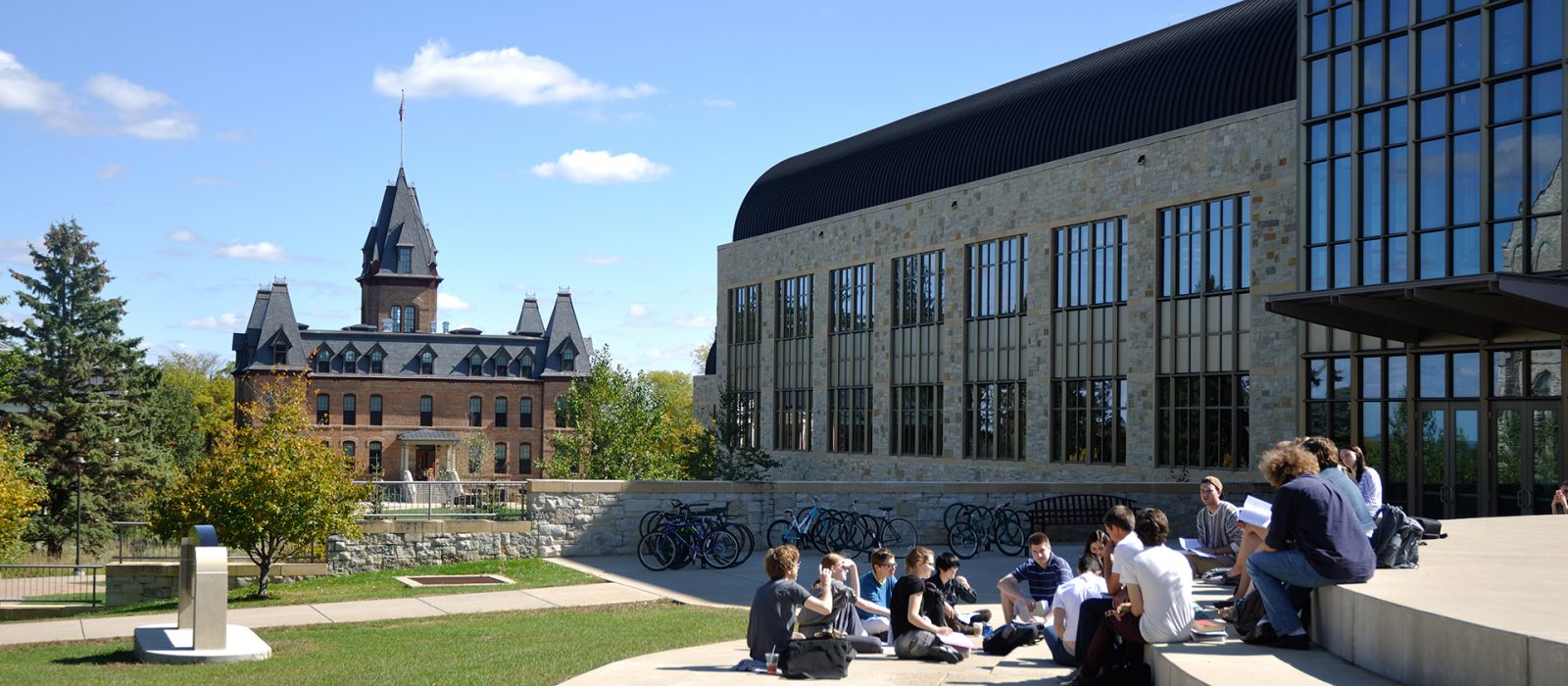
Life at St. Olaf is intensely residential and community-oriented, creating a distinct 'bubble on the hill.' A remarkable 99% of students live in college-owned, -operated, or -affiliated housing, with newly built townhouses adding to the on-campus options. This fosters a friendly, supportive environment focused on 'community responsibility' and the development of life skills. The college's Lutheran heritage is present but not overwhelming; only 12% of students identify as Lutheran, but there's a shared commitment to exploring the role of faith and spirituality. The social scene is often described as friendly but can be cliquey and less lively compared to larger universities, with students finding their own social circles. The Princeton Review's ranking of St. Olaf as having the #6 'Best Campus Food' is a point of immense pride and a daily quality-of-life booster. The campus culture leans progressive, and the residential nature means student life is almost entirely contained within the campus community.
St. Olaf graduates consistently achieve strong outcomes, characterized by high completion rates and solid earning potential. The four-year graduation rate is 84%, significantly above the national midpoint for four-year colleges. This success begins early, with a first-year retention rate of 91%. Financially, the median earnings for graduates ten years after entry are $65,543. Earlier career earnings data shows a median of $36,427 one year after graduation and $48,373 at the five-year mark, indicating a strong trajectory for career growth and advanced degree attainment. A majority of students (58%) graduate having borrowed some type of loan to finance their education.
St. Olaf is a high-tuition institution that mitigates cost through a robust and comprehensive financial aid program. The average after aid is $23,874. The college meets 100% of demonstrated financial need for all admitted students, a cornerstone of its affordability promise. This commitment is reflected in the numbers: 99% of students receive financial aid, with an average first-year need-based award of $51,900. Furthermore, 75% of students receive a merit scholarship. Roughly half of all students receive some form of federal or state aid, including grants, work-study, and loans. Financial aid is recalculated annually, requiring students to submit the FAFSA each year. For international students, aid is a combination of scholarships, on-campus work-study, and loans based on academic excellence and economic need.
St. Olaf carves out a distinctive niche by fusing a powerhouse STEM-oriented liberal arts curriculum with an all-encompassing, almost monastic residential community. It’s a place where the top majors are in math and biology, the science labs are among the best in the country, and the cafeteria food is legendary. This creates a unique student: analytically sharp, equipped with strong writing skills, and embedded in a supportive, if sometimes insular, campus ecosystem where nearly everyone lives, eats, and studies together. The college’s Lutheran heritage provides an ethical framework without defining the daily experience for most students. Its unwavering commitment to meeting 100% of demonstrated financial need removes a major barrier for admitted students, making its rigorous education accessible. The result is a highly cohesive, focused environment that produces graduates with high completion rates and strong long-term earning potential—a Midwestern liberal arts college that competes on academic intensity and community, not just coastline or cachet.
St Olaf College seal · sourceSt. Olaf College – Colleges That Change Lives · sourceSt. Olaf a national 'best value' college in U.S. News ranking – St. Olaf College · sourceAcademics – St. Olaf College · source