Admit rate has ranged 68%–73% over the last 5 years, though the latest figure above (66%) falls outside that window. Source: IPEDS via Urban Institute.
Acceptance & SAT from Common Data Set / IPEDS; net price, earnings & graduation from the U.S. Dept. of Education College Scorecard. Figures lag ~1–2 years — verify with the school.
Stonehill College is a Catholic liberal arts school in Easton, Massachusetts, that operates like a tight-knit, residential village where nearly everyone lives on campus. It’s known for pragmatic, career-oriented programs in business, health sciences, and criminology wrapped in a traditional liberal arts core, fostering a community-oriented, service-focused student body. The vibe is supportive and structured, with a campus life that leans more toward Midnight Madness basketball events than raucous parties, reflecting its mission to develop 'compassionate leaders.'
Admission requirements
Test-blind — scores not considered
Required
High school transcript
Grade point average
Letters of recommendation
College-prep program
TOEFL (non-native English)
Considered (not required)
Class rank
Source: IPEDS Admissions survey (2022) via Urban Institute. Covers formal factors only — it does not reflect essays, extracurriculars, or other holistic criteria.
More details
Undergrad enrollment
2,528
In-state tuition
$57,490
Out-of-state tuition
$57,490
Graduation Rate
76%
On-Campus Living
90% of students
Median Earnings (10yr)
$77,745
Need-Based Aid Awarded
Yes, as funds permit
Early Decision Deadline
December 1 (ED I)
Outcomes & value
Outcomes & value
Median earnings (10 yr)
$77,745
Value (earnings ÷ net price)
2.4×
Median debt at graduation
$25,000
Graduation rate
76%
First-year retention
84%
Reducing loan balance (3 yr)
86%
Pell (lower-income) share
17%
First-gen share (among federal-aid recipients)
16%
Financial health
2.6 / 3.0Meets the federal financial-responsibility standard
U.S. Dept. of Education Financial Responsibility Composite Score (FY2022-23). Scale −1.0 to 3.0; ≥1.5 meets the standard. Reported for private nonprofit & for-profit institutions only — public universities are state-backed and not scored, so this is a stability signal, not a ranking.
Top-earning majors
Median earnings by field of study (highest credential), ~2 years after completion.
Finance and Financial Management Services$60,523
Accounting and Related Services$59,485
Economics$52,941
Marketing$50,356
Health and Medical Administrative Services$49,729
Business Administration, Management and Operations$46,087
Applicants here also applied to
The schools that most often appear alongside Stonehill College on applicants’ lists, from our self-reported outcomes corpus.
Co-application frequency from self-reported results — directional peer discovery, not a recommendation.
Campus & location
Campus safety
On-campus violent crimes (2024)
2
Per 1,000 students
0.76
On-campus criminal offenses classed as violent (murder/non-negligent manslaughter, rape, robbery, aggravated assault) for the most recent reported year. Source: U.S. Dept. of Education Campus Safety and Security (Clery Act). Counts reflect what’s reported to the school, and urban campuses often report more partly due to non-student incidents nearby — read alongside campus size and setting, not as a standalone safety verdict.
Climate
Pleasant days / yr
92
Summer high
81°F
Winter low
26°F
Annual rain
52.4"
Annual snow
31.2"
Natural-hazard risk
Relatively Moderate
Pleasant days counts days per year with a mean temperature of 55–75°F, a high at or below 90°F, a low at or above 45°F, and little precipitation — a transparent comfort measure, not a weighting we invented. Computed from Open-Meteo ERA5 daily history (2019–2023). Natural-hazard risk is the county’s composite rating from the FEMA National Risk Index.
Deep dive — research, future-scholar output & economic mobility▾
Research output
Institutional h-index
74
Scholarly works
1,587
Institutional research volume and impact from OpenAlex. The h-index reflects large research universities and will be low for teaching-focused liberal-arts colleges — not a measure of undergraduate quality.
Economic mobility
Mobility rate
0.6%
Bottom → top quintile
37%
From bottom quintile
2%
Mobility rate = the share of students who both start in the bottom household-income quintile and reach the top quintile; bottom → top is that chance conditional on starting at the bottom. Source: Opportunity Insights Mobility Report Cards (Chetty, Friedman, Saez, Turner & Yagan). Reflects 1980–82 birth cohorts, so it’s directional, not current.
Quick answers
What is the acceptance rate at Stonehill College?
Stonehill College's acceptance rate is approximately 66% (Easton, MA), based on the most recent figures we compiled from public and primary sources.
How much does Stonehill College cost?
At Stonehill College, the average net price (after aid) is about $33,016 per year. Actual cost varies with financial aid and residency.
How many undergraduates attend Stonehill College?
Stonehill College enrolls approximately 2,528 undergraduate students.
Where is Stonehill College located?
Stonehill College is located in Easton, MA.
Admissions
Stonehill's admissions process is selective but not hyper-competitive, with a clear pathway for students who show strong engagement. The overall is 66%, but applying Early Decision can significantly boost an applicant's odds, with one source citing an Early Decision acceptance rate of 88% compared to the regular decision pool. The college offers Early Decision I (deadline December 1) and Early Action plans, with Early Action applicants receiving admission and merit scholarship decisions in early January.
For the admitted class, academic preparation is key. The middle 50% SAT range for admitted students falls between 1120–1290, with an ACT range of 22–27. The average high school GPA of entering students is approximately 3.3. The college's admission priorities, as outlined in the , emphasize academic factors like rigor of secondary school record, GPA, and standardized test scores. While the college welcomes students of all religious traditions, its Catholic heritage informs a that values character and personal qualities.
Demographically, a recent first-year class of 725 students was 54% women and 46% men, with a racial/ethnic composition of 2.6% Asian, 6.7% Black or African American, 8.7% Hispanic, 76.2% White, and 2.7% identifying with two or more races.
Earnings = median of students working ~10 years after entry; debt = median of graduates. Value divides 10-yr earnings by one year’s net price — read it as earnings per dollar of annual cost, not a full lifetime ROI; it favors lower-cost schools. Source: U.S. Dept. of Education College Scorecard. Figures lag ~2 years and reflect all students, not your intended major.
Neurobiology and Neurosciences$44,747
International Business$43,798
Source: U.S. Dept. of Education College Scorecard (field-of-study earnings). Figures cover graduates who received federal aid and lag ~2 years; not all programs report data.
Stonehill’s academic identity blends a foundational liberal arts education with professionally focused programs that have clear pathways to careers. The most popular majors reflect this practical bent: Marketing/Marketing Management, Psychology, Business Administration and Management, and Biology. The college is frequently noted for particular strengths in business, biology, political science, health sciences, and criminology.
The curriculum is designed to be rigorous and tailored, with programs that span from Arts to Business to STEM. Beyond traditional majors, Stonehill offers graduate certificates, such as one in Bilingual Education, and emphasizes developing mathematics, science, and computational skills that provide a competitive advantage. This approach is rooted in the college's mission to leverage rigorous academics and a commitment to compassionate leadership to equip students for the 21st century. The academic culture is supportive, with a focus on close faculty-student interaction inherent to its liberal arts model.
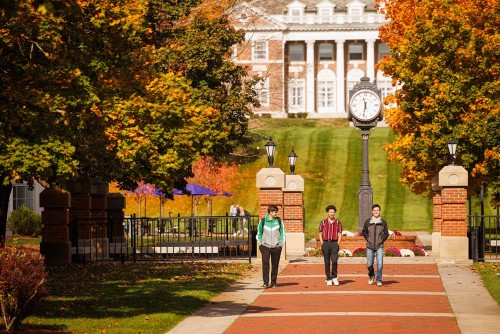
Stonehill’s campus life is overwhelmingly residential and communal, creating a self-contained, village-like atmosphere. A defining statistic is that 90% of students live on campus, which the college says provides countless opportunities for social and academic connection. This high residential rate fosters a tight-knit community where much of the social life is campus-centric.
The college actively cultivates this community through organized events and a commitment to inclusive values. Traditions like Midnight Madness kick off the basketball season with campus-wide energy. The Office of Intercultural Affairs and other departments work to foster a culture where differences – and commonalities – are embraced, and the college states a belief in the inherent dignity of each person.
This supportive environment comes with a structured code of conduct. The campus is dry for students under twenty-one, and alcohol consumption is governed by strict policies, contributing to a social scene that is less defined by large parties and more by campus-sponsored activities and smaller gatherings. The Student Life team aims to engage students in co-curricular activities that empower them to become the people they are meant to be.
Stonehill delivers strong return-on-investment outcomes, particularly in early and mid-career earnings, which are a point of institutional pride. According to a Payscale survey highlighted by the college, Stonehill ranks in the Top 14% among U.S. colleges for earnings potential, with graduates earning an average of $70,500 in their early careers and $129,500 in their mid-career. The Wall Street Journal has also recognized the college's outcomes, giving it a salary impact score of 87 out of 100.
Graduation rates are solid, with sources reporting rates between 79% and 81%, placing Stonehill within the top 15% nationally for graduation outcomes. The average time to degree is an efficient 4.1 years. For recent graduates, median earnings are reported at $45,932, with 86% earning more than a high school graduate. The college's outcomes page emphasizes that Payscale ranks Stonehill graduates among the highest salaries nationwide and that Money magazine ranks the college in the Top 16% of best colleges.
Attending Stonehill requires a significant financial investment, but the college provides substantial aid to offset the sticker price. The average financial aid award package—comprising scholarships, grants, and loans—is $45,713. A large majority of students receive assistance, with one source noting 63.56% of students receiving financial aid and an average aid package of $43,798.
The —the average cost after aid—varies slightly by source but is consistently presented as a key figure. The canonical average net price after aid is $33,016. Other reported net prices include $31,134 and $37,706. The college encourages all families to use its official Net Price Calculator to get a personalized estimate.
Stonehill awards need-based financial aid as funds permit, on the basis of demonstrated financial need and academic performance. The college's policy documents state it cannot guarantee to meet the full demonstrated need of all admitted students. While some elite institutions advertise "no-loan" policies for low-income students, the provided sources do not indicate Stonehill has such a universal policy; aid packages typically include a mix of grants, scholarships, and loans.
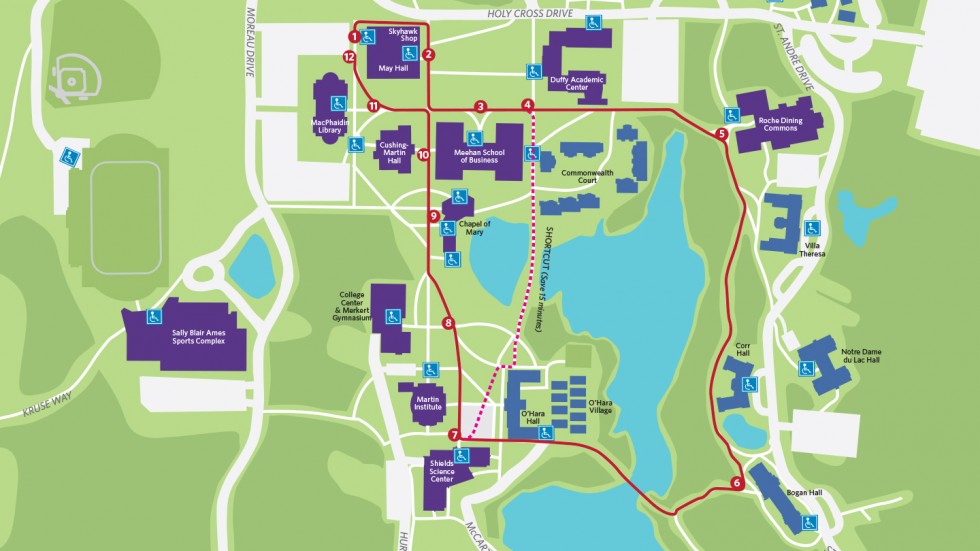
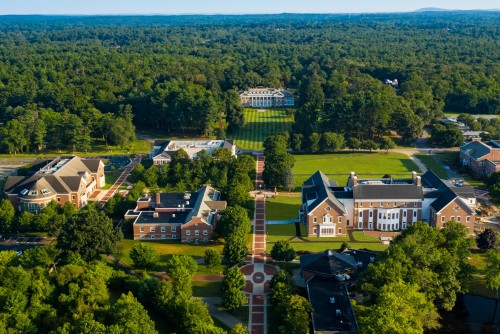
Stonehill College stands out for its potent combination of a classic, immersive residential liberal arts experience and a pragmatic, outcomes-focused curriculum. It’s not a sprawling research university or a tiny, isolated liberal arts college; it’s a 375-acre campus where almost everyone lives, creating a uniquely cohesive and self-contained community. This "90% on-campus" statistic is more than a number—it's the engine of the Stonehill experience, fostering the relationships and engagement the college prizes.
Academically, it avoids the purely theoretical, leaning into programs with clear professional trajectories—business, health sciences, criminology—while grounding them in the liberal arts. This formula works: the college reliably produces graduates who out-earn their peers from the vast majority of U.S. colleges, a fact it promotes confidently.
Finally, its Catholic heritage, which welcomes all traditions, provides a distinct ethical framework centered on compassionate leadership and service. This manifests in a campus culture that is supportive, structured, and intentionally inclusive, appealing to students and families seeking a values-oriented education with a strong return on investment. It’s a community designed not just for learning, but for forming a particular kind of purposeful graduate.