Admit rate has ranged 6%–20% over the last 5 years — notably volatile. Source: IPEDS via Urban Institute.
Acceptance & SAT from Common Data Set / IPEDS; net price, earnings & graduation from the U.S. Dept. of Education College Scorecard. Figures lag ~1–2 years — verify with the school.
Northeastern University has transformed itself from a regional commuter school into a selective, globally-minded powerhouse defined by its signature co-op program. Its identity is a pragmatic fusion of rigorous academics and relentless professional preparation, set on a 73-acre arboretum campus in the heart of Boston. This is a place for students who want to graduate with a resume as impressive as their transcript, and who see the classroom and the corporate world as equally essential parts of their education.
Admission requirements
Test-optional — scores considered if submitted
Required
High school transcript
Grade point average
Letters of recommendation
TOEFL (non-native English)
Considered (not required)
Class rank
Test scores (SAT/ACT)
College-prep program
Demonstrated competencies
Source: IPEDS Admissions survey (2022) via Urban Institute. Covers formal factors only — it does not reflect essays, extracurriculars, or other holistic criteria.
Key deadlines (2026-2027)
Early Action — Early Action
November 1, 2026
Early Decision — Early Decision I
November 1, 2026
ED2 — Early Decision II
January 1, 2027
Regular Decision — Regular Decision
January 1, 2027
Financial Aid — FAFSA Priority Deadline
February 1, 2027
More details
Undergrad enrollment
17,326
In-state tuition
$66,162
Out-of-state tuition
$66,162
No-Loan Policy
Yes, for Pell Grant recipients
Graduation Rate
91%
Meets Full Need
Yes
ED Share of Class
Approximately 51%
Demonstrated Interest
Considered
Median Earnings (10yr)
$92,538
First-Year Students Receiving Aid
70%+
Outcomes & value
Outcomes & value
Median earnings (10 yr)
$92,538
Value (earnings ÷ net price)
3.0×
Median debt at graduation
$24,250
Graduation rate
91%
First-year retention
97%
Reducing loan balance (3 yr)
79%
Pell (lower-income) share
12%
First-gen share (among federal-aid recipients)
19%
Financial health
3.0 / 3.0Meets the federal financial-responsibility standard
U.S. Dept. of Education Financial Responsibility Composite Score (FY2022-23). Scale −1.0 to 3.0; ≥1.5 meets the standard. Reported for private nonprofit & for-profit institutions only — public universities are state-backed and not scored, so this is a stability signal, not a ranking.
Top-earning majors
Median earnings by field of study (highest credential), ~2 years after completion.
Computer Engineering$89,564
Computer and Information Sciences, General$89,413
Electrical, Electronics, and Communications Engineering$76,773
Physics$74,200
Mechanical Engineering$72,771
Chemical Engineering$72,022
Applicants here also applied to
The schools that most often appear alongside Northeastern on applicants’ lists, from our self-reported outcomes corpus.
Co-application frequency from self-reported results — directional peer discovery, not a recommendation.
Campus & location
Campus safety
On-campus violent crimes (2024)
13
Per 1,000 students
0.40
On-campus criminal offenses classed as violent (murder/non-negligent manslaughter, rape, robbery, aggravated assault) for the most recent reported year. Source: U.S. Dept. of Education Campus Safety and Security (Clery Act). Counts reflect what’s reported to the school, and urban campuses often report more partly due to non-student incidents nearby — read alongside campus size and setting, not as a standalone safety verdict.
Climate
Pleasant days / yr
91
Summer high
81°F
Winter low
25°F
Annual rain
49"
Annual snow
31.4"
Natural-hazard risk
Relatively Moderate
Pleasant days counts days per year with a mean temperature of 55–75°F, a high at or below 90°F, a low at or above 45°F, and little precipitation — a transparent comfort measure, not a weighting we invented. Computed from Open-Meteo ERA5 daily history (2019–2023). Natural-hazard risk is the county’s composite rating from the FEMA National Risk Index.
Deep dive — research, future-scholar output & economic mobility▾
Research output
Institutional h-index
686
Scholarly works
82,847
Institutional research volume and impact from OpenAlex. The h-index reflects large research universities and will be low for teaching-focused liberal-arts colleges — not a measure of undergraduate quality.
Economic mobility
Mobility rate
2.4%
Bottom → top quintile
47%
From bottom quintile
5%
Mobility rate = the share of students who both start in the bottom household-income quintile and reach the top quintile; bottom → top is that chance conditional on starting at the bottom. Source: Opportunity Insights Mobility Report Cards (Chetty, Friedman, Saez, Turner & Yagan). Reflects 1980–82 birth cohorts, so it’s directional, not current.
Quick answers
What is the acceptance rate at Northeastern University?
Northeastern University's acceptance rate is approximately 5% (Boston, MA), based on the most recent figures we compiled from public and primary sources.
What SAT score do you need for Northeastern University?
Admitted students at Northeastern University typically score 1440–1540 on the SAT (the middle-50% range). Scores outside this band are still admitted, especially with strong applications.
How much does Northeastern University cost?
At Northeastern University, the average net price (after aid) is about $30,915 per year. Actual cost varies with financial aid and residency.
How many undergraduates attend Northeastern University?
Northeastern University enrolls approximately 17,326 undergraduate students.
Where is Northeastern University located?
Northeastern University is located in Boston, MA.
Admissions
Gaining admission to Northeastern is an intensely competitive proposition, with an of 5%. The admitted student profile is exceptionally strong, with the middle 50% SAT range for admitted students reported as 1480-1540 and a middle 50% ACT range of 33-35. Academic performance is paramount; one analysis of the indicated that over 86% of a recent admitted class had a GPA of 4.0. The university's strategy for shaping its class relies heavily on Early Decision. Reports suggest a significant portion of the incoming class—approximately 51%—is selected during the Early Decision rounds, where acceptance rates are understood to be markedly higher, with estimates ranging from 27% to as high as 51%. This creates a starkly different admissions landscape for ED applicants versus the single-digit Regular Decision pool. Demonstrated interest is a factor Northeastern considers in its admissions process, as indicated in analyses of its Common Data Set.
Earnings = median of students working ~10 years after entry; debt = median of graduates. Value divides 10-yr earnings by one year’s net price — read it as earnings per dollar of annual cost, not a full lifetime ROI; it favors lower-cost schools. Source: U.S. Dept. of Education College Scorecard. Figures lag ~2 years and reflect all students, not your intended major.
Registered Nursing, Nursing Administration, Nursing Research and Clinical Nursing
$70,200
Industrial Engineering$66,541
Source: U.S. Dept. of Education College Scorecard (field-of-study earnings). Figures cover graduates who received federal aid and lag ~2 years; not all programs report data.
Northeastern's academic engine is powered by a simple, powerful idea: integrate deep classroom learning with extensive professional experience. The university offers a "rigorous, guided, and flexible" academic environment across 329 majors. Its crown jewel is the co-operative education (co-op) program, ranked #1 in the nation for internships/co-ops, which allows students to alternate semesters of academic study with full-time, paid professional work. This isn't a side program; it's the core curriculum for most students, fundamentally shaping the academic calendar and student experience. The range of study is vast, spanning Business, Communications, Computer Science, Design, Economics, Engineering, Health, and Interdisciplinary Studies. This unique blend has propelled Northeastern's reputation, creating graduates who are not just theoretically prepared but are proven operators in their fields from day one.
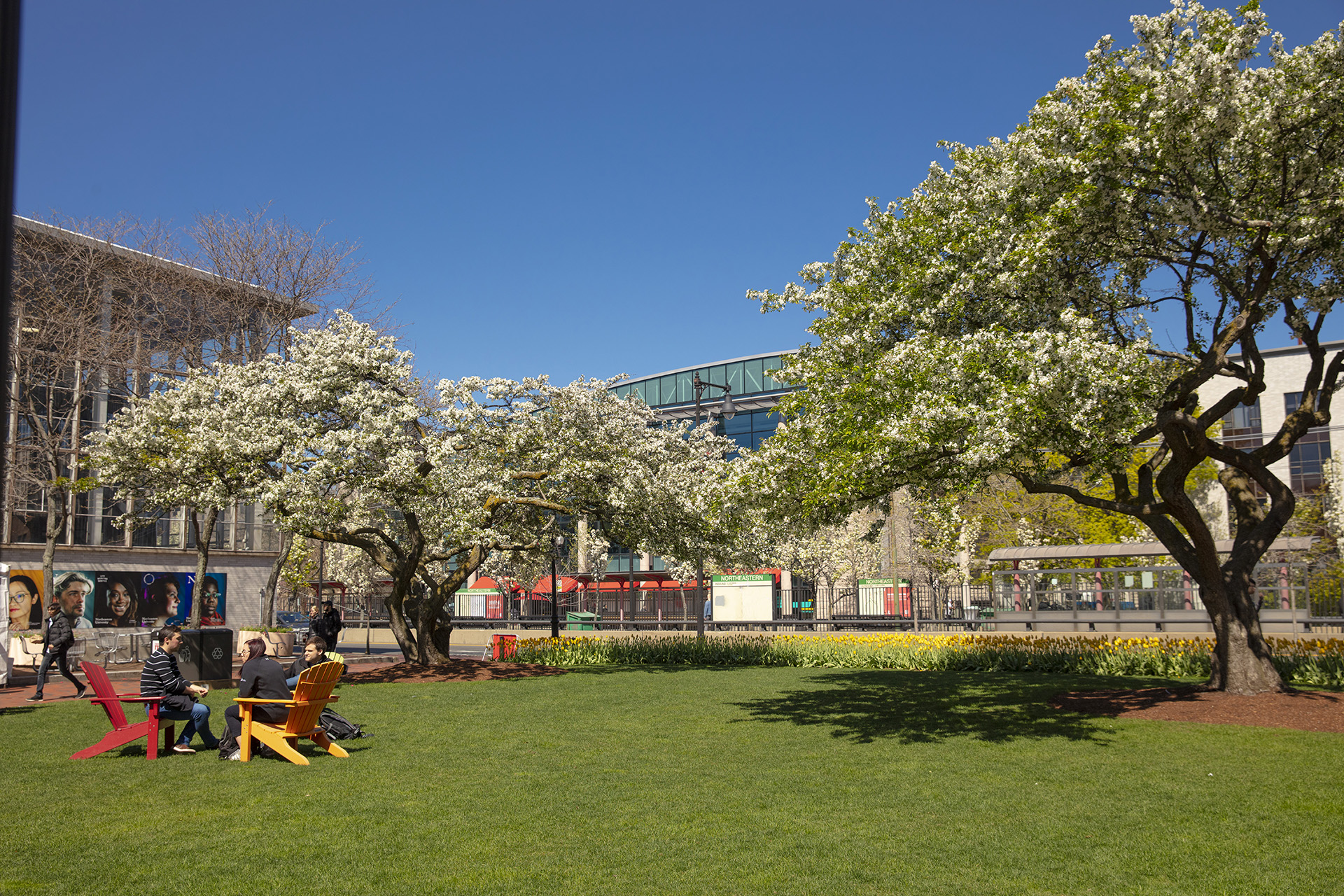
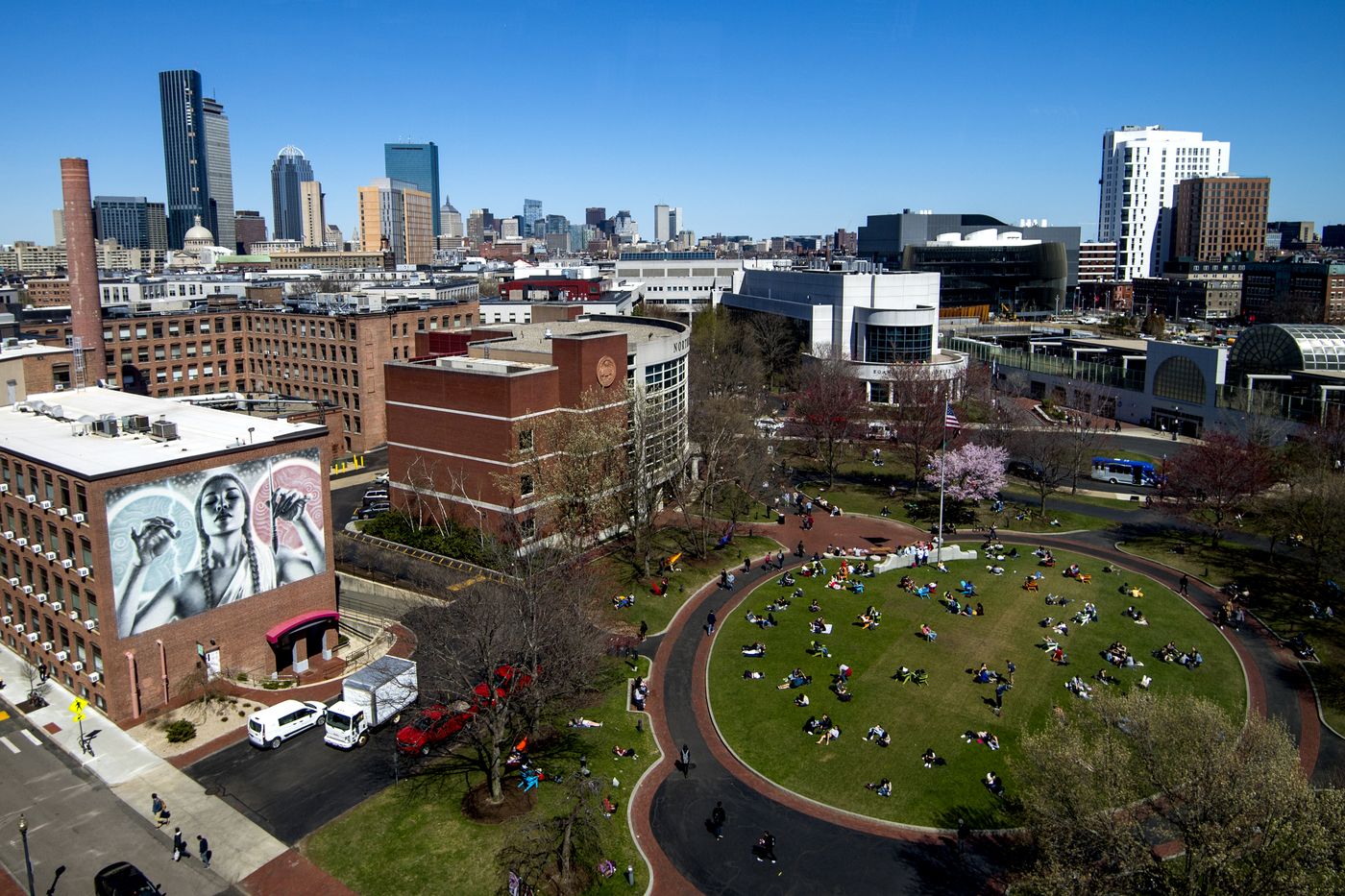
Life at Northeastern unfolds on a 73-acre Boston campus that doubles as a certified Level II Arboretum, a "one-of-a-kind sanctuary" in the middle of a major city. The vibe is active, independent, and professionally oriented—a reflection of the co-op cycle that constantly has a portion of the student body off-campus working. Students are deeply engaged in over 500 student clubs and organizations, and the university emphasizes building community and promoting inclusion across its global network through its Cultural and Spiritual Life office. The location in Boston is not just a backdrop; it's a central resource for internships, cultural events, and the overall student experience. The culture is described as open and globally diverse, with the campus hosting a constant flow of cultural events and activities that leverage its urban setting.
The proof of Northeastern's model is in the postgraduate data. The university reports a 91% graduation rate, significantly above the national midpoint. Career outcomes are exceptionally strong. For recent graduating classes, knowledge of postgraduate status consistently exceeds 75%, and for those graduates, 78% are employed full-time within six months of graduation, with an additional 13.2% pursuing additional education. The co-op program is the direct pipeline to these results, providing students with an average of 18 months of professional experience, a robust network, and often a direct line to a job offer long before graduation.
Northeastern is a significant financial investment, but the university has structured policies to support access. Through "The Northeastern Promise," the university states it is "dedicated to meeting the full demonstrated need for each admitted student eligible for federal financial aid." This commitment to meeting full need is a cornerstone of their aid policy. Furthermore, the university has implemented a no-loan policy for students who qualify for the Pell Grant, replacing loans with grant aid. A substantial majority—over 70%—of first-year students receive some form of financial aid, including merit scholarships and grants, with the university awarding $470 million in institutional aid to undergraduates. Prospective students are encouraged to use the university's official calculator and MyinTuition cost estimator tools to get a personalized picture of cost.
Northeastern stands out for its masterful, total institutional commitment to the integration of work and learning. Unlike schools where internships are an add-on, the co-op program is the rhythmic heartbeat of a Northeastern education, structuring the academic year and defining the student experience. This creates a distinctive culture: the campus is perpetually in motion, with students cycling between intense academic semesters and professional placements across Boston and the globe. The result is a graduate who is pre-vetted by the job market—confident, experienced, and connected. Its dramatic rise in selectivity is a direct market validation of this model. Northeastern isn't for the student who wants a purely cloistered, liberal arts experience; it's for the builder, the doer, and the strategist who views college as the launchpad for a tangible career, and who wants to start building that career on day one.
Northeastern University seal · sourceVisit Campus | Undergraduate Admissions · sourceGetting to Know: Northeastern University (MA) - Educated Quest · sourceNortheastern University moves to online learning at its Boston campus - Northeastern Global News · source