Admit rate has ranged 77%–93% over the last 5 years — notably volatile, though the latest figure above (75%) falls outside that window. Source: IPEDS via Urban Institute.
Acceptance & SAT from Common Data Set / IPEDS; net price, earnings & graduation from the U.S. Dept. of Education College Scorecard. Figures lag ~1–2 years — verify with the school.
University of Detroit Mercy is a Jesuit and Mercy institution that delivers a practical, values-driven education anchored in the gritty, resurgent heart of Detroit. It’s a place where small classes and a 12:1 student-faculty ratio foster close mentorship, and where graduates—particularly in its signature engineering, nursing, and business programs—launch into careers with earnings that rank in the top 9% nationally. This isn't a cloistered campus; it's a commuter-heavy, urban university where the city itself is a classroom and service is woven into the curriculum.
Admission requirements
Test-optional — scores considered if submitted
Required
High school transcript
Grade point average
College-prep program
TOEFL (non-native English)
Considered (not required)
Class rank
Letters of recommendation
Test scores (SAT/ACT)
Demonstrated competencies
Source: IPEDS Admissions survey (2022) via Urban Institute. Covers formal factors only — it does not reflect essays, extracurriculars, or other holistic criteria.
More details
Undergrad enrollment
2,438
In-state tuition
$32,946
Out-of-state tuition
$32,946
Top Majors
Engineering, Nursing, Biology, Business
Campus Type
Urban, Primarily Commuter
Graduation Rate
67%
On-Campus Housing
22% of students
Student-Faculty Ratio
12:1
Median Earnings (10yr)
$71,030
Outcomes & value
Outcomes & value
Median earnings (10 yr)
$71,030
Value (earnings ÷ net price)
4.7×
Median debt at graduation
$23,250
Graduation rate
67%
First-year retention
83%
Reducing loan balance (3 yr)
69%
Pell (lower-income) share
26%
First-gen share (among federal-aid recipients)
29%
Financial health
2.7 / 3.0Meets the federal financial-responsibility standard
U.S. Dept. of Education Financial Responsibility Composite Score (FY2022-23). Scale −1.0 to 3.0; ≥1.5 meets the standard. Reported for private nonprofit & for-profit institutions only — public universities are state-backed and not scored, so this is a stability signal, not a ranking.
Top-earning majors
Median earnings by field of study (highest credential), ~2 years after completion.
Registered Nursing, Nursing Administration, Nursing Research and Clinical Nursing$60,897
Biochemistry, Biophysics and Molecular Biology$48,432
Dental Support Services and Allied Professions$48,041
Business Administration, Management and Operations$44,747
Biology, General$42,682
Public Health
Campus & location
Campus safety
On-campus violent crimes (2024)
2
Per 1,000 students
0.43
On-campus criminal offenses classed as violent (murder/non-negligent manslaughter, rape, robbery, aggravated assault) for the most recent reported year. Source: U.S. Dept. of Education Campus Safety and Security (Clery Act). Counts reflect what’s reported to the school, and urban campuses often report more partly due to non-student incidents nearby — read alongside campus size and setting, not as a standalone safety verdict.
Climate
Pleasant days / yr
87
Summer high
82°F
Winter low
23°F
Annual rain
38.1"
Annual snow
29.3"
Natural-hazard risk
Relatively High
Pleasant days counts days per year with a mean temperature of 55–75°F, a high at or below 90°F, a low at or above 45°F, and little precipitation — a transparent comfort measure, not a weighting we invented. Computed from Open-Meteo ERA5 daily history (2019–2023). Natural-hazard risk is the county’s composite rating from the FEMA National Risk Index.
Deep dive — research, future-scholar output & economic mobility▾
Research output
Institutional h-index
122
Scholarly works
6,024
Institutional research volume and impact from OpenAlex. The h-index reflects large research universities and will be low for teaching-focused liberal-arts colleges — not a measure of undergraduate quality.
Economic mobility
Mobility rate
1.9%
Bottom → top quintile
19%
From bottom quintile
10%
Mobility rate = the share of students who both start in the bottom household-income quintile and reach the top quintile; bottom → top is that chance conditional on starting at the bottom. Source: Opportunity Insights Mobility Report Cards (Chetty, Friedman, Saez, Turner & Yagan). Reflects 1980–82 birth cohorts, so it’s directional, not current.
Quick answers
What is the acceptance rate at University of Detroit Mercy?
University of Detroit Mercy's acceptance rate is approximately 75% (Detroit, MI), based on the most recent figures we compiled from public and primary sources.
What SAT score do you need for University of Detroit Mercy?
Admitted students at University of Detroit Mercy typically score 1030–1260 on the SAT (the middle-50% range). Scores outside this band are still admitted, especially with strong applications.
How much does University of Detroit Mercy cost?
At University of Detroit Mercy, the average net price (after aid) is about $15,232 per year. Actual cost varies with financial aid and residency.
How many undergraduates attend University of Detroit Mercy?
University of Detroit Mercy enrolls approximately 2,438 undergraduate students.
Where is University of Detroit Mercy located?
University of Detroit Mercy is located in Detroit, MI.
Admissions
Detroit Mercy's admissions process is characterized by accessibility and flexibility, positioning it as a realistic target for a broad range of students. The university is classified as "less selective," with a high . It employs a policy for the SAT and ACT, though some specific programs may have other requirements. The admitted student profile shows a middle 50% SAT range of 1030–1260 and an ACT range of 22–28. High school GPA is a significant factor, with the distribution of admitted students skewing toward strong academic performance: 50% report a GPA of 3.75 or higher, and 19% fall between 3.50 and 3.74. The university does not offer an Early Decision program, and while sources discuss the 's role in detailing admission factors, the specific weight Detroit Mercy places on elements like demonstrated interest is not detailed in the provided materials.
Selectivity: Less selective.
Test Policy: Test-optional (SAT/ACT not required).
Academic Profile: Middle 50% SAT: 1030–1260; Middle 50% ACT: 22–28; High school GPA is a key metric.
Application Process: No Early Decision program mentioned.
Earnings = median of students working ~10 years after entry; debt = median of graduates. Value divides 10-yr earnings by one year’s net price — read it as earnings per dollar of annual cost, not a full lifetime ROI; it favors lower-cost schools. Source: U.S. Dept. of Education College Scorecard. Figures lag ~2 years and reflect all students, not your intended major.
$36,141
Source: U.S. Dept. of Education College Scorecard (field-of-study earnings). Figures cover graduates who received federal aid and lag ~2 years; not all programs report data.
The academic experience at Detroit Mercy is defined by its Jesuit and Mercy mission to "educate the whole person," emphasizing excellent academics, community service, and spirituality. The university offers more than 100 undergraduate and graduate programs delivered in small classes taught by faculty, not teaching assistants, supported by a 12:1 student-to-faculty ratio. This intimate setting fosters mentorship and hands-on learning. The curriculum is career-oriented, with popular majors including Engineering (31% of degrees), Registered Nursing (17%), Biology/Biological Sciences (16%), and Business Administration and Management. The College of Liberal Arts & Education (CHASS) alone offers 15 majors and 19 minors, while the Health Sciences program prepares students for expanding opportunities in healthcare and related fields like business and law. The core curriculum is designed to integrate values with professional preparation.
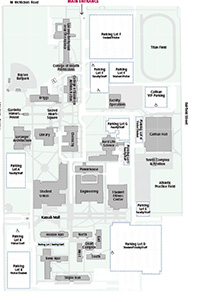
Life at Detroit Mercy is deeply integrated with its urban setting. It is primarily a commuter campus, with only 22% of students living in college-owned, -operated, or -affiliated housing, while 84% live off campus. The Student Life Office serves as a hub for events, activities, and resources, helping students connect with over 60 student organizations, Greek life, and work-study positions. The university promotes a holistic experience that extends beyond the classroom, offering opportunities in campus ministry, recreation, and public safety. The campus itself is located at 4001 W. McNichols Rd. in Detroit, placing students in the midst of a city that offers both professional opportunities and community engagement as part of the institution's core values.
Detroit Mercy prides itself on strong post-graduation outcomes that validate its career-focused education. University data states that graduates rank in the top 9% nationwide for career earnings. Nearly all graduates secure employment or continue their education within six months of graduation. External sources report a median earnings figure for alumni and note that graduates earn significantly more than the national median. The university's performance in outcomes is recognized in rankings; it ranked No. 36 in the 2026 Wall Street Journal/College Pulse Higher Education Rankings, cited for maintaining strong graduation rates and positive salary outcomes. The six-year graduation rate is reported by one source, and there is a noted disparity in graduation rates between Pell and non-Pell Grant recipients.
Affordability is a central part of Detroit Mercy's appeal, with a significant majority of students receiving financial assistance. The university reports that 98% of full-time undergraduate students receive some form of financial aid, which can include institutional scholarships, state grants, and federal programs. The —the average cost after aid and scholarships are applied—is a key figure for prospective families. The university provides a Net Price Calculator to help families estimate their individual financial aid options. The office emphasizes connecting students with federal, state, institutional, and private resources. The provided sources do not indicate the presence of a "no-loan" policy or a commitment to meet 100% of demonstrated financial need without loans.
University of Detroit Mercy carves out a distinct niche as an urban, Catholic university where mission and practicality powerfully intersect. It’s not just about getting a degree; it's about getting a degree that matters in the real world, underscored by an educational philosophy that ties academic excellence to service and ethical reflection. The 12:1 student-faculty ratio ensures students are known by their professors, a rarity that supports both academic success and professional networking. Its location in Detroit is not a backdrop but a core component—the city provides a living lab for its engineering, business, health, and liberal arts students. The outcome data is compelling: ranking in the top 9% for graduate earnings transforms its accessible admissions profile into a remarkable value proposition. This is a school for students who want a supportive, close-knit learning environment without sacrificing the professional opportunities and gritty authenticity of a major American city.
University of Detroit Mercy seal · sourceLocation, Maps and Directions | University of Detroit Mercy · sourceLocation, Maps and Directions | University of Detroit Mercy · sourceUniversity of Detroit Mercy: A Campus on the Move — The Monahan Company · source