Admit rate has ranged 85%–95% over the last 5 years — notably volatile, though the latest figure above (72%) falls outside that window. Source: IPEDS via Urban Institute.
Acceptance & SAT from Common Data Set / IPEDS; net price, earnings & graduation from the U.S. Dept. of Education College Scorecard. Figures lag ~1–2 years — verify with the school.
The University of Memphis is a large, public urban research university that serves as a vital engine of opportunity and a cultural hub for its city. With a notably accessible admissions profile and a sprawling academic catalog, it offers a practical, career-focused education deeply intertwined with the life and rhythms of Memphis. Its identity is less about exclusivity and more about providing a dynamic, supportive, and affordable pathway to a degree for a diverse student body.
Admission requirements
Test-optional — scores considered if submitted
Required
High school transcript
Grade point average
TOEFL (non-native English)
Considered (not required)
Class rank
Letters of recommendation
Test scores (SAT/ACT)
College-prep program
Demonstrated competencies
Source: IPEDS Admissions survey (2022) via Urban Institute. Covers formal factors only — it does not reflect essays, extracurriculars, or other holistic criteria.
More details
Undergrad enrollment
12,701
In-state tuition
$10,728
Out-of-state tuition
$15,384
Campus Housing
20% live on campus
Graduation Rate
51%
Average Aid Package
$13,601
First-Year Retention
Not Stated in Sources
Demonstrated Interest
Not Considered
Median Earnings (10yr)
$48,458
% of Students Receiving Grant Aid
92%
Outcomes & value
Outcomes & value
Median earnings (10 yr)
$48,458
Value (earnings ÷ net price)
3.9×
Median debt at graduation
$23,300
Graduation rate
51%
First-year retention
77%
Reducing loan balance (3 yr)
38%
Pell (lower-income) share
41%
First-gen share (among federal-aid recipients)
37%
Top-earning majors
Median earnings by field of study (highest credential), ~2 years after completion.
Electrical, Electronics, and Communications Engineering$63,749
Registered Nursing, Nursing Administration, Nursing Research and Clinical Nursing$58,968
Civil Engineering$55,964
Computer Engineering
Campus & location
Campus safety
On-campus violent crimes (2024)
8
Per 1,000 students
0.46
On-campus criminal offenses classed as violent (murder/non-negligent manslaughter, rape, robbery, aggravated assault) for the most recent reported year. Source: U.S. Dept. of Education Campus Safety and Security (Clery Act). Counts reflect what’s reported to the school, and urban campuses often report more partly due to non-student incidents nearby — read alongside campus size and setting, not as a standalone safety verdict.
Climate
Pleasant days / yr
87
Summer high
88°F
Winter low
37°F
Annual rain
56.4"
Annual snow
3.6"
Natural-hazard risk
Relatively High
Pleasant days counts days per year with a mean temperature of 55–75°F, a high at or below 90°F, a low at or above 45°F, and little precipitation — a transparent comfort measure, not a weighting we invented. Computed from Open-Meteo ERA5 daily history (2019–2023). Natural-hazard risk is the county’s composite rating from the FEMA National Risk Index.
Deep dive — research, future-scholar output & economic mobility▾
Research output
Institutional h-index
395
Scholarly works
38,438
Institutional research volume and impact from OpenAlex. The h-index reflects large research universities and will be low for teaching-focused liberal-arts colleges — not a measure of undergraduate quality.
Economic mobility
Mobility rate
1.2%
Bottom → top quintile
12%
From bottom quintile
10%
Mobility rate = the share of students who both start in the bottom household-income quintile and reach the top quintile; bottom → top is that chance conditional on starting at the bottom. Source: Opportunity Insights Mobility Report Cards (Chetty, Friedman, Saez, Turner & Yagan). Reflects 1980–82 birth cohorts, so it’s directional, not current.
Quick answers
What is the acceptance rate at University of Memphis?
University of Memphis's acceptance rate is approximately 72% (Memphis, TN), based on the most recent figures we compiled from public and primary sources.
What SAT score do you need for University of Memphis?
Admitted students at University of Memphis typically score 915–1180 on the SAT (the middle-50% range). Scores outside this band are still admitted, especially with strong applications.
How much does University of Memphis cost?
At University of Memphis, the average net price (after aid) is about $12,397 per year. Actual cost varies with financial aid and residency.
How many undergraduates attend University of Memphis?
University of Memphis enrolls approximately 12,701 undergraduate students.
Where is University of Memphis located?
University of Memphis is located in Memphis, TN.
Admissions
The University of Memphis operates with a notably accessible admissions process, positioning itself as a gateway for a broad range of students. The university does not have an open admission policy but maintains a high , making it a realistic option for many Tennessee residents and out-of-state applicants. The middle 50% SAT range for admitted students is 915–1180, with an average score of 1040, placing most admitted students within the top 35% nationally on the SAT. The average ACT score for incoming freshmen is 22. The admissions office reports that the average GPA of incoming students is 3.62. While the outlines the factors considered in admissions decisions, the university's high acceptance rate indicates that meeting baseline academic requirements is the primary hurdle for most applicants.
Key factors in the admissions process, as detailed in the Common Data Set, include the rigor of secondary school record, academic GPA, and standardized test scores. The university also considers class rank, application essay, recommendations, extracurricular activities, talent/ability, character/personal qualities, status, alumni/ae relation, geographical residence, state residency, volunteer work, and work experience. Demonstrated interest is listed as "Not Considered" in the Common Data Set, meaning visiting campus or engaging with admissions staff does not formally impact an applicant's chances.
Earnings = median of students working ~10 years after entry; debt = median of graduates. Value divides 10-yr earnings by one year’s net price — read it as earnings per dollar of annual cost, not a full lifetime ROI; it favors lower-cost schools. Source: U.S. Dept. of Education College Scorecard. Figures lag ~2 years and reflect all students, not your intended major.
$55,964
Management Information Systems and Services$51,273
Computer Science$48,823
Source: U.S. Dept. of Education College Scorecard (field-of-study earnings). Figures cover graduates who received federal aid and lag ~2 years; not all programs report data.
The University of Memphis offers a sprawling academic menu with over 250 fields of study and more than 230 undergraduate majors, minors, and concentrations. This breadth allows students to pursue everything from traditional liberal arts to highly specialized professional tracks. The curriculum is pragmatic and career-oriented, with several programs ranked among the best in the nation. According to U.S. News data, the most popular majors reflect this practical focus: Kinesiology and Exercise Science, Nursing, Liberal Arts and Humanities, Psychology, and Business are among the largest. Engineering and the visual and performing arts also claim significant shares of the student body.
The university's identity is firmly rooted in its role as a major public research institution. Its faculty are leaders in their fields, and the academic environment is one where applied learning and research opportunities, particularly those connected to the urban context of Memphis, are emphasized. Students looking for a large university experience with extensive program options and a direct connection to professional outcomes will find a strong fit here.
Life at the University of Memphis is defined by its large, commuter-heavy campus situated within a major city. Only about 20% of students live in college-owned, -operated, or -affiliated housing, with the vast majority—80%—living off-campus. This creates a dynamic where campus buzz is often concentrated around class times, university events, and the activities of over 200 student organizations. The Division of Student Affairs promotes a "campus culture of care" through holistic well-being services and proactive outreach.
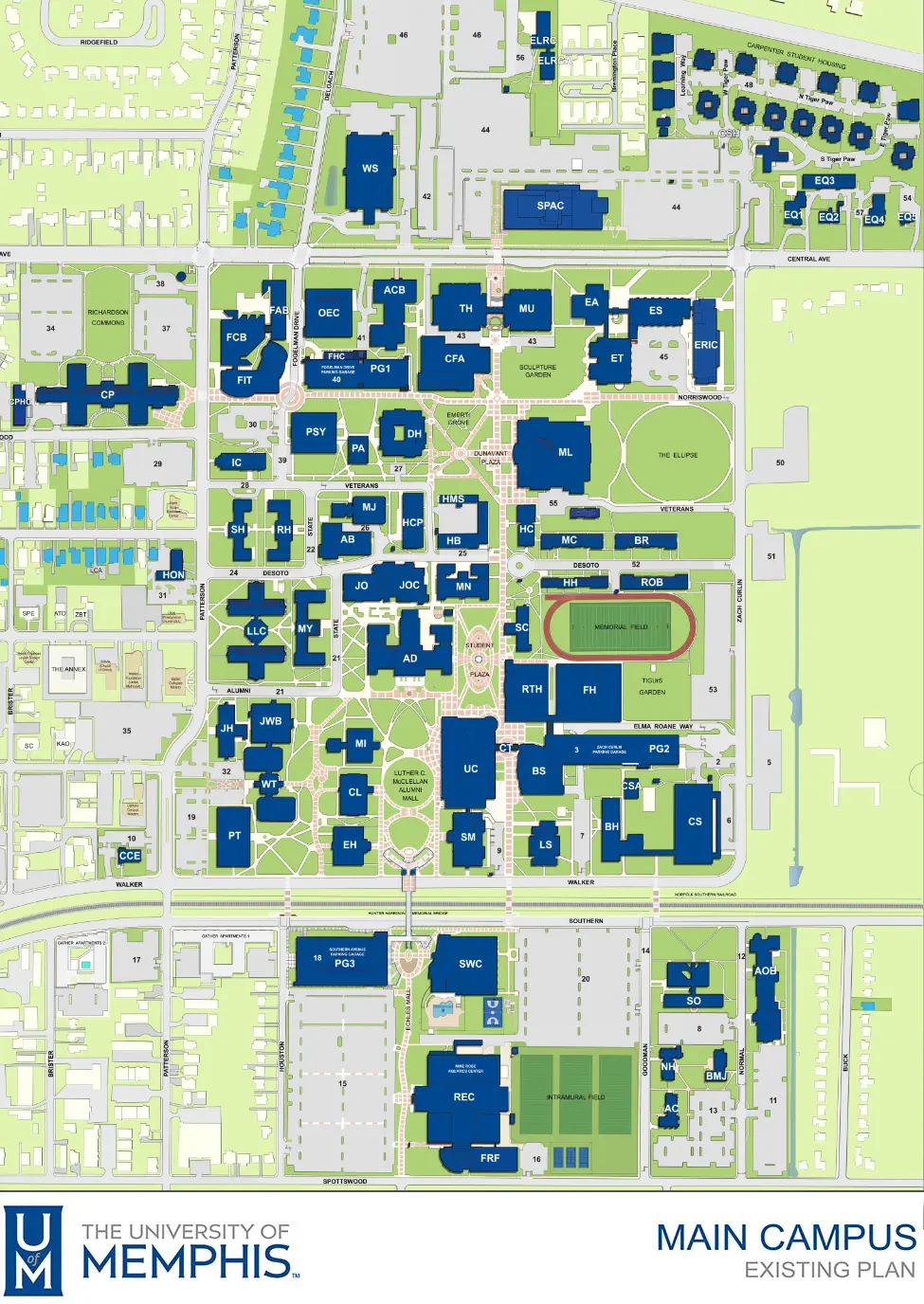
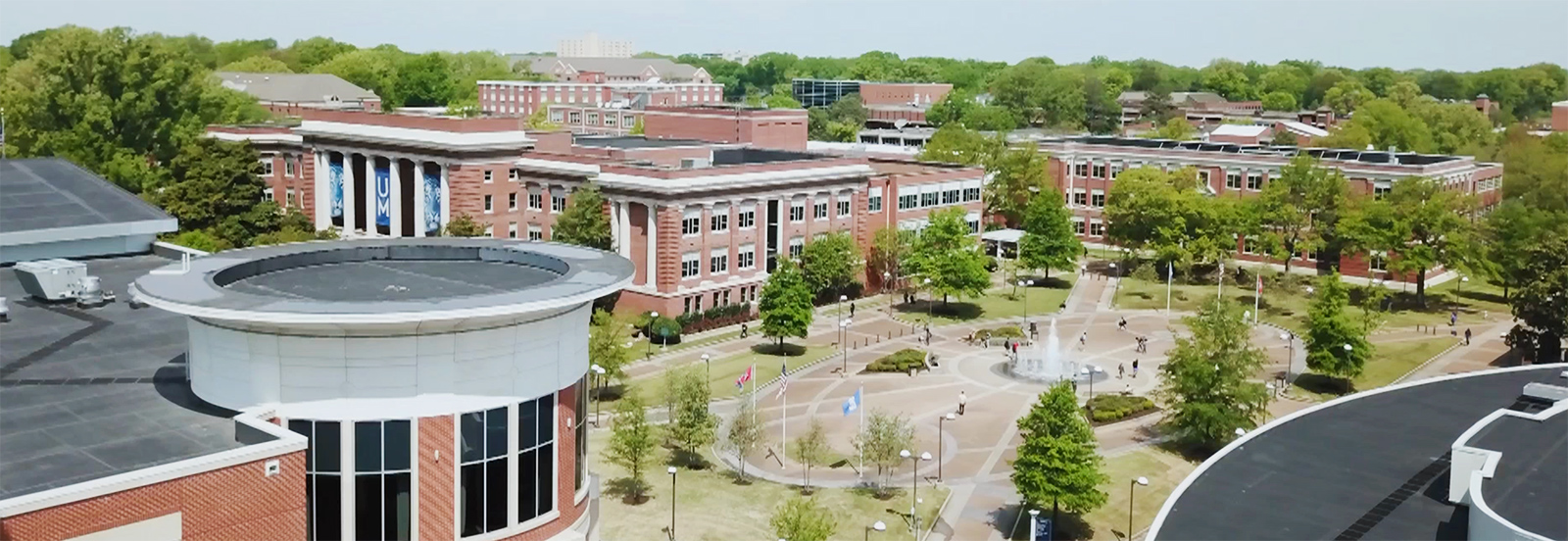
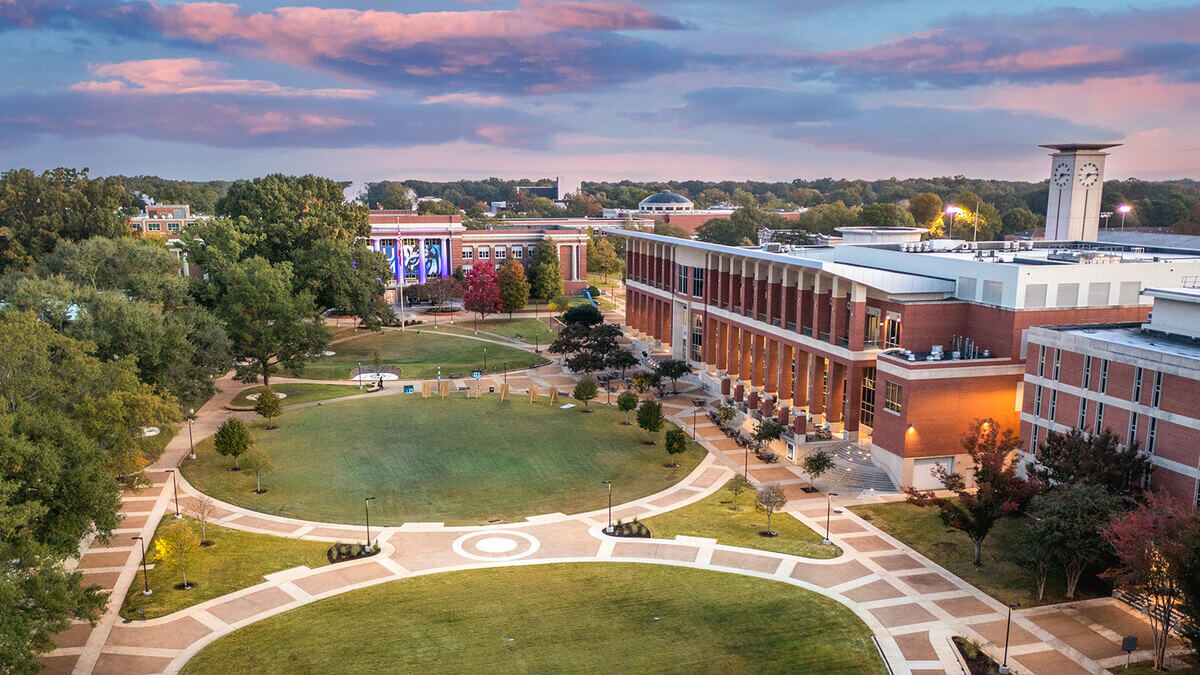
The campus itself is described as beautiful, clean, and pedestrian-friendly, with many modern or recently updated facilities. The university works hard to generate on-campus energy, offering a steady stream of concerts, art exhibits, theatre performances, cultural events, intramural and club sports, and international festivals. For students, the city of Memphis acts as an extended campus, offering unparalleled access to music, history, food, and professional internships. The student experience is one of self-direction; engagement doesn't always come automatically but is abundantly available for those who seek it out.
Outcomes for University of Memphis graduates reflect its mission as a broad-access public university. The six-year graduation rate stands at 49-51%, a figure that aligns with its admissions profile and student body. Post-graduation, earnings data shows a strong return on investment, especially given the university's low . According to the College Scorecard, the median earnings six years after entry are $40,921. Other sources report median earnings of $42,466 one year after graduation, rising to $52,242 after five years.
Salary outcomes vary significantly by major, with fields like Civil Engineering reporting median salaries around $56,998 shortly after graduation. The university tracks earnings by degree and major one year after graduation, providing transparency for prospective students. For many students, particularly and lower-income attendees, a University of Memphis degree represents a critical step into the professional middle class, with a favorable debt-to-earnings ratio.
Affordability is a central pillar of the University of Memphis's value proposition. The average —the cost after grants and scholarships are applied—is strikingly low for a four-year university. A significant majority of students (92% of full-time beginning undergraduates) receive some form of grant or scholarship aid, with the average aid package reported to be $13,601. The primary avenue for aid is through the federal Pell Grant program, a non-repayable award for undergraduates pursuing a first bachelor's degree, along with other federal and state programs.
The university provides a net price calculator for families to estimate their actual cost. To maintain eligibility for federal and state aid, undergraduate students must keep a cumulative GPA of 2.0. While the University of Memphis does not advertise a "no-loan" policy or a guarantee to meet 100% of demonstrated financial need like some elite private institutions, its combination of low tuition (for a public university) and substantial grant aid makes it a financially manageable choice for many.
The University of Memphis stands out not for exclusivity, but for its potent combination of access, affordability, and authentic urban integration. It is a university deeply of its place—the energy, challenges, and culture of Memphis are not just a backdrop but are woven into the academic and social fabric. Its high and low make a four-year degree a tangible reality for students who might be priced out or screened out of more selective institutions.
What it offers in return is a vast academic catalog with several nationally recognized programs, a pragmatic focus on career readiness, and the unmatched experiential learning laboratory of a major American city. It's a campus where a student can study audiology, music business, civil engineering, or nursing while having internships and cultural experiences that are simply unavailable in a college town. The student who thrives here is self-motivated, eager to engage with the city, and values a practical education that leads directly to a career without burdening them with excessive debt. It is the definition of a modern, urban, public university: open, engaged, and focused on delivering value.
University of Memphis seal · sourceUniversity of Memphis · sourceCampus Planning and Design · sourceUniversity of Memphis — Admissions, Tuition & Acceptance Rate | Appily · source