Admit rate has ranged 85%–88% over the last 5 years, though the latest figure above (74%) falls outside that window. Source: IPEDS via Urban Institute.
Acceptance & SAT from Common Data Set / IPEDS; net price, earnings & graduation from the U.S. Dept. of Education College Scorecard. Figures lag ~1–2 years — verify with the school.
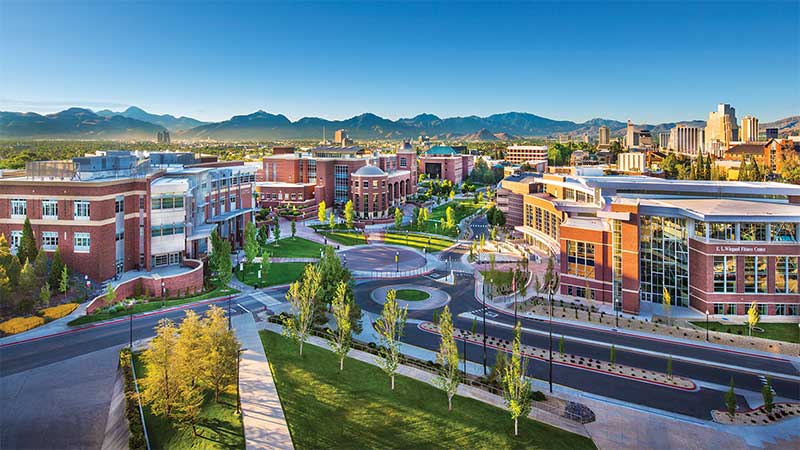
The University of Nevada-Reno is a public research university that blends accessibility with pockets of academic rigor, particularly in engineering, agriculture, and journalism. With a laid-back campus vibe and proximity to Lake Tahoe’s outdoor adventures, it attracts students who want a balance of academics and an active social scene—though its graduation rates lag behind national averages.
Admission requirements
Test-blind — scores not considered
Required
High school transcript
Grade point average
College-prep program
TOEFL (non-native English)
Source: IPEDS Admissions survey (2022) via Urban Institute. Covers formal factors only — it does not reflect essays, extracurriculars, or other holistic criteria.
More details
Undergrad enrollment
15,599
In-state tuition
$9,578
Out-of-state tuition
$27,720
Top Majors
Psychology, Public Health, Biology, Criminal Justice
Notable Fact
No SAT/ACT required for admission
Campus Housing
19% of students
Annual Cost (Avg.)
$15,927
Student-Faculty Ratio
17:1
4-Year Graduation Rate
42%
Avg. Debt at Graduation
$23,732
Median Salary (6 Years Post-Grad)
$49,182
Outcomes & value
Outcomes & value
Median earnings (10 yr)
$60,614
Value (earnings ÷ net price)
3.8×
Median debt at graduation
$18,922
Graduation rate
61%
First-year retention
80%
Reducing loan balance (3 yr)
66%
Pell (lower-income) share
23%
First-gen share (among federal-aid recipients)
38%
Top-earning majors
Median earnings by field of study (highest credential), ~2 years after completion.
Mining and Mineral Engineering$69,338
Registered Nursing, Nursing Administration, Nursing Research and Clinical Nursing$69,161
Computer Engineering$67,473
Electrical, Electronics, and Communications Engineering$67,324
Mechanical Engineering$59,011
Civil Engineering
Campus & location
Campus safety
On-campus violent crimes (2024)
24
Per 1,000 students
1.23
On-campus criminal offenses classed as violent (murder/non-negligent manslaughter, rape, robbery, aggravated assault) for the most recent reported year. Source: U.S. Dept. of Education Campus Safety and Security (Clery Act). Counts reflect what’s reported to the school, and urban campuses often report more partly due to non-student incidents nearby — read alongside campus size and setting, not as a standalone safety verdict.
Climate
Pleasant days / yr
91
Summer high
88°F
Winter low
28°F
Annual rain
16.2"
Annual snow
43"
Natural-hazard risk
Relatively High
Pleasant days counts days per year with a mean temperature of 55–75°F, a high at or below 90°F, a low at or above 45°F, and little precipitation — a transparent comfort measure, not a weighting we invented. Computed from Open-Meteo ERA5 daily history (2019–2023). Natural-hazard risk is the county’s composite rating from the FEMA National Risk Index.
Deep dive — research, future-scholar output & economic mobility▾
Research output
Institutional h-index
512
Scholarly works
52,207
Institutional research volume and impact from OpenAlex. The h-index reflects large research universities and will be low for teaching-focused liberal-arts colleges — not a measure of undergraduate quality.
Economic mobility
Mobility rate
1.2%
Bottom → top quintile
29%
From bottom quintile
4%
Mobility rate = the share of students who both start in the bottom household-income quintile and reach the top quintile; bottom → top is that chance conditional on starting at the bottom. Source: Opportunity Insights Mobility Report Cards (Chetty, Friedman, Saez, Turner & Yagan). Reflects 1980–82 birth cohorts, so it’s directional, not current.
Quick answers
What is the acceptance rate at University of Nevada-Reno?
University of Nevada-Reno's acceptance rate is approximately 74% (Reno, NV), based on the most recent figures we compiled from public and primary sources.
What SAT score do you need for University of Nevada-Reno?
Admitted students at University of Nevada-Reno typically score 1060–1290 on the SAT (the middle-50% range). Scores outside this band are still admitted, especially with strong applications.
How much does University of Nevada-Reno cost?
At University of Nevada-Reno, the average net price (after aid) is about $15,927 per year. Actual cost varies with financial aid and residency.
How many undergraduates attend University of Nevada-Reno?
University of Nevada-Reno enrolls approximately 15,599 undergraduate students.
Where is University of Nevada-Reno located?
University of Nevada-Reno is located in Reno, NV.
Admissions
UNR is moderately selective, with an hovering around 74% (sources vary slightly between 73.7% and 88%). The university operates on an open-admission policy for in-state students but imposes selective criteria for out-of-state applicants and certain programs. Test scores (SAT/ACT) are not required for admission, though submitted scores typically fall within an ACT range of 19–26. GPA distribution skews toward solid but not elite academic performance: 28% of admitted students have a 3.75+ GPA, while 21% fall between 3.50–3.74. Notably, only 1.5% of admitted first-year students have GPAs below 2.5.
UNR offers nearly 500 degree programs, with standout strengths in engineering, agriculture, journalism, and environmental science. As a Carnegie R1 research institution, it emphasizes undergraduate research opportunities, supported by a 17:1 student-faculty ratio. The most popular majors reflect practical and pre-professional leanings: Psychology (5%), Public Health (5%), Biology (4%), and Criminal Justice top the list. While some dismiss it as a 'safety school' for Nevadans, its STEM programs and journalism school punch above their weight. The university’s self-branding leans heavily on its 'engagement' and 'creativity,' though student reviews suggest variability in academic rigor across departments.
Earnings = median of students working ~10 years after entry; debt = median of graduates. Value divides 10-yr earnings by one year’s net price — read it as earnings per dollar of annual cost, not a full lifetime ROI; it favors lower-cost schools. Source: U.S. Dept. of Education College Scorecard. Figures lag ~2 years and reflect all students, not your intended major.
$57,705
Environmental/Environmental Health Engineering$57,318
Geological/Geophysical Engineering$55,964
Source: U.S. Dept. of Education College Scorecard (field-of-study earnings). Figures cover graduates who received federal aid and lag ~2 years; not all programs report data.
Campus life at UNR is defined by its outdoorsy setting and Reno’s mix of urban and recreational perks. Only 19% of students live on campus, with the majority opting for off-campus housing near bars and restaurants adjacent to campus. Descriptions from students highlight a 'fun, friendly' atmosphere, with social life often revolving around Tahoe skiing, hiking, and Reno’s nightlife. The university promotes cultural diversity programs and residential life services, but student testimonials suggest social engagement is largely self-directed—'what you make of it.' TikTok tours and Reddit threads showcase a lively but not overwhelming Greek scene, with plenty of niche clubs and intramural sports to fill the gaps.
Graduation rates are a mixed bag: the overall 4-year rate sits at 42% (per U.S. News), though other sources cite 62% for 6-year completion—placing UNR in the top 40% of comparable institutions. Career outcomes are stronger for targeted programs; business graduates report 82% full-time employment, with 85% working in their field and an average salary of $54,228. University-wide, the median salary six years post-graduation is $49,182, slightly below the national average for public universities. Debt at graduation averages $23,732, a relative bright spot compared to peer institutions.
UNR’s affordability is a key selling point, with an average annual cost of $15,927—below the midpoint for 4-year colleges. The university awards need-based scholarships averaging $9,850 to first-year students, with 56% receiving aid. The financial aid office emphasizes merit- and need-based scholarships (which don’t require repayment), though student loans remain a common supplement. calculators suggest significant variability based on residency status, with in-state students benefiting from Nevada’s subsidized tuition rates.
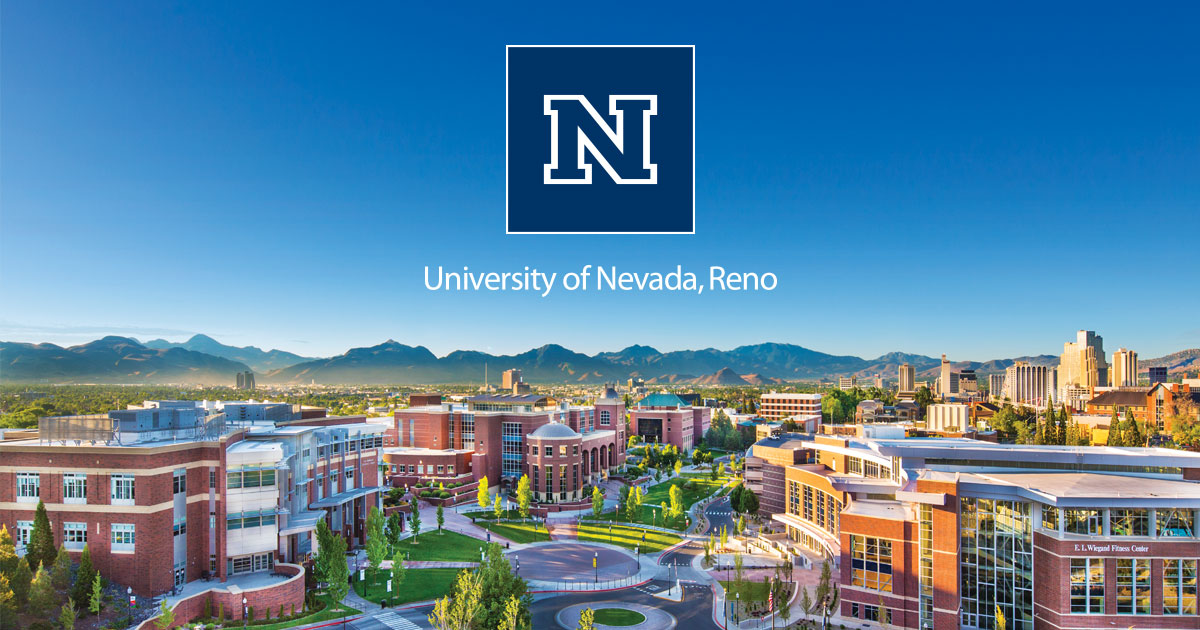
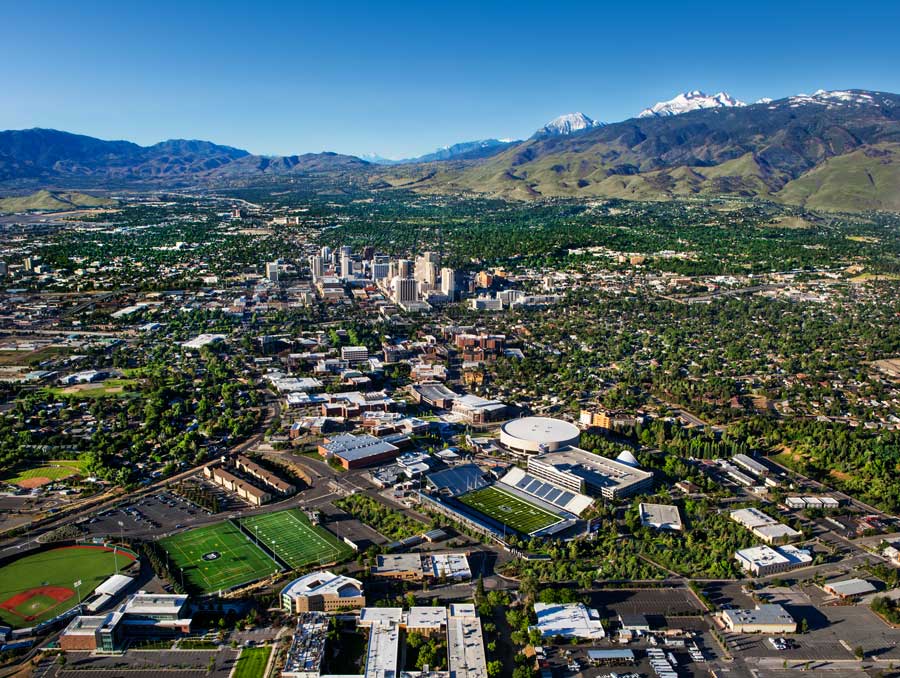
UNR’s appeal lies in its balance of accessibility and niche excellence. Its R1 research status and strong engineering/agriculture programs attract ambitious students, while the 74% ensures broad access. The Reno location—wedged between the Sierra Nevada mountains and a mid-sized city—offers unique lifestyle perks, from skiing to internships in Nevada’s growing tech and renewable energy sectors. Yet it’s not without trade-offs: lower graduation rates and uneven academic reputations outside STEM fields temper its appeal. For students seeking affordability, outdoor adventure, and a 'work-hard, play-hard' culture, UNR delivers—provided they’re self-motivated to navigate its inconsistencies.
University of Nevada-Reno logo · sourceUniversity of Nevada, Reno | University of Nevada, Reno · source5 reasons Californians Should Consider College in Nevada | Nevada Admissions Blog · sourceVirtual Campus Tour | Online Interactive Tour with 360-Degree Videos | University of Nevada, Reno · source