Loading…
← All schools
University of New Haven
West Haven, CTprivate nonprofitwww.newhaven.edu/
Acceptance
60%
SAT 25–75
1060–1265
Avg net price
$34,192
Earnings (10 yr)
$60,126
Graduation rate
63%
Admit rate has ranged 81%–94% over the last 5 years — notably volatile, though the latest figure above (60%) falls outside that window. Source: IPEDS via Urban Institute.
Acceptance & SAT from Common Data Set / IPEDS; net price, earnings & graduation from the U.S. Dept. of Education College Scorecard. Figures lag ~1–2 years — verify with the school.
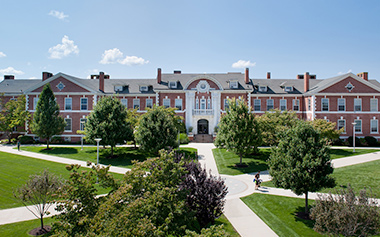
The University of New Haven is a private university in coastal Connecticut that has built a distinctive identity around career-focused, hands-on learning, particularly in its powerhouse programs in criminal justice, forensic science, and homeland security. It's a school for doers, not just thinkers, where over 100 academic programs blend classical disciplines with project-based, interdisciplinary work. The campus vibe is active and community-oriented, with just over half of students living on campus, and its outcomes are defined by a strong track record of graduates landing jobs quickly in their fields.
Admission requirements
Test-optional — scores considered if submitted
Required
- High school transcript
- Grade point average
- Letters of recommendation
- TOEFL (non-native English)
Considered (not required)
- Test scores (SAT/ACT)
- College-prep program
Source: IPEDS Admissions survey (2022) via Urban Institute. Covers formal factors only — it does not reflect essays, extracurriculars, or other holistic criteria.
More details
- Undergrad enrollment
- 4,841
- In-state tuition
- $47,332
- Out-of-state tuition
- $47,332
- Graduation Rate
- 63%
- On-Campus Students
- 52%
- Early Decision Benefit
- Guaranteed $20k+ annual merit scholarship
- Median Earnings (10yr)
- $60,126
- Career Outcomes Rate (2024)
- 95.48%
- Students Receiving Financial Aid
- ~97%
- First-Year Profile (Class of 2029)
- Avg SAT 1170, Avg GPA 3.43
Outcomes & value
Outcomes & value
- Median earnings (10 yr)
- $60,126
- Value (earnings ÷ net price)
- 1.8×
- Median debt at graduation
- $27,000
- Graduation rate
- 63%
- First-year retention
- 76%
- Reducing loan balance (3 yr)
- 70%
- Pell (lower-income) share
- 32%
- First-gen share (among federal-aid recipients)
- 29%
Financial health
2.5 / 3.0Meets the federal financial-responsibility standard
U.S. Dept. of Education Financial Responsibility Composite Score (FY2022-23). Scale −1.0 to 3.0; ≥1.5 meets the standard. Reported for private nonprofit & for-profit institutions only — public universities are state-backed and not scored, so this is a stability signal, not a ranking.
Top-earning majors
Median earnings by field of study (highest credential), ~2 years after completion.
- Electrical, Electronics, and Communications Engineering$67,995
- Civil Engineering$65,486
- Mechanical Engineering$63,997
- Dental Support Services and Allied Professions$58,673
- Fire Protection$48,682
- Chemistry$44,356
Campus & location
Campus safety
- On-campus violent crimes (2024)
- 2
- Per 1,000 students
- 0.22
On-campus criminal offenses classed as violent (murder/non-negligent manslaughter, rape, robbery, aggravated assault) for the most recent reported year. Source: U.S. Dept. of Education Campus Safety and Security (Clery Act). Counts reflect what’s reported to the school, and urban campuses often report more partly due to non-student incidents nearby — read alongside campus size and setting, not as a standalone safety verdict.
Climate
- Pleasant days / yr
- 96
- Summer high
- 80°F
- Winter low
- 28°F
- Annual rain
- 56.3"
- Annual snow
- 22.4"
Pleasant days counts days per year with a mean temperature of 55–75°F, a high at or below 90°F, a low at or above 45°F, and little precipitation — a transparent comfort measure, not a weighting we invented. Computed from Open-Meteo ERA5 daily history (2019–2023).
Deep dive — research, future-scholar output & economic mobility
Research output
- Institutional h-index
- 261
- Scholarly works
- 9,844
Institutional research volume and impact from OpenAlex. The h-index reflects large research universities and will be low for teaching-focused liberal-arts colleges — not a measure of undergraduate quality.
Economic mobility
- Mobility rate
- 1.8%
- Bottom → top quintile
- 24%
- From bottom quintile
- 8%
Mobility rate = the share of students who both start in the bottom household-income quintile and reach the top quintile; bottom → top is that chance conditional on starting at the bottom. Source: Opportunity Insights Mobility Report Cards (Chetty, Friedman, Saez, Turner & Yagan). Reflects 1980–82 birth cohorts, so it’s directional, not current.
Quick answers
- What is the acceptance rate at University of New Haven?
- University of New Haven's acceptance rate is approximately 60% (West Haven, CT), based on the most recent figures we compiled from public and primary sources.
- What SAT score do you need for University of New Haven?
- Admitted students at University of New Haven typically score 1060–1265 on the SAT (the middle-50% range). Scores outside this band are still admitted, especially with strong applications.
- How much does University of New Haven cost?
- At University of New Haven, the average net price (after aid) is about $34,192 per year. Actual cost varies with financial aid and residency.
- How many undergraduates attend University of New Haven?
- University of New Haven enrolls approximately 4,841 undergraduate students.
- Where is University of New Haven located?
- University of New Haven is located in West Haven, CT.
Admissions
The University of New Haven operates on a rolling admissions basis and is considered a less selective institution, though selectivity has been increasing. For the Class of 2029, the university received more than 24,000 applications, marking its most selective incoming class to date. The admissions process is not open; students must meet minimum program of study requirements, typically with largely B grades or better. While the university does not have a singular, highly publicized Early Decision , it offers an Early Decision option for students who are "100-percent certain" they plan to attend if admitted, and those admitted via Early Decision or Early Action receive a guaranteed minimum $20,000 annual merit scholarship. Demonstrated interest is a factor that applicants can research via the (specifically section C7), though the university's specific rating is not detailed in the provided sources. The incoming academic profile is solid, with the Class of 2029 boasting an average SAT score of 1170 and an average high school GPA of 3.43.
Compare University of New Haven
See colleges similar to University of New Haven →Sources
- Fast Facts about the University of New Haven
- University of New Haven Overview - CollegeData
- University of New Haven | Data USA
- University of New Haven | US News Best Colleges
- [PDF] 2023-2024 Common Data Set Template
- [PDF] National Center for Education Statistics
- University of New Haven Admissions - BigFuture College Search
- University of New Haven SAT Scores and GPA
- University of New Haven - Tuition and Acceptance Rate - Peterson's
- Class of 2029 Is Most Selective in University of New Haven's 105 ...