Admit rate has ranged 76%–88% over the last 5 years — notably volatile, though the latest figure above (72%) falls outside that window. Source: IPEDS via Urban Institute.
Acceptance & SAT from Common Data Set / IPEDS; net price, earnings & graduation from the U.S. Dept. of Education College Scorecard. Figures lag ~1–2 years — verify with the school.
University of Puget Sound is a private liberal arts college in Tacoma, Washington, that offers a rigorous, flexible education rooted in the liberal arts tradition, allowing students to explore over 1,200 courses across 50 areas of study. The campus vibe is described as collaborative and politically engaged, with a strong emphasis on sustainability and social justice, supported by 75 student-run clubs and NCAA Division III athletics. While its admissions are moderately selective, the school is recognized for its high medical school acceptance rate and a financial aid approach that meets demonstrated need for a significant portion of its students.
Admission requirements
Test-optional — scores considered if submitted
Required
High school transcript
Grade point average
Letters of recommendation
TOEFL (non-native English)
Considered (not required)
Test scores (SAT/ACT)
College-prep program
Source: IPEDS Admissions survey (2022) via Urban Institute. Covers formal factors only — it does not reflect essays, extracurriculars, or other holistic criteria.
More details
Undergrad enrollment
1,594
In-state tuition
$62,898
Out-of-state tuition
$62,898
Graduation Rate
68%
Student-Run Clubs
75
Demonstrated Interest
Considered
Median Earnings (10yr)
$69,594
Students Receiving Aid
99%
NCAA Division III Teams
23
Outcomes & value
Outcomes & value
Median earnings (10 yr)
$69,594
Value (earnings ÷ net price)
1.8×
Median debt at graduation
$25,000
Graduation rate
68%
First-year retention
84%
Reducing loan balance (3 yr)
82%
Pell (lower-income) share
17%
First-gen share (among federal-aid recipients)
12%
Financial health
2.8 / 3.0Meets the federal financial-responsibility standard
U.S. Dept. of Education Financial Responsibility Composite Score (FY2022-23). Scale −1.0 to 3.0; ≥1.5 meets the standard. Reported for private nonprofit & for-profit institutions only — public universities are state-backed and not scored, so this is a stability signal, not a ranking.
Top-earning majors
Median earnings by field of study (highest credential), ~2 years after completion.
Business Administration, Management and Operations$41,789
Computer Science$41,565
Economics$41,565
Biochemistry, Biophysics and Molecular Biology$38,289
Cell/Cellular Biology and Anatomical Sciences$37,568
Communication and Media Studies$33,993
Campus & location
Campus safety
On-campus violent crimes (2024)
8
Per 1,000 students
4.29
On-campus criminal offenses classed as violent (murder/non-negligent manslaughter, rape, robbery, aggravated assault) for the most recent reported year. Source: U.S. Dept. of Education Campus Safety and Security (Clery Act). Counts reflect what’s reported to the school, and urban campuses often report more partly due to non-student incidents nearby — read alongside campus size and setting, not as a standalone safety verdict.
Climate
Pleasant days / yr
122
Summer high
76°F
Winter low
36°F
Annual rain
47.5"
Annual snow
13"
Natural-hazard risk
Relatively High
Pleasant days counts days per year with a mean temperature of 55–75°F, a high at or below 90°F, a low at or above 45°F, and little precipitation — a transparent comfort measure, not a weighting we invented. Computed from Open-Meteo ERA5 daily history (2019–2023). Natural-hazard risk is the county’s composite rating from the FEMA National Risk Index.
Deep dive — research, future-scholar output & economic mobility▾
Research output
Institutional h-index
301
Scholarly works
6,801
Institutional research volume and impact from OpenAlex. The h-index reflects large research universities and will be low for teaching-focused liberal-arts colleges — not a measure of undergraduate quality.
Economic mobility
Mobility rate
0.7%
Bottom → top quintile
32%
From bottom quintile
2%
Mobility rate = the share of students who both start in the bottom household-income quintile and reach the top quintile; bottom → top is that chance conditional on starting at the bottom. Source: Opportunity Insights Mobility Report Cards (Chetty, Friedman, Saez, Turner & Yagan). Reflects 1980–82 birth cohorts, so it’s directional, not current.
Quick answers
What is the acceptance rate at University of Puget Sound?
University of Puget Sound's acceptance rate is approximately 72% (Tacoma, WA), based on the most recent figures we compiled from public and primary sources.
What SAT score do you need for University of Puget Sound?
Admitted students at University of Puget Sound typically score 1170–1380 on the SAT (the middle-50% range). Scores outside this band are still admitted, especially with strong applications.
How much does University of Puget Sound cost?
At University of Puget Sound, the average net price (after aid) is about $38,394 per year. Actual cost varies with financial aid and residency.
How many undergraduates attend University of Puget Sound?
University of Puget Sound enrolls approximately 1,594 undergraduate students.
Where is University of Puget Sound located?
University of Puget Sound is located in Tacoma, WA.
Admissions
University of Puget Sound operates with a moderately selective admissions process. The is 72%, with an early acceptance rate notably higher at 83.6%. The middle 50% SAT range for admitted students is 1170–1380, and the ACT range is 27–31. The average GPA of accepted applicants is 3.6. The university considers a student's academic record, including rigor of secondary school record, class rank, and GPA as very important factors in the admissions decision. Standardized test scores are considered but not required. The university offers a binding Early Decision program. Demonstrated interest is considered in the admissions process. The overall rate—the percentage of admitted students who enroll—is 11%.
Earnings = median of students working ~10 years after entry; debt = median of graduates. Value divides 10-yr earnings by one year’s net price — read it as earnings per dollar of annual cost, not a full lifetime ROI; it favors lower-cost schools. Source: U.S. Dept. of Education College Scorecard. Figures lag ~2 years and reflect all students, not your intended major.
Psychology, General$32,332
English Language and Literature, General$31,848
Source: U.S. Dept. of Education College Scorecard (field-of-study earnings). Figures cover graduates who received federal aid and lag ~2 years; not all programs report data.
Puget Sound's academic philosophy is firmly rooted in the liberal arts, described as 'rigorous' and 'flexible.' Students can choose from more than 1,200 courses across 50 traditional and interdisciplinary majors and minors. The most popular majors are in Social Sciences and Business, Management, Marketing, and Related Support Services. The curriculum requires students to maintain a minimum 2.0 cumulative GPA to graduate. The university has received national recognition as a College of Distinction and a Business College of Distinction. A particularly standout program is Health Professions Advising, which boasts an 89% medical school , significantly above the national average of 33%.
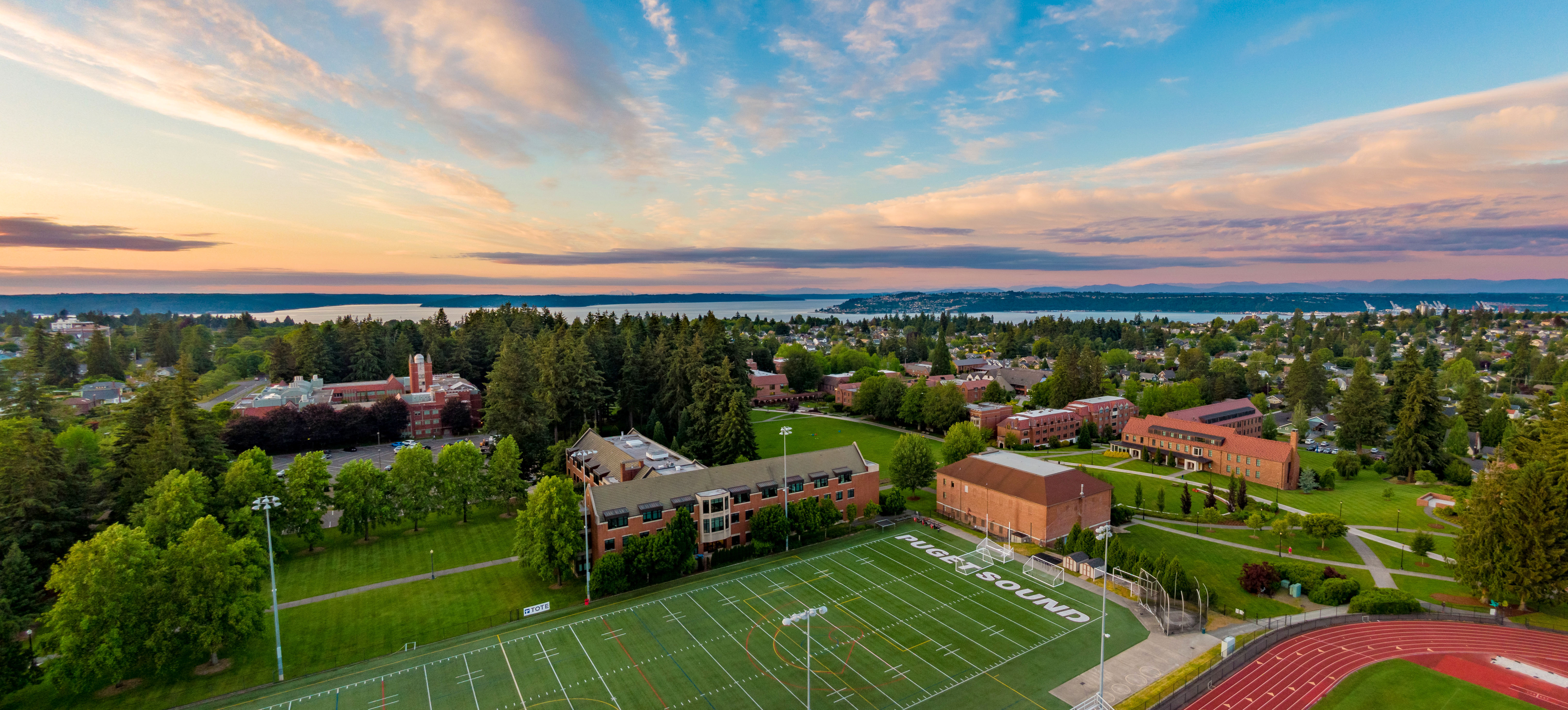
Life on the 97-acre campus in Tacoma is active and community-oriented. Students have access to 75 student-run clubs and organizations, which include groups focused on social and political passions like Students for a Sustainable Campus, Relay for Life, and Students for a Free Tibet. The university fields 23 NCAA Division III varsity sports teams. Greek life is present with fraternities and sororities. Campus culture is enriched by 'world-class arts and culture' through music recitals, visual art exhibits, theater productions, film showings, and endowed lectures. The average housing cost is $8,250 per year, and 66% of students report feeling happy with their housing. The overall feel is often described as collaborative, with a strong emphasis on sustainability and social engagement.
Puget Sound graduates see solid returns on their education. The four-year graduation rate is 53%, and the six-year rate is 68%. Median earnings six years after graduation are $46,802. One year after graduation, median earnings are $31,762, rising to $58,376 after five years. The Princeton Review has named Puget Sound a Best Value College, giving it an ROI rating of 89 out of 99, which measures the long-term value of the education by balancing cost with post-graduate outcomes. Notably, 96% of students report positive post-graduation outcomes (employment or further education). Economics graduates see comparatively strong earnings, averaging $48,980.
The comprehensive is significant, but the university is committed to making it accessible through financial aid. The average —the cost after aid and scholarships—is $38,394. On average, the university offers need-based financial aid awards to 65% of students who complete the FAFSA. Award packages typically combine scholarships, grants, loans, and work-study. According to one source, 99% of full-time beginning undergraduates receive grant or scholarship aid. The university states it 'strives to create a financial aid package that meets your demonstrated need,' though it notes that funding limitations can sometimes prevent meeting 100% of need for all students. It does not advertise a universal 'no-loan' policy where all student debt is replaced with grants.
Puget Sound carves out a distinctive niche with its potent combination of a classic liberal arts education and exceptional pre-professional outcomes. Its Health Professions Advising program is a powerhouse, with an 89% medical school that dwarfs the national average, making it a hidden gem for aspiring doctors. The academic culture is both rigorous and flexible, allowing deep exploration across a wide array of over 1,200 courses. Beyond the classroom, the campus vibrates with a politically and socially conscious energy, reflected in its many activist clubs and a strong focus on sustainability. Financially, it delivers notable value, earning a high ROI rating from The Princeton Review, and it supports a majority of its students with substantial . It’s a school for the student who wants the close-knit, inquiry-driven community of a liberal arts college but also desires clear, strong pathways to graduate school and careers.
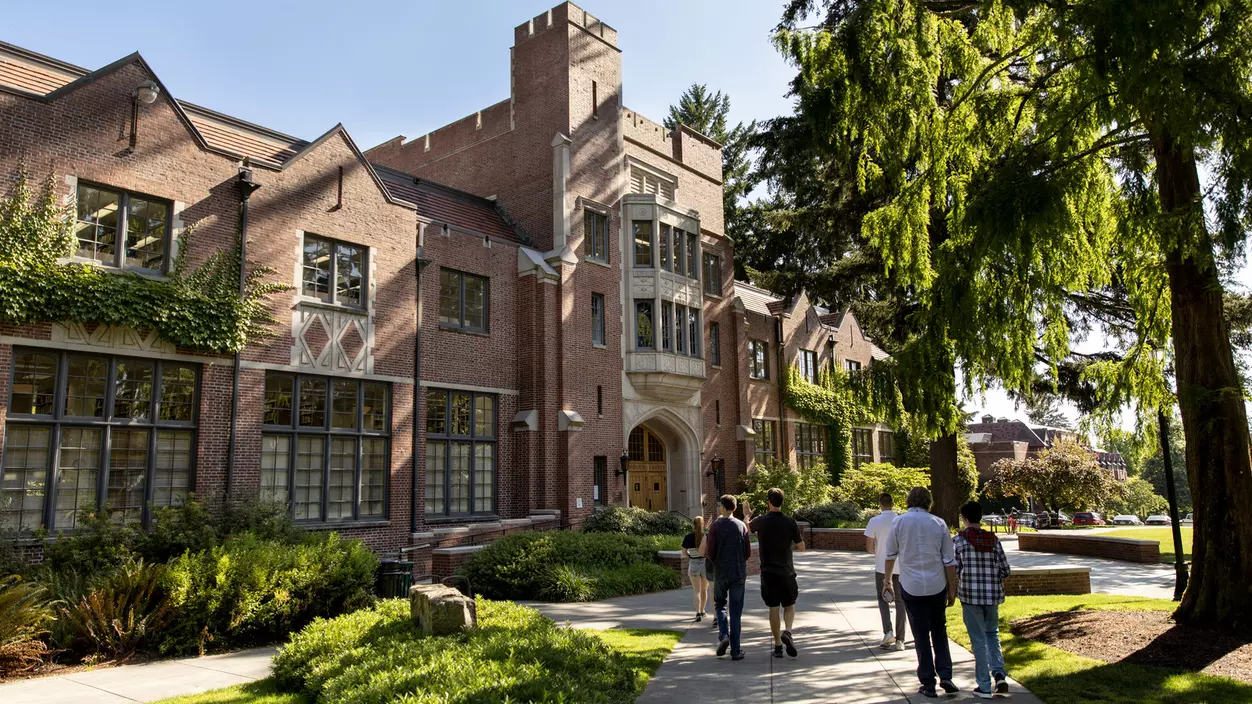
University of Puget Sound seal · sourceFacts & Rankings | University of Puget Sound · sourceSee the Campus | University of Puget Sound · sourceVisit Us | University of Puget Sound · source