Admit rate has ranged 66%–75% over the last 5 years — notably volatile. Source: IPEDS via Urban Institute.
Acceptance & SAT from Common Data Set / IPEDS; net price, earnings & graduation from the U.S. Dept. of Education College Scorecard. Figures lag ~1–2 years — verify with the school.
The University of Wisconsin-Parkside is a public, regional campus where the open door is literal: nearly everyone who applies gets in. It serves a heavily commuter population from the corridor between Milwaukee and Chicago, offering a practical, no-frills education focused on career preparation and access. While its graduation rates are modest, its location provides a tangible advantage for internships and networking, and its cost is kept deliberately low for Wisconsin residents.
Admission requirements
Test-optional — scores considered if submitted
Required
High school transcript
Grade point average
College-prep program
TOEFL (non-native English)
Considered (not required)
Class rank
Letters of recommendation
Test scores (SAT/ACT)
Demonstrated competencies
Source: IPEDS Admissions survey (2022) via Urban Institute. Covers formal factors only — it does not reflect essays, extracurriculars, or other holistic criteria.
More details
Undergrad enrollment
2,844
In-state tuition
$8,270
Out-of-state tuition
$17,429
No-Loan Policy
Yes, for eligible students via Parkside Promise
Graduation Rate
40%
On-Campus Students
22%
Off-Campus Students
78%
Student-Faculty Ratio
16:1
Median Earnings (10yr)
$51,129
Classes Under 20 Students
50.9%
Outcomes & value
Outcomes & value
Median earnings (10 yr)
$51,129
Value (earnings ÷ net price)
4.3×
Median debt at graduation
$20,492
Graduation rate
40%
First-year retention
69%
Reducing loan balance (3 yr)
54%
Pell (lower-income) share
35%
First-gen share (among federal-aid recipients)
41%
Top-earning majors
Median earnings by field of study (highest credential), ~2 years after completion.
Computer Science$56,641
Accounting and Related Services$44,830
Business/Commerce, General$42,682
Marketing$40,647
Criminal Justice and Corrections$34,526
Sociology$33,565
Sports, Kinesiology, and Physical Education/Fitness
Campus & location
Campus safety
On-campus violent crimes (2024)
1
Per 1,000 students
0.28
On-campus criminal offenses classed as violent (murder/non-negligent manslaughter, rape, robbery, aggravated assault) for the most recent reported year. Source: U.S. Dept. of Education Campus Safety and Security (Clery Act). Counts reflect what’s reported to the school, and urban campuses often report more partly due to non-student incidents nearby — read alongside campus size and setting, not as a standalone safety verdict.
Climate
Pleasant days / yr
96
Summer high
79°F
Winter low
21°F
Annual rain
39.3"
Annual snow
36.2"
Natural-hazard risk
Relatively Moderate
Pleasant days counts days per year with a mean temperature of 55–75°F, a high at or below 90°F, a low at or above 45°F, and little precipitation — a transparent comfort measure, not a weighting we invented. Computed from Open-Meteo ERA5 daily history (2019–2023). Natural-hazard risk is the county’s composite rating from the FEMA National Risk Index.
Deep dive — research, future-scholar output & economic mobility▾
Research output
Institutional h-index
114
Scholarly works
3,116
Institutional research volume and impact from OpenAlex. The h-index reflects large research universities and will be low for teaching-focused liberal-arts colleges — not a measure of undergraduate quality.
Quick answers
What is the acceptance rate at University of Wisconsin-Parkside?
University of Wisconsin-Parkside's acceptance rate is approximately 75% (Kenosha, WI), based on the most recent figures we compiled from public and primary sources.
How much does University of Wisconsin-Parkside cost?
At University of Wisconsin-Parkside, the average net price (after aid) is about $11,772 per year. Actual cost varies with financial aid and residency.
How many undergraduates attend University of Wisconsin-Parkside?
University of Wisconsin-Parkside enrolls approximately 2,844 undergraduate students.
Where is University of Wisconsin-Parkside located?
University of Wisconsin-Parkside is located in Kenosha, WI.
Admissions
UW-Parkside operates with a profoundly open admissions philosophy. The process is straightforward and emphasizes accessibility over selectivity. The middle 50% of admitted students have SAT scores between 1040 and 1230, ACT scores between 17 and 25, and an average high school GPA of 3.11. The university's own is the definitive source for its admission factors and statistics. For the small fraction of the class admitted via an early decision process, can be significantly higher than the regular decision pool, a common pattern in higher education. Demonstrated interest—tracking whether applicants visit campus or engage with admissions staff—is a factor some colleges weigh heavily, but its specific consideration at Parkside would be detailed in its Common Data Set (Section C7).
Admission Factors: The most important factors in admission decisions are the rigor of a student's secondary school record, class rank, academic GPA, and standardized test scores.
Student Profile: The admitted student body is academically solid but not highly competitive, with grade and test score ranges that reflect the university's mission of broad access.
Yield: Only about 26% of admitted students choose to enroll, indicating that many admitted students have other, often more selective, options.
Earnings = median of students working ~10 years after entry; debt = median of graduates. Value divides 10-yr earnings by one year’s net price — read it as earnings per dollar of annual cost, not a full lifetime ROI; it favors lower-cost schools. Source: U.S. Dept. of Education College Scorecard. Figures lag ~2 years and reflect all students, not your intended major.
$32,569
Psychology, General$28,236
Source: U.S. Dept. of Education College Scorecard (field-of-study earnings). Figures cover graduates who received federal aid and lag ~2 years; not all programs report data.
Academics at Parkside are defined by practicality and direct student-faculty interaction. The university offers approximately 40 undergraduate majors, alongside pre-professional programs, education licensure tracks, and a handful of graduate degrees in fields like business, applied molecular biology, and sustainable management. The student-faculty ratio is 16:1, and over half of its classes have fewer than 20 students, ensuring a level of personal attention uncommon at larger state schools. The curriculum is not known for intense academic pressure but rather for providing a solid foundation for career entry or further study. Online degree options add flexibility, particularly for its many non-traditional and commuting students. The academic culture is best described as supportive and focused on application, preparing students for the regional job market between Milwaukee and Chicago.
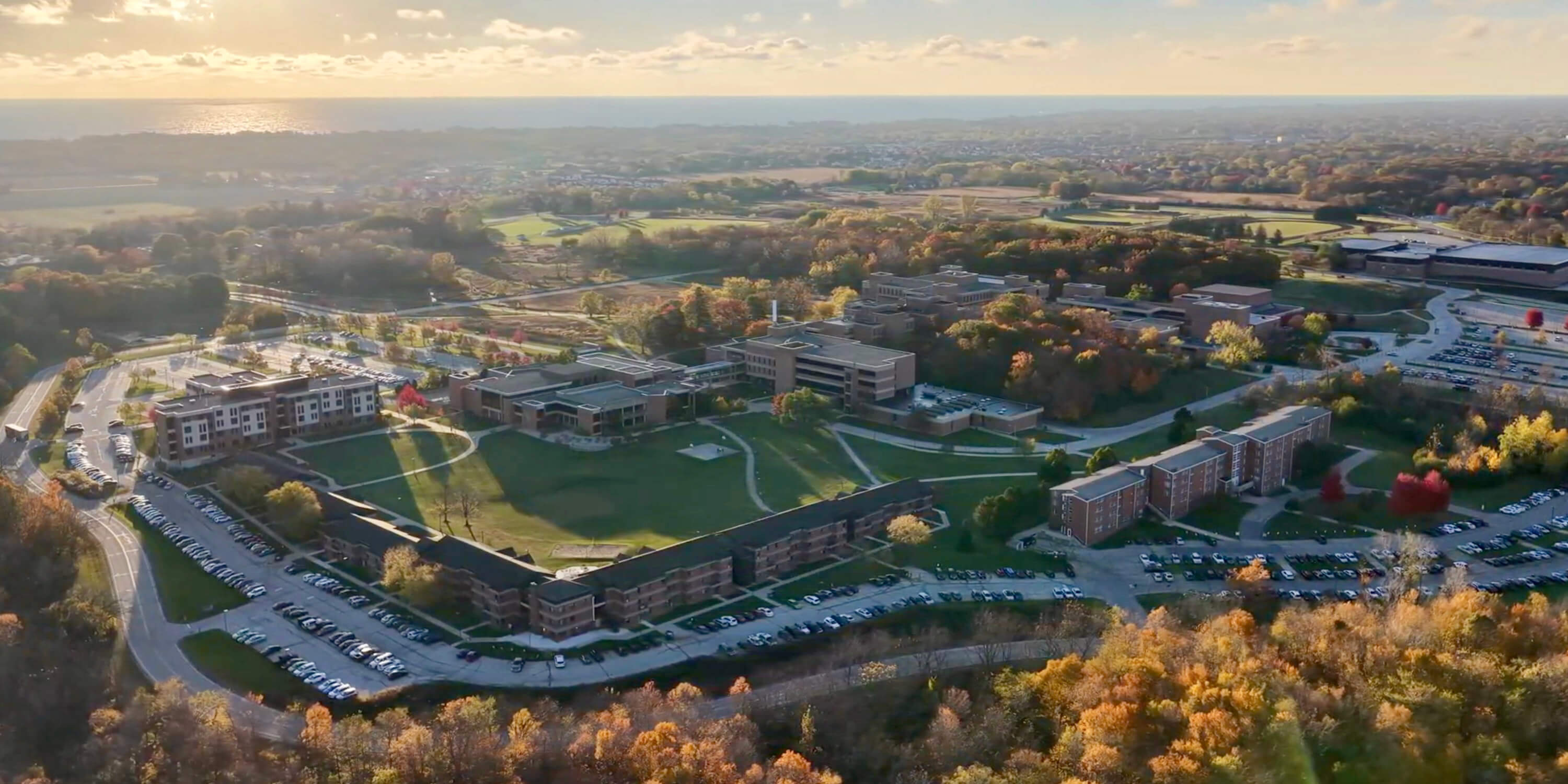
Life at UW-Parkside is shaped decisively by its commuter-school status. Only about 22% of students live in college-owned, -operated, or -affiliated housing, with the overwhelming majority—78%—living off campus. This creates a social scene that is often described as quieter and more self-directed; campus can feel sleepy after class hours. The university actively works to counter this with a calendar of events, including concerts, films, and intramural sports. There's even a disc golf course on the tree-lined campus. The Student Center serves as a primary hub for those who are on campus. The defining feature of student life, however, is arguably the location itself: being situated between Milwaukee and Chicago means internships, networking events, and big-city amenities are within easy reach, which many students prioritize over a traditional residential college experience.
Outcomes for Parkside graduates reflect its mission of access and its commuter-student population. The four-year graduation rate is notably low, while the six-year rate shows more students eventually crossing the finish line. The median salary for graduates six years after entry is reported around $42,154. Other sources cite median alumni salaries in the low-$40,000s one year out and rising to the mid-$50,000s range five years after graduation. Earnings vary significantly by major, with Business and STEM fields typically leading. The university's own fact book tracks detailed student outcomes, including fall-to-fall retention rates and graduation rates for both first-time and transfer students. For many Parkside students, the value proposition is less about prestigious postgraduate placements and more about obtaining an affordable credential that opens doors to stable, middle-class employment in the region.
Affordability is a central pillar of the UW-Parkside value proposition. The university awards over $1,000,000 in institutional scholarships annually and helps students secure an additional $400,000 in private scholarships. All U.S. citizens and eligible non-citizens qualify for some form of financial aid, which can include grants, loans, and work-study, depending on calculated need. The —the average cost after grants and scholarships are applied—is a critical figure for families. The Parkside Promise Program is a notable initiative designed to support eligible students by covering tuition and fee gaps with scholarships that replace loans, effectively meeting 100% of demonstrated financial need for qualifying students without burdening them with debt. This represents a significant commitment to making college debt-free for its lowest-income students.
UW-Parkside stands out for its unwavering commitment to being an open-access, commuter-focused public university that serves its regional community with clear-eyed practicality. It doesn't pretend to be a highly selective, residential liberal arts college. Instead, it leans into its strengths: unmatched accessibility (the speaks for itself), a strategic location in the Milwaukee-Chicago corridor that provides direct pipelines to internships and jobs, and a relentless focus on affordability through programs like the Parkside Promise. Its small class sizes and 16:1 student-faculty ratio offer a level of personal attention rare at its price point. For students, returning adults, and career-focused learners in southeastern Wisconsin and northern Illinois, Parkside is a straightforward, low-risk, high-return option. It's a place where the barrier to entry is low, the cost is controlled, and the education is directly tied to economic mobility in the region.
University of Wisconsin-Parkside seal · sourceUW-Parkside - Universities of Wisconsin · sourceAbout Us - University of Wisconsin Parkside · sourceUniversity of Wisconsin-Parkside — Admissions, Tuition & Acceptance Rate | Appily · source
.JPG?width=1600)