Admit rate has ranged 60%–82% over the last 5 years — notably volatile. Source: IPEDS via Urban Institute.
Acceptance & SAT from Common Data Set / IPEDS; net price, earnings & graduation from the U.S. Dept. of Education College Scorecard. Figures lag ~1–2 years — verify with the school.
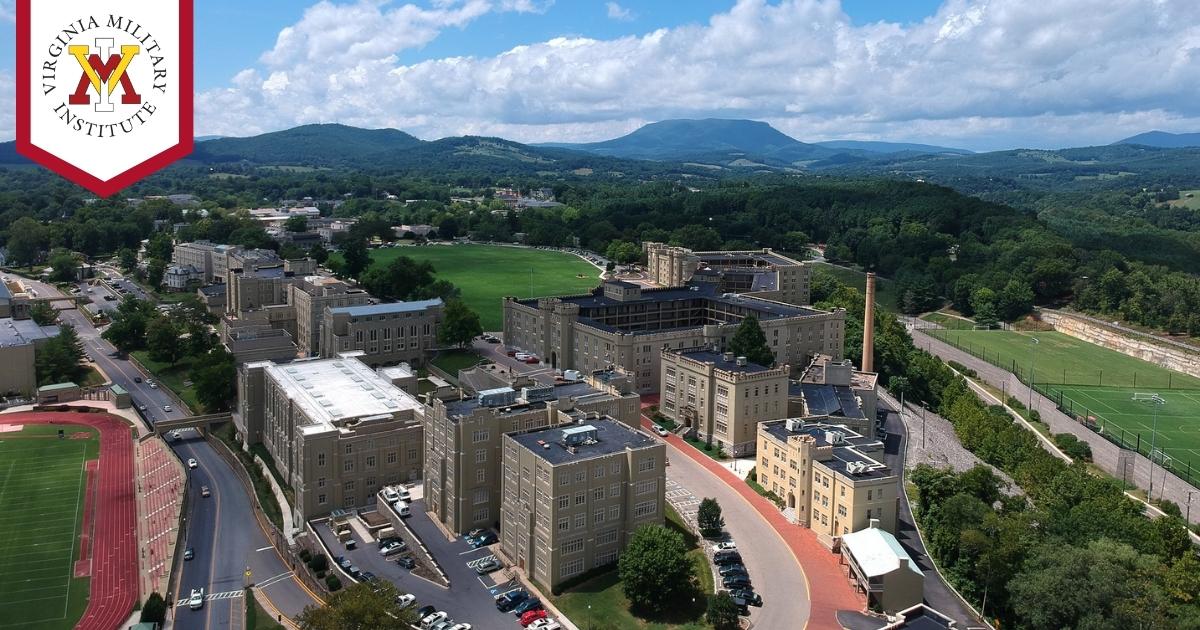
Virginia Military Institute (VMI) is a public senior military college in Lexington, VA, where cadets endure a spartan lifestyle marked by rigorous academics, strict discipline, and an honor-bound culture. With a 71% acceptance rate and a focus on leadership development, VMI graduates boast strong outcomes, particularly in engineering and international relations, with median early-career earnings of $77,000.
Admission requirements
Test-optional — scores considered if submitted
Required
College-prep program
Considered (not required)
High school transcript
Grade point average
Class rank
Test scores (SAT/ACT)
Source: IPEDS Admissions survey (2022) via Urban Institute. Covers formal factors only — it does not reflect essays, extracurriculars, or other holistic criteria.
More details
Undergrad enrollment
1,527
In-state tuition
$21,046
Out-of-state tuition
$52,638
Notable Alumni
Gen. George Marshall (Nobel Prize), CEOs, Marine Corps officers
Graduation Rate
77%
ROTC Participation
~25%
Median Early-Career Salary
$77,000
Outcomes & value
Outcomes & value
Median earnings (10 yr)
$77,369
Value (earnings ÷ net price)
4.5×
Median debt at graduation
$22,996
Graduation rate
76%
First-year retention
81%
Reducing loan balance (3 yr)
84%
Pell (lower-income) share
16%
First-gen share (among federal-aid recipients)
15%
Top-earning majors
Median earnings by field of study (highest credential), ~2 years after completion.
Computer Science$64,493
Civil Engineering$49,270
English Language and Literature, General$46,087
History$45,094
Mechanical Engineering$44,942
Economics$41,937
Biology, General
Campus & location
Campus safety
On-campus violent crimes (2024)
2
On-campus criminal offenses classed as violent (murder/non-negligent manslaughter, rape, robbery, aggravated assault) for the most recent reported year. Source: U.S. Dept. of Education Campus Safety and Security (Clery Act). Counts reflect what’s reported to the school, and urban campuses often report more partly due to non-student incidents nearby — read alongside campus size and setting, not as a standalone safety verdict.
Climate
Pleasant days / yr
95
Summer high
85°F
Winter low
29°F
Annual rain
38.4"
Annual snow
12.5"
Natural-hazard risk
Very Low
Pleasant days counts days per year with a mean temperature of 55–75°F, a high at or below 90°F, a low at or above 45°F, and little precipitation — a transparent comfort measure, not a weighting we invented. Computed from Open-Meteo ERA5 daily history (2019–2023). Natural-hazard risk is the county’s composite rating from the FEMA National Risk Index.
Deep dive — research, future-scholar output & economic mobility▾
Research output
Institutional h-index
79
Scholarly works
2,078
Institutional research volume and impact from OpenAlex. The h-index reflects large research universities and will be low for teaching-focused liberal-arts colleges — not a measure of undergraduate quality.
Economic mobility
Mobility rate
2.0%
Bottom → top quintile
43%
From bottom quintile
5%
Mobility rate = the share of students who both start in the bottom household-income quintile and reach the top quintile; bottom → top is that chance conditional on starting at the bottom. Source: Opportunity Insights Mobility Report Cards (Chetty, Friedman, Saez, Turner & Yagan). Reflects 1980–82 birth cohorts, so it’s directional, not current.
Quick answers
What is the acceptance rate at Virginia Military Institute?
Virginia Military Institute's acceptance rate is approximately 71% (Lexington, VA), based on the most recent figures we compiled from public and primary sources.
What SAT score do you need for Virginia Military Institute?
Admitted students at Virginia Military Institute typically score 1050–1270 on the SAT (the middle-50% range). Scores outside this band are still admitted, especially with strong applications.
How much does Virginia Military Institute cost?
At Virginia Military Institute, the average net price (after aid) is about $17,113 per year. Actual cost varies with financial aid and residency.
How many undergraduates attend Virginia Military Institute?
Virginia Military Institute enrolls approximately 1,527 undergraduate students.
Where is Virginia Military Institute located?
Virginia Military Institute is located in Lexington, VA.
Admissions
VMI's admissions process is moderately selective, with a 71% acceptance rate for the Class of 2026 (down from 73% in prior years). The middle 50% of admitted students scored between 1090–1270 on the SAT or 24–31 on the ACT, with an average high school GPA of 3.59. Rigor of coursework and class rank weigh heavily, reflecting VMI's emphasis on discipline and academic preparedness. Applications are due by February 1, and waitlisted students are occasionally admitted. Notably, only about 1,200 applicants compete for roughly 850 spots annually, making it less cutthroat than service academies but still demanding.
Earnings = median of students working ~10 years after entry; debt = median of graduates. Value divides 10-yr earnings by one year’s net price — read it as earnings per dollar of annual cost, not a full lifetime ROI; it favors lower-cost schools. Source: U.S. Dept. of Education College Scorecard. Figures lag ~2 years and reflect all students, not your intended major.
$41,007
Linguistic, Comparative, and Related Language Studies and Services$39,909
Source: U.S. Dept. of Education College Scorecard (field-of-study earnings). Figures cover graduates who received federal aid and lag ~2 years; not all programs report data.
VMI offers 14 majors, with standout programs in International Relations (14% of graduates), Economics (11%), History (11%), and Civil Engineering. The institute is nationally recognized for its engineering and computer science programs, ranked just below the U.S. service academies. Classes are small, with a focus on leadership integration across disciplines—whether cadets are studying psychology or mechanical engineering. The core curriculum emphasizes applied learning; for example, economics majors often analyze defense budgets, while computer science students tackle cybersecurity projects tied to military applications. The average GPA hovers around 3.0–3.5, reflecting the institution’s rigorous grading.
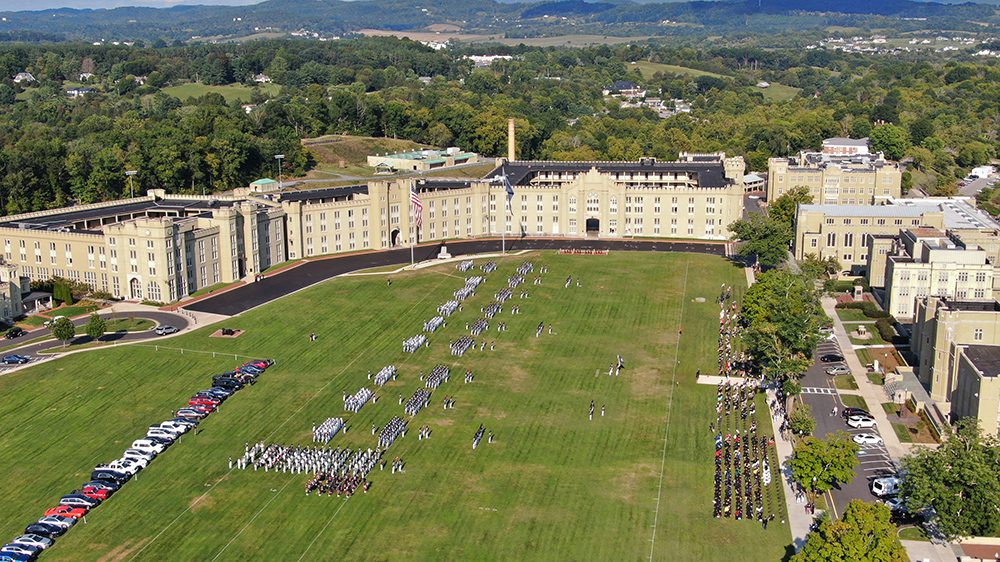
Life at VMI is far from typical college fare. All 1,600–1,700 cadets live in barracks with shared rooms, open doors, and minimal privacy—a deliberate design to foster accountability. The daily routine is regimented: 5:30 AM wake-ups, mandatory formations, and strict dress codes (think uniforms, not hoodies). Yet cadets find camaraderie through clubs, ROTC training, and NCAA Division I athletics (VMI fields 18 teams, notably in rifle and wrestling). The honor code—"a cadet does not lie, cheat, steal, nor tolerate those who do"—permeates everything. Social life is sparse by conventional standards; weekends might involve hiking the Blue Ridge Mountains or volunteering, not frat parties. As one cadet put it: "You’re here to become a leader, not to Netflix and chill."
VMI’s 77% graduation rate outpaces many public colleges, with 76% finishing in four years. Alumni typically earn $77,000 median early-career salaries, well above the national average ($45,409 for recent grads). About 25% commission into the military, while others thrive in defense contracting, engineering firms, or federal agencies. The institute’s ROTC programs are a pipeline to elite military branches, and its alumni network—tight-knit and fiercely loyal—opens doors in sectors like cybersecurity and international policy. Debt is relatively low (median $22,996), thanks to Virginia’s in-state tuition subsidies and ROTC scholarships.
VMI’s average net price is $17,229 after aid, with in-state cadets paying significantly less than out-of-state peers. ROTC scholarships can slash costs to $3,600 annually, covering room, board, and tuition. The financial aid office prioritizes need-based grants and merit scholarships, though only 48% of students receive federal aid. Key stats:
Median debt: $22,996 (below national average)
Average aid package: $14,000 (mix of grants, work-study, and loans)
ROTC benefits: Full-tuition coverage for select cadets
Pro tip: Use VMI’s Net Price Calculator—the institute is transparent about costs but expects cadets to seek external scholarships.
VMI is one of six senior military colleges and the oldest state-supported one (founded in 1839). Its Spartan ethos—no Greek life, no coed dorms, no tolerance for honor-code violations—creates a culture unlike any other. The institute produces more Marine Corps officers than any school except Annapolis and counts Nobel laureates, generals, and Fortune 500 CEOs among its alumni. Yet it’s the quirks that define VMI: the nightly "cock hour" (a mandatory study period), the 24/7 salute-to-upperclassmen rule, and the fact that cadets still march to class in formation. If you want a traditional college experience, look elsewhere. If you want to be forged into a leader, this is the place.
Virginia Military Institute logo · sourceMap and Directions - About VMI - Virginia Military Institute · sourceVirginia Military Institute - All You SHOULD Know Before Going (2026 Reviews) · sourceVMI Again Ranked Highly by U.S. News and World Report - VMI Alumni Agencies · source