Loading…
← All schools
West Coast University-Anaheim-Orange County
Anaheim, CAprivate forprofitwestcoastuniversity.edu/
Avg net price
$32,879
Earnings (10 yr)
$102,672
Graduation rate
60%
Acceptance & SAT from Common Data Set / IPEDS; net price, earnings & graduation from the U.S. Dept. of Education College Scorecard. Figures lag ~1–2 years — verify with the school.
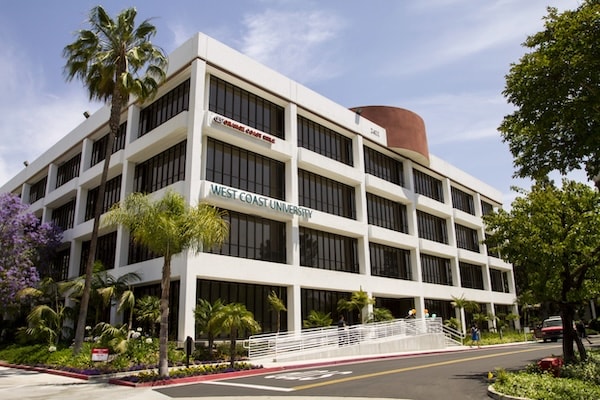
West Coast University-Orange County is a single-minded, career-launching institution for aspiring healthcare professionals, particularly nurses. Located in Anaheim, its entire identity is built around fast-tracking students into high-demand clinical roles through focused, hands-on programs. This is not a place for a broad liberal arts exploration; it's a pragmatic, streamlined pipeline where the campus vibe is professional, the curriculum is intensely specialized, and the goal is clear: credential, graduate, and get to work.
More details
- Undergrad enrollment
- 3,192
- In-state tuition
- $22,506
- Out-of-state tuition
- $22,506
- Top Major
- Registered Nursing
- No-Loan Policy
- No
- Graduation Rate
- 60%
- Meets Full Need
- No
- Demonstrated Interest
- Not considered (Inferred from open admission policy)
- Median Earnings (10yr)
- $102,672
- First Available Exam Passage Rate (2021)
- 89.8%
Outcomes & value
Outcomes & value
- Median earnings (10 yr)
- $102,672
- Value (earnings ÷ net price)
- 3.1×
- Median debt at graduation
- $32,946
- Graduation rate
- 60%
- First-year retention
- 100%
- Reducing loan balance (3 yr)
- 69%
- Pell (lower-income) share
- 41%
- First-gen share (among federal-aid recipients)
- 40%
Top-earning majors
Median earnings by field of study (highest credential), ~2 years after completion.
- Registered Nursing, Nursing Administration, Nursing Research and Clinical Nursing$82,415
- Dental Support Services and Allied Professions$71,015
Source: U.S. Dept. of Education College Scorecard (field-of-study earnings). Figures cover graduates who received federal aid and lag ~2 years; not all programs report data.
Compare on earnings: best colleges for Nursing
Campus & location
Campus safety
- On-campus violent crimes (2024)
- 0
- Per 1,000 students
- 0.00
On-campus criminal offenses classed as violent (murder/non-negligent manslaughter, rape, robbery, aggravated assault) for the most recent reported year. Source: U.S. Dept. of Education Campus Safety and Security (Clery Act). Counts reflect what’s reported to the school, and urban campuses often report more partly due to non-student incidents nearby — read alongside campus size and setting, not as a standalone safety verdict.
Climate
- Pleasant days / yr
- 252
- Summer high
- 84°F
- Winter low
- 48°F
- Annual rain
- 17.9"
- Natural-hazard risk
- Very High
Pleasant days counts days per year with a mean temperature of 55–75°F, a high at or below 90°F, a low at or above 45°F, and little precipitation — a transparent comfort measure, not a weighting we invented. Computed from Open-Meteo ERA5 daily history (2019–2023). Natural-hazard risk is the county’s composite rating from the FEMA National Risk Index.
Quick answers
- How much does West Coast University-Anaheim-Orange County cost?
- At West Coast University-Anaheim-Orange County, the average net price (after aid) is about $32,879 per year. Actual cost varies with financial aid and residency.
- How many undergraduates attend West Coast University-Anaheim-Orange County?
- West Coast University-Anaheim-Orange County enrolls approximately 3,192 undergraduate students.
- Where is West Coast University-Anaheim-Orange County located?
- West Coast University-Anaheim-Orange County is located in Anaheim, CA.
Admissions
The gate is wide open, but the path is clearly marked. West Coast University-Orange County operates with an open admission policy, meaning all applicants who meet the basic requirements are accepted. Multiple sources confirm a 100% , with one noting a 95.3% rate from 2018 data, but the prevailing and most recent characterization is that it's open. The College Scorecard explicitly states it has an open admission policy, and Niche and Edurank both report a 100% acceptance rate, placing it among the easiest universities to gain admission to in the United States. This does not mean there are no standards; applicants are evaluated on academic performance, the ability to demonstrate leadership potential, and physical aptitude for certain programs. The process is designed for accessibility, not exclusivity, reflecting its mission to train healthcare workers. There is no indication of an Early Decision program or that demonstrated interest is a considered factor in admissions.
Compare West Coast University-Anaheim-Orange County
vs United States Air Force Academyvs University of San Franciscovs Claremont McKennavs University of San Diego
See colleges similar to West Coast University-Anaheim-Orange County →Sources
- West Coast University-Orange County
- 1477 S. Manchester Ave., Anaheim, CA 92802
- West Coast University-Anaheim-Orange County
- Common Data Set: Home
- West Coast University - Orange County
- Common Data Set 2021-2022
- West Coast University - Los Angeles
- West Coast University-Los Angeles - Tuition and Acceptance Rate
- Admission Requirements
- West Coast University - Orange County [Acceptance Rate + Statistics]