Admit rate has ranged 51%–66% over the last 5 years — notably volatile, though the latest figure above (37%) falls outside that window. Source: IPEDS via Urban Institute.
Acceptance & SAT from Common Data Set / IPEDS; net price, earnings & graduation from the U.S. Dept. of Education College Scorecard. Figures lag ~1–2 years — verify with the school.
West Virginia University Institute of Technology (WVU Tech) is a public polytechnic campus in Beckley, WV, that operates less as a traditional liberal arts college and more as a direct pipeline to industrial and technical careers in the Mountain State. Its identity is rooted in practical, hands-on engineering and technology programs—six of which are ABET-accredited—delivered in small classes with a focus on job readiness. While its graduation rate signals challenges, the school serves as a critical access point for students, particularly from West Virginia, seeking an affordable, career-oriented education with a net price far below the national average.
Admission requirements
Test-optional — scores considered if submitted
Required
High school transcript
Grade point average
Considered (not required)
Test scores (SAT/ACT)
TOEFL (non-native English)
Source: IPEDS Admissions survey (2022) via Urban Institute. Covers formal factors only — it does not reflect essays, extracurriculars, or other holistic criteria.
More details
Undergrad enrollment
981
In-state tuition
$8,424
Out-of-state tuition
$21,072
Graduation Rate
33%
Median Earnings (10yr)
$55,939
First-Year Retention Rate
62%
Students Receiving Financial Aid
90%
Outcomes & value
Outcomes & value
Median earnings (10 yr)
$55,939
Value (earnings ÷ net price)
6.0×
Median debt at graduation
$22,500
Graduation rate
33%
First-year retention
62%
Reducing loan balance (3 yr)
58%
Pell (lower-income) share
27%
First-gen share (among federal-aid recipients)
30%
Top-earning majors
Median earnings by field of study (highest credential), ~2 years after completion.
Electrical, Electronics, and Communications Engineering$67,995
Mechanical Engineering$65,457
Aerospace, Aeronautical, and Astronautical/Space Engineering$65,238
Chemical Engineering$62,012
Registered Nursing, Nursing Administration, Nursing Research and Clinical Nursing$61,454
Computer Engineering
Campus & location
Campus safety
On-campus violent crimes (2024)
1
On-campus criminal offenses classed as violent (murder/non-negligent manslaughter, rape, robbery, aggravated assault) for the most recent reported year. Source: U.S. Dept. of Education Campus Safety and Security (Clery Act). Counts reflect what’s reported to the school, and urban campuses often report more partly due to non-student incidents nearby — read alongside campus size and setting, not as a standalone safety verdict.
Climate
Pleasant days / yr
114
Summer high
79°F
Winter low
29°F
Annual rain
47.2"
Annual snow
21.5"
Natural-hazard risk
Relatively Low
Pleasant days counts days per year with a mean temperature of 55–75°F, a high at or below 90°F, a low at or above 45°F, and little precipitation — a transparent comfort measure, not a weighting we invented. Computed from Open-Meteo ERA5 daily history (2019–2023). Natural-hazard risk is the county’s composite rating from the FEMA National Risk Index.
Deep dive — research, future-scholar output & economic mobility▾
Research output
Institutional h-index
61
Scholarly works
860
Institutional research volume and impact from OpenAlex. The h-index reflects large research universities and will be low for teaching-focused liberal-arts colleges — not a measure of undergraduate quality.
Quick answers
What is the acceptance rate at West Virginia University Institute of Technology?
West Virginia University Institute of Technology's acceptance rate is approximately 37% (Beckley, WV), based on the most recent figures we compiled from public and primary sources.
What SAT score do you need for West Virginia University Institute of Technology?
Admitted students at West Virginia University Institute of Technology typically score 880–1120 on the SAT (the middle-50% range). Scores outside this band are still admitted, especially with strong applications.
How much does West Virginia University Institute of Technology cost?
At West Virginia University Institute of Technology, the average net price (after aid) is about $9,337 per year. Actual cost varies with financial aid and residency.
How many undergraduates attend West Virginia University Institute of Technology?
West Virginia University Institute of Technology enrolls approximately 981 undergraduate students.
Where is West Virginia University Institute of Technology located?
West Virginia University Institute of Technology is located in Beckley, WV.
Admissions
WVU Tech is an accessible, moderately selective institution designed to serve a broad range of students, particularly those within West Virginia. The admissions process is straightforward and formulaic. For freshman admission, students must meet a clear-cut threshold: either a 3.0 high school GPA or a 960 SAT composite score (combined Evidence-Based Reading/Writing and Math). This binary requirement underscores the school's mission to provide multiple pathways to entry.
While the CANONICAL FIGURES set the at 37% and the SAT middle 50% range at 880–1120, other sources reflect a wider range of historical data, with acceptance rates cited between 37% and 61% and SAT ranges from 900–1120. The university reports that WVU's overall fall 2025 freshman class (which includes the main campus) had an average SAT of 1079 and an average ACT of 23.9, though these figures likely represent the flagship Morgantown campus more than Tech specifically.
There is no mention of an Early Decision or Early Action program in the provided sources for undergraduate admissions. The term "Early Enrollment" at WVU Tech refers specifically to a dual-enrollment program for high school juniors and seniors with a minimum 3.0 GPA, offering courses at a steeply discounted rate of $25 per credit hour. Demonstrated interest is not discussed in the context of WVU Tech's admissions factors within the provided snippets.
Earnings = median of students working ~10 years after entry; debt = median of graduates. Value divides 10-yr earnings by one year’s net price — read it as earnings per dollar of annual cost, not a full lifetime ROI; it favors lower-cost schools. Source: U.S. Dept. of Education College Scorecard. Figures lag ~2 years and reflect all students, not your intended major.
$60,061
Civil Engineering$58,092
Accounting and Related Services$50,060
Source: U.S. Dept. of Education College Scorecard (field-of-study earnings). Figures cover graduates who received federal aid and lag ~2 years; not all programs report data.
The academic heart of WVU Tech is unapologetically practical and industry-focused. The school offers a "broad array" of bachelor's degrees spanning business, science, humanities, and social sciences, but its flagship offerings are in engineering and technology. Six of its programs hold ABET accreditation, a gold standard for engineering education that signals rigorous, industry-relevant curricula. The institution promotes its "practice-oriented curriculum" and small class sizes as key differentiators, designed to translate theory directly into hands-on skill.
Programs like Business Management provide a broad foundation in management and leadership, including human resources. However, the spotlight remains on technical fields. The school's U.S. News & World Report ranking—No. 46 in Regional Colleges South and No. 14 in Top Public Schools within that category—positions it as a solid regional player, though the provided snippets do not detail specific strengths beyond the ABET accreditation. Online discussions (like those on Reddit) about WVU's quality of education often center on the larger Morgantown campus, leaving the distinct pedagogical environment at the Tech campus less scrutinized in public forums.
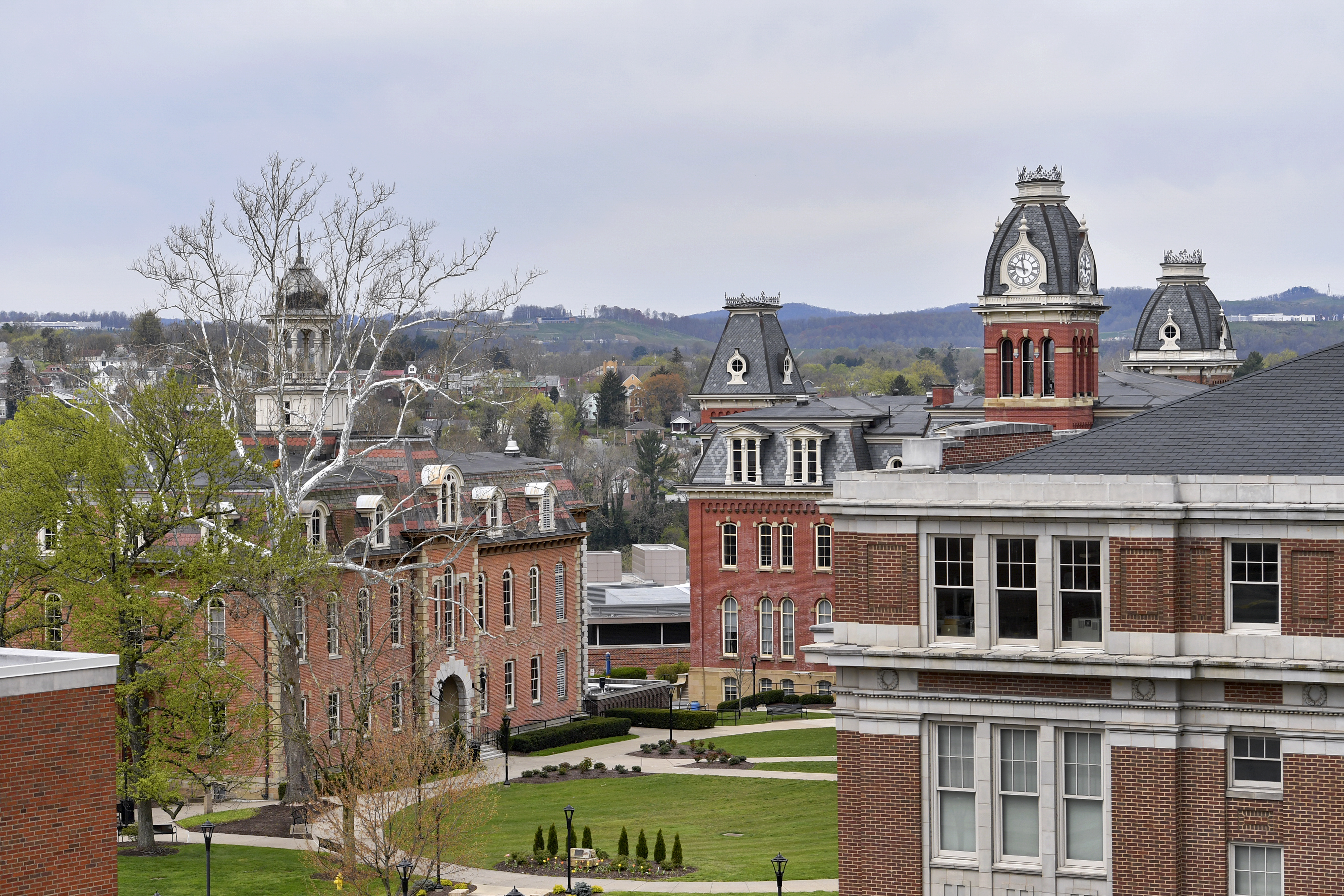
Campus culture at WVU Tech is consistently described as friendly, welcoming, and close-knit. Students and third-party reviews highlight an environment where staff and professors are approachable and supportive, fostering a sense of community. The Division of Student Life aims to support "the academic, personal, and professional growth of all students through services, programs and resources developed with intention."
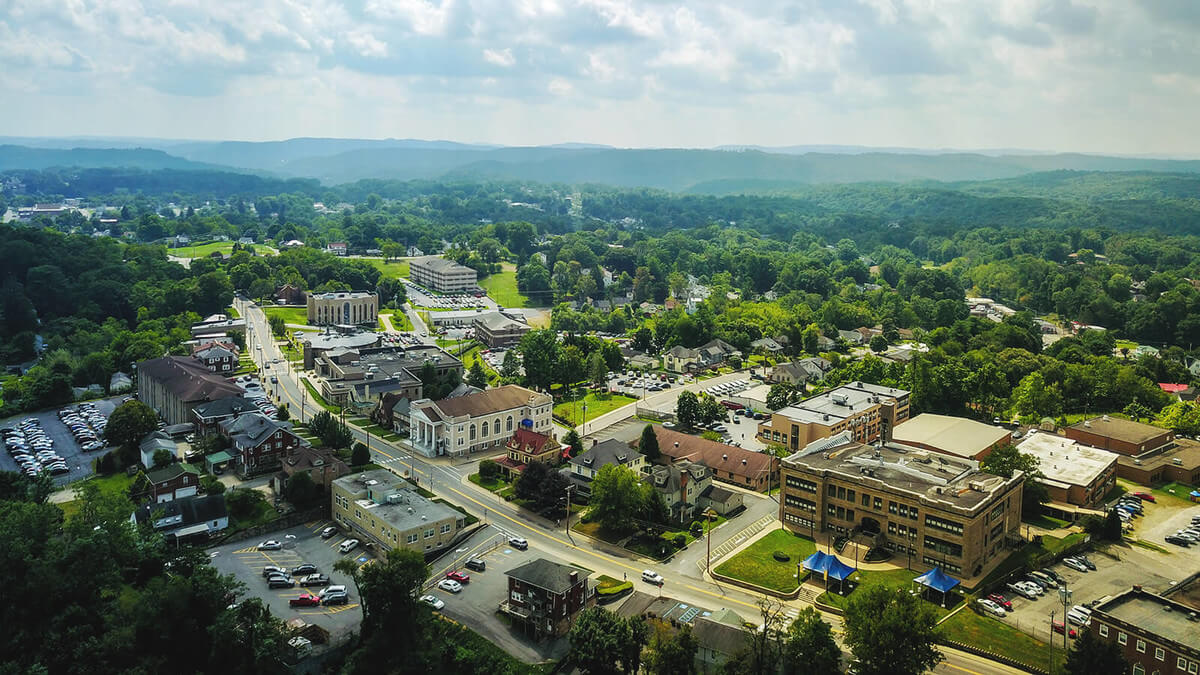
Student organizations provide avenues for social growth, community awareness, and professional development. The campus operates with a philosophy of helping "students thrive on and off campus" through care, empathy, and collaboration. Located in Beckley, the campus life likely reflects the character of southern West Virginia—more subdued than a large university town but focused on creating a supportive in-community experience for students. The Facebook presence for WVU Tech Student Life suggests active programming aimed at building campus engagement.
Outcome data for WVU Tech paints a picture of a school serving a population where immediate workforce entry and earning potential are paramount, though persistence to graduation is a significant challenge. The CANONICAL FIGURES set the graduation rate at 33% and median earnings 10 years after entry at $55,939. Other sources align closely, citing a 31% graduation rate and median 10-year earnings of $55,939. The first-year retention rate is reported at 62%.
Earnings growth is notable: data shows median earnings one year after graduation at $43,805, jumping to $62,396 five years after graduation. This trajectory suggests that WVU Tech graduates gain a foothold in the workforce quickly and see their earning power increase substantially with a few years of experience, a pattern consistent with the value of its technical degrees. The stark gap between the retention rate (62%) and the graduation rate (~33%) indicates that a significant portion of students who start do not finish, a critical context for understanding the institution's role and challenges.
Affordability is the cornerstone of WVU Tech's value proposition. The CANONICAL FIGURES set the average after aid at $9,337, a figure corroborated by the College Scorecard. The school boasts that 90% of its students receive some form of financial aid. is available for families who demonstrate financial need, though the provided sources do not specify a "no-loan" policy or a threshold for meeting full demonstrated need.
Tuition and fees for in-state students are listed at $11,064 per year, while the average financial aid package is reported to be $9,908. The university provides a Net Price Calculator to help incoming freshmen estimate their true cost after scholarships and aid. This focus on low net cost, combined with the availability of aid, positions WVU Tech as a financially accessible option, particularly for West Virginia residents and those seeking to minimize debt.
WVU Tech stands out for its unambiguous, no-frills mission: to deliver an affordable, practice-based technical education that leads directly to employment in fields like engineering and business. It is not a university trying to be all things to all people. Its identity is cemented by its six ABET-accredited engineering programs, small class sizes, and a curriculum explicitly designed to "meet the demands of modern industry."
Its value is starkly numerical: a under $10,000, median earnings nearing $56,000 a decade out, and an acceptance policy that provides clear, alternative pathways for admission (3.0 GPA OR 960 SAT). While its low graduation rate is a serious concern, the significant earnings growth from year one to year five post-graduation suggests its graduates who persist are securing solid, growing careers. In a higher education landscape often obsessed with prestige and selectivity, WVU Tech's distinctiveness lies in its focused, utilitarian approach to serving the workforce needs of its region without pretense.
West Virginia University Institute of Technology seal · sourceWest Virginia University Institute of Technology — Admissions, Tuition & Acceptance Rate | Appily · sourceWest Virginia University Institute of Technology | Beckley WV · sourceWest Virginia University Institute of Technology-Montgomery - Clio · source