Admit rate has ranged 72%–88% over the last 5 years — notably volatile, though the latest figure above (71%) falls outside that window. Source: IPEDS via Urban Institute.
Acceptance & SAT from Common Data Set / IPEDS; net price, earnings & graduation from the U.S. Dept. of Education College Scorecard. Figures lag ~1–2 years — verify with the school.
Widener University in Chester, Pennsylvania, is a private institution that has carved out a distinctive niche as a pragmatic, career-focused university with a surprisingly robust civic conscience. It’s a place where nationally ranked programs in nursing, business, and engineering share campus with a deep commitment to service and community engagement, producing graduates who are as likely to be praised for their professional readiness as for their 'good heart.' With a residential campus that feels more like a supportive community than a sprawling metropolis, Widener offers a direct, hands-on path from classroom to career.
Admission requirements
Test-optional — scores considered if submitted
Required
High school transcript
Grade point average
TOEFL (non-native English)
Considered (not required)
Letters of recommendation
Test scores (SAT/ACT)
College-prep program
Source: IPEDS Admissions survey (2022) via Urban Institute. Covers formal factors only — it does not reflect essays, extracurriculars, or other holistic criteria.
More details
Undergrad enrollment
2,951
In-state tuition
$55,730
Out-of-state tuition
$55,730
Early Action
Non-binding, decision by Thanksgiving
No-Loan Policy
No indication in sources
Graduation Rate
68%
Meets Full Need
No indication in sources
Demonstrated Interest
Considered (per CDS C7)
Student-Faculty Ratio
11:1
Median Earnings (10yr)
$70,920
First-Year Retention Rate
79%
Post-Grad Success (6 months)
Outcomes & value
Outcomes & value
Median earnings (10 yr)
$70,920
Value (earnings ÷ net price)
2.8×
Median debt at graduation
$27,000
Graduation rate
68%
First-year retention
78%
Reducing loan balance (3 yr)
66%
Pell (lower-income) share
33%
First-gen share (among federal-aid recipients)
30%
Financial health
3.0 / 3.0Meets the federal financial-responsibility standard
U.S. Dept. of Education Financial Responsibility Composite Score (FY2022-23). Scale −1.0 to 3.0; ≥1.5 meets the standard. Reported for private nonprofit & for-profit institutions only — public universities are state-backed and not scored, so this is a stability signal, not a ranking.
Top-earning majors
Median earnings by field of study (highest credential), ~2 years after completion.
Registered Nursing, Nursing Administration, Nursing Research and Clinical Nursing$69,023
Chemical Engineering$67,660
Electrical, Electronics, and Communications Engineering$66,029
Mechanical Engineering$63,275
Civil Engineering$59,640
Accounting and Related Services
Campus & location
Campus safety
On-campus violent crimes (2024)
12
Per 1,000 students
2.11
On-campus criminal offenses classed as violent (murder/non-negligent manslaughter, rape, robbery, aggravated assault) for the most recent reported year. Source: U.S. Dept. of Education Campus Safety and Security (Clery Act). Counts reflect what’s reported to the school, and urban campuses often report more partly due to non-student incidents nearby — read alongside campus size and setting, not as a standalone safety verdict.
Climate
Pleasant days / yr
90
Summer high
85°F
Winter low
30°F
Annual rain
52"
Annual snow
12"
Natural-hazard risk
Relatively Moderate
Pleasant days counts days per year with a mean temperature of 55–75°F, a high at or below 90°F, a low at or above 45°F, and little precipitation — a transparent comfort measure, not a weighting we invented. Computed from Open-Meteo ERA5 daily history (2019–2023). Natural-hazard risk is the county’s composite rating from the FEMA National Risk Index.
Deep dive — research, future-scholar output & economic mobility▾
Research output
Institutional h-index
126
Scholarly works
4,914
Institutional research volume and impact from OpenAlex. The h-index reflects large research universities and will be low for teaching-focused liberal-arts colleges — not a measure of undergraduate quality.
Economic mobility
Mobility rate
2.0%
Bottom → top quintile
33%
From bottom quintile
6%
Mobility rate = the share of students who both start in the bottom household-income quintile and reach the top quintile; bottom → top is that chance conditional on starting at the bottom. Source: Opportunity Insights Mobility Report Cards (Chetty, Friedman, Saez, Turner & Yagan). Reflects 1980–82 birth cohorts, so it’s directional, not current.
Quick answers
What is the acceptance rate at Widener University?
Widener University's acceptance rate is approximately 71% (Chester, PA), based on the most recent figures we compiled from public and primary sources.
What SAT score do you need for Widener University?
Admitted students at Widener University typically score 1080–1290 on the SAT (the middle-50% range). Scores outside this band are still admitted, especially with strong applications.
How much does Widener University cost?
At Widener University, the average net price (after aid) is about $25,759 per year. Actual cost varies with financial aid and residency.
How many undergraduates attend Widener University?
Widener University enrolls approximately 2,951 undergraduate students.
Where is Widener University located?
Widener University is located in Chester, PA.
Admissions
Widener's admissions process is best described as accessible and holistic, with a focus on building a well-rounded class rather than chasing ultra-low . The university admits a significant majority of its applicants, with a CANONICAL acceptance rate of 71%. The middle 50% SAT range for admitted students is 1080–1290, aligning with the university's profile as a test-considering but not test-dominated institution. While the indicates a relatively low percentage of first-year students submit SAT scores (11% per the 2023-2024 CDS), the scores remain a considered part of the application.
The university offers an Early Action option, which is non-binding and promises a decision by Thanksgiving, allowing students to get a head start on class scheduling and scholarships. While specific Early Decision acceptance rates for Widener are not detailed in the provided sources, external commentary suggests that such plans often higher acceptance rates nationally. The overall yield rate—the percentage of admitted students who enroll—is reported as low, at 14%. Demonstrated interest is a factor admissions officers can consider, as indicated by its presence in the Common Data Set's C7 grid, though its specific weight ('very important,' 'important,' 'considered') is not detailed in the snippets.
Admissions statistics show growth, with one source noting a 10.1% increase in admissions from 2024. The total undergraduate enrollment for fall 2023 was 2,811, with a gender distribution skewing female (60.4% female, 39.6% male).
Earnings = median of students working ~10 years after entry; debt = median of graduates. Value divides 10-yr earnings by one year’s net price — read it as earnings per dollar of annual cost, not a full lifetime ROI; it favors lower-cost schools. Source: U.S. Dept. of Education College Scorecard. Figures lag ~2 years and reflect all students, not your intended major.
$57,318
Computer and Information Sciences, General$52,107
Biomedical/Medical Engineering$52,107
Source: U.S. Dept. of Education College Scorecard (field-of-study earnings). Figures cover graduates who received federal aid and lag ~2 years; not all programs report data.
Widener's academic identity is defined by professional preparation and a surprisingly intimate scale. The university offers more than 60 majors and minors, with particular strength in fields that lead directly to in-demand careers. Its programs in business, engineering, education, nursing, and law are nationally ranked. The School of Business is nationally accredited, and the university boasts the region’s first undergraduate Robotics Engineering major. Nursing (Registered Nursing/Registered Nurse) is the most popular major, followed by Psychology, General, and Business Administration and Management.
The student-faculty ratio is an impressively low 11:1, facilitating close mentorship and hands-on learning. This supportive environment contributes to an average first-year retention rate of 79%, a key indicator of student satisfaction. The academic culture, as humorously acknowledged in a university social media post, often attracts students with 'a good heart' who 'like helping others'—a nod to the strong social work, nursing, and service-oriented programs. Beyond the flagship departments, the curriculum spans from Accounting and Anthropology to the cutting-edge fields of Artificial Intelligence, ensuring a broad liberal arts foundation underpins professional training.
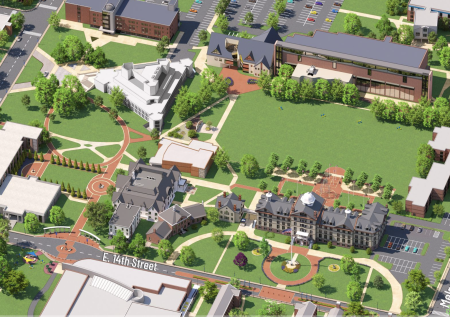
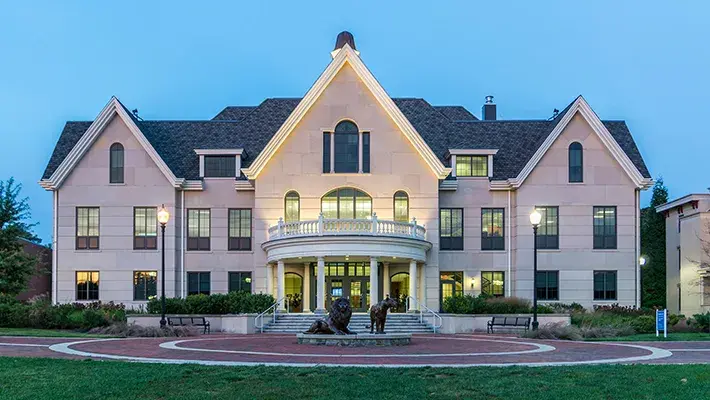
Life at Widener revolves around a welcoming, inclusive, and supportive residential community on its scenic Chester campus. With a total undergraduate population just under 3,000, the vibe is communal rather than anonymous. The university explicitly states that students will find peers who 'care as much as you do about learning, connecting with others, and exploring their...' interests. Housing options are designed to 'suit a variety of interests and living styles,' promoting a sense of belonging from day one.
This emphasis on community extends beyond the dormitories. The university's official 'Points of Pride' and marketing materials consistently highlight a student body that is 'civic-minded,' suggesting that engagement—whether through clubs, athletics, or service—is a major part of the Widener experience. While the provided sources don't drill down into specific club counts or dining hall reviews, the overarching message is clear: Widener cultivates a dynamic campus environment where professors are described as 'dynamic' and the overall setting is considered a 'great place to pursue your undergraduate' degree.
Widener's ultimate selling point is its powerful return on investment, measured in gainful employment and graduate school placements. The university reports that 93% of its graduates achieve their career goals—whether employment, graduate school, or military/service—within six months of graduation. This exceptional outcomes rate underscores the effectiveness of its career-focused curriculum and support services.
Financially, the results are strong. The CANONICAL median earnings 10 years after entry is $70,920. Other sources provide complementary data: earnings one year after graduation are reported at $65,589, rising to $79,120 after five years. The CANONICAL graduation rate is 68% (with other sources citing 64% and 67% over recent years), placing Widener in the top 40% of institutions nationally for this metric. This combination of solid graduation rates and high post-graduate success paints a picture of a university that effectively shepherds its students through to degree completion and launches them into promising next chapters.
Widener's stated tuition and fees are $58,280, but the university is aggressive in using institutional aid to bring down the for most families. The CANONICAL average net price after aid is $25,759. A significant 78.26% of students receive financial aid, with the average aid package reported as $50,112. Widener promotes its academic scholarships as starting at $100,000 over four years.
The university has a dedicated Net Price Calculator to help families estimate their true cost, and it considers need-based financial aid through annual allocations of federal, state, and institutional funds. The provided sources confirm that Widener offers both subsidized (need-based) and unsubsidized federal loans to eligible students. However, there is no indication in the provided sources that Widener has a 'no-loan' policy (where loans are replaced by grants) or a commitment to meet 100% of demonstrated financial need without loans. The financial aid strategy appears to be a mix of merit-based scholarships and that may include loans.
Widener University stands out for its potent, no-nonsense fusion of career readiness and civic character. It’s not trying to be an Ivy League replica; instead, it excels at being a decisive launchpad for pragmatic, purpose-driven students. Its distinction lies in several converging strengths:
Outcomes-First Focus: The staggering 93% post-graduation success rate isn't an accident; it's the product of nationally ranked professional programs (nursing, business, engineering) designed with employer needs in mind, coupled with a 11:1 student-faculty ratio that allows for meaningful mentorship.
The Civic Engine: The university's identity is deeply intertwined with service and engagement. This isn't just brochure language; it's reflected in the curriculum, the 'civic-minded' student body it attracts, and the social ethos that even the school jokes about ('you have a good heart').
The Accessible Pathway: With a 71% and robust financial aid, Widener provides a high-value, high-outcome private education to a broad range of students. It removes the aura of exclusivity and replaces it with demonstrable results: a degree that leads directly to a career with median earnings exceeding $70,000 a decade out.
In essence, Widener is for the student who wants the close-knit community and professional rigor of a private university without the cutthroat admissions gamble, and who measures success not just by the diploma but by the immediate and meaningful impact they can make with it.
Widener University seal · sourceWidener Map & Directions | Widener University · sourceOur Campus | Widener University · sourceVisit Opportunities for Graduate Students | Widener University · source