Admit rate has ranged 78%–81% over the last 5 years, though the latest figure above (77%) falls outside that window. Source: IPEDS via Urban Institute.
Acceptance & SAT from Common Data Set / IPEDS; net price, earnings & graduation from the U.S. Dept. of Education College Scorecard. Figures lag ~1–2 years — verify with the school.
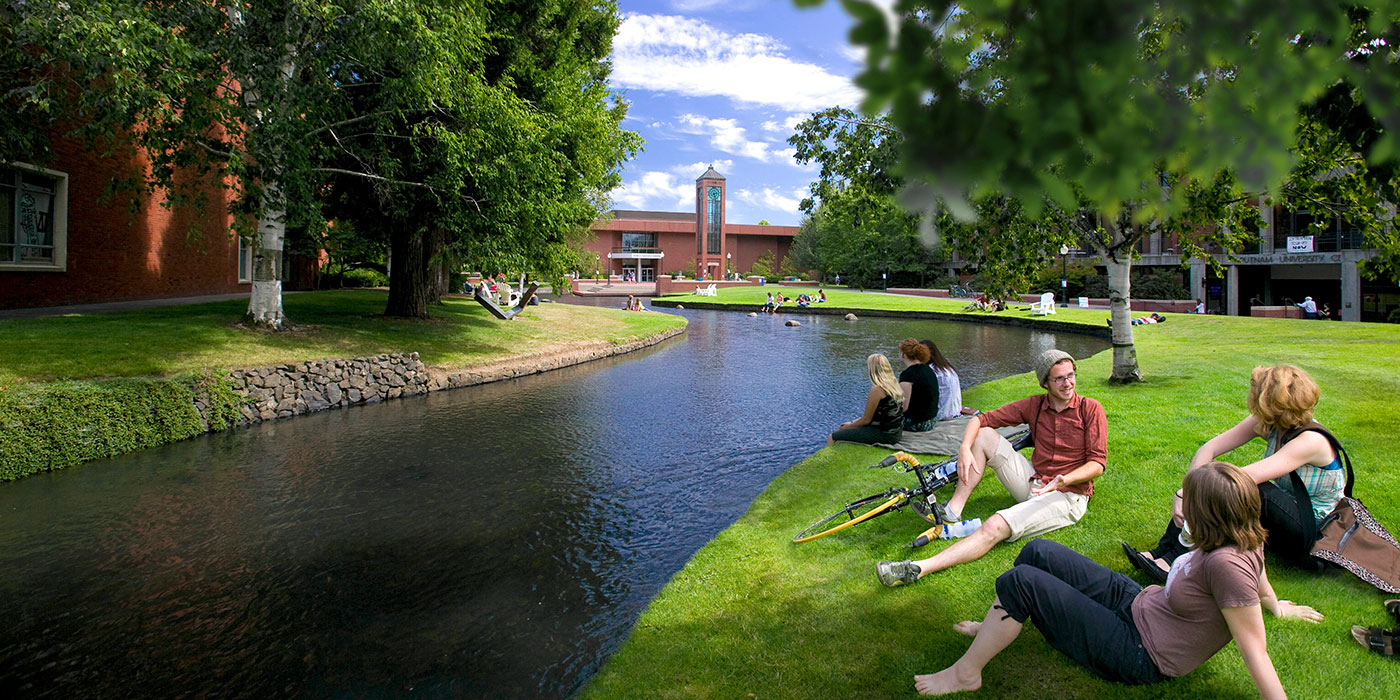
Willamette University, Oregon's oldest college, blends rigorous liberal arts with hands-on professional training—all steps from the state capitol, making it a powerhouse for policy and politics. With a 77% acceptance rate, it's accessible yet punches above its weight in outcomes, boasting a 74% graduation rate and strong alumni networks. The cherry blossom-lined campus hums with activity—95% of students join clubs—while Portland's indie culture is just an hour north.
Admission requirements
Test-optional — scores considered if submitted
Required
High school transcript
Grade point average
Letters of recommendation
College-prep program
TOEFL (non-native English)
Considered (not required)
Class rank
Test scores (SAT/ACT)
Source: IPEDS Admissions survey (2022) via Urban Institute. Covers formal factors only — it does not reflect essays, extracurriculars, or other holistic criteria.
More details
Undergrad enrollment
1,592
In-state tuition
$51,156
Out-of-state tuition
$51,156
Student Clubs
75+
Campus Housing
68% live on campus
Graduation Rate
74%
Median Earnings 1 Yr After Graduation
$36,427
Outcomes & value
Outcomes & value
Median earnings (10 yr)
$56,911
Value (earnings ÷ net price)
2.3×
Median debt at graduation
$21,500
Graduation rate
71%
First-year retention
87%
Reducing loan balance (3 yr)
78%
Pell (lower-income) share
24%
First-gen share (among federal-aid recipients)
19%
Financial health
2.2 / 3.0Meets the federal financial-responsibility standard
U.S. Dept. of Education Financial Responsibility Composite Score (FY2022-23). Scale −1.0 to 3.0; ≥1.5 meets the standard. Reported for private nonprofit & for-profit institutions only — public universities are state-backed and not scored, so this is a stability signal, not a ranking.
Top-earning majors
Median earnings by field of study (highest credential), ~2 years after completion.
Computer Science$70,456
Mathematics$42,682
Economics$39,909
Political Science and Government$36,848
Romance Languages, Literatures, and Linguistics$32,925
Psychology, General$31,133
Biology, General
Campus & location
Campus safety
On-campus violent crimes (2024)
1
Per 1,000 students
0.47
On-campus criminal offenses classed as violent (murder/non-negligent manslaughter, rape, robbery, aggravated assault) for the most recent reported year. Source: U.S. Dept. of Education Campus Safety and Security (Clery Act). Counts reflect what’s reported to the school, and urban campuses often report more partly due to non-student incidents nearby — read alongside campus size and setting, not as a standalone safety verdict.
Climate
Pleasant days / yr
109
Summer high
82°F
Winter low
35°F
Annual rain
45.2"
Annual snow
9.5"
Natural-hazard risk
Relatively High
Pleasant days counts days per year with a mean temperature of 55–75°F, a high at or below 90°F, a low at or above 45°F, and little precipitation — a transparent comfort measure, not a weighting we invented. Computed from Open-Meteo ERA5 daily history (2019–2023). Natural-hazard risk is the county’s composite rating from the FEMA National Risk Index.
Deep dive — research, future-scholar output & economic mobility▾
Research output
Institutional h-index
153
Scholarly works
4,279
Institutional research volume and impact from OpenAlex. The h-index reflects large research universities and will be low for teaching-focused liberal-arts colleges — not a measure of undergraduate quality.
Economic mobility
Mobility rate
1.8%
Bottom → top quintile
52%
From bottom quintile
4%
Mobility rate = the share of students who both start in the bottom household-income quintile and reach the top quintile; bottom → top is that chance conditional on starting at the bottom. Source: Opportunity Insights Mobility Report Cards (Chetty, Friedman, Saez, Turner & Yagan). Reflects 1980–82 birth cohorts, so it’s directional, not current.
Quick answers
What is the acceptance rate at Willamette University?
Willamette University's acceptance rate is approximately 77% (Salem, OR), based on the most recent figures we compiled from public and primary sources.
What SAT score do you need for Willamette University?
Admitted students at Willamette University typically score 1240–1440 on the SAT (the middle-50% range). Scores outside this band are still admitted, especially with strong applications.
How much does Willamette University cost?
At Willamette University, the average net price (after aid) is about $25,121 per year. Actual cost varies with financial aid and residency.
How many undergraduates attend Willamette University?
Willamette University enrolls approximately 1,592 undergraduate students.
Where is Willamette University located?
Willamette University is located in Salem, OR.
Admissions
Willamette's admissions process leans inclusive, with a 77% ([7], [8], [9], [10], [11]). Early applicants have a clear edge—86.6% get the nod ([8]). Midrange SAT scores (1250–1390) are typical for admits, though 27% of enrolled students submitted no test scores at all ([7], [8]). The university received 3,832 applications last cycle, admitting 2,954 and enrolling 1,683—a rate hovering around 57% ([10], [11]). Transfer students find a welcoming path too, with dedicated admission protocols ([1], [3]).
Earnings = median of students working ~10 years after entry; debt = median of graduates. Value divides 10-yr earnings by one year’s net price — read it as earnings per dollar of annual cost, not a full lifetime ROI; it favors lower-cost schools. Source: U.S. Dept. of Education College Scorecard. Figures lag ~2 years and reflect all students, not your intended major.
$28,055
Chemistry$27,204
Source: U.S. Dept. of Education College Scorecard (field-of-study earnings). Figures cover graduates who received federal aid and lag ~2 years; not all programs report data.
Willamette's academic spine is classic liberal arts—economics, political science, and environmental science each claim 6-9% of majors ([15])—but with a pragmatic twist. The university is Oregon's only institution ranked among top liberal arts colleges and business schools ([18]). Its location adjacent to the state capitol creates a policy lab for political science students, while 50+ majors span from computer science to accelerated dual-degree programs ([13], [17]). Faculty accessibility shines in Reddit anecdotes, particularly for econ and poli-sci students who benefit from Capitol internships ([16]). The curriculum emphasizes 'career-relevant coursework' and hands-on learning, with graduate school pipelines in law, business, and data science ([14], [17]).
This is a campus that joins hard—95% of students participate in clubs, averaging three memberships each ([23]). Seventy-five student organizations range from Willamette Journal of the Liberal Arts to quirky hobby groups ([19]). Housing skews traditional (68% live on campus), with dorms ranging from historic to modern ([22], [24]). The 1620 undergrads enjoy an urban-but-gardenesque setting—think cherry blossoms in spring, foliage in fall—with Salem's coffee shops and the Oregon Capitol grounds as extensions of campus ([20]). An inclusive ethos prevails, with structured support for and marginalized students ([21]). Sports are Division III, but the real action is in traditions like the 'Wulapalooza' music festival and proximity to Portland's indie scene ([19], [20]).
Willamette's 74% graduation rate outpaces the national average for four-year colleges by 15 percentage points ([26], [29]). First-year retention hits 95%, signaling strong student satisfaction ([30]). Alumni earn median salaries of $36,427 one year post-graduation—on par with regional averages ([27]). Career Services reports 64-100% response rates for outcome surveys across programs, with law, public policy, and business common next steps ([25]). Notably, the university lands in the top 20% of institutions for completion rates, suggesting effective student support ([29]).
Sticker shock is real—total cost runs $71,440 ([33])—but 56.66% of students receive aid, slashing the average to $27,716 ([35]). Every applicant is automatically considered for merit scholarships starting at $28,000/year, with top awards hitting $33,000 ([32], [36]). The university emphasizes need-blind admissions and meets 100% of demonstrated need for domestic students ([32]). For families weighing options, Willamette's net price calculator demystifies personalized aid packages ([31], [34]).
Willamette is that rare hybrid: a small liberal arts college with big-city professional opportunities. Its adjacency to Oregon's government hub creates unparalleled policy immersion—political science majors can intern at the Capitol between classes ([16]). The university's dual identity (top-tier liberal arts and business school) allows students to pair philosophy seminars with MBA-track courses ([18]). Campus culture strikes a balance between Pacific Northwest chill (think: slacklining between cherry trees) and intellectual intensity (94.8% first-year retention) ([20], [30]). Add Portland's creative class an hour away, and you've got a college experience that's both rooted and reaching.
Willamette University logo · sourceWillamette University | Oregon's Top Private University · sourceWhy You Should Visit Campus? | Willamette 2022 News · sourceWillamette University – Colleges That Change Lives · source