Admit rate has ranged 52%–60% over the last 5 years, though the latest figure above (52%) falls outside that window. Source: IPEDS via Urban Institute.
Acceptance & SAT from Common Data Set / IPEDS; net price, earnings & graduation from the U.S. Dept. of Education College Scorecard. Figures lag ~1–2 years — verify with the school.
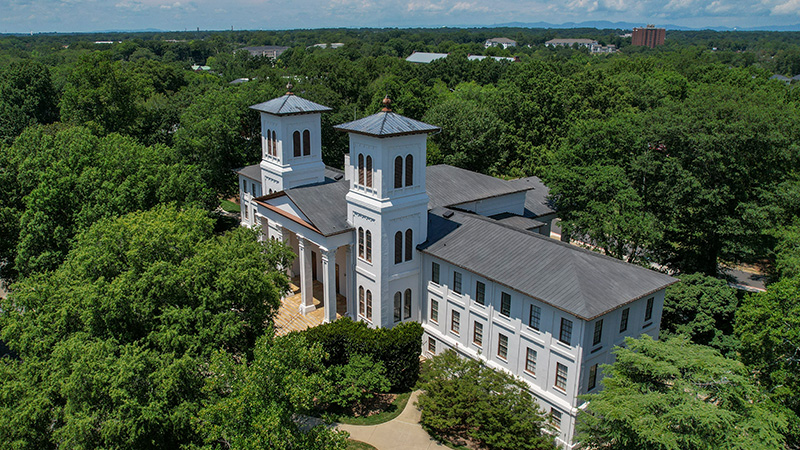
Wofford College is a small, private liberal arts college in Spartanburg, South Carolina, that operates with the precision and focus of a much more selective institution. It’s a place where a rigorous, individualized academic core—famous for its pre-professional pipelines to medicine, law, and business—is wrapped in a classic, residential Southern college experience, complete with Greek life and a 'work hard, play hard' ethos. The numbers tell a compelling story of high graduation rates and strong career outcomes, making it a powerhouse for students who thrive in a structured, supportive, and tradition-rich environment.
Admission requirements
Test-optional — scores considered if submitted
Required
High school transcript
Grade point average
TOEFL (non-native English)
Considered (not required)
Class rank
Letters of recommendation
Test scores (SAT/ACT)
College-prep program
Demonstrated competencies
Source: IPEDS Admissions survey (2022) via Urban Institute. Covers formal factors only — it does not reflect essays, extracurriculars, or other holistic criteria.
More details
Undergrad enrollment
1,816
In-state tuition
$56,005
Out-of-state tuition
$56,005
Graduation Rate
84%
ED Share of Class
Substantial portion (exact % not specified in sources)
On-Campus Housing
90%
Demonstrated Interest
Not considered
Student-Faculty Ratio
12:1
Median Earnings (10yr)
$68,964
Classes Under 20 Students
56.4%
Average Need-Based Grant (First-Year)
$46,076
Positive Career Outcomes (within 6 months)
Outcomes & value
Outcomes & value
Median earnings (10 yr)
$68,964
Value (earnings ÷ net price)
3.7×
Median debt at graduation
$25,732
Graduation rate
84%
First-year retention
91%
Reducing loan balance (3 yr)
79%
Pell (lower-income) share
16%
Earnings = median of students working ~10 years after entry; debt = median of graduates. Value divides 10-yr earnings by one year’s net price — read it as earnings per dollar of annual cost, not a full lifetime ROI; it favors lower-cost schools. Source: U.S. Dept. of Education College Scorecard. Figures lag ~2 years and reflect all students, not your intended major.
Financial health
2.5 / 3.0Meets the federal financial-responsibility standard
U.S. Dept. of Education Financial Responsibility Composite Score (FY2022-23). Scale −1.0 to 3.0; ≥1.5 meets the standard. Reported for private nonprofit & for-profit institutions only — public universities are state-backed and not scored, so this is a stability signal, not a ranking.
Top-earning majors
Median earnings by field of study (highest credential), ~2 years after completion.
Finance and Financial Management Services$47,729
Computer Science$42,682
Business/Managerial Economics$41,565
Chemistry$40,485
Economics$38,472
English Language and Literature, General$38,289
Campus & location
Campus safety
On-campus violent crimes (2024)
5
On-campus criminal offenses classed as violent (murder/non-negligent manslaughter, rape, robbery, aggravated assault) for the most recent reported year. Source: U.S. Dept. of Education Campus Safety and Security (Clery Act). Counts reflect what’s reported to the school, and urban campuses often report more partly due to non-student incidents nearby — read alongside campus size and setting, not as a standalone safety verdict.
Climate
Pleasant days / yr
105
Summer high
88°F
Winter low
38°F
Annual rain
48"
Annual snow
2.2"
Natural-hazard risk
Relatively Moderate
Pleasant days counts days per year with a mean temperature of 55–75°F, a high at or below 90°F, a low at or above 45°F, and little precipitation — a transparent comfort measure, not a weighting we invented. Computed from Open-Meteo ERA5 daily history (2019–2023). Natural-hazard risk is the county’s composite rating from the FEMA National Risk Index.
Deep dive — research, future-scholar output & economic mobility▾
Research output
Institutional h-index
51
Scholarly works
868
Institutional research volume and impact from OpenAlex. The h-index reflects large research universities and will be low for teaching-focused liberal-arts colleges — not a measure of undergraduate quality.
Economic mobility
Mobility rate
1.2%
Bottom → top quintile
31%
From bottom quintile
4%
Mobility rate = the share of students who both start in the bottom household-income quintile and reach the top quintile; bottom → top is that chance conditional on starting at the bottom. Source: Opportunity Insights Mobility Report Cards (Chetty, Friedman, Saez, Turner & Yagan). Reflects 1980–82 birth cohorts, so it’s directional, not current.
Quick answers
What is the acceptance rate at Wofford College?
Wofford College's acceptance rate is approximately 52% (Spartanburg, SC), based on the most recent figures we compiled from public and primary sources.
What SAT score do you need for Wofford College?
Admitted students at Wofford College typically score 1198–1343 on the SAT (the middle-50% range). Scores outside this band are still admitted, especially with strong applications.
How much does Wofford College cost?
At Wofford College, the average net price (after aid) is about $18,732 per year. Actual cost varies with financial aid and residency.
How many undergraduates attend Wofford College?
Wofford College enrolls approximately 1,816 undergraduate students.
Where is Wofford College located?
Wofford College is located in Spartanburg, SC.
Admissions
Wofford's admissions process is selective but navigable, with a clear strategic advantage for students who commit early. The college received 4,425 applications for a recent first-year class and admitted 2,663, resulting in a 52% . Of those admitted, 450 enrolled, yielding a 19% rate. The middle 50% SAT range for admitted students is 1198–1343, and the ACT composite range is 27–31. The college offers a non-binding Early Action option for students seeking an earlier decision, but the real insider tip is Early Decision: sources indicate Wofford's Early Decision acceptance rate is significantly higher at 78%, compared to the overall rate, and it's reported that the college fills a substantial portion of its class through ED. Notably, Wofford does not consider demonstrated interest as a factor in admissions decisions, per Section C7, which means campus visits and communications won't directly affect an applicant's odds.
Source: U.S. Dept. of Education College Scorecard (field-of-study earnings). Figures cover graduates who received federal aid and lag ~2 years; not all programs report data.
Wofford's academic identity is defined by a rigorous liberal arts curriculum with a powerful pre-professional bent. The student-faculty ratio is 12:1, and 56.4% of classes have fewer than 20 students, enabling the individualized education the college promotes. The most popular majors reflect this career-focused approach: Biology, Finance, Psychology, Accounting, and Spanish Language and Literature. The college is particularly well-known for its programs leading to graduate and professional studies in medicine, other health professions, law, and advanced graduate study. This focus on outcomes is underscored by a remarkable 98% positive career outcomes rate for graduates within six months of graduation, encompassing employment, graduate school, and military service. Beyond the classroom, Wofford promotes an outstanding study abroad program and opportunities to network with influential people as key components of its educational design.
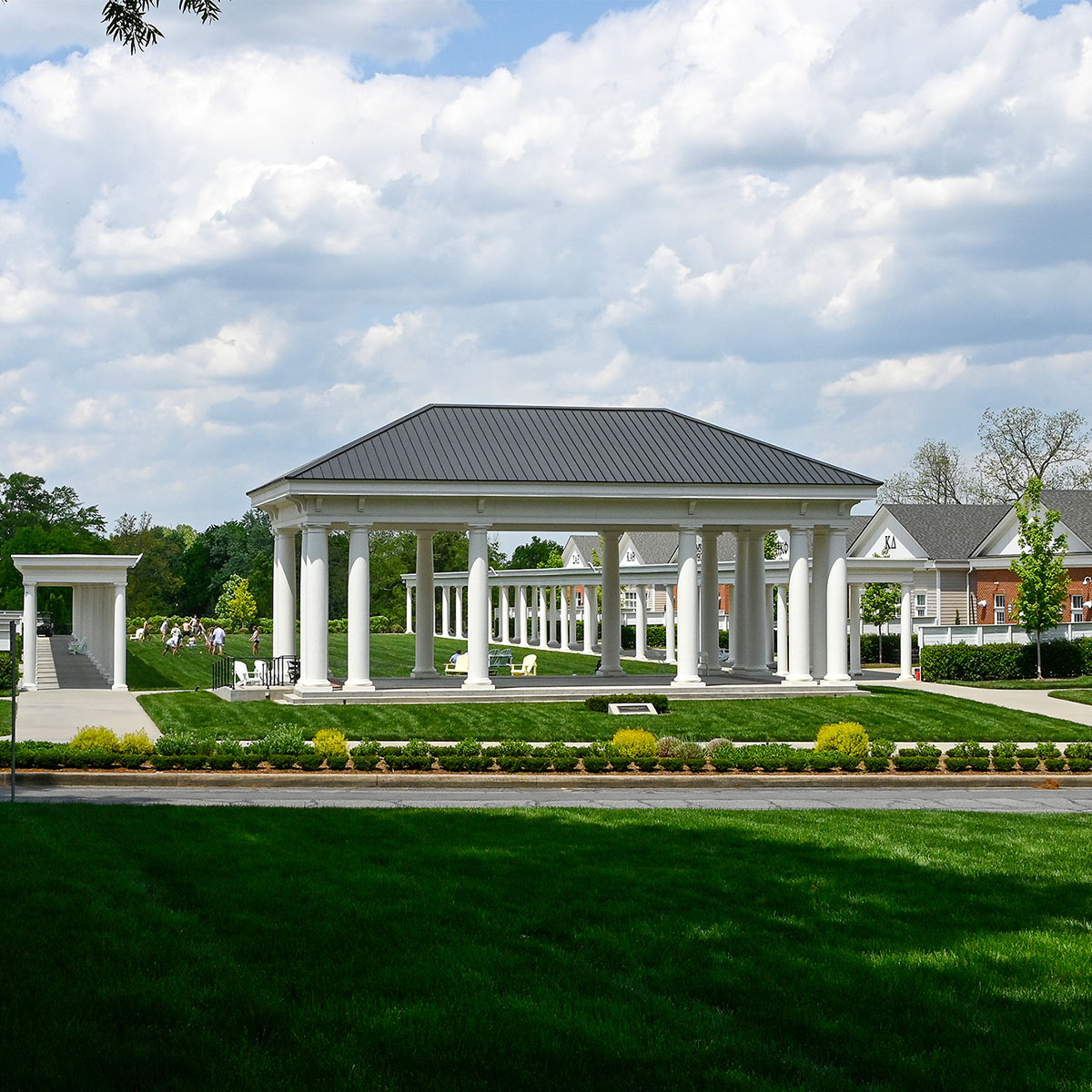
Life at Wofford is intensely residential and traditional, offering a classic Southern liberal arts college experience. A full 90% of students live in college-owned, -operated, or -affiliated housing, creating a tight-knit campus community. The Division of Campus Life and Student Development provides comprehensive resources and programming for students, covering everything from residence life to student activities. The stated goal of campus life programs is to enable students to become persons who will make a positive difference in their future communities. The social scene is often described as balanced, with a distinct 'work hard, play hard' culture, suggesting a student body that is serious about academics but also engaged in a vibrant social life, likely supported by a significant Greek life presence. The college offers a wide array of arts and cultural opportunities as part of the student experience.
Wofford delivers exceptionally strong post-graduation results, a cornerstone of its value proposition. The college's graduation rate is 84%, a figure that places it in the top tier nationally. The career outcomes are particularly impressive: the NACE Career Outcomes Rate for a recent graduating class was 98.18%, and the Career Center receives updates on more than 95% of each class, eager to share the accomplishments of graduates. These outcomes include employment, graduate school attendance, and military service. For the graduating class of 2021, Wofford tracked a 98.18% positive outcomes rate. While early-career earnings are reported, the most significant figure is the median earnings ten years after entry, which stands at $68,964, indicating substantial mid-career growth and the long-term value of a Wofford degree.
Wofford is a private institution with a high sticker price, but it uses institutional aid aggressively to bring down the net cost for many families. The average need-based scholarship or grant awarded to first-year students is $46,076, and 53% of first-year students receive need-based financial aid. Another source reports that 54.02% of students receive financial aid, with an average aid package of $53,094. This substantial aid brings the average after aid down to $18,732 per year. The college encourages families to use its Net Price Calculator for a preliminary estimate of federal, state, and institutional aid eligibility. It's important to note that while Wofford commits to meeting 100% of demonstrated financial need for all students (including those in specific programs like Bonner Scholars), its standard financial aid packages may include loans if grants and scholarships do not fully cover the need; the college does not advertise a universal no-loan policy for all income brackets.
Wofford College stands out for its potent, almost algorithmic combination of a classic liberal arts experience with remarkably high-return professional outcomes. It’s not trying to be an Ivy; it’s perfecting a specific model. The college takes the traditional pillars of small classes (12:1 ratio), residential community (90% on-campus), and a rigorous core curriculum and laser-focuses them on preparing students for medical school, law school, finance, and accounting. This is not a place of vague exploration; it’s a place of directed formation. The result is a graduation rate (84%) and career outcomes rate (98%) that rival those of far more famous and selective institutions. The 'work hard, play hard' culture is the social engine that makes this high-pressure model sustainable, offering a balanced, tradition-rich collegiate life in Spartanburg. For a student who wants the close-knit relationships and personal attention of a small liberal arts college but also demands a clear, high-probability pathway to a prosperous career, Wofford is a uniquely effective and unpretentious choice.