Admit rate has ranged 63%–73% over the last 5 years — notably volatile, though the latest figure above (82%) falls outside that window. Source: IPEDS via Urban Institute.
Acceptance & SAT from Common Data Set / IPEDS; net price, earnings & graduation from the U.S. Dept. of Education College Scorecard. Figures lag ~1–2 years — verify with the school.
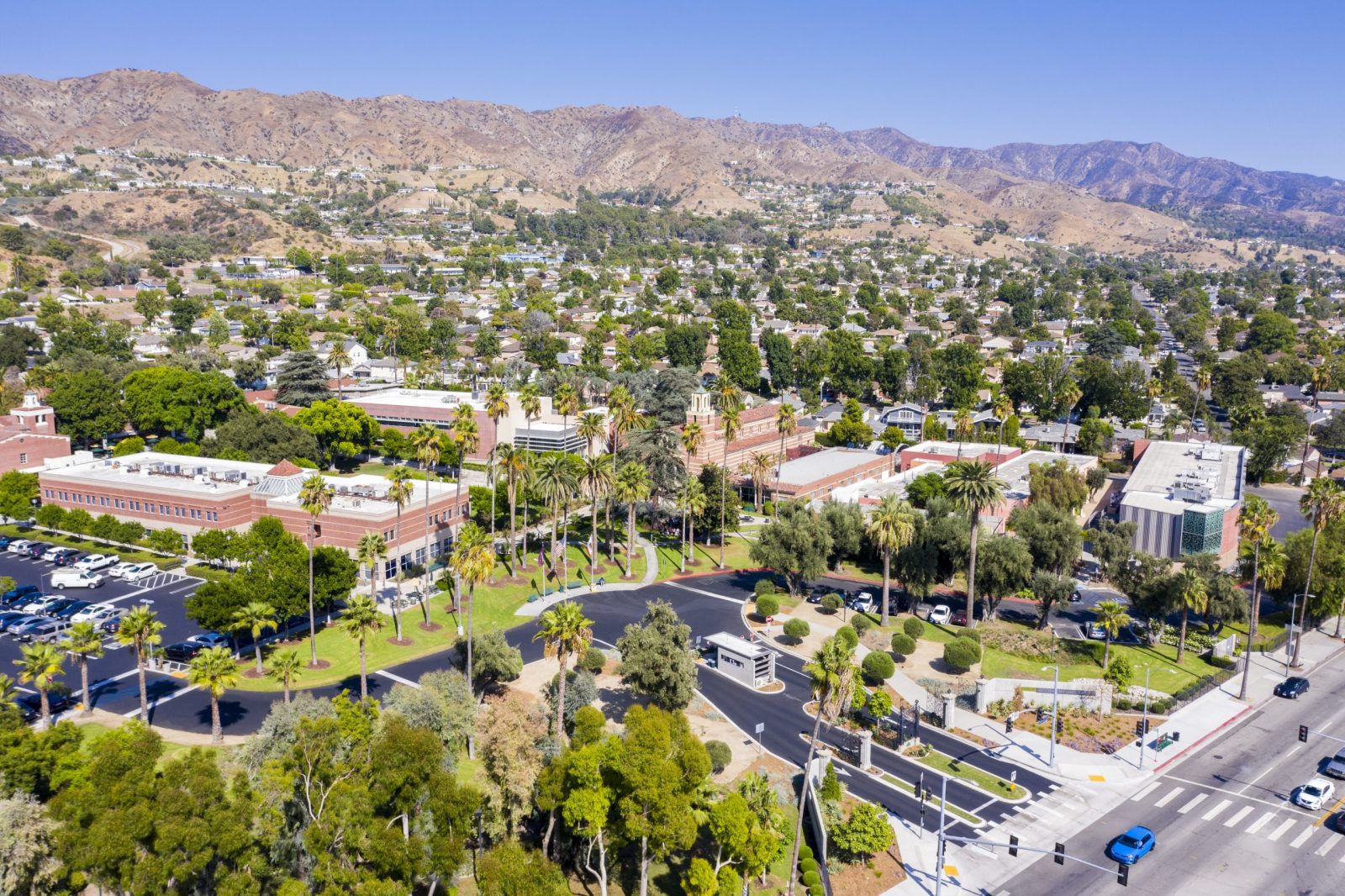
Woodbury University, nestled in the creative industry hub of Burbank, California, operates less like a traditional liberal arts college and more like a professional studio. Its identity is overwhelmingly shaped by its architecture and design programs, which dominate the campus culture and curriculum, offering a hands-on, internship-driven education for students aiming straight for creative careers in Los Angeles. While its admissions are accessible, the financial commitment is significant, and the experience is defined by its specialized focus and proximity to Hollywood's backlots.
Admission requirements
Test-optional — scores considered if submitted
Required
High school transcript
Grade point average
Demonstrated competencies
TOEFL (non-native English)
Considered (not required)
Letters of recommendation
Test scores (SAT/ACT)
Source: IPEDS Admissions survey (2022) via Urban Institute. Covers formal factors only — it does not reflect essays, extracurriculars, or other holistic criteria.
More details
Undergrad enrollment
779
In-state tuition
$47,056
Out-of-state tuition
$47,056
Top Major
Architecture & Related Services
Graduation Rate
60%
Required Internships
Yes, for all majors
Student-Faculty Ratio
8:1
Median Earnings (10yr)
$65,668
Financial Aid Recipients
>85%
Outcomes & value
Outcomes & value
Median earnings (10 yr)
$65,668
Value (earnings ÷ net price)
1.9×
Median debt at graduation
$26,960
Graduation rate
60%
First-year retention
74%
Reducing loan balance (3 yr)
58%
Pell (lower-income) share
46%
First-gen share (among federal-aid recipients)
41%
Top-earning majors
Median earnings by field of study (highest credential), ~2 years after completion.
Business Administration, Management and Operations$52,107
Architecture$49,064
Accounting and Related Services$47,260
Marketing$42,682
Specialized Sales, Merchandising and Marketing Operations$37,208
Design and Applied Arts$33,993
Campus & location
Campus safety
On-campus violent crimes (2024)
0
Per 1,000 students
0.00
On-campus criminal offenses classed as violent (murder/non-negligent manslaughter, rape, robbery, aggravated assault) for the most recent reported year. Source: U.S. Dept. of Education Campus Safety and Security (Clery Act). Counts reflect what’s reported to the school, and urban campuses often report more partly due to non-student incidents nearby — read alongside campus size and setting, not as a standalone safety verdict.
Climate
Pleasant days / yr
210
Summer high
88°F
Winter low
47°F
Annual rain
23.5"
Natural-hazard risk
Very High
Pleasant days counts days per year with a mean temperature of 55–75°F, a high at or below 90°F, a low at or above 45°F, and little precipitation — a transparent comfort measure, not a weighting we invented. Computed from Open-Meteo ERA5 daily history (2019–2023). Natural-hazard risk is the county’s composite rating from the FEMA National Risk Index.
Deep dive — research, future-scholar output & economic mobility▾
Research output
Institutional h-index
49
Scholarly works
1,591
Institutional research volume and impact from OpenAlex. The h-index reflects large research universities and will be low for teaching-focused liberal-arts colleges — not a measure of undergraduate quality.
Economic mobility
Mobility rate
6.4%
Bottom → top quintile
34%
From bottom quintile
19%
Mobility rate = the share of students who both start in the bottom household-income quintile and reach the top quintile; bottom → top is that chance conditional on starting at the bottom. Source: Opportunity Insights Mobility Report Cards (Chetty, Friedman, Saez, Turner & Yagan). Reflects 1980–82 birth cohorts, so it’s directional, not current.
Quick answers
What is the acceptance rate at Woodbury University?
Woodbury University's acceptance rate is approximately 82% (Burbank, CA), based on the most recent figures we compiled from public and primary sources.
How much does Woodbury University cost?
At Woodbury University, the average net price (after aid) is about $33,692 per year. Actual cost varies with financial aid and residency.
How many undergraduates attend Woodbury University?
Woodbury University enrolls approximately 779 undergraduate students.
Where is Woodbury University located?
Woodbury University is located in Burbank, CA.
Admissions
Woodbury's admissions process is notably accessible, with an that suggests a mission of inclusion rather than exclusion. The university does not require SAT or ACT scores for freshman applicants, though they can be submitted if a student chooses, indicating a that likely places greater weight on a student's portfolio, academic record, and fit for its specialized programs. There is no mention of an Early Decision plan being a significant factor in the admissions cycle. The undergraduate student body is small, with a fall 2024 enrollment of 785, and skews slightly more female (53.5%) than male (44.3%).
The academic experience at Woodbury is intensely focused and practical. The student-faculty ratio is an intimate 8:1, with nearly 80% of classes having fewer than 20 students, enabling a highly personalized, studio-like environment. The curriculum is built around a university-wide commitment to hands-on learning, with required internships for all majors ensuring students graduate with real-world experience. This is not a school of abstract theory; it's a school of applied practice.
The most popular and specialized majors are overwhelmingly in creative fields. Architecture and Related Services is the dominant program, awarding 78 degrees according to one data set—this single major likely defines the campus vibe more than any other. Other notable specializations include Communication Technologies, Digital Communication and Media/Multimedia, and Animation, Video Graphics and Special Effects. The College of Liberal Arts and Sciences exists, offering five degree options, but it operates within an ecosystem fundamentally oriented toward design and professional preparation.
Earnings = median of students working ~10 years after entry; debt = median of graduates. Value divides 10-yr earnings by one year’s net price — read it as earnings per dollar of annual cost, not a full lifetime ROI; it favors lower-cost schools. Source: U.S. Dept. of Education College Scorecard. Figures lag ~2 years and reflect all students, not your intended major.
Film/Video and Photographic Arts$25,774
Source: U.S. Dept. of Education College Scorecard (field-of-study earnings). Figures cover graduates who received federal aid and lag ~2 years; not all programs report data.
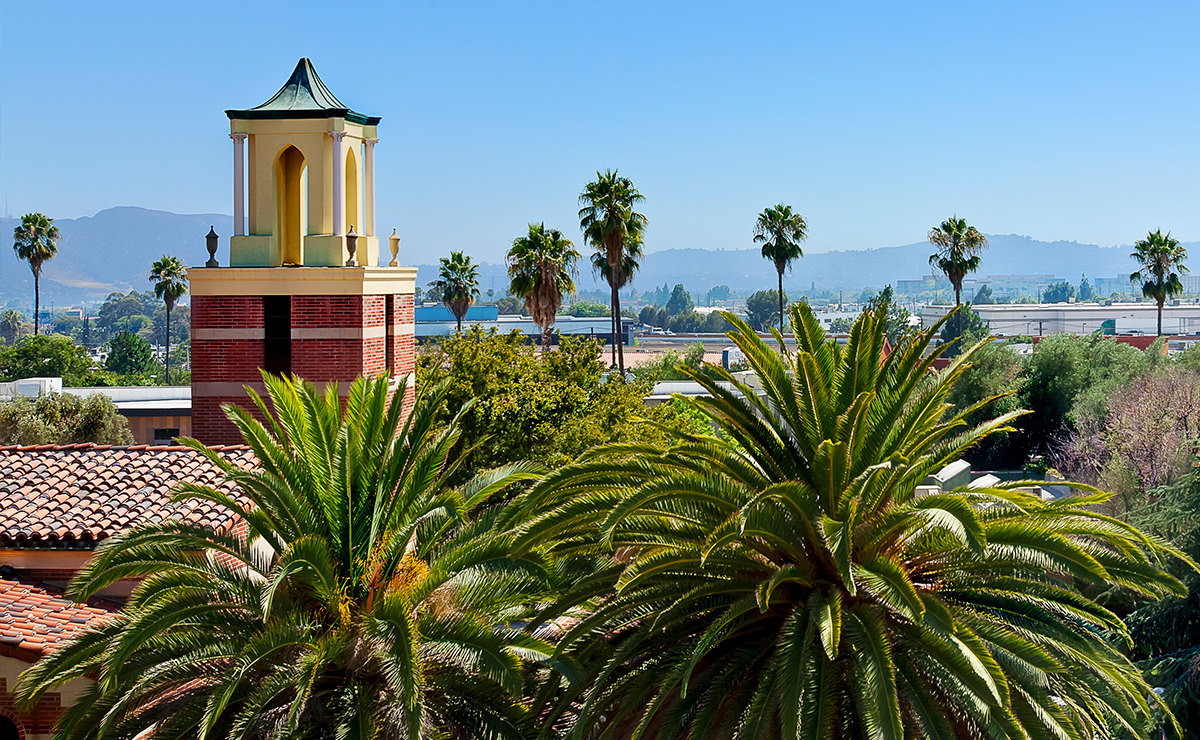
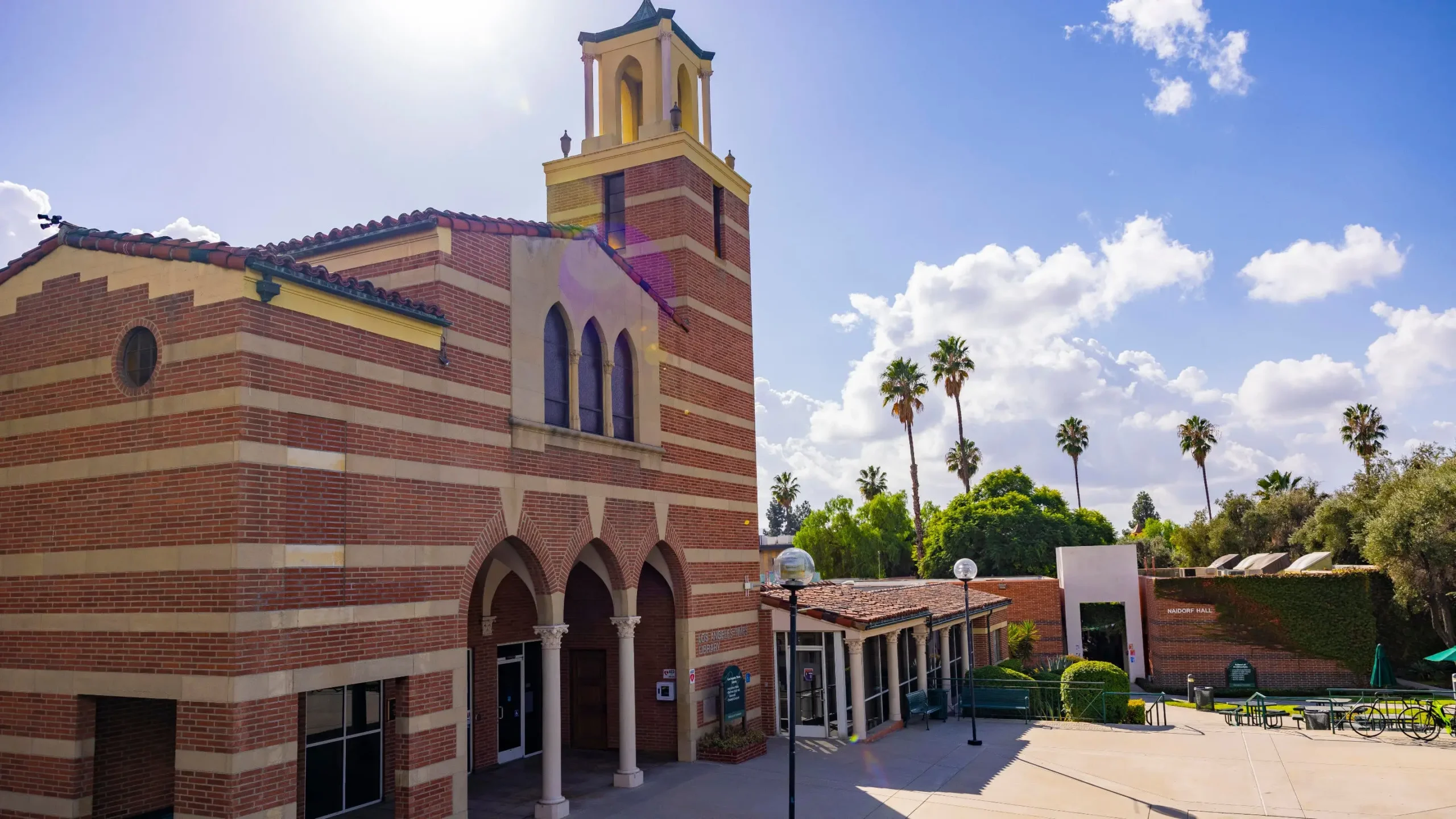
Life on the Burbank campus is described as a "personalized experience," with the university emphasizing both academic and social support. The culture is self-identified as "Design Liberal," suggesting a blend of creative ambition within a structured, project-based framework. On-campus housing is available in North or South Hall, with annual costs ranging from $6,000 to $9,000, which breaks down to roughly $700–$1,000 per month. Student life offerings include organized activities like group fitness and social "kickbacks." The small total enrollment of under 800 undergraduates means the community is tight-knit, and the location—minutes from major film and television studios—provides an inescapable industry backdrop that permeates campus life, from internship opportunities to casual inspiration.
Woodbury's outcomes reflect its professional, career-oriented mission. The graduation rate is a key benchmark. The university touts its economic value, ranking "among the top 4% of colleges and universities based on economic value by The Economist." For graduates, earnings show a strong trajectory: while initial post-graduation salaries are reported around $39,998, earnings five years after graduation jump significantly to approximately $66,933, indicating that its specialized degrees in fields like architecture gain substantial value with a bit of industry experience. This payoff suggests the investment in its high-tuition, hands-on model can strong returns for students who complete their degrees and enter their targeted creative professions.
Attending Woodbury University requires a significant financial commitment. The sticker price for tuition, fees, room, and board is substantial. However, the university is active in providing financial aid to offset costs. More than 85% of students receive some form of financial aid. The average financial aid grant package is notable, reported as over $21,193 in one source and over $23,254 in another for the 2024-2025 academic year. This aid package typically consists of a mix of institutional grants (averaging around $17,425), state grants, and federal grants. The —the cost after grants and scholarships—is the critical figure for families. While one source cites a net price of $53,385, others suggest lower figures after aid. It's a school where virtually every student is negotiating a financial package, and the high aid participation rate is essential to its accessibility.
Woodbury University stands out for its uncompromising, singular focus on professional creative education, particularly architecture. It is not a well-rounded liberal arts college with a design school attached; it is a design and architecture school with a liberal arts college attached. This creates a unique environment where the culture, curriculum, and career outcomes are all aligned toward turning students into industry-ready practitioners. The required internship for every major embeds this professional focus into the DNA of every degree. Its location in Burbank—the 'Media Capital of the World'—is not incidental; it's integral, providing immediate access to internships, networks, and a constant reminder of the professional world students are training to enter. For a student certain of a career in architecture, animation, media, or design, Woodbury offers a focused, hands-on, and location-perfect alternative to the more theoretical or generalized programs at larger universities.
Woodbury University seal · sourceUniversity Campus Tour | Woodbury University · sourceWoodbury University - Burbank/LA, California · sourceWoodbury University - Burbank/LA, California · source