Loading…
← All schools
Azusa Pacific University
Azusa, CAprivate nonprofitwww.apu.edu/
Acceptance
88%
SAT 25–75
983–1238
Avg net price
$22,212
Earnings (10 yr)
$66,677
Graduation rate
62%
Admit rate has ranged 67%–94% over the last 5 years — notably volatile. Source: IPEDS via Urban Institute.
Acceptance & SAT from Common Data Set / IPEDS; net price, earnings & graduation from the U.S. Dept. of Education College Scorecard. Figures lag ~1–2 years — verify with the school.
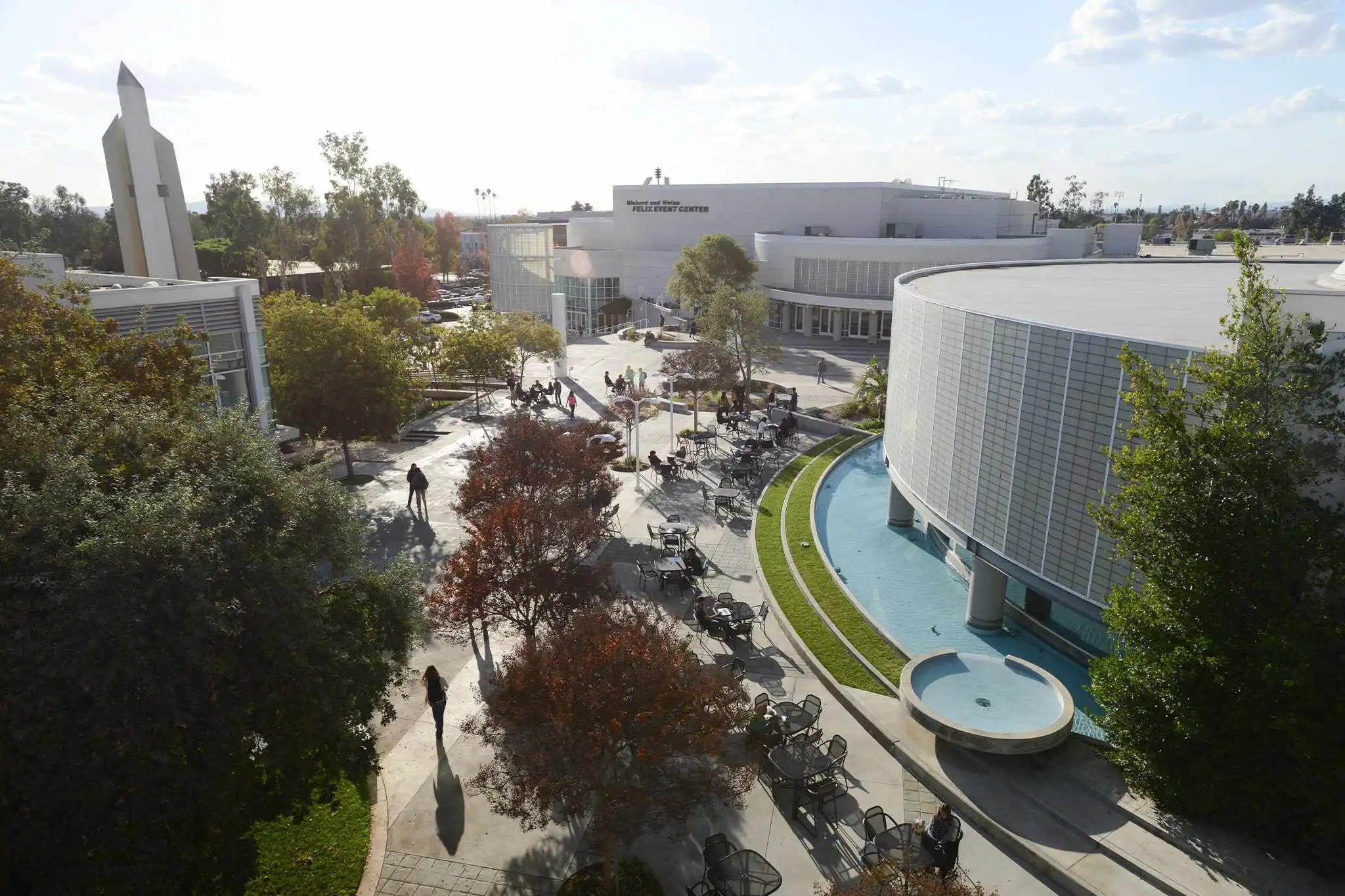
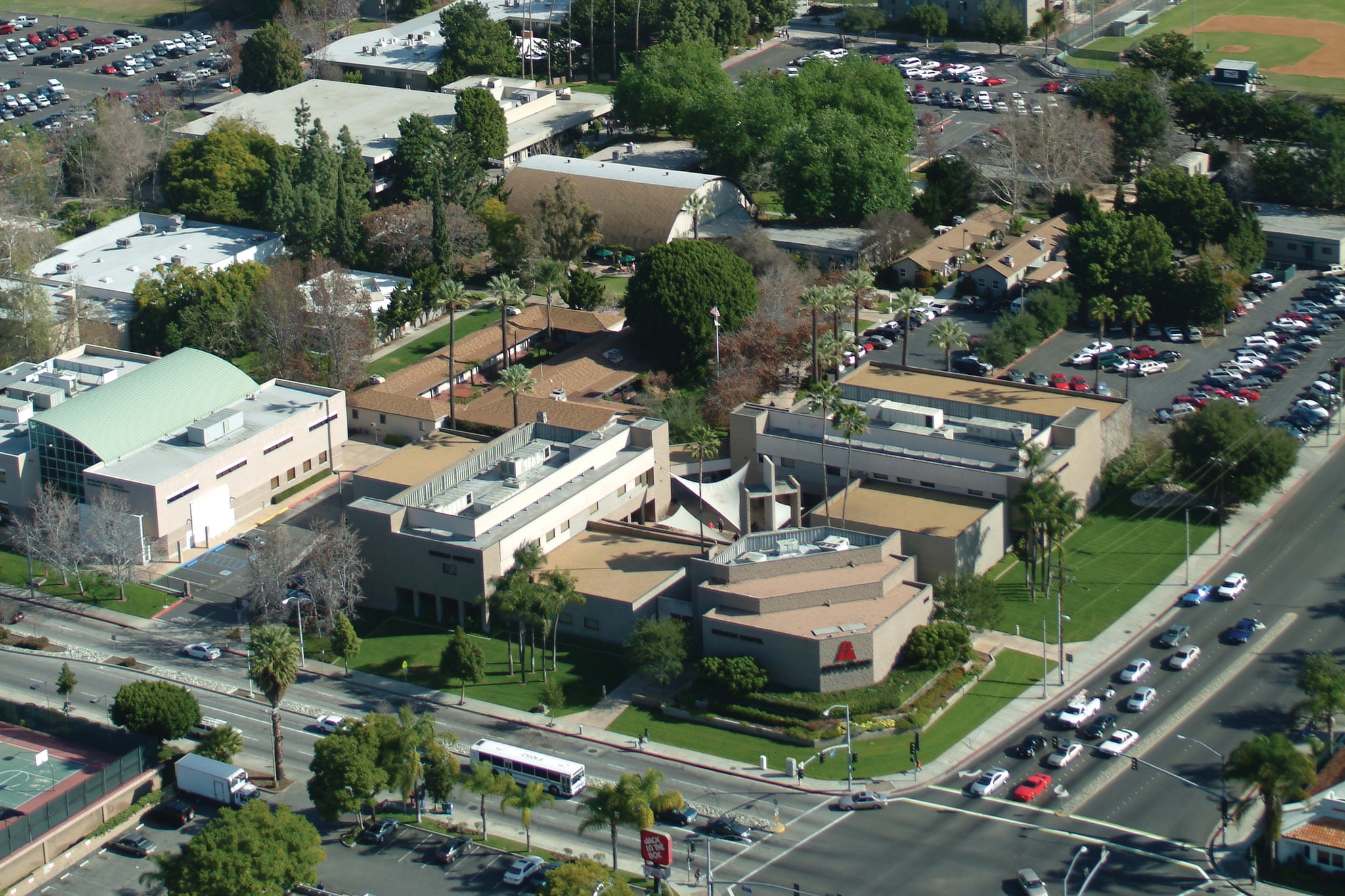
Azusa Pacific University is a Christian liberal arts institution in the foothills of the San Gabriel Valley, where faith and vocation are intentionally intertwined. It operates with an inclusive admissions philosophy and a curriculum heavily tilted toward practical, service-oriented fields like nursing and business. The campus vibe is suburban and residential, with a strong emphasis on spiritual formation and community life that feels more like a close-knit fellowship than a sprawling research university.
Admission requirements
Test-optional — scores considered if submitted
Required
- High school transcript
- Grade point average
Considered (not required)
- Letters of recommendation
- Test scores (SAT/ACT)
- College-prep program
- TOEFL (non-native English)
Source: IPEDS Admissions survey (2022) via Urban Institute. Covers formal factors only — it does not reflect essays, extracurriculars, or other holistic criteria.
More details
- Undergrad enrollment
- 2,759
- In-state tuition
- $44,458
- Out-of-state tuition
- $44,458
- No-Loan Policy
- No
- Graduation Rate
- 62%
- Meets Full Need
- No policy indicated
- On-Campus Housing
- 45% of students
- Early Decision Plan
- Not indicated
- First-Year Retention
- Not in sources
- Demonstrated Interest
- Not considered
- Median Earnings (10yr)
- $66,677
- Students Receiving Grant/Scholarship Aid
Outcomes & value
Outcomes & value
- Median earnings (10 yr)
- $66,677
- Value (earnings ÷ net price)
- 3.0×
- Median debt at graduation
- $23,219
- Graduation rate
- 62%
- First-year retention
- 84%
- Reducing loan balance (3 yr)
- 64%
- Pell (lower-income) share
- 35%
- First-gen share (among federal-aid recipients)
- 38%
Financial health
3.0 / 3.0Meets the federal financial-responsibility standard
U.S. Dept. of Education Financial Responsibility Composite Score (FY2022-23). Scale −1.0 to 3.0; ≥1.5 meets the standard. Reported for private nonprofit & for-profit institutions only — public universities are state-backed and not scored, so this is a stability signal, not a ranking.
Top-earning majors
Median earnings by field of study (highest credential), ~2 years after completion.
- Registered Nursing, Nursing Administration, Nursing Research and Clinical Nursing$89,570
- Accounting and Related Services$60,771
- Computer and Information Sciences, General$58,673
- International Business$52,107
- Business/Commerce, General$48,432
- Business Administration, Management and Operations
Campus & location
Campus safety
- On-campus violent crimes (2024)
- 4
- Per 1,000 students
- 0.64
On-campus criminal offenses classed as violent (murder/non-negligent manslaughter, rape, robbery, aggravated assault) for the most recent reported year. Source: U.S. Dept. of Education Campus Safety and Security (Clery Act). Counts reflect what’s reported to the school, and urban campuses often report more partly due to non-student incidents nearby — read alongside campus size and setting, not as a standalone safety verdict.
Climate
- Pleasant days / yr
- 163
- Summer high
- 90°F
- Winter low
- 43°F
- Annual rain
- 29.7"
- Annual snow
- 1"
- Natural-hazard risk
- Very High
Pleasant days counts days per year with a mean temperature of 55–75°F, a high at or below 90°F, a low at or above 45°F, and little precipitation — a transparent comfort measure, not a weighting we invented. Computed from Open-Meteo ERA5 daily history (2019–2023). Natural-hazard risk is the county’s composite rating from the FEMA National Risk Index.
Deep dive — research, future-scholar output & economic mobility
Research output
- Institutional h-index
- 88
- Scholarly works
- 2,914
Institutional research volume and impact from OpenAlex. The h-index reflects large research universities and will be low for teaching-focused liberal-arts colleges — not a measure of undergraduate quality.
Economic mobility
- Mobility rate
- 1.5%
- Bottom → top quintile
- 31%
- From bottom quintile
- 5%
Mobility rate = the share of students who both start in the bottom household-income quintile and reach the top quintile; bottom → top is that chance conditional on starting at the bottom. Source: Opportunity Insights Mobility Report Cards (Chetty, Friedman, Saez, Turner & Yagan). Reflects 1980–82 birth cohorts, so it’s directional, not current.
Quick answers
- What is the acceptance rate at Azusa Pacific University?
- Azusa Pacific University's acceptance rate is approximately 88% (Azusa, CA), based on the most recent figures we compiled from public and primary sources.
- What SAT score do you need for Azusa Pacific University?
- Admitted students at Azusa Pacific University typically score 983–1238 on the SAT (the middle-50% range). Scores outside this band are still admitted, especially with strong applications.
- How much does Azusa Pacific University cost?
- At Azusa Pacific University, the average net price (after aid) is about $22,212 per year. Actual cost varies with financial aid and residency.
- How many undergraduates attend Azusa Pacific University?
- Azusa Pacific University enrolls approximately 2,759 undergraduate students.
- Where is Azusa Pacific University located?
- Azusa Pacific University is located in Azusa, CA.
Admissions
APU's admissions process is decidedly accessible, reflecting its mission to serve a broad population. The university reports an of 88%, placing it firmly in the 'less selective' category. For the entering class, the middle 50% SAT range is 983–1238, and the ACT range is 20–25. Academic preparation is a clear priority; the university requires a minimum high school GPA of 3.0 for regular admission. Notably, demonstrated interest is not considered in the admissions process, according to conventions. The university does not appear to offer a binding Early Decision plan, focusing instead on regular admission cycles. While a significant majority of applicants are admitted, the —the percentage who enroll—is a more modest figure, indicating that many admitted students ultimately choose other options.
Compare Azusa Pacific University
vs Mount Saint Mary's Universityvs Concordia University-Irvinevs California Lutheran Universityvs Elmhurst University
See colleges similar to Azusa Pacific University →Sources
- Common Data Set - Azusa Pacific University
- Institutional Data - Azusa Pacific University
- Azusa Pacific University - IPEDS - Department of Education
- Common Data Set (CDS) - University of the Pacific
- Common Data Set: Home
- Common Data Set | Seattle Pacific University
- Azusa Pacific University Admissions - BigFuture College Search
- Azusa Pacific University SAT Scores and GPA - PrepScholar
- Azusa Pacific University Admissions - US News Best Colleges
- Azusa Pacific University (APU) - The Princeton Review College ...