Admit rate has ranged 59%–79% over the last 5 years — notably volatile. Source: IPEDS via Urban Institute.
Acceptance & SAT from Common Data Set / IPEDS; net price, earnings & graduation from the U.S. Dept. of Education College Scorecard. Figures lag ~1–2 years — verify with the school.
Cedarville University is a singular proposition in American higher education: a deeply conservative, Baptist-affiliated liberal arts and sciences university where faith isn't just a footnote but the foundational text for every class, campus activity, and career path. With a sprawling portfolio of over 150 programs, its academic identity is a distinctive fusion of rigorous professional preparation in nursing, engineering, and computer science with an unwavering commitment to biblical integration. The result is a self-contained, residential community in rural Ohio where 85% of students live on campus, bound by shared convictions, a famously friendly atmosphere, and a staggering 98% career outcomes rate that speaks to the institution's focused mission.
Admission requirements
Test-optional — scores considered if submitted
Required
High school transcript
Grade point average
Letters of recommendation
TOEFL (non-native English)
Considered (not required)
Class rank
Test scores (SAT/ACT)
College-prep program
Source: IPEDS Admissions survey (2022) via Urban Institute. Covers formal factors only — it does not reflect essays, extracurriculars, or other holistic criteria.
More details
Undergrad enrollment
4,024
In-state tuition
$37,150
Out-of-state tuition
$37,150
Graduation Rate
73%
Academic Programs
150+
On-Campus Housing
85% of students
Median Earnings (10yr)
$55,443
First-Year Retention Rate
90%
Career Outcomes Rate (2024)
98.17%
Outcomes & value
Outcomes & value
Median earnings (10 yr)
$55,443
Value (earnings ÷ net price)
2.3×
Median debt at graduation
$20,937
Graduation rate
73%
First-year retention
90%
Reducing loan balance (3 yr)
87%
Pell (lower-income) share
15%
First-gen share (among federal-aid recipients)
13%
Financial health
2.2 / 3.0Meets the federal financial-responsibility standard
U.S. Dept. of Education Financial Responsibility Composite Score (FY2022-23). Scale −1.0 to 3.0; ≥1.5 meets the standard. Reported for private nonprofit & for-profit institutions only — public universities are state-backed and not scored, so this is a stability signal, not a ranking.
Top-earning majors
Median earnings by field of study (highest credential), ~2 years after completion.
Computer Engineering$73,635
Computer Science$69,338
Electrical, Electronics, and Communications Engineering$67,101
Mechanical Engineering$62,409
Accounting and Related Services$57,318
Finance and Financial Management Services$57,318
Campus & location
Campus safety
On-campus violent crimes (2024)
0
Per 1,000 students
0.00
On-campus criminal offenses classed as violent (murder/non-negligent manslaughter, rape, robbery, aggravated assault) for the most recent reported year. Source: U.S. Dept. of Education Campus Safety and Security (Clery Act). Counts reflect what’s reported to the school, and urban campuses often report more partly due to non-student incidents nearby — read alongside campus size and setting, not as a standalone safety verdict.
Climate
Pleasant days / yr
90
Summer high
82°F
Winter low
27°F
Annual rain
43.3"
Annual snow
19.9"
Natural-hazard risk
Relatively Low
Pleasant days counts days per year with a mean temperature of 55–75°F, a high at or below 90°F, a low at or above 45°F, and little precipitation — a transparent comfort measure, not a weighting we invented. Computed from Open-Meteo ERA5 daily history (2019–2023). Natural-hazard risk is the county’s composite rating from the FEMA National Risk Index.
Deep dive — research, future-scholar output & economic mobility▾
Research output
Institutional h-index
59
Scholarly works
3,126
Institutional research volume and impact from OpenAlex. The h-index reflects large research universities and will be low for teaching-focused liberal-arts colleges — not a measure of undergraduate quality.
Economic mobility
Mobility rate
0.9%
Bottom → top quintile
29%
From bottom quintile
3%
Mobility rate = the share of students who both start in the bottom household-income quintile and reach the top quintile; bottom → top is that chance conditional on starting at the bottom. Source: Opportunity Insights Mobility Report Cards (Chetty, Friedman, Saez, Turner & Yagan). Reflects 1980–82 birth cohorts, so it’s directional, not current.
Quick answers
What is the acceptance rate at Cedarville University?
Cedarville University's acceptance rate is approximately 65% (Cedarville, OH), based on the most recent figures we compiled from public and primary sources.
What SAT score do you need for Cedarville University?
Admitted students at Cedarville University typically score 1130–1360 on the SAT (the middle-50% range). Scores outside this band are still admitted, especially with strong applications.
How much does Cedarville University cost?
At Cedarville University, the average net price (after aid) is about $24,468 per year. Actual cost varies with financial aid and residency.
How many undergraduates attend Cedarville University?
Cedarville University enrolls approximately 4,024 undergraduate students.
Where is Cedarville University located?
Cedarville University is located in Cedarville, OH.
Admissions
Cedarville's admissions process is moderately selective, prioritizing academic preparation and alignment with the university's mission. The university accepts both the SAT and ACT, and will consider a student's highest superscored composite score from either test. For the 2026-27 academic year, new residential freshmen are automatically considered for academic scholarships ranging from $15,000 to $25,000 per year, which are renewable for all four years. The admissions office can be reached at 937-766-7700 for assistance. While the outlines various admission factors, specific details on the importance of demonstrated interest or early decision policies are not detailed in the provided sources.
Cedarville offers a comprehensive academic portfolio built on the principle of biblical integration in every course. Students can explore over 150 undergraduate and graduate degree programs. The curriculum is designed to provide rigorous coursework taught by highly credentialed professors. Popular majors reflect a blend of healthcare, STEM, and liberal arts, with the most common being:
Earnings = median of students working ~10 years after entry; debt = median of graduates. Value divides 10-yr earnings by one year’s net price — read it as earnings per dollar of annual cost, not a full lifetime ROI; it favors lower-cost schools. Source: U.S. Dept. of Education College Scorecard. Figures lag ~2 years and reflect all students, not your intended major.
Registered Nursing, Nursing Administration, Nursing Research and Clinical Nursing$56,532
Business Administration, Management and Operations$50,270
Source: U.S. Dept. of Education College Scorecard (field-of-study earnings). Figures cover graduates who received federal aid and lag ~2 years; not all programs report data.
Programs like the BA in Liberal Arts are suited for students with broad interests and strong academic abilities, aiming to provide a classical liberal arts education within a Christian worldview. This expansive range allows students to pursue professional callings in fields like engineering and healthcare alongside deep theological study.
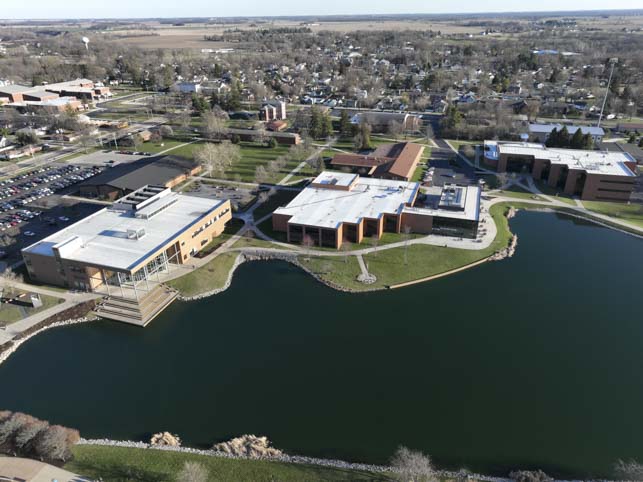
Life at Cedarville is defined by a vibrant, close-knit, and intentionally Christ-centered campus community. The university fosters a residential experience where 85% of students live in college-owned, -operated, or -affiliated housing. The Student Life and Christian Ministries Division exists explicitly to equip students "to love God, love others, live in community, and pursue excellence." This mission translates into a campus culture known for its friendly and kind student body, with numerous opportunities for engagement through clubs, intramural sports, and leadership roles. The environment is designed to be a place where students find a familial community, are discipled, and connect deeply with peers who share their faith commitments.
Cedarville demonstrates strong student success metrics, particularly in career placement. The university's most recent career outcomes rate is exceptionally high, with 98.17% of the Class of 2024 graduates successfully placed in employment, graduate school, or other pursuits, a figure that sits just behind its five-year average of 98.22%. This significantly outpaces the cited five-year national average of 84%. The institution also maintains a robust first-year retention rate of 90%. These figures underscore the effectiveness of Cedarville's model in preparing students for their next steps, supported by a dedicated campus community and career services aligned with its mission.
Cedarville employs a significant scholarship model to make attendance more accessible. For students entering in the 2026–27 academic year, new residential freshmen are automatically awarded academic scholarships ranging from $15,000 to $25,000 per year, renewable for all four years. The university provides a range of financial aid options, including for residential students, which requires completion of the FAFSA. Federal direct loans are available based on financial need assessment from the FAFSA, with subsidized loans specifically requiring a demonstration of financial need. Students must be enrolled full-time (a minimum of 12 credit hours per semester) to receive institutional financial aid. The university offers a Calculator to help families estimate personalized costs after aid.
Cedarville University stands out not for prestige in the conventional sense, but for the uncompromising depth and consistency of its mission. It is a university that operates with a singular, all-encompassing worldview. The commitment to "biblical integration in every" one of its 175+ academic programs is not marketing rhetoric but an operational principle that shapes curricula from nursing to mechanical engineering. This creates a unique educational product: a graduate who is both a technically competent professional and a theologically grounded practitioner. This mission fosters the intensely residential, 85%-on-campus community that is repeatedly described as friendly and kind—a cohesion born of shared conviction rather than just shared geography. The staggering 98% career outcomes rate is the powerful empirical result of this model, proving that a university built on such specific, unwavering foundations can deliver exceptional postgraduate success by fully preparing students within the context of their chosen community and calling.
Cedarville University seal · sourceMy Journey to Finding Cedarville - Student Life · sourceWashington Post: Cedarville Is Ohio's “Most Collegiest Town” | Cedarville University · sourceCedarville University - Profile, Rankings and Data | US News Best Colleges · source
.jpg?width=1600)