Admit rate has ranged 51%–71% over the last 5 years — notably volatile. Source: IPEDS via Urban Institute.
Acceptance & SAT from Common Data Set / IPEDS; net price, earnings & graduation from the U.S. Dept. of Education College Scorecard. Figures lag ~1–2 years — verify with the school.
Clayton State University is a public, four-year institution in Morrow, Georgia, that operates as a pragmatic engine of upward mobility for the Atlanta metro area. With an open-armed admissions policy and a sprawling catalog of over 100 degrees and certificates, it serves a largely commuter student body focused on direct pathways to careers in health sciences, business, and the liberal arts. The campus vibe is functional and career-oriented, where student life is often self-directed and the value proposition is clear: a low-cost, accessible education designed to get graduates into the workforce.
Admission requirements
Test-optional — scores considered if submitted
Required
High school transcript
Grade point average
College-prep program
TOEFL (non-native English)
Considered (not required)
Test scores (SAT/ACT)
Source: IPEDS Admissions survey (2022) via Urban Institute. Covers formal factors only — it does not reflect essays, extracurriculars, or other holistic criteria.
More details
Undergrad enrollment
4,348
In-state tuition
$5,180
Out-of-state tuition
$16,532
Graduation Rate
40%
On-Campus Housing
21% of students
Percent Receiving Aid
79%
Student-Faculty Ratio
22:1
Median Earnings (10yr)
$49,179
First-Year Retention Rate
71%
Outcomes & value
Outcomes & value
Median earnings (10 yr)
$49,179
Value (earnings ÷ net price)
5.9×
Median debt at graduation
$25,706
Graduation rate
40%
First-year retention
71%
Reducing loan balance (3 yr)
36%
Pell (lower-income) share
52%
First-gen share (among federal-aid recipients)
38%
Top-earning majors
Median earnings by field of study (highest credential), ~2 years after completion.
Registered Nursing, Nursing Administration, Nursing Research and Clinical Nursing$68,394
Dental Support Services and Allied Professions$52,607
Computer and Information Sciences, General$45,696
Teacher Education and Professional Development, Specific Levels and Methods$41,937
Accounting and Related Services$40,492
History
Campus & location
Campus safety
On-campus violent crimes (2024)
10
Per 1,000 students
2.02
On-campus criminal offenses classed as violent (murder/non-negligent manslaughter, rape, robbery, aggravated assault) for the most recent reported year. Source: U.S. Dept. of Education Campus Safety and Security (Clery Act). Counts reflect what’s reported to the school, and urban campuses often report more partly due to non-student incidents nearby — read alongside campus size and setting, not as a standalone safety verdict.
Climate
Pleasant days / yr
101
Summer high
87°F
Winter low
40°F
Annual rain
62.8"
Annual snow
0.5"
Natural-hazard risk
Relatively Moderate
Pleasant days counts days per year with a mean temperature of 55–75°F, a high at or below 90°F, a low at or above 45°F, and little precipitation — a transparent comfort measure, not a weighting we invented. Computed from Open-Meteo ERA5 daily history (2019–2023). Natural-hazard risk is the county’s composite rating from the FEMA National Risk Index.
Deep dive — research, future-scholar output & economic mobility▾
Research output
Institutional h-index
81
Scholarly works
1,546
Institutional research volume and impact from OpenAlex. The h-index reflects large research universities and will be low for teaching-focused liberal-arts colleges — not a measure of undergraduate quality.
Economic mobility
Mobility rate
1.5%
Bottom → top quintile
16%
From bottom quintile
10%
Mobility rate = the share of students who both start in the bottom household-income quintile and reach the top quintile; bottom → top is that chance conditional on starting at the bottom. Source: Opportunity Insights Mobility Report Cards (Chetty, Friedman, Saez, Turner & Yagan). Reflects 1980–82 birth cohorts, so it’s directional, not current.
Quick answers
What is the acceptance rate at Clayton State University?
Clayton State University's acceptance rate is approximately 68% (Morrow, GA), based on the most recent figures we compiled from public and primary sources.
What SAT score do you need for Clayton State University?
Admitted students at Clayton State University typically score 860–1078 on the SAT (the middle-50% range). Scores outside this band are still admitted, especially with strong applications.
How much does Clayton State University cost?
At Clayton State University, the average net price (after aid) is about $8,365 per year. Actual cost varies with financial aid and residency.
How many undergraduates attend Clayton State University?
Clayton State University enrolls approximately 4,348 undergraduate students.
Where is Clayton State University located?
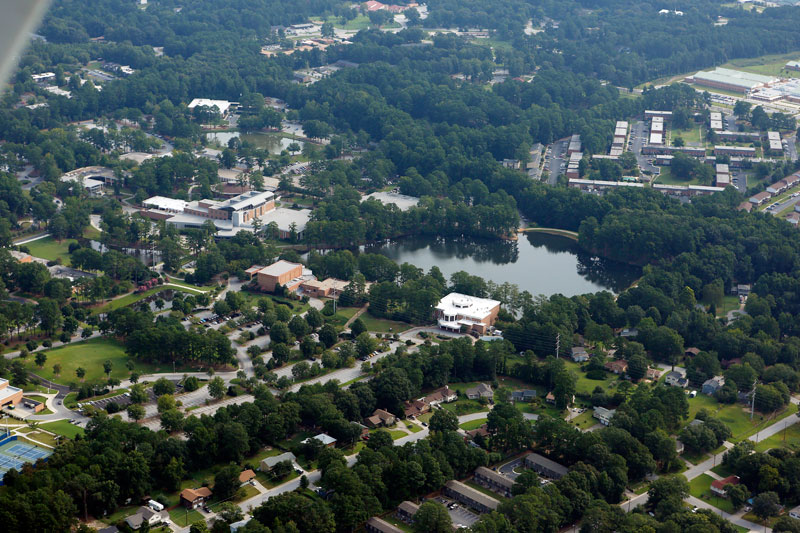
Clayton State University is located in Morrow, GA.
Admissions
Clayton State's admissions process is designed for accessibility, positioning the university as a gateway rather than a gatekeeper. With an of 68%, the school is categorized as "less selective." The middle 50% SAT range for admitted students is 860–1078, and the ACT range is 15–19, with an average high school GPA of 3.2. Notably, the university employs a policy for incoming freshmen who have a core high school GPA of 3.0 or higher. The rate—the percentage of admitted students who enroll—is reported at 40.47%, which is considered significantly higher than some benchmarks. While the university encourages applying early for timely decisions and planning, it does not appear to have a binding Early Decision plan. The is the definitive source for understanding how factors like demonstrated interest are weighted in admissions decisions, though the provided sources do not specify Clayton State's policy on this particular factor.
Earnings = median of students working ~10 years after entry; debt = median of graduates. Value divides 10-yr earnings by one year’s net price — read it as earnings per dollar of annual cost, not a full lifetime ROI; it favors lower-cost schools. Source: U.S. Dept. of Education College Scorecard. Figures lag ~2 years and reflect all students, not your intended major.
$39,585
Business Administration, Management and Operations$37,688
Biology, General$36,848
Source: U.S. Dept. of Education College Scorecard (field-of-study earnings). Figures cover graduates who received federal aid and lag ~2 years; not all programs report data.
Academics at Clayton State are defined by breadth, practicality, and a focus on undergraduate education. The university offers a sprawling selection of over 100 degrees, majors, and certificates, including more than 60 undergraduate majors and minors, 8 master's degrees, and over 15 master's concentrations. The student-faculty ratio is 22:1. Popular majors reflect the institution's career-oriented mission and include:
Community Psychology
Health Services/Allied Health/Health Sciences, General
Liberal Arts and Humanities
Health Service Preparatory Studies
The curriculum emphasizes hands-on learning projects designed to build not just knowledge but a "full resume," directly tying classroom work to professional aspirations. The university has been ranked among the top public institutions in the South.
Student life at Clayton State is predominantly shaped by its commuter-campus identity. Only 21% of students live in college-owned, -operated, or -affiliated housing, with 79% living off campus. The university describes its community as "Diverse. Thriving. Engaged. Welcoming. Safe. Well-resourced and opportunity rich," and points to quality facilities and a wide array of student-focused programs. These are coordinated by the "Laker Life" office, which handles major campus events, student advocacy, service, and leadership initiatives. Campus Life also oversees student organizations and Greek life. However, this official portrait is tempered by student reviews that note campus life can feel "quiet or lacking in social activities," with students often heading to their rooms after class, suggesting that engagement often requires proactive effort from the student.
Outcomes data paints a picture of a university serving students who are often balancing education with other life responsibilities. The four-year graduation rate is 31%, and the six-year rate is between 35% and 45%. The first-year retention rate is 71%. For graduates, career outcomes are strong among those who report employment. From one survey of 534 responding graduates, 90% of those indicating employment were employed full time. The average annual salary for these full-time employed graduates was reported, though the specific figure is not provided in the snippet. The median earnings ten years after entry are $49,179.
Clayton State's primary appeal is its affordability. The average —the cost after grants and scholarships—is $8,365. The average financial aid package is $6,226, and 79% of enrolled students receive grants or scholarships. The university offers a mix of need-based and merit-based scholarships, which students can apply for through an online database. Financial aid packages may include cash, scholarships, loans, grants, and VA benefits, and are awarded on a first-come, first-served basis to eligible students who complete the FAFSA. The university provides a net price calculator for prospective students to estimate their individual cost. The sources reviewed do not indicate that Clayton State has a policy of meeting 100% of demonstrated financial need or a "no-loan" policy where loans are replaced with grants.
Clayton State University stands out as a quintessential modern regional public university: it is unpretentious, hyper-accessible, and ruthlessly practical. It doesn't chase prestige; it chases relevance for its community. This is evident in its policy for students with a 3.0 GPA, its rate of over 40% (suggesting it is a first-choice for many who apply), and its academic portfolio heavily skewed toward in-demand fields like health sciences and psychology. The campus culture is honest—it's a place where many students come to learn, not to live a curated residential college experience, and the university leans into that with career-focused "hands-on learning" and a straightforward financial value proposition. In a higher education landscape often obsessed with exclusivity, Clayton State's identity is built on inclusion and utility, serving as a critical on-ramp to professional success for the diverse population of metropolitan Atlanta.
Clayton State University seal · sourceCampus Buildings - Clayton State University · sourceClayton State University - Profile, Rankings and Data | US News Best Colleges · sourceClayton State University Lakeview Discovery and Science Center - Architect Magazine · source