Admit rate has ranged 72%–78% over the last 5 years, though the latest figure above (60%) falls outside that window. Source: IPEDS via Urban Institute.
Acceptance & SAT from Common Data Set / IPEDS; net price, earnings & graduation from the U.S. Dept. of Education College Scorecard. Figures lag ~1–2 years — verify with the school.
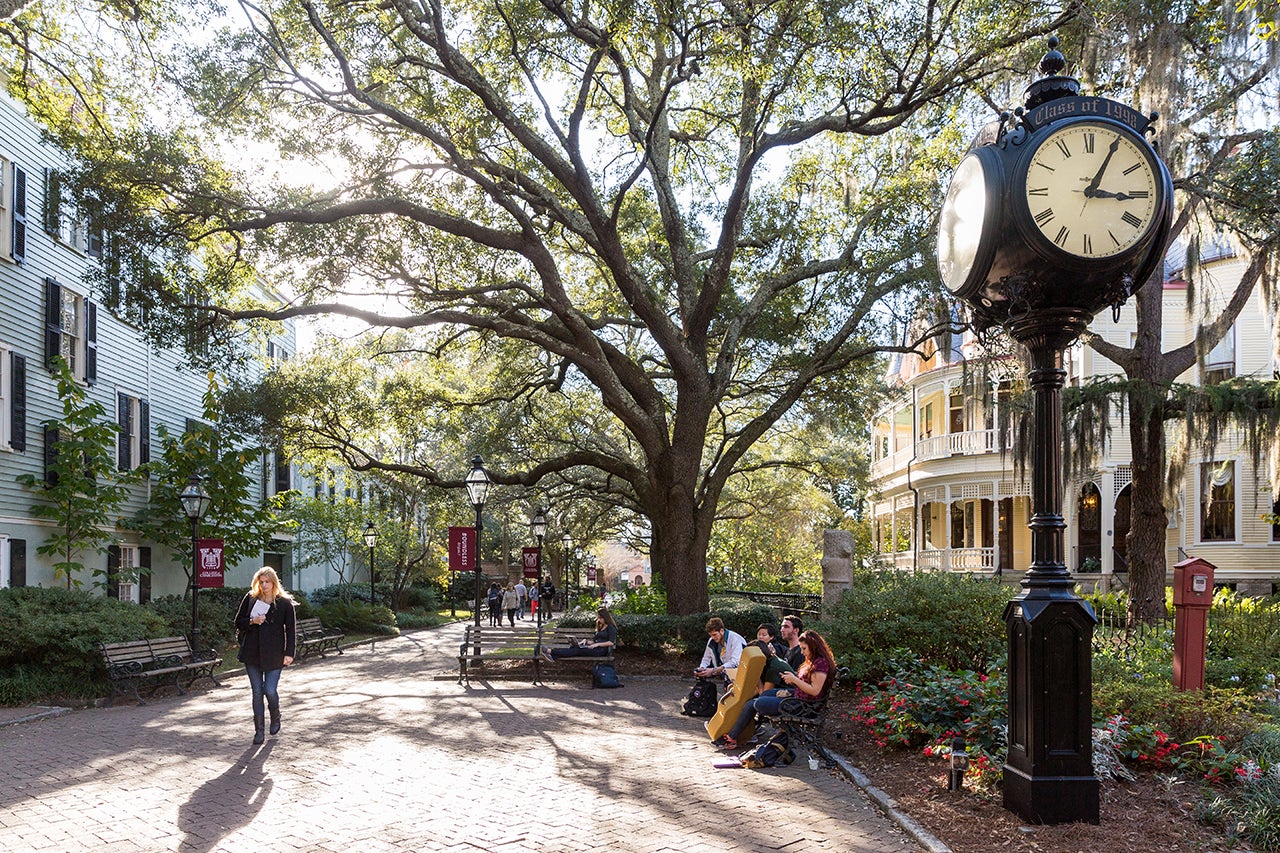
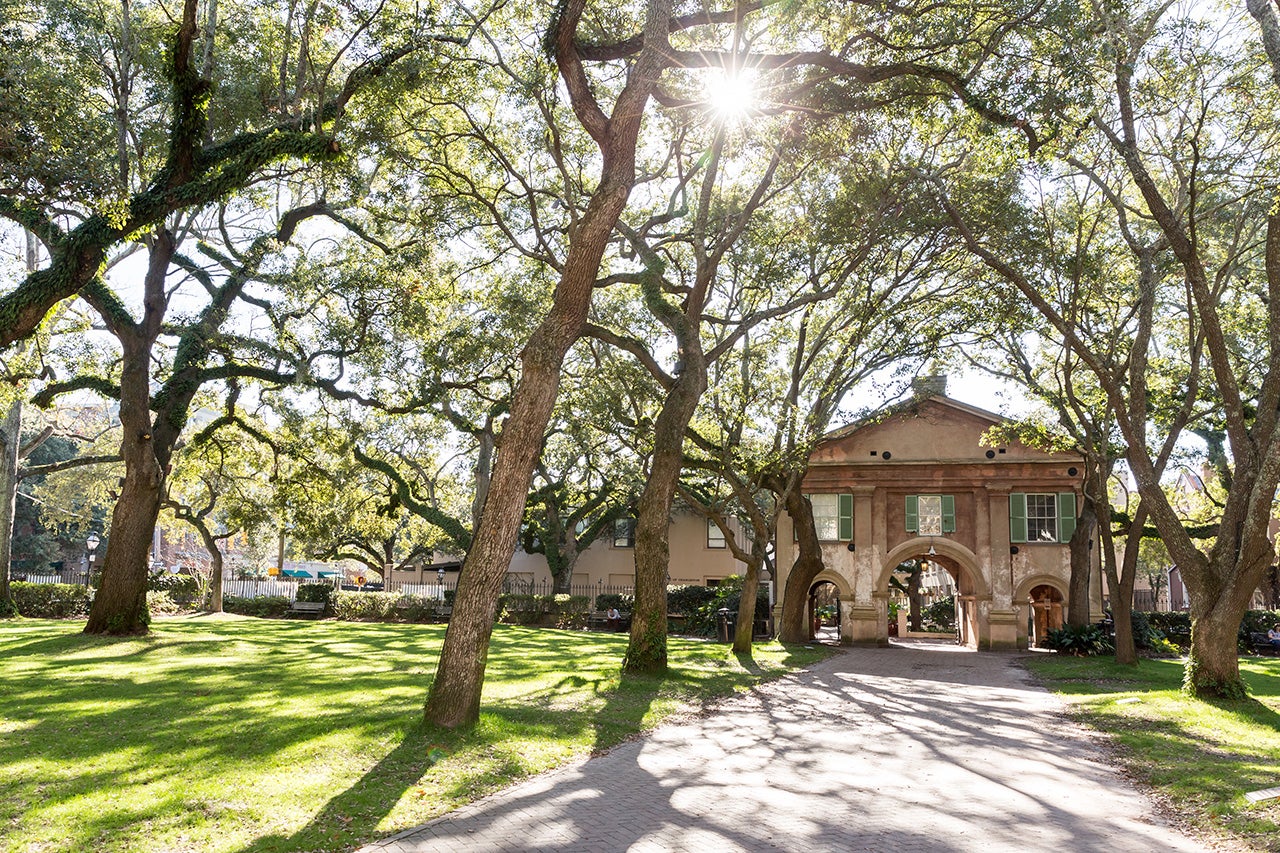
The College of Charleston is a public liberal arts university where the historic campus and the vibrant, tourist-drenched city of Charleston are inextricably fused. It’s a place where the academic offerings—a robust slate of 69 majors—compete for attention with a potent social scene, a bustling calendar of over 230 student clubs, and a coastal lifestyle that defines the undergraduate experience. This is a school for students who want a traditional college atmosphere wrapped in the distinctive, sometimes decadent, charm of the Lowcountry, where the six-year graduation rate sits at a solid 66% and the median SAT score for incoming students signals a steadily rising academic profile.
Admission requirements
Test-optional — scores considered if submitted
Required
High school transcript
Grade point average
Class rank
College-prep program
TOEFL (non-native English)
Considered (not required)
Letters of recommendation
Test scores (SAT/ACT)
Source: IPEDS Admissions survey (2022) via Urban Institute. Covers formal factors only — it does not reflect essays, extracurriculars, or other holistic criteria.
More details
Undergrad enrollment
10,558
In-state tuition
$12,978
Out-of-state tuition
$38,296
Majors Offered
69
Meets Full Need
No
Demonstrated Interest
Not considered
Median Earnings (10yr)
$56,416
Six-Year Graduation Rate
66%
Four-Year Graduation Rate
57%
Student Clubs & Organizations
230+
Employed 1 Year After Graduation
95%
Students Completing an Internship
Outcomes & value
Outcomes & value
Median earnings (10 yr)
$56,416
Value (earnings ÷ net price)
3.0×
Median debt at graduation
$23,250
Graduation rate
66%
First-year retention
82%
Reducing loan balance (3 yr)
60%
Pell (lower-income) share
19%
First-gen share (among federal-aid recipients)
20%
Top-earning majors
Median earnings by field of study (highest credential), ~2 years after completion.
Computer and Information Sciences, General$65,238
Finance and Financial Management Services$52,941
Mathematics$46,478
Accounting and Related Services$43,519
Marketing$43,000
International Business$42,930
Campus & location
Campus safety
On-campus violent crimes (2024)
12
Per 1,000 students
1.03
On-campus criminal offenses classed as violent (murder/non-negligent manslaughter, rape, robbery, aggravated assault) for the most recent reported year. Source: U.S. Dept. of Education Campus Safety and Security (Clery Act). Counts reflect what’s reported to the school, and urban campuses often report more partly due to non-student incidents nearby — read alongside campus size and setting, not as a standalone safety verdict.
Climate
Pleasant days / yr
130
Summer high
86°F
Winter low
46°F
Annual rain
58.4"
Natural-hazard risk
Relatively High
Pleasant days counts days per year with a mean temperature of 55–75°F, a high at or below 90°F, a low at or above 45°F, and little precipitation — a transparent comfort measure, not a weighting we invented. Computed from Open-Meteo ERA5 daily history (2019–2023). Natural-hazard risk is the county’s composite rating from the FEMA National Risk Index.
Deep dive — research, future-scholar output & economic mobility▾
Research output
Institutional h-index
220
Scholarly works
11,486
Institutional research volume and impact from OpenAlex. The h-index reflects large research universities and will be low for teaching-focused liberal-arts colleges — not a measure of undergraduate quality.
Economic mobility
Mobility rate
1.0%
Bottom → top quintile
23%
From bottom quintile
4%
Mobility rate = the share of students who both start in the bottom household-income quintile and reach the top quintile; bottom → top is that chance conditional on starting at the bottom. Source: Opportunity Insights Mobility Report Cards (Chetty, Friedman, Saez, Turner & Yagan). Reflects 1980–82 birth cohorts, so it’s directional, not current.
Quick answers
What is the acceptance rate at College of Charleston?
College of Charleston's acceptance rate is approximately 60% (Charleston, SC), based on the most recent figures we compiled from public and primary sources.
What SAT score do you need for College of Charleston?
Admitted students at College of Charleston typically score 1140–1310 on the SAT (the middle-50% range). Scores outside this band are still admitted, especially with strong applications.
How much does College of Charleston cost?
At College of Charleston, the average net price (after aid) is about $18,960 per year. Actual cost varies with financial aid and residency.
How many undergraduates attend College of Charleston?
College of Charleston enrolls approximately 10,558 undergraduate students.
Where is College of Charleston located?
College of Charleston is located in Charleston, SC.
Admissions
Admission to the College of Charleston is moderately selective, with a clear advantage for those who apply through its binding Early Decision program. While the overall is 60%, the Early Decision acceptance rate has been reported as high as 71.96%, offering a significant boost to committed applicants. The process is test-flexible, and the admitted class is academically solid: for the Fall 2024 cohort, median SAT scores were 1210 for in-state students and 1260 for out-of-state students, with median ACT scores of 26 and 28, respectively. The university does not consider demonstrated interest as a factor in admissions decisions, focusing instead on the academic record. The rate—the percentage of admitted students who enroll—has been noted as low as 11.91%, indicating that many admitted students ultimately choose other options.
The academic structure at CofC is built on a broad liberal arts foundation, offering students a choice of 69 majors, 88 minors, and 7 undergraduate certificates. The curriculum is supplemented by 20 master's degrees and 3 doctoral programs. The most popular majors cluster in business, communications, and the sciences: Business Administration and Management, Speech Communication and Rhetoric, Psychology, and Biology each account for between 8% and 9% of graduating students. The scale of the university allows for a wide variety of programs—approximately 150 undergraduate majors and minors in total—within a mid-sized public university setting. The academic experience is often described as engaged and community-oriented, though external perceptions sometimes emphasize the vibrant social and party scene as a dominant feature of campus life.
Earnings = median of students working ~10 years after entry; debt = median of graduates. Value divides 10-yr earnings by one year’s net price — read it as earnings per dollar of annual cost, not a full lifetime ROI; it favors lower-cost schools. Source: U.S. Dept. of Education College Scorecard. Figures lag ~2 years and reflect all students, not your intended major.
Economics
$41,937
Business Administration, Management and Operations$40,688
Source: U.S. Dept. of Education College Scorecard (field-of-study earnings). Figures cover graduates who received federal aid and lag ~2 years; not all programs report data.
Life at the College of Charleston is defined by an intense blurring of campus and city. With over 230 student clubs and organizations, a vibrant arts scene, and a calendar packed with traditions and events from the first week of class, the campus culture is actively social. The Office of Student Involvement facilitates hundreds of opportunities for engagement. Greek life is a large and visible part of the social ecosystem, though students report it is possible to have a full social life without participating. The ultimate selling point, however, is location: students experience a "vibrant and diverse cultural life" in historic Charleston, with its restaurants, festivals, and coastal amenities serving as an extended campus. This fusion creates a distinct vibe where the city's energy is a central part of the college experience.
The College of Charleston posts solid, if not elite, student outcomes. The four-year graduation rate is 57%, but the six-year rate rises to 66%, placing it right at the national average. Post-graduation, 95% of alumni are employed one year after earning their degree. A strong 66% of students complete at least one internship during their undergraduate career, contributing to career readiness. The university highlights over 8,000 experiential learning opportunities available to students. These figures paint a picture of a university where a majority of students persist to graduation and successfully enter the workforce, supported by practical, hands-on learning experiences integrated into the curriculum.
As a public institution, the College of Charleston has a stark cost differential for in-state versus out-of-state students. For the 2026-27 academic year, the total estimated is $35,270 for South Carolina residents and $63,856 for non-residents. The university emphasizes affordability through a financial aid program encompassing scholarships and grants. For in-state students with demonstrated financial need, the college commits to meeting at least 65% of that need. The average after aid—what families actually pay—is reported around $18,960 to $21,004. Aid packages include federal and state grants (which do not need to be repaid) as well as non-need-based loans. A Net Price Calculator is available for prospective students to estimate their individual cost.
The College of Charleston’s singular appeal is its inseparable bond with the city of Charleston. This isn't just a college in a city; it's a college of the city, where the historic architecture, coastal culture, and tourist-driven economy profoundly shape daily life. The academic offering is substantial and growing, but the experience is defined by the unique environment. It attracts students who want the classic undergraduate package—clubs, Greek life, sports—within a uniquely Southern, historic, and aesthetically captivating setting. The rising median test scores and the significant Early Decision advantage indicate it is becoming more strategically selective, seeking students who are all-in on the Charleston vibe. For the right student, it offers a compelling alternative to larger state schools: a mid-sized public university with a strong liberal arts core, wrapped in an irresistible location that is as much a part of the curriculum as any classroom.
College of Charleston seal · sourceCollege of Charleston Named 'Most Beautiful Campus' in South Carolina · sourceCollege of Charleston - All You SHOULD Know Before Going 2026 (with Reviews) · sourceCofC Named America's Most Beautiful College Campus - The College Today · source