Loading…
← All schools
Columbia College
Columbia, SCprivate nonprofitwww.columbiasc.edu/
Acceptance
94%
Avg net price
$18,408
Earnings (10 yr)
$41,338
Graduation rate
37%
Admit rate has ranged 96%–99% over the last 5 years, though the latest figure above (94%) falls outside that window. Source: IPEDS via Urban Institute.
Acceptance & SAT from Common Data Set / IPEDS; net price, earnings & graduation from the U.S. Dept. of Education College Scorecard. Figures lag ~1–2 years — verify with the school.
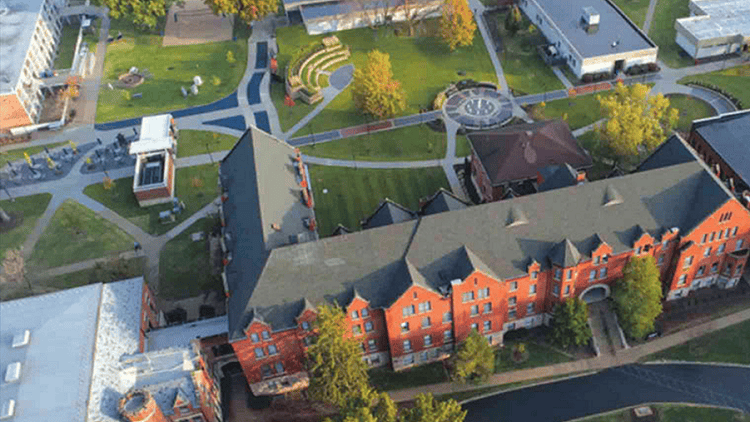
Columbia College in South Carolina is a private, liberal arts institution that defines itself by accessibility and practical, student-centered education. With an exceptionally high acceptance rate, it serves a diverse student body seeking flexible degree paths in fields like psychology, business, and criminal justice. The campus life emphasizes a close-knit, residential community where spontaneous fun and supportive friendships are part of the package, all at a relatively modest net price.
Admission requirements
Test-optional — scores considered if submitted
Required
- High school transcript
- Grade point average
- Class rank
- TOEFL (non-native English)
Considered (not required)
- Letters of recommendation
- Test scores (SAT/ACT)
Source: IPEDS Admissions survey (2022) via Urban Institute. Covers formal factors only — it does not reflect essays, extracurriculars, or other holistic criteria.
More details
- Undergrad enrollment
- 1,343
- In-state tuition
- $22,214
- Out-of-state tuition
- $22,214
- Top Majors
- Psychology, Business, Criminal Justice, Speech-Language Pathology
- Graduation Rate
- 37%
- Demonstrated Interest
- Not considered
- Median Earnings (10yr)
- $41,338
Outcomes & value
Outcomes & value
- Median earnings (10 yr)
- $41,338
- Value (earnings ÷ net price)
- 2.2×
- Median debt at graduation
- $22,750
- Graduation rate
- 37%
- First-year retention
- 60%
- Reducing loan balance (3 yr)
- 44%
- Pell (lower-income) share
- 54%
- First-gen share (among federal-aid recipients)
- 41%
Top-earning majors
Median earnings by field of study (highest credential), ~2 years after completion.
- Computer and Information Sciences and Support Services, Other$46,087
- Business Administration, Management and Operations$42,123
- Communication and Media Studies$33,993
- Special Education and Teaching$33,687
- Social Work$30,926
- Teacher Education and Professional Development, Specific Levels and Methods
Campus & location
Campus safety
- On-campus violent crimes (2024)
- 2
- Per 1,000 students
- 1.19
On-campus criminal offenses classed as violent (murder/non-negligent manslaughter, rape, robbery, aggravated assault) for the most recent reported year. Source: U.S. Dept. of Education Campus Safety and Security (Clery Act). Counts reflect what’s reported to the school, and urban campuses often report more partly due to non-student incidents nearby — read alongside campus size and setting, not as a standalone safety verdict.
Climate
- Pleasant days / yr
- 110
- Summer high
- 89°F
- Winter low
- 41°F
- Annual rain
- 47.4"
- Natural-hazard risk
- Relatively Moderate
Pleasant days counts days per year with a mean temperature of 55–75°F, a high at or below 90°F, a low at or above 45°F, and little precipitation — a transparent comfort measure, not a weighting we invented. Computed from Open-Meteo ERA5 daily history (2019–2023). Natural-hazard risk is the county’s composite rating from the FEMA National Risk Index.
Quick answers
- What is the acceptance rate at Columbia College?
- Columbia College's acceptance rate is approximately 94% (Columbia, SC), based on the most recent figures we compiled from public and primary sources.
- How much does Columbia College cost?
- At Columbia College, the average net price (after aid) is about $18,408 per year. Actual cost varies with financial aid and residency.
- How many undergraduates attend Columbia College?
- Columbia College enrolls approximately 1,343 undergraduate students.
- Where is Columbia College located?
- Columbia College is located in Columbia, SC.
Admissions
Columbia College operates with a highly accessible admissions philosophy, a stark contrast to the famously selective Ivy League institution it shares a name with. The process is designed to be straightforward, with the serving as a key resource for prospective students. The school's official stance, as reflected in its policies, is that demonstrated interest—such as campus visits or contact with admissions officers—is not considered in admissions decisions. This means applicants are evaluated on their submitted credentials without pressure to "show love" to the school. While the Common Data Set outlines the factors considered, the overarching theme is one of openness, aiming to provide educational opportunities to a broad range of students from South Carolina and beyond.
- Admissions Resources: Prospective students are directed to tools like the Common Data Set for transparent information about the process and requirements.
- Policy on Interest: The college explicitly does not factor demonstrated interest into its admissions evaluations, focusing instead on academic and personal credentials.
Compare Columbia College
See colleges similar to Columbia College →Sources
- Columbia University's Common Data Set
- Columbia Common Dataset 2024 : How to get into Columbia?
- [PDF] Common Data Set 2024-2025 - Columbia College Chicago
- [PDF] 2023-2024 Common Data Set Template - Columbia College
- Understanding Columbia's Common Data Set
- Common Data set - Columbia University
- First-Year Class Profile | Columbia Undergraduate Admissions
- Columbia College Admissions - BigFuture College Search
- This Year's Columbia University Admission Requirements
- Columbia College Admissions - US News Best Colleges