Admit rate has ranged 64%–78% over the last 5 years — notably volatile, though the latest figure above (80%) falls outside that window. Source: IPEDS via Urban Institute.
Acceptance & SAT from Common Data Set / IPEDS; net price, earnings & graduation from the U.S. Dept. of Education College Scorecard. Figures lag ~1–2 years — verify with the school.
Creighton University is a Jesuit institution in Omaha that operates like a well-oiled machine for producing healthcare professionals and business leaders, wrapped in a notably supportive and tight-knit Midwestern community. Its identity is split between a pre-professional powerhouse—particularly in the health sciences—and a classic liberal arts college, all underpinned by a culture that students describe as one of genuine care and connection. With an admissions process that is accessible but values academic rigor, Creighton offers a clear, outcomes-focused path, though its price tag demands careful financial planning.
Admission requirements
Test-optional — scores considered if submitted
Required
High school transcript
Grade point average
Letters of recommendation
College-prep program
TOEFL (non-native English)
Considered (not required)
Class rank
Test scores (SAT/ACT)
Source: IPEDS Admissions survey (2022) via Urban Institute. Covers formal factors only — it does not reflect essays, extracurriculars, or other holistic criteria.
More details
Undergrad enrollment
4,348
In-state tuition
$48,856
Out-of-state tuition
$48,856
Graduation Rate
83%
On-Campus Housing
51% of students
Median Earnings (10yr)
$73,911
Career Outcomes Rate (6 months)
98%
Athletics Graduation Success Rate
97%
Students Receiving Grant/Scholarship Aid
98%
Outcomes & value
Outcomes & value
Median earnings (10 yr)
$73,911
Value (earnings ÷ net price)
2.3×
Median debt at graduation
$25,000
Graduation rate
83%
First-year retention
94%
Reducing loan balance (3 yr)
81%
Pell (lower-income) share
12%
First-gen share (among federal-aid recipients)
18%
Top-earning majors
Median earnings by field of study (highest credential), ~2 years after completion.
Registered Nursing, Nursing Administration, Nursing Research and Clinical Nursing$62,483
Computer and Information Sciences, General$60,689
Accounting and Related Services$57,811
Finance and Financial Management Services$55,794
Economics$55,286
Communication and Media Studies
Campus & location
Campus safety
On-campus violent crimes (2024)
10
Per 1,000 students
1.17
On-campus criminal offenses classed as violent (murder/non-negligent manslaughter, rape, robbery, aggravated assault) for the most recent reported year. Source: U.S. Dept. of Education Campus Safety and Security (Clery Act). Counts reflect what’s reported to the school, and urban campuses often report more partly due to non-student incidents nearby — read alongside campus size and setting, not as a standalone safety verdict.
Climate
Pleasant days / yr
77
Summer high
85°F
Winter low
19°F
Annual rain
29.7"
Annual snow
22.6"
Natural-hazard risk
Relatively High
Pleasant days counts days per year with a mean temperature of 55–75°F, a high at or below 90°F, a low at or above 45°F, and little precipitation — a transparent comfort measure, not a weighting we invented. Computed from Open-Meteo ERA5 daily history (2019–2023). Natural-hazard risk is the county’s composite rating from the FEMA National Risk Index.
Deep dive — research, future-scholar output & economic mobility▾
Research output
Institutional h-index
433
Scholarly works
27,193
Institutional research volume and impact from OpenAlex. The h-index reflects large research universities and will be low for teaching-focused liberal-arts colleges — not a measure of undergraduate quality.
Economic mobility
Mobility rate
1.6%
Bottom → top quintile
53%
From bottom quintile
3%
Mobility rate = the share of students who both start in the bottom household-income quintile and reach the top quintile; bottom → top is that chance conditional on starting at the bottom. Source: Opportunity Insights Mobility Report Cards (Chetty, Friedman, Saez, Turner & Yagan). Reflects 1980–82 birth cohorts, so it’s directional, not current.
Quick answers
What is the acceptance rate at Creighton University?
Creighton University's acceptance rate is approximately 80% (Omaha, NE), based on the most recent figures we compiled from public and primary sources.
What SAT score do you need for Creighton University?
Admitted students at Creighton University typically score 1243–1428 on the SAT (the middle-50% range). Scores outside this band are still admitted, especially with strong applications.
How much does Creighton University cost?
At Creighton University, the average net price (after aid) is about $31,568 per year. Actual cost varies with financial aid and residency.
How many undergraduates attend Creighton University?
Creighton University enrolls approximately 4,348 undergraduate students.
Where is Creighton University located?
Creighton University is located in Omaha, NE.
Admissions
Creighton's admissions process is notably accessible compared to many private universities, with a high that reflects its mission to serve a broad student body. The university receives a substantial number of applications—sources cite figures ranging from 6,389 to over 14,000 for recent cycles—and admits a large majority. While the is the definitive source for detailed criteria, public reports highlight that admitted students typically present strong academic credentials. The university offers an Early Decision option, and applying early is encouraged for the best scholarship consideration. Demonstrated interest is a factor that prospective students should be aware of, as it is a component some colleges consider in admissions decisions, though its specific weight at Creighton should be confirmed via their Common Data Set.
Application Volume: Recent cycles show application numbers in the thousands, with one source noting 14,685 applications for the Fall 2023 entering class.
Early Decision: Applying via Early Decision can be a strategic advantage, as Creighton has an early acceptance rate.
Admission Factors: Prospective students should consult Creighton's Common Data Set for the official, detailed breakdown of how factors like GPA, test scores, class rank, essays, recommendations, and extracurriculars are evaluated.
Earnings = median of students working ~10 years after entry; debt = median of graduates. Value divides 10-yr earnings by one year’s net price — read it as earnings per dollar of annual cost, not a full lifetime ROI; it favors lower-cost schools. Source: U.S. Dept. of Education College Scorecard. Figures lag ~2 years and reflect all students, not your intended major.
$50,856
Marketing$49,136
Business Administration, Management and Operations$48,041
Source: U.S. Dept. of Education College Scorecard (field-of-study earnings). Figures cover graduates who received federal aid and lag ~2 years; not all programs report data.
Creighton's academic identity is firmly anchored in its Jesuit tradition and its formidable strength in pre-professional education, particularly health sciences. The university offers more than 140 academic programs across nine schools and colleges. While it provides a broad liberal arts foundation, its reputation and student outcomes are most powerfully linked to fields like medicine, nursing, pharmacy, dentistry, and business. A review of popular majors and external commentary consistently points to these areas as having the strongest job prospects. The curriculum is described as blending rigorous coursework with hands-on learning, designed to prepare impactful leaders. This practical, outcomes-oriented approach defines the academic experience for many undergraduates, who are often on a direct track to graduate programs or professional careers.
Program Breadth: Over 140 academic programs in health sciences, arts, law, and business.
Signature Strengths: External analyses and internal focus highlight health sciences (medicine, nursing, pharmacy, dentistry) and business as the university's strongest majors in terms of job prospects.
Educational Philosophy: Academics are designed to combine rigorous coursework with hands-on learning to prepare leaders.
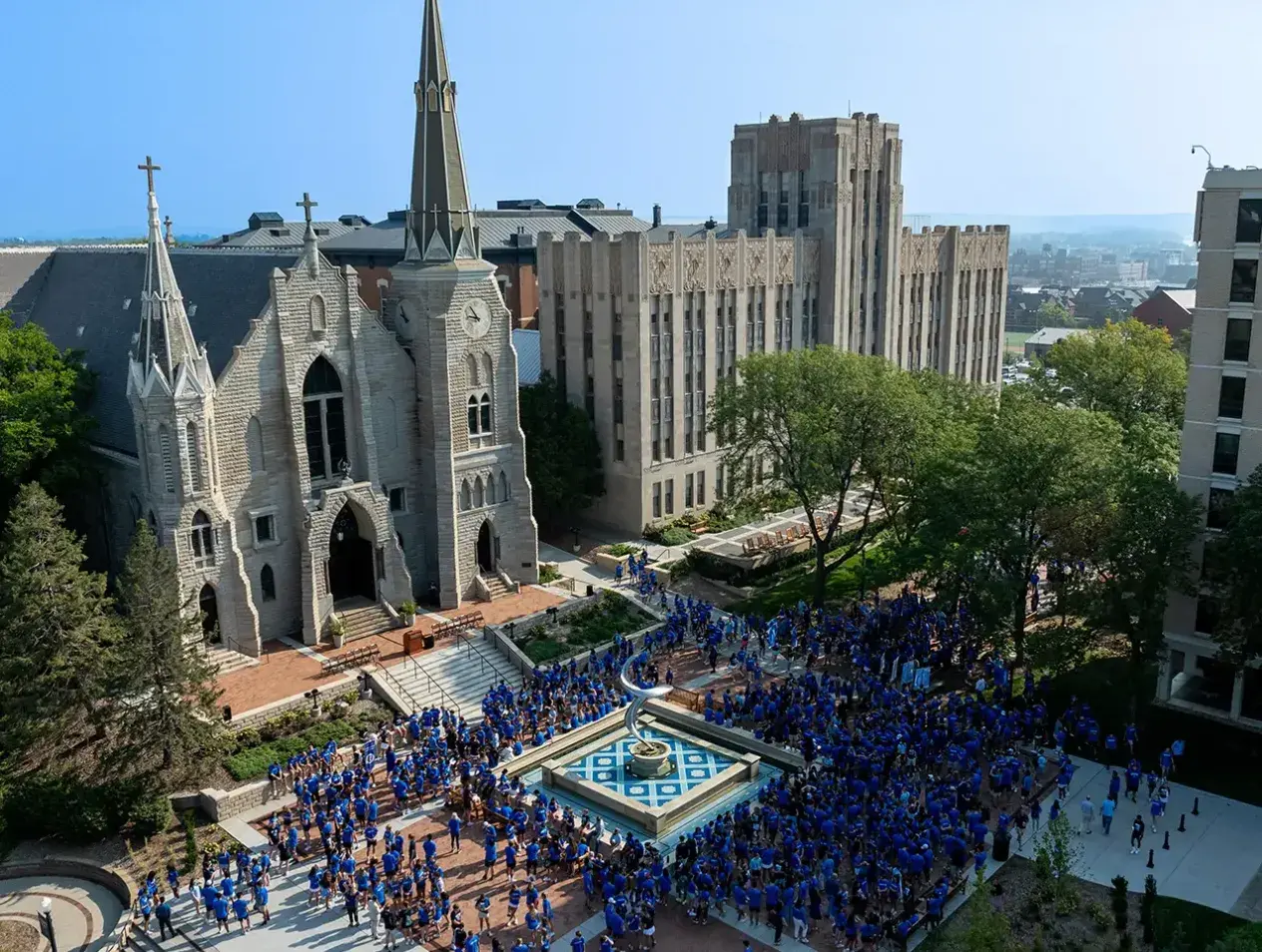
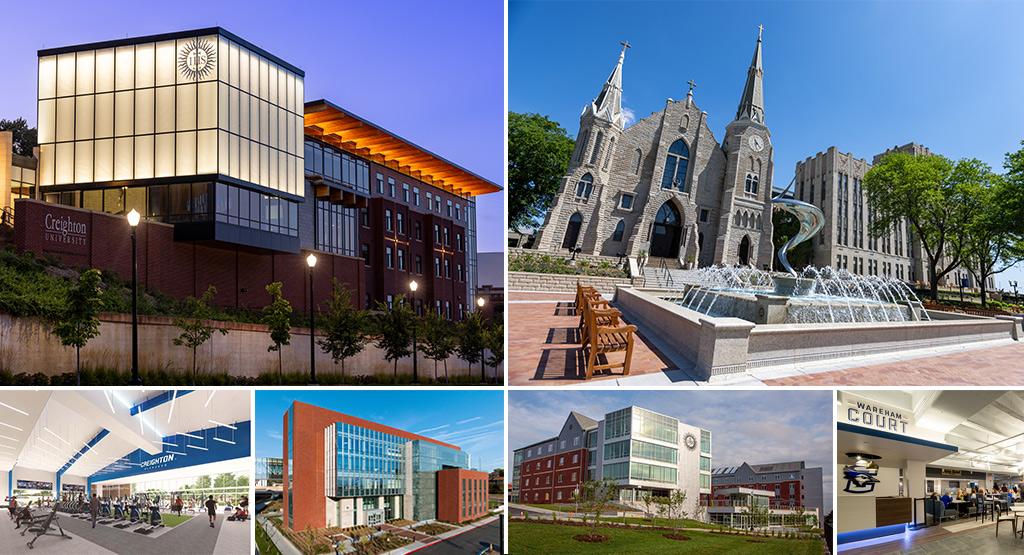
Life at Creighton is characterized by a highly residential, involved, and community-focused experience. Just over half of students live in college-owned, -operated, or -affiliated housing, creating a campus-centric vibe. Students and the university itself actively promote a "culture of care and connection" that is more than just a slogan; it's described as a defining feature that helps students grow. The campus offers numerous indoor and outdoor spaces for gathering, socializing, studying, and recreation. This strong sense of community is repeatedly cited as what makes Creighton special, fostering an environment where support and involvement are the norms. From clubs and organizations to spirituality and wellness resources, student life is structured to be immersive and engaging.
Creighton delivers impressively strong outcomes for its graduates, validating its pre-professional focus. The university reports an overall career outcomes rate of 98% within six months of graduation, based on its First Destination Survey. This high success rate speaks to the effectiveness of its career preparation and the market value of its degrees, particularly in health and business. Furthermore, Creighton's student-athletes excel academically, with the athletics program recently earning an NCAA Graduation Success Rate (GSR) of 97 percent, ranking tied for 17th-best nationally. These figures collectively paint a picture of an institution where students, whether on the field or in the classroom, are well-supported to complete their degrees and launch successfully into their next steps.
Attending Creighton is a significant financial investment, but the university works to offset costs through widespread grant and scholarship aid. A very high percentage of students—98% according to one calculator—receive some form of grant or scholarship aid. The average financial aid package is substantial. Students and families are encouraged to use the university's Net Price Calculator to get a personalized estimate, which subtracts grants and scholarships from the total . It's important to note that while aid is prevalent, Creighton's financial aid policies include both need-based and non-need-based options, including loans and work-study. The university does not advertise a "no-loan" policy, meaning loans are typically part of financial aid packages for students who demonstrate need.
Creighton carves out a distinctive niche by masterfully combining two often-separate models: the intimate, values-driven liberal arts college and the high-stakes, pre-professional training ground. Its Jesuit foundation provides the cohesive glue—a focus on caring for the whole person and serving others—that makes the relentless pre-med or business grind feel part of a larger purpose. This is not a cutthroat environment; the celebrated "culture of care" seems to soften the edges of pre-professional competition. The result is a university where you can pursue a direct, almost guaranteed pipeline to medical or dental school (its health sciences are legendary within the region) while living in a supportive, all-in residential community. It’s this dual identity—exceptional job placement rooted in a genuinely connected campus life—that defines the Creighton experience and justifies its position as a premier regional institution.
Creighton University seal · sourceAbout Creighton University · sourceSix must-see additions to Creighton's campus | University Relations | Creighton University · sourceCampus Maps and Directions | Creighton University · source