Admit rate has ranged 46%–67% over the last 5 years — notably volatile. Source: IPEDS via Urban Institute.
Acceptance & SAT from Common Data Set / IPEDS; net price, earnings & graduation from the U.S. Dept. of Education College Scorecard. Figures lag ~1–2 years — verify with the school.
CUNY City College is the flagship public liberal arts and engineering college of the City University of New York, offering a rigorous, practical education on a historic, gothic-revival campus in upper Manhattan. It's a place of profound socioeconomic mobility, where a famously diverse student body—many first-generation—pursues degrees in everything from architecture to atmospheric sciences at a net cost that's among the lowest in the nation. The vibe is no-nonsense, urban, and intellectually scrappy, a true 'Harvard of the Proletariat' that delivers standout outcomes without the crippling debt.
Admission requirements
Test-blind — scores not considered
Required
High school transcript
Grade point average
College-prep program
TOEFL (non-native English)
Source: IPEDS Admissions survey (2022) via Urban Institute. Covers formal factors only — it does not reflect essays, extracurriculars, or other holistic criteria.
More details
Undergrad enrollment
12,505
In-state tuition
$7,340
Out-of-state tuition
$15,290
No-Loan Policy
No
Graduation Rate
57%
Meets Full Need
Not stated in sources
ED Share of Class
Not applicable (No ED program)
First-Year Retention
Not stated in sources
Demonstrated Interest
Not considered
Median Earnings (10yr)
$66,039
Outcomes & value
Outcomes & value
Median earnings (10 yr)
$66,039
Value (earnings ÷ net price)
17.5×
Median debt at graduation
$11,990
Graduation rate
57%
First-year retention
79%
Reducing loan balance (3 yr)
53%
Pell (lower-income) share
61%
First-gen share (among federal-aid recipients)
46%
Top-earning majors
Median earnings by field of study (highest credential), ~2 years after completion.
Allied Health Diagnostic, Intervention, and Treatment Professions$115,339
Mechanical Engineering$68,618
Civil Engineering$64,706
Computer Science$59,169
Electrical, Electronics, and Communications Engineering$57,318
Environmental/Environmental Health Engineering
Campus & location
Campus safety
On-campus violent crimes (2024)
11
Per 1,000 students
0.73
On-campus criminal offenses classed as violent (murder/non-negligent manslaughter, rape, robbery, aggravated assault) for the most recent reported year. Source: U.S. Dept. of Education Campus Safety and Security (Clery Act). Counts reflect what’s reported to the school, and urban campuses often report more partly due to non-student incidents nearby — read alongside campus size and setting, not as a standalone safety verdict.
Climate
Pleasant days / yr
89
Summer high
83°F
Winter low
29°F
Annual rain
54.3"
Annual snow
18.8"
Natural-hazard risk
Relatively High
Pleasant days counts days per year with a mean temperature of 55–75°F, a high at or below 90°F, a low at or above 45°F, and little precipitation — a transparent comfort measure, not a weighting we invented. Computed from Open-Meteo ERA5 daily history (2019–2023). Natural-hazard risk is the county’s composite rating from the FEMA National Risk Index.
Quick answers
What is the acceptance rate at CUNY City College?
CUNY City College's acceptance rate is approximately 60% (New York, NY), based on the most recent figures we compiled from public and primary sources.
What SAT score do you need for CUNY City College?
Admitted students at CUNY City College typically score 1070–1430 on the SAT (the middle-50% range). Scores outside this band are still admitted, especially with strong applications.
How much does CUNY City College cost?
At CUNY City College, the average net price (after aid) is about $3,776 per year. Actual cost varies with financial aid and residency.
How many undergraduates attend CUNY City College?
CUNY City College enrolls approximately 12,505 undergraduate students.
Where is CUNY City College located?
CUNY City College is located in New York, NY.
Admissions
City College operates with a moderately selective admissions process, accepting about 60% of applicants. The middle 50% SAT range for admitted students is 1070–1430, though the college maintains a policy. The admissions office does not consider demonstrated interest as a factor in its decisions. The most important academic factors are the rigor of a student's secondary school record and their academic GPA. City College does not accept the Common Application and has no early decision program; all applicants are considered within the regular decision pool. For fall 2022, the average academic profile of admitted freshmen included a GPA of 3.75 or higher for 13.22% of the class, and a GPA between 3.50–3.74 for 27% of the class. Selective programs, particularly in engineering and the sciences, may have additional requirements.
Earnings = median of students working ~10 years after entry; debt = median of graduates. Value divides 10-yr earnings by one year’s net price — read it as earnings per dollar of annual cost, not a full lifetime ROI; it favors lower-cost schools. Source: U.S. Dept. of Education College Scorecard. Figures lag ~2 years and reflect all students, not your intended major.
$55,964
Computer Engineering$52,733
Bilingual, Multilingual, and Multicultural Education$41,937
Source: U.S. Dept. of Education College Scorecard (field-of-study earnings). Figures cover graduates who received federal aid and lag ~2 years; not all programs report data.
City College offers a comprehensive range of over 115 undergraduate and graduate programs across its eight schools and divisions. The most popular majors include Psychology, Engineering, Social Sciences, Biological and Biomedical Sciences, and Visual and Performing Arts. Its standout programs are often in STEM and professional fields: the Grove School of Engineering is highly regarded, and the Bernard and Anne Spitzer School of Architecture is one of the oldest in the country. The college also offers unique interdisciplinary programs like Atmospheric Sciences and Asian Studies.
The academic culture is known for being demanding, particularly in engineering and the hard sciences. Online student discussions frequently mention the rigorous curriculum, with some noting that degrees in engineering or physics can take longer than four years for the average student to complete, a point of both pride and frustration. The college emphasizes critical thinking, communication, and analytical skills across its curriculum, preparing graduates for direct career paths or further academic study. It recently earned a spot on Money's Best Colleges in America list, highlighting its balance of academic quality and financial practicality.
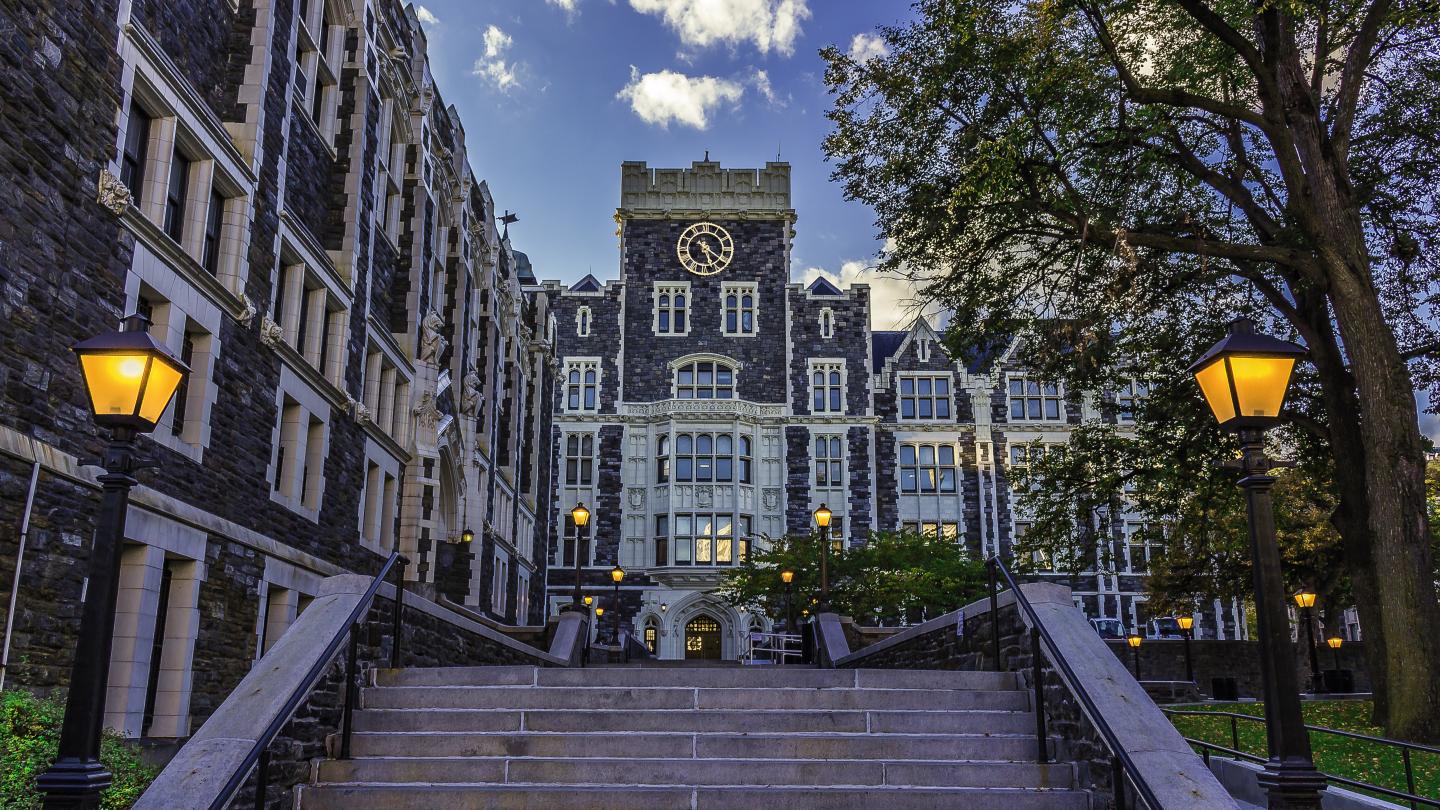
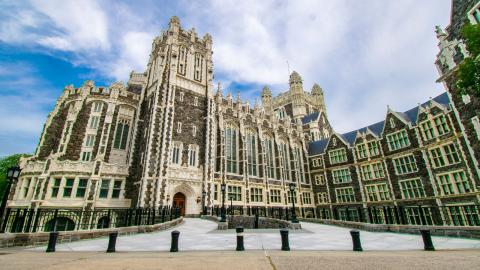
Unlike many of its CUNY peers, City College boasts a traditional, self-contained 35-acre campus in the Hamilton Heights neighborhood of Manhattan, featuring striking Gothic-revival architecture. This physical campus fosters a more cohesive student life than is possible at commuter-only colleges. The Office of Student Life and Leadership Development runs a wide array of cultural, educational, and social programs designed to reflect and engage the institution's famously diverse population.
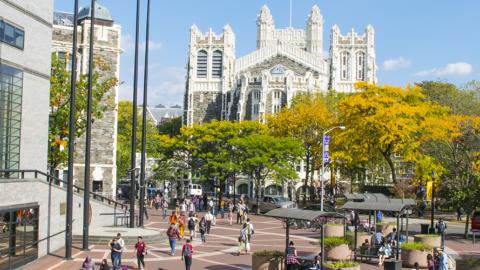
Student activities are centered around over 100 clubs and organizations, ranging from academic and cultural groups to recreational clubs. The college actively promotes club involvement as a key to navigating college life, building community, and accessing campus resources. While many students commute, there is on-campus housing available, which helps create residential pockets of community. The general consensus among students is that CCNY offers a better, more active campus life than most other CUNY schools, precisely because it has a real quad, green spaces, and historic buildings that encourage congregation beyond the classroom.
The six-year graduation rate for first-time, full-time students is 57%. For the 2020-2021 graduating class, a survey of employed graduates found that the majority (72%) in full-time positions were earning wages above $50,001. The most common salary band for employed graduates was $50,001–$60,000 (32% of respondents).
Long-term earnings data shows strong return on investment. The median earnings for graduates six years after enrollment is $46,435, rising to $66,039 ten years after entry. Certain majors, particularly in engineering, lead to significantly higher early-career earnings; for example, Civil Engineering graduates earn approximately $68,145. The college's outcomes are a testament to its mission of providing accessible, high-quality education that leads to economic mobility for its students, many of whom are college attendees.
City College's defining characteristic is its exceptional affordability. The average after grants and scholarships is $3,776. In-state tuition and fees are $7,340, with out-of-state tuition significantly higher. The college encourages all students to use the CUNY Financial Aid Estimator to get an early estimate of potential aid and net price.
Financial aid is packaged based on need, and includes federal Pell Grants, New York State TAP grants, and federal student loans. Eligibility for subsidized loans is based on demonstrated financial need, while unsubsidized loans are available regardless of need. City College does not have a "no-loan" policy that replaces loans with grants for all needy students; loans are a standard component of aid packages. However, New York State residents may qualify for the Excelsior Scholarship, which provides free tuition at CUNY and SUNY schools for families earning up to $125,000, subject to specific residency and credit-load requirements.
City College stands out as the original 'Harvard of the Proletariat,' a moniker earned through its historic mission to provide a first-rate education to the children of immigrants and the working class. This isn't just history; it's the lived reality of its student body today. It combines the academic heft of a respected research institution—with particularly strong schools of engineering, architecture, and liberal arts—with the almost-unmatched affordability of a public urban university. The result is a specific kind of student: driven, pragmatic, and incredibly diverse, navigating a rigorous curriculum on a stunning, castle-like campus in the heart of New York City.
Its value proposition is brutally clear: you can graduate with a degree that commands respect in the job market (and median earnings over $66,000 a decade out) while carrying a fraction of the debt typical of a private college education. The culture is less about manicured lawns and football games, and more about getting down to business—a place where world-class professors teach students who are often the first in their families to attend college. It's a New York institution in the truest sense: tough, ambitious, diverse, and offering a ladder to the middle class that actually works.
.jpg?width=1600)