Admit rate has ranged 38%–58% over the last 5 years — notably volatile. Source: IPEDS via Urban Institute.
Acceptance & SAT from Common Data Set / IPEDS; net price, earnings & graduation from the U.S. Dept. of Education College Scorecard. Figures lag ~1–2 years — verify with the school.
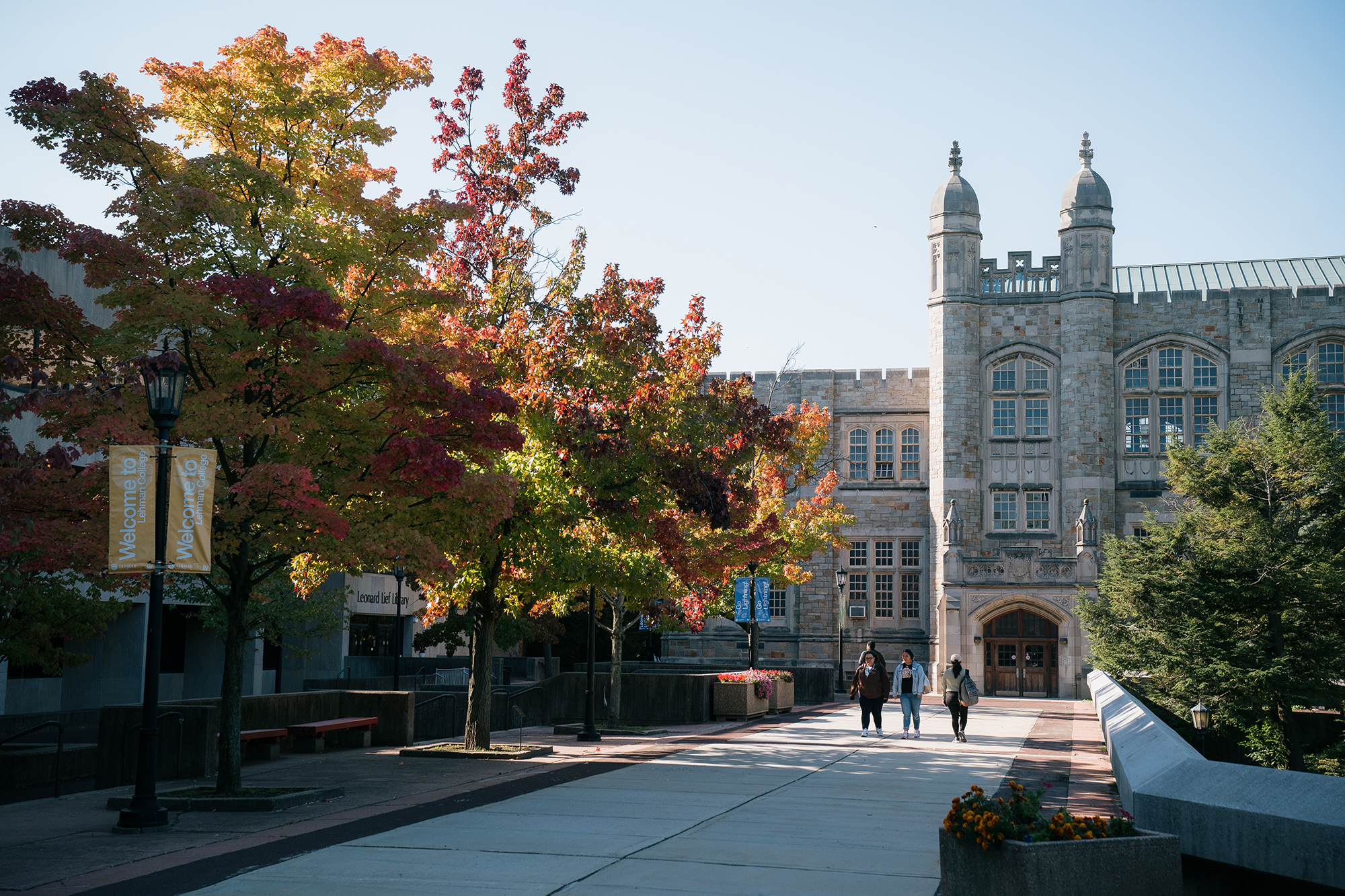
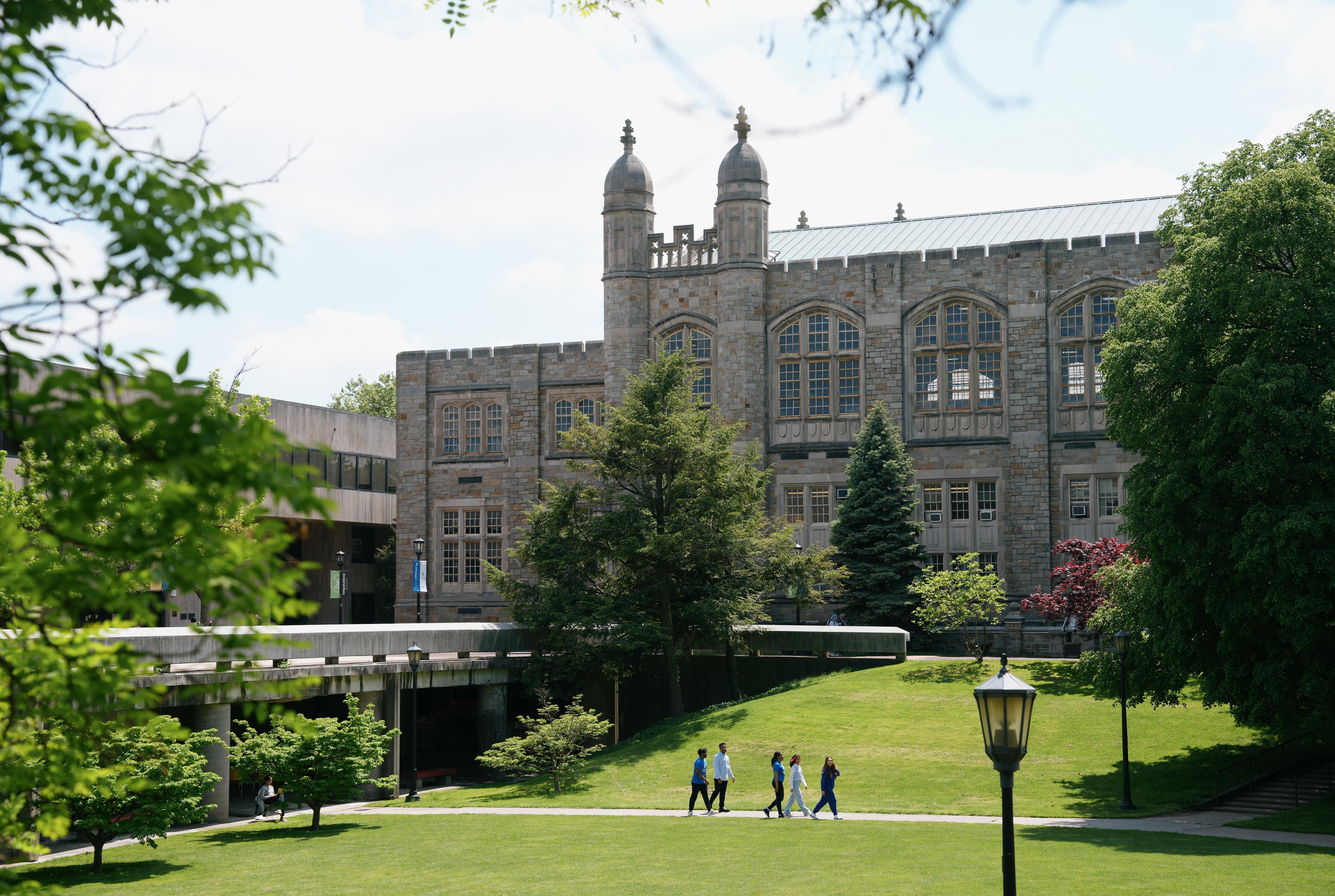
Lehman College is the public liberal arts heart of the Bronx, a CUNY campus where affordability and a tree-lined, 37-acre oasis meet the gritty energy of New York City. It’s a commuter school with a mission-driven soul, serving a predominantly local and first-generation student body with over 80 undergraduate majors and a starkly practical focus on upward mobility. The vibe is unpretentious, diverse, and fiercely proud of its borough, offering a high-impact education where the average net price after aid is less than a monthly subway pass.
Admission requirements
Test-blind — scores not considered
Required
High school transcript
Grade point average
College-prep program
Demonstrated competencies
TOEFL (non-native English)
Source: IPEDS Admissions survey (2022) via Urban Institute. Covers formal factors only — it does not reflect essays, extracurriculars, or other holistic criteria.
More details
Undergrad enrollment
10,696
In-state tuition
$7,410
Out-of-state tuition
$15,360
Campus Setting
37-acre tree-lined campus in the Bronx
Graduation Rate
51%
Most Popular Majors
Psychology, Dental Assisting, Business Administration
Student-Faculty Ratio
15:1
Median Earnings (10yr)
$58,013
Students Receiving Grant/Scholarship Aid
94%
Outcomes & value
Outcomes & value
Median earnings (10 yr)
$58,013
Value (earnings ÷ net price)
18.4×
Median debt at graduation
$10,950
Graduation rate
51%
First-year retention
73%
Reducing loan balance (3 yr)
51%
Pell (lower-income) share
60%
First-gen share (among federal-aid recipients)
52%
Top-earning majors
Median earnings by field of study (highest credential), ~2 years after completion.
Registered Nursing, Nursing Administration, Nursing Research and Clinical Nursing$95,348
Computer Science$57,318
Information Science/Studies$46,673
Health and Medical Administrative Services$42,235
Accounting and Related Services$40,927
Business Administration, Management and Operations
Campus & location
Campus safety
On-campus violent crimes (2024)
0
Per 1,000 students
0.00
On-campus criminal offenses classed as violent (murder/non-negligent manslaughter, rape, robbery, aggravated assault) for the most recent reported year. Source: U.S. Dept. of Education Campus Safety and Security (Clery Act). Counts reflect what’s reported to the school, and urban campuses often report more partly due to non-student incidents nearby — read alongside campus size and setting, not as a standalone safety verdict.
Climate
Pleasant days / yr
91
Summer high
83°F
Winter low
29°F
Annual rain
54.3"
Annual snow
19.6"
Natural-hazard risk
Relatively High
Pleasant days counts days per year with a mean temperature of 55–75°F, a high at or below 90°F, a low at or above 45°F, and little precipitation — a transparent comfort measure, not a weighting we invented. Computed from Open-Meteo ERA5 daily history (2019–2023). Natural-hazard risk is the county’s composite rating from the FEMA National Risk Index.
Deep dive — research, future-scholar output & economic mobility▾
Economic mobility
Mobility rate
10.2%
Bottom → top quintile
28%
From bottom quintile
37%
Mobility rate = the share of students who both start in the bottom household-income quintile and reach the top quintile; bottom → top is that chance conditional on starting at the bottom. Source: Opportunity Insights Mobility Report Cards (Chetty, Friedman, Saez, Turner & Yagan). Reflects 1980–82 birth cohorts, so it’s directional, not current.
Quick answers
What is the acceptance rate at CUNY Lehman College?
CUNY Lehman College's acceptance rate is approximately 57% (Bronx, NY), based on the most recent figures we compiled from public and primary sources.
What SAT score do you need for CUNY Lehman College?
Admitted students at CUNY Lehman College typically score 850–1150 on the SAT (the middle-50% range). Scores outside this band are still admitted, especially with strong applications.
How much does CUNY Lehman College cost?
At CUNY Lehman College, the average net price (after aid) is about $3,148 per year. Actual cost varies with financial aid and residency.
How many undergraduates attend CUNY Lehman College?
CUNY Lehman College enrolls approximately 10,696 undergraduate students.
Where is CUNY Lehman College located?
CUNY Lehman College is located in Bronx, NY.
Admissions
Lehman operates with a moderately selective admissions process that reflects its role as a vital public institution for the Bronx and greater New York. The is 57%, positioning it as accessible yet not open-enrollment. The middle 50% SAT range for admitted students who submit scores is 850–1150, with sources noting that a score of roughly 1050 or higher gives a candidate a strong chance. The average high school GPA of admitted students is reported as a 3.50. The college does not appear to have a binding Early Decision program; the provided sources discussing Early Decision acceptance rates and policies reference highly selective private institutions and are not applicable to Lehman's public, CUNY-wide application system. Similarly, while the is a standard tool for understanding admissions factors, the specific snippets provided do not contain Lehman's C7 data to confirm whether demonstrated interest is considered. The admissions process is grounded in the college's stated mission of equity, inclusion, and social justice.
Earnings = median of students working ~10 years after entry; debt = median of graduates. Value divides 10-yr earnings by one year’s net price — read it as earnings per dollar of annual cost, not a full lifetime ROI; it favors lower-cost schools. Source: U.S. Dept. of Education College Scorecard. Figures lag ~2 years and reflect all students, not your intended major.
$40,037
Teacher Education and Professional Development, Specific Subject Areas$39,369
Anthropology$38,289
Source: U.S. Dept. of Education College Scorecard (field-of-study earnings). Figures cover graduates who received federal aid and lag ~2 years; not all programs report data.
Academic life at Lehman is defined by breadth, practicality, and its identity as a public liberal arts college. The institution offers over 80 undergraduate majors and more than 100 graduate and advanced certificate programs across six schools. This expansive catalog provides what the college calls "infinite possibilities" for students to shape their futures. The curriculum is not merely theoretical; it's designed to combine high-quality academics with affordability and student support. The most popular majors reveal a focus on applied fields and in-demand professions. For the 2024 graduating class, the top programs were:
Psychology, General (8%)
Dental Assisting/Assistant (6%)
Business Administration and Management, General (6%)
Hospital and Health Care Administration/Management
Other sources consistently list Psychology, Business Administration, and Health Care fields as the most pursued paths. This academic profile underscores Lehman's role in preparing students for direct entry into the workforce or further professional study, all within the context of a liberal arts foundation.
As a predominantly commuter campus, student life at Lehman is actively cultivated through centralized support and programming designed to build community. The Office of Campus Life, housed in the dedicated Student Life Building, serves as the hub for a "myriad of student development programs" that complement academic work. The campus is described as a "thriving, productive, and nurturing environment" where students benefit from college-sponsored support services. Life extends beyond the classroom into a vibrant network of clubs, athletics, cultural events, and social activities. The college promotes its "diverse campus, strong academics, Bronx pride, global student community, and vibrant campus life." This effort is crucial for creating cohesion and a sense of belonging for students who may live off-campus. The Office of Campus Life explicitly works to provide student organizations with a collaborative environment to share ideas and resources, fostering leadership and engagement within the 37-acre, tree-lined campus in the Bronx.
Lehman’s outcomes narrative is one of transformative value, particularly for its student demographic. The graduation rate is 51%. The payoff, however, is where Lehman shines: the median earnings for students working ten years after entry is $58,013. This strong return on investment has earned the college national recognition; it was recently placed in Washington Monthly's Top Ten for Value, praised for its ability to combine affordability with strong outcomes. More granular data shows earnings progression: one year after graduation, alumni earn a median of $45,331, which grows to $63,847 five years out. Certain majors lead to significantly higher earnings; for example, Computer Science graduates report the highest average annual income at $89,786. These figures paint a picture of a college that successfully launches graduates, many of whom are , into the middle class with manageable debt, validating its mission-driven focus on social mobility.
Affordability is Lehman College's defining characteristic and its most powerful tool for equity. The average after grant and scholarship aid is a remarkably low $3,148. This staggering value is made possible by a robust financial aid apparatus that serves the vast majority of the student body: 94% of full-time beginning undergraduates receive grant or scholarship aid. The Financial Aid Office helps students apply for and maintain eligibility for various types of aid, including federal programs accessed via the FAFSA. While the provided sources discuss 'no-loan' policies at other institutions, they do not indicate that Lehman has such a policy; its aid packages are likely a mix of grants, scholarships, and federal loans. The college provides a dedicated Net Price Calculator and an aid estimator to help families anticipate costs. The result is an institution where, as one source projects, students from lower-income families may pay a net price close to zero, fulfilling its public mission to make higher education accessible.
Lehman College stands out as a potent rebuttal to the notion that high-quality education must come with a crippling price tag. It is a college of stark, compelling contrasts: a serene, 37-acre tree-lined campus in the heart of the bustling Bronx; a comprehensive liberal arts curriculum with fiercely practical, career-oriented popular majors; and a mission of social justice made tangible through an average of $3,148. It doesn't cater to the national elite but serves the ambitious local community, creating a uniquely diverse, unpretentious, and driven student body. Its recognition by Washington Monthly for value isn't about prestige—it's about performance, delivering life-changing earnings growth ($58,013 median 10-year earnings) at a cost lower than most community colleges. Lehman is the embodiment of the public university ideal: an engine of equity that takes its students, and their economic potential, seriously.
CUNY Lehman College seal · sourceCUNY--Lehman College - Profile, Rankings and Data | US News Best Colleges · sourceLehman College | Lehman College · sourceAbout Lehman College | Lehman College · source
.jpg?width=1600)