Admit rate has ranged 53%–73% over the last 5 years — notably volatile. Source: IPEDS via Urban Institute.
Acceptance & SAT from Common Data Set / IPEDS; net price, earnings & graduation from the U.S. Dept. of Education College Scorecard. Figures lag ~1–2 years — verify with the school.
CUNY York College is a public, senior college in the heart of Jamaica, Queens, offering a pragmatic, urban education to a remarkably diverse student body. As part of the nation's largest urban university system, it provides access to over 60 undergraduate majors—with particular strengths in health professions and business—at a net price that makes it one of the most affordable four-year options in New York City. The experience is defined by its commuter-campus reality, a no-frills focus on career preparation, and a graduation rate that underscores the significant challenges its students often face in balancing education with life.
Admission requirements
Test-blind — scores not considered
Required
High school transcript
Grade point average
College-prep program
TOEFL (non-native English)
Source: IPEDS Admissions survey (2022) via Urban Institute. Covers formal factors only — it does not reflect essays, extracurriculars, or other holistic criteria.
More details
Undergrad enrollment
4,345
In-state tuition
$7,358
Out-of-state tuition
$15,308
Application Fee
$65
Graduation Rate
32%
Early Decision Plan
Not offered
Demonstrated Interest
Not considered
Median Earnings (10yr)
$56,945
First-Year Students Receiving Need-Based Aid
88%
Outcomes & value
Outcomes & value
Median earnings (10 yr)
$56,945
Value (earnings ÷ net price)
12.8×
Median debt at graduation
$11,000
Graduation rate
32%
First-year retention
57%
Reducing loan balance (3 yr)
48%
Pell (lower-income) share
40%
First-gen share (among federal-aid recipients)
50%
Top-earning majors
Median earnings by field of study (highest credential), ~2 years after completion.
Registered Nursing, Nursing Administration, Nursing Research and Clinical Nursing$87,973
Clinical/Medical Laboratory Science/Research and Allied Professions$74,576
Rehabilitation and Therapeutic Professions$71,351
Computer and Information Sciences, General$41,937
Computer Science$41,565
Pharmacology and Toxicology
Campus & location
Campus safety
On-campus violent crimes (2024)
0
Per 1,000 students
0.00
On-campus criminal offenses classed as violent (murder/non-negligent manslaughter, rape, robbery, aggravated assault) for the most recent reported year. Source: U.S. Dept. of Education Campus Safety and Security (Clery Act). Counts reflect what’s reported to the school, and urban campuses often report more partly due to non-student incidents nearby — read alongside campus size and setting, not as a standalone safety verdict.
Climate
Pleasant days / yr
97
Summer high
80°F
Winter low
30°F
Annual rain
52.8"
Annual snow
16.5"
Natural-hazard risk
Relatively High
Pleasant days counts days per year with a mean temperature of 55–75°F, a high at or below 90°F, a low at or above 45°F, and little precipitation — a transparent comfort measure, not a weighting we invented. Computed from Open-Meteo ERA5 daily history (2019–2023). Natural-hazard risk is the county’s composite rating from the FEMA National Risk Index.
Deep dive — research, future-scholar output & economic mobility▾
Economic mobility
Mobility rate
6.8%
Bottom → top quintile
22%
From bottom quintile
31%
Mobility rate = the share of students who both start in the bottom household-income quintile and reach the top quintile; bottom → top is that chance conditional on starting at the bottom. Source: Opportunity Insights Mobility Report Cards (Chetty, Friedman, Saez, Turner & Yagan). Reflects 1980–82 birth cohorts, so it’s directional, not current.
Quick answers
What is the acceptance rate at CUNY York College?
CUNY York College's acceptance rate is approximately 64% (Jamaica, NY), based on the most recent figures we compiled from public and primary sources.
What SAT score do you need for CUNY York College?
Admitted students at CUNY York College typically score 790–960 on the SAT (the middle-50% range). Scores outside this band are still admitted, especially with strong applications.
How much does CUNY York College cost?
At CUNY York College, the average net price (after aid) is about $4,456 per year. Actual cost varies with financial aid and residency.
How many undergraduates attend CUNY York College?
CUNY York College enrolls approximately 4,345 undergraduate students.
Where is CUNY York College located?
CUNY York College is located in Jamaica, NY.
Admissions
York College operates with a moderately selective, high-access admissions philosophy typical of CUNY's mission. With an of 64%, it serves as a critical entry point to a four-year degree for a broad cross-section of New Yorkers. The process is straightforward and rolling, with priority deadlines set for two weeks prior to the start of classes for both fall and spring semesters. The college does not offer an early decision plan. For the freshman class, the middle 50% SAT range is 790–960, indicating a student body with a wide range of academic preparation. The application fee is $65. The admissions office receives a high volume of applications—over 15,500 for a recent cycle—from which about 10,000 are accepted, resulting in an enrolled class of nearly 6,000 students, reflecting the large scale of the institution. Demonstrated interest is not a formal factor in the process, aligning with its role as a public institution focused on academic credentials and access.
Earnings = median of students working ~10 years after entry; debt = median of graduates. Value divides 10-yr earnings by one year’s net price — read it as earnings per dollar of annual cost, not a full lifetime ROI; it favors lower-cost schools. Source: U.S. Dept. of Education College Scorecard. Figures lag ~2 years and reflect all students, not your intended major.
$39,729
Social Work$39,369
Biology, General$39,009
Source: U.S. Dept. of Education College Scorecard (field-of-study earnings). Figures cover graduates who received federal aid and lag ~2 years; not all programs report data.
York College offers a practical, career-oriented curriculum through more than 60 undergraduate majors and degree programs. The academic identity is anchored in the liberal arts and sciences but is heavily geared toward professional fields. The most popular majors cluster in Health Professions and Related Programs and Business, Management, Marketing, and Related Support Services, reflecting student demand for direct pathways to employment. Distinctive Bachelor of Science programs include Aviation Management, Biotechnology, and Accounting & Finance. The college's stated mission is for its hallmark programs to be recognized as 'centers of excellence within CUNY,' attracting and graduating students prepared for graduate school and professional success. The academic environment is often described by students as having both challenges and rewards; some note issues with staff and campus resources, while others appreciate the dedicated faculty and the specific programs. The catalog of majors is extensive, ranging from Anthropology and Art History to Black Studies, Biology, and various education tracks, providing a wide array of options within a commuter-school framework.
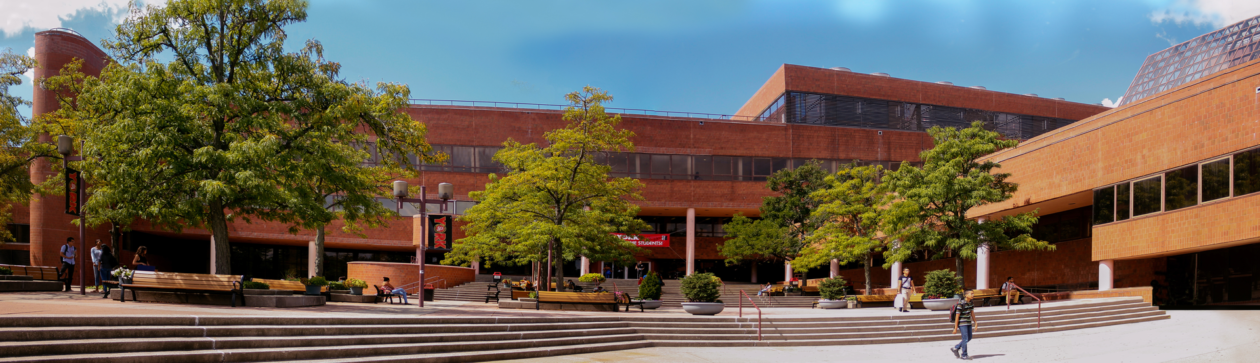
Life at York is that of a classic urban commuter campus: the vibrancy is student-driven and revolves around clubs, organizations, and the shared experience of navigating college in New York City. The college is home to a wide variety of student-run groups—academic, social, athletic, cultural, recreational, political, and special interest—that provide the primary social fabric. A Student Government Association represents the student body. Students often describe the community as notably diverse and welcoming, with a 'family-like' environment that supports one another. The campus itself is in Jamaica, Queens, placing students in a bustling, transit-rich neighborhood without the traditional residential quad experience. Resources and activities are centralized through the Office of Student Affairs and the 'Current Student' portal, which highlights clubs, government, and support services. The overall feel is one of self-motivated engagement; students who get involved find community, while for many, York is primarily a place of academic pursuit before returning to jobs, families, and homes across the city.
Outcomes at York College tell a story of significant economic mobility paired with the systemic challenges of graduating a high-need, largely commuter population. The six-year graduation rate is 32%, the lowest among CUNY's senior colleges, highlighting the difficulties many students face in persisting to degree completion. However, for those who do graduate, the financial payoff is substantial relative to the low cost. The median earnings ten years after entry are $56,945. This return on investment is a core part of York's value proposition: graduates earn a solid middle-class income after attending a college with an average of just $4,456 per year. Retention data shows that first-time, full-time students make up about 42% of a graduating class, indicating a large population of transfer and part-time students who shape the completion metrics. The college's role within the CUNY system is explicitly access-oriented, and its outcomes must be viewed through that lens—it provides a critical, affordable on-ramp to a bachelor's degree and increased earning potential, even as the path to graduation is arduous for many.
York College's defining characteristic is its profound affordability. The average after aid is a remarkably low $4,456, making it one of the least expensive four-year colleges in the region. This is achieved through a combination of low CUNY tuition and significant . In a recent year, 88% of first-year students received need-based scholarships or grants, with the average award being $9,365. About 83% of full-time beginning undergraduates receive grant or scholarship aid. The financial aid system includes federal programs like the Pell Grant, Federal Supplemental Educational Opportunity Grant (FSEOG) for exceptionally needy students, and federal student loans. The college provides a CUNY Net Price Calculator to help families estimate their total cost and potential aid. It's important to note that York, like most public institutions, does not have a 'no-loan' policy that meets full need with only grants; loans are a part of many financial aid packages. However, the low sticker price and high grant aid result in a net cost that is often lower than community college for many New York residents.
York College stands out as the unapologetically pragmatic engine of the CUNY system. It doesn't offer Gothic quads or a sprawling Greek life; it offers a no-frills, career-focused education at a price that defies the economics of higher education in New York City. Its identity is forged in the tension between its mission—providing access to a diverse, urban population—and the hard metrics of student success. It has the lowest graduation rate in CUNY, yet for the third who persist, it delivers a median earnings premium that validates the investment many times over. Its strengths are in direct pipeline fields like health professions and aviation management, and its campus life is what the students make of it through dozens of clubs in a commuter setting. In a landscape of soaring college costs, York remains a bastion of affordability and opportunity, serving as a critical social mobility ladder for thousands of New Yorkers each year. It is a college defined by its context: a place where the challenges of urban public education are fully visible, and the value of a degree, once earned, is concretely and powerfully realized.
CUNY York College seal · sourceCampus Map | York College Catalog · sourceYork College, City University of New York - Wikipedia · sourceYork College | The History of York College · source