Admit rate has ranged 53%–72% over the last 5 years — notably volatile. Source: IPEDS via Urban Institute.
Acceptance & SAT from Common Data Set / IPEDS; net price, earnings & graduation from the U.S. Dept. of Education College Scorecard. Figures lag ~1–2 years — verify with the school.
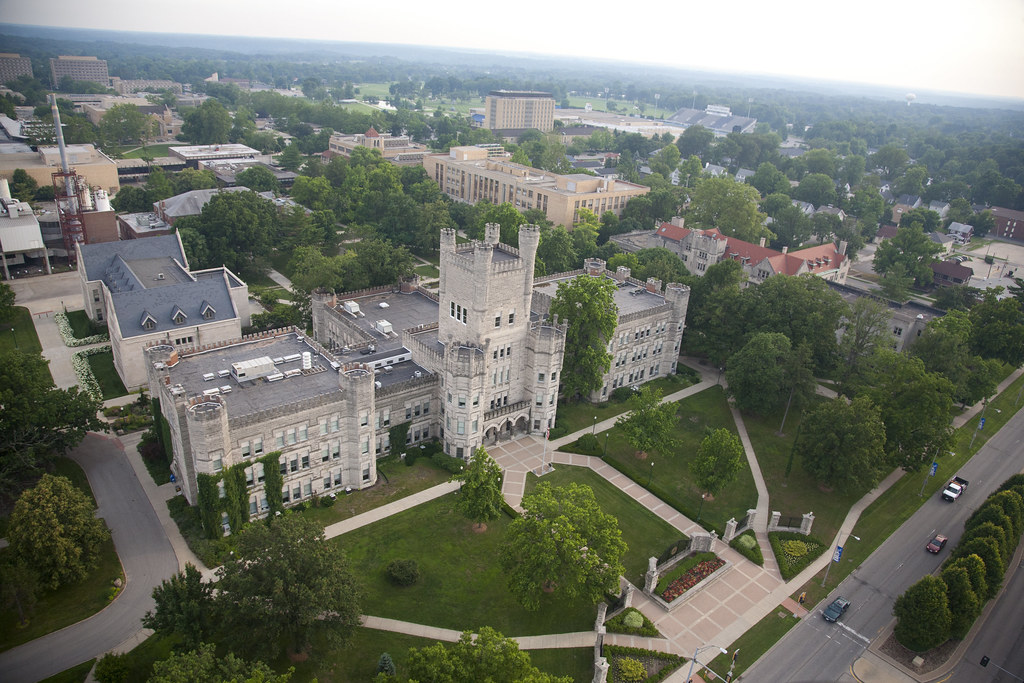
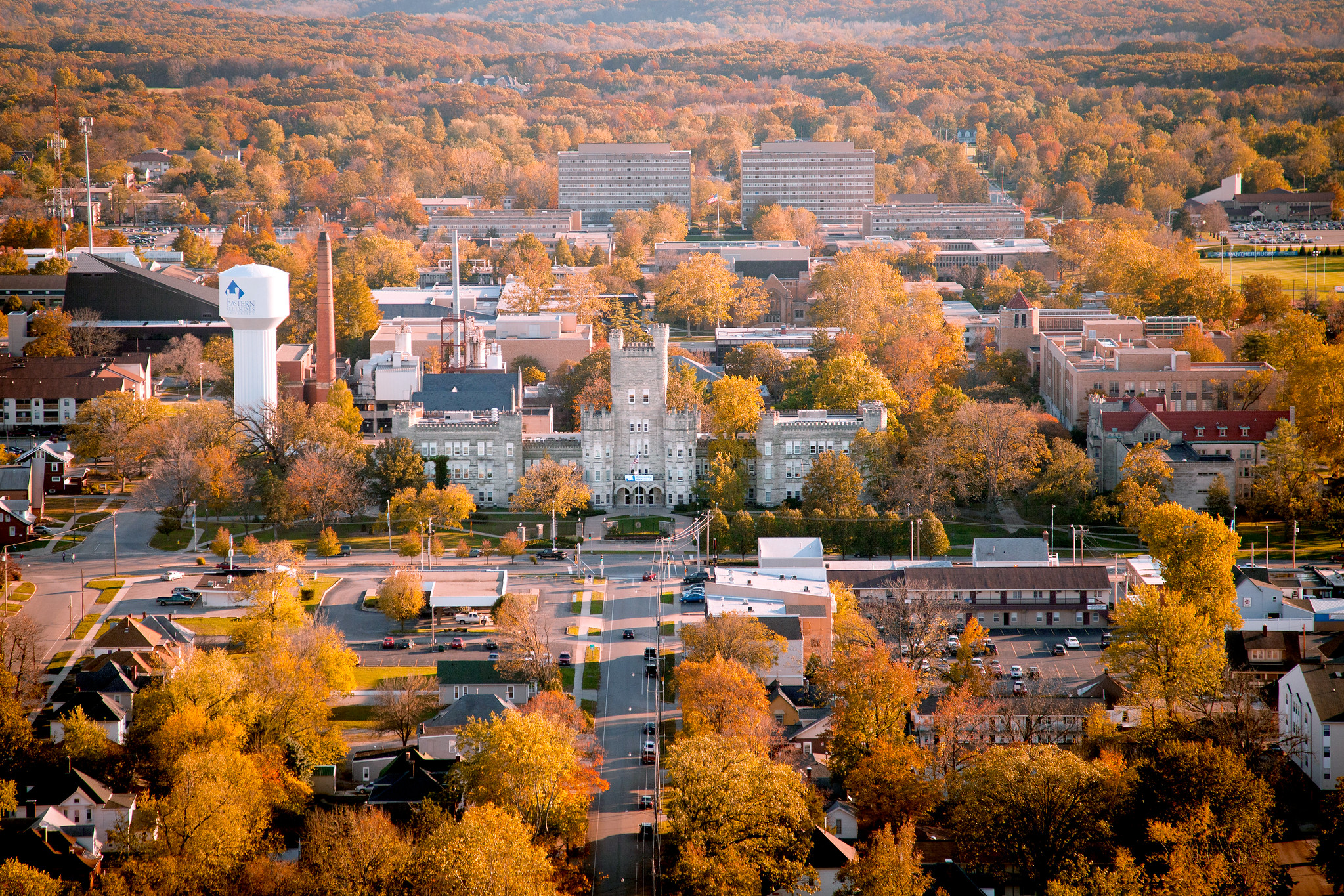
Eastern Illinois University is a public regional university in Charleston, Illinois, that serves as a classic, no-frills engine of upward mobility for the state's heartland. Its character is defined by a sprawling catalog of over 150 major and minor options, a campus where nearly half the students live in university housing, and a pragmatic focus on job placement, where it claims the highest graduate placement rate among Illinois state universities. This is a school for students who want a traditional, residential college experience with a clear path to a career, particularly in fields like business, education, and the liberal arts.
Admission requirements
Test-optional — scores considered if submitted
Required
High school transcript
Grade point average
College-prep program
TOEFL (non-native English)
Considered (not required)
Class rank
Letters of recommendation
Test scores (SAT/ACT)
Source: IPEDS Admissions survey (2022) via Urban Institute. Covers formal factors only — it does not reflect essays, extracurriculars, or other holistic criteria.
More details
Undergrad enrollment
4,188
In-state tuition
$13,679
Out-of-state tuition
$16,217
Graduation Rate
47%
On-Campus Housing
48% of students
Average Aid Package
$17,899
Demonstrated Interest
Not considered
Median Earnings (6yr)
$42,694
Median Earnings (10yr)
$51,989
Graduate Placement Rate
91.2%
First-Year Retention Rate
82%
Students Receiving Financial Aid
Outcomes & value
Outcomes & value
Median earnings (10 yr)
$51,989
Value (earnings ÷ net price)
4.1×
Median debt at graduation
$21,500
Graduation rate
47%
First-year retention
72%
Reducing loan balance (3 yr)
58%
Pell (lower-income) share
29%
First-gen share (among federal-aid recipients)
34%
Top-earning majors
Median earnings by field of study (highest credential), ~2 years after completion.
Registered Nursing, Nursing Administration, Nursing Research and Clinical Nursing$70,176
Industrial Production Technologies/Technicians$50,856
Accounting and Related Services$50,677
Finance and Financial Management Services$46,673
Computer and Information Sciences, General$43,798
Multi/Interdisciplinary Studies, Other
Campus & location
Campus safety
On-campus violent crimes (2024)
5
Per 1,000 students
0.85
On-campus criminal offenses classed as violent (murder/non-negligent manslaughter, rape, robbery, aggravated assault) for the most recent reported year. Source: U.S. Dept. of Education Campus Safety and Security (Clery Act). Counts reflect what’s reported to the school, and urban campuses often report more partly due to non-student incidents nearby — read alongside campus size and setting, not as a standalone safety verdict.
Climate
Pleasant days / yr
92
Summer high
84°F
Winter low
26°F
Annual rain
41.8"
Annual snow
14.6"
Natural-hazard risk
Relatively Low
Pleasant days counts days per year with a mean temperature of 55–75°F, a high at or below 90°F, a low at or above 45°F, and little precipitation — a transparent comfort measure, not a weighting we invented. Computed from Open-Meteo ERA5 daily history (2019–2023). Natural-hazard risk is the county’s composite rating from the FEMA National Risk Index.
Deep dive — research, future-scholar output & economic mobility▾
Research output
Institutional h-index
146
Scholarly works
10,117
Institutional research volume and impact from OpenAlex. The h-index reflects large research universities and will be low for teaching-focused liberal-arts colleges — not a measure of undergraduate quality.
Economic mobility
Mobility rate
1.0%
Bottom → top quintile
26%
From bottom quintile
4%
Mobility rate = the share of students who both start in the bottom household-income quintile and reach the top quintile; bottom → top is that chance conditional on starting at the bottom. Source: Opportunity Insights Mobility Report Cards (Chetty, Friedman, Saez, Turner & Yagan). Reflects 1980–82 birth cohorts, so it’s directional, not current.
Quick answers
What is the acceptance rate at Eastern Illinois University?
Eastern Illinois University's acceptance rate is approximately 65% (Charleston, IL), based on the most recent figures we compiled from public and primary sources.
What SAT score do you need for Eastern Illinois University?
Admitted students at Eastern Illinois University typically score 880–1090 on the SAT (the middle-50% range). Scores outside this band are still admitted, especially with strong applications.
How much does Eastern Illinois University cost?
At Eastern Illinois University, the average net price (after aid) is about $12,786 per year. Actual cost varies with financial aid and residency.
How many undergraduates attend Eastern Illinois University?
Eastern Illinois University enrolls approximately 4,188 undergraduate students.
Where is Eastern Illinois University located?
Eastern Illinois University is located in Charleston, IL.
Admissions
Eastern Illinois University operates with a moderately selective, transparent admissions process centered on clear academic benchmarks. The university reports an of 65%, admitting a significant majority of its over 12,000 applicants. The middle 50% of admitted students who submit test scores fall within an SAT range of 880–1090 or an ACT range of 17–23. The stated minimum admission requirements are a high school GPA of 2.5 on a 4.0 scale, paired with an SAT score of 960 or an ACT score of 18; alternatively, applicants can be admitted with a cumulative GPA of 2.0. The process is not geared toward early decision or binding early admission programs, and the university does not track or consider demonstrated interest as a factor in admissions decisions—what you see in your application file is what you get.
Earnings = median of students working ~10 years after entry; debt = median of graduates. Value divides 10-yr earnings by one year’s net price — read it as earnings per dollar of annual cost, not a full lifetime ROI; it favors lower-cost schools. Source: U.S. Dept. of Education College Scorecard. Figures lag ~2 years and reflect all students, not your intended major.
$41,565
Marketing$40,768
Political Science and Government$39,741
Source: U.S. Dept. of Education College Scorecard (field-of-study earnings). Figures cover graduates who received federal aid and lag ~2 years; not all programs report data.
EIU’s academic offering is its central draw: a vast and varied menu designed to let students explore and specialize. The university boasts more than 300 ways to explore interests through majors, minors, graduate programs, concentrations, and options, with over 150 major and minor options within its 50 undergraduate degree programs. This breadth translates into popular pathways; the most popular majors for recent graduates are in Business, Management, Marketing, and Related Support Services (13%), Education (12%), and Communication, Journalism, and Related Programs. Other notably popular undergraduate majors include Liberal Arts and Humanities, Psychology, Kinesiology and Exercise Science, and Nursing. The curriculum is supported by 36 graduate programs of study, including online learning opportunities. The academic culture is pragmatic, with a clear focus on ensuring graduates are prepared for their next steps.
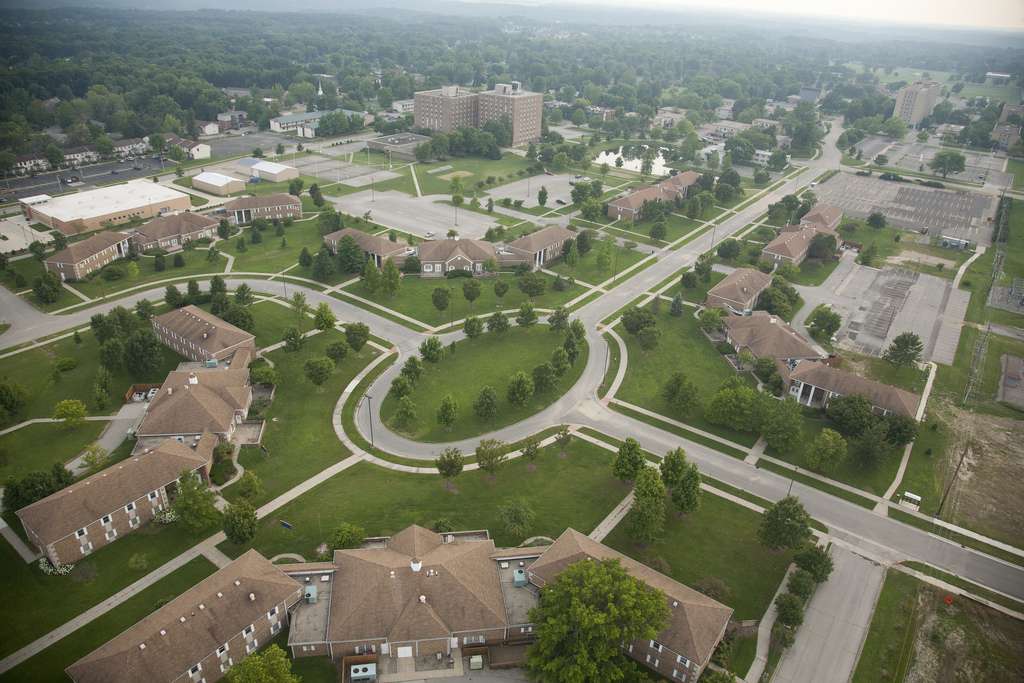
Life at EIU is characterized by a classic, engaged residential college experience in the small-town setting of Charleston. The university promotes a vibrant out-of-classroom life through diverse student organizations, campus recreation programs, and a Student Life Office dedicated to providing social, cultural, and developmental activities. A near-even split defines campus residency: 48% of students live in college-owned, -operated, or -affiliated housing, while 52% live off-campus. The university actively encourages living on campus, framing it as a "wonderful experience" that fosters community and student development. This creates a campus-centric social environment where athletics, clubs, and organized events form the backbone of student interaction. The vibe is traditionally collegiate, less fragmented than at many commuter schools, with a focus on building community among those who choose to plant themselves in Charleston for their studies.
Outcomes are a point of significant pride and marketing for Eastern Illinois University, which positions itself as a direct pipeline to employment. The university claims a 91.2% placement rate for its graduates, meaning more than nine out of ten students were employed or enrolled in further education after graduation—a rate it states is the highest among Illinois state universities. This strong placement record underpins the modest but steady earnings trajectory for alumni. The median earnings for graduates six years after entry is $42,694. The university also reports solid retention rates, with 82% of the Fall 2019 freshman cohort returning for their second year. The graduation rate stands at 47%, reflecting the profile of a regional public university that serves a broad cross-section of students.
EIU is a competitively priced public institution where financial aid significantly reduces the sticker price for most students. The average after aid is $12,786. A substantial 68.45% of students receive financial aid, with the average aid package totaling $17,899. The university employs a straightforward merit scholarship system based primarily on high school GPA: the Distinguished Merit Scholarship (3.85-4.0 GPA) awards $4,000 annually, the High Achieving Merit Scholarship (3.60-3.84 GPA) awards $3,000 annually, and other Academic Merit scholarships are available. is also offered, including Pell Grants and federal loans. The standard full-time undergraduate tuition rate is $356.34 per credit hour, or $10,690.20 per year, with additional student fees of $140.80 per credit hour, or $4,224.00 per year. The university does not advertise a "no-loan" policy or a guarantee to meet full financial need for all admitted students.
Eastern Illinois University stands out as a specific type of institution: a comprehensive, residential public university that has carved a definitive niche in career placement. Its singularity lies in the combination of extensive academic choice—over 150 majors and minors—with an unapologetic focus on employment outcomes, boasting a 91.2% placement rate that it claims leads the state's public universities. This isn't a theoretical or graduate-school-focused campus; it's a practical engine where popular programs in business, education, and communications directly feed into the workforce. The experience is wrapped in a traditional, on-campus package, with nearly half the student body living in university housing, fostering a cohesive community that can be rare at regional publics. For a student seeking a classic college vibe, a wide array of academic paths, and a clear, data-supported track record of turning a degree into a job, EIU offers a compelling and straightforward value proposition.