Admit rate has ranged 55%–73% over the last 5 years — notably volatile. Source: IPEDS via Urban Institute.
Acceptance & SAT from Common Data Set / IPEDS; net price, earnings & graduation from the U.S. Dept. of Education College Scorecard. Figures lag ~1–2 years — verify with the school.
Farmingdale State College is a public, technology-anchored institution in the SUNY system that operates with the pragmatic, career-focused ethos of a polytechnic. It’s a place where hands-on learning in fields like aviation, engineering technology, and health sciences is the norm, not the exception, and where a remarkably low net price makes a direct path to the middle class a tangible reality for its predominantly commuter student body.
Admission requirements
Test-optional — scores considered if submitted
Required
High school transcript
Grade point average
TOEFL (non-native English)
Considered (not required)
Class rank
Letters of recommendation
Test scores (SAT/ACT)
College-prep program
Source: IPEDS Admissions survey (2022) via Urban Institute. Covers formal factors only — it does not reflect essays, extracurriculars, or other holistic criteria.
More details
Undergrad enrollment
9,552
In-state tuition
$8,626
Out-of-state tuition
$18,536
Graduation Rate
53%
On-Campus Housing
5% of students
Student-Faculty Ratio
18:1
Median Earnings (10yr)
$69,781
First-Year Students Receiving Aid
59%
Outcomes & value
Outcomes & value
Median earnings (10 yr)
$69,781
Value (earnings ÷ net price)
6.4×
Median debt at graduation
$14,718
Graduation rate
53%
First-year retention
82%
Reducing loan balance (3 yr)
65%
Pell (lower-income) share
36%
First-gen share (among federal-aid recipients)
40%
Top-earning majors
Median earnings by field of study (highest credential), ~2 years after completion.
Registered Nursing, Nursing Administration, Nursing Research and Clinical Nursing$93,439
Clinical/Medical Laboratory Science/Research and Allied Professions$69,338
Construction Engineering Technology/Technician$58,221
Criminal Justice and Corrections$57,318
Campus & location
Campus safety
On-campus violent crimes (2024)
0
Per 1,000 students
0.00
On-campus criminal offenses classed as violent (murder/non-negligent manslaughter, rape, robbery, aggravated assault) for the most recent reported year. Source: U.S. Dept. of Education Campus Safety and Security (Clery Act). Counts reflect what’s reported to the school, and urban campuses often report more partly due to non-student incidents nearby — read alongside campus size and setting, not as a standalone safety verdict.
Climate
Pleasant days / yr
98
Summer high
80°F
Winter low
29°F
Annual rain
56.3"
Annual snow
18"
Natural-hazard risk
Relatively High
Pleasant days counts days per year with a mean temperature of 55–75°F, a high at or below 90°F, a low at or above 45°F, and little precipitation — a transparent comfort measure, not a weighting we invented. Computed from Open-Meteo ERA5 daily history (2019–2023). Natural-hazard risk is the county’s composite rating from the FEMA National Risk Index.
Deep dive — research, future-scholar output & economic mobility▾
Research output
Institutional h-index
65
Scholarly works
1,880
Institutional research volume and impact from OpenAlex. The h-index reflects large research universities and will be low for teaching-focused liberal-arts colleges — not a measure of undergraduate quality.
Quick answers
What is the acceptance rate at Farmingdale State College?
Farmingdale State College's acceptance rate is approximately 63% (Farmingdale, NY), based on the most recent figures we compiled from public and primary sources.
What SAT score do you need for Farmingdale State College?
Admitted students at Farmingdale State College typically score 1040–1240 on the SAT (the middle-50% range). Scores outside this band are still admitted, especially with strong applications.
How much does Farmingdale State College cost?
At Farmingdale State College, the average net price (after aid) is about $10,867 per year. Actual cost varies with financial aid and residency.
How many undergraduates attend Farmingdale State College?
Farmingdale State College enrolls approximately 9,552 undergraduate students.
Where is Farmingdale State College located?
Farmingdale State College is located in Farmingdale, NY.
Admissions
Farmingdale's admissions process is moderately selective, with a focus on academic preparation for its career-oriented programs. The college reported receiving 9,205 applications for a recent cycle, with an of 48% according to its own profile. However, multiple external sources, including U.S. News and the College Board's BigFuture, consistently report an acceptance rate around 63%. The middle 50% SAT range for admitted students is 1040–1240, and the middle 50% ACT range is 20–28. High school GPA is a significant factor; in one reported class, 22% of enrolled students had a GPA of 3.75 or higher, and 17% had a GPA between 3.50 and 3.74. The college operates on a rolling admissions basis with a regular decision deadline of June 1. The rate—the percentage of admitted students who enroll—is reported to be 26%, which is considered medium. There is no mention of an early decision or early action program in the provided sources, and demonstrated interest is not discussed as a formal factor in the admissions process.
Earnings = median of students working ~10 years after entry; debt = median of graduates. Value divides 10-yr earnings by one year’s net price — read it as earnings per dollar of annual cost, not a full lifetime ROI; it favors lower-cost schools. Source: U.S. Dept. of Education College Scorecard. Figures lag ~2 years and reflect all students, not your intended major.
Mechanical Engineering Related Technologies/Technicians
Source: U.S. Dept. of Education College Scorecard (field-of-study earnings). Figures cover graduates who received federal aid and lag ~2 years; not all programs report data.
The academic identity of Farmingdale is defined by its applied, technology-driven programs designed for high-demand careers. The college offers a mix of degrees in engineering and technology, the health sciences, business, and liberal arts. Its newest bachelor's degree programs are explicitly focused on emerging fields like nutrition, big data, human/computer interaction, and digital forensics. Signature programs include Aviation Administration, Bioscience, and various engineering technology majors housed within the Pasternack School of Engineering Technology. The curriculum emphasizes practical, writing-intensive work; 100% of students are required to complete writing-in-the-discipline courses, and 62% participate in a senior capstone or culminating academic experience. The student-faculty ratio is 18:1, fostering a more personalized environment than many large public institutions. This is not a liberal arts college in the traditional sense; it's a place where theory meets practice, and a degree is explicitly linked to a professional pathway.
Student life at Farmingdale reflects its identity as a primarily commuter campus, with only 5% of students living in college-owned, -operated, or -affiliated housing. The vast majority—95%—live off-campus. This creates a dynamic where campus buzz is concentrated around class times and organized events rather than 24/7 residential energy. The Office of Student Activities works to build community through a roster of recognized student clubs and organizations, encouraging students to attend events or even take on executive board roles. Campus traditions and social life have historical roots, with past amenities including a "Flab Factory" (gym), bowling, billiards, and air hockey. Today, the active Instagram presence of Farmingdale Student Activities showcases events like Campus Life Awards and Wellness fairs, aiming to help students "make all the memories" they can. The atmosphere is described by students as welcoming and friendly, where people are willing to help. For those who do reside on campus, research promoted by the Residence Life office indicates it can be beneficial, correlating with higher GPAs and a greater likelihood of graduation.
The outcomes narrative at Farmingdale is one of strong return on investment, particularly for a public institution with a low . The median earnings for students working ten years after entry are $69,781. Earlier career data shows promising traction: earnings one year after graduation are reported at $42,972, which jumps significantly to $66,973 five years after graduation. According to the college's own Six-Month After Graduation Survey, a substantial portion of graduates quickly secure solid employment. In recent years, between 34% and 38% of reporting graduates were earning an annual salary of $40,000 or more within six months of leaving. The overall graduation rate is 53%. An analysis from College Factual suggests the earnings from an average Farmingdale graduate will surpass those of a high school graduate in 22 years, underscoring the value proposition of the degree.
Farmingdale's most compelling argument is its affordability. The average after grants and scholarships is $10,867. This figure is significantly below the national midpoint for four-year colleges. The average need-based scholarship or grant awarded to first-year students is $8,388, and 59% of first-year students receive some form of financial aid. Students manage costs through the standard federal aid apparatus, including Federal Direct Unsubsidized Loans, for which graduate students can borrow up to $20,500 per year if eligible. The college provides an online system (OASIS) for students to view awards and requirements, and it directs prospective students to use its official Net Price Calculator for the best estimate of costs. The provided sources do not indicate that Farmingdale has a "no-loan" policy or that it meets 100% of demonstrated financial need without loans; financial aid appears to be a mix of grants, scholarships, and federal loan options.
Farmingdale State College stands out as a pure-play engine of socioeconomic mobility within the SUNY system. It forgoes the sprawling residential experience and broad liberal arts curriculum of a university center in favor of a focused, pragmatic mission: delivering career-ready skills in applied fields at a public-college price. Its identity is crystallized in programs like Aviation Administration and engineering technology—majors that sound like job titles. The 18:1 student-faculty ratio in these hands-on programs means students aren't lost in lecture halls. While the 5% on-campus population defines it as a commuter school, that very characteristic attracts a specific student: one who is cost-conscious, likely from Long Island or the NYC metro area, and intent on converting education directly into employment. The outcome data validates the model, with median earnings ten years out nearing $70,000. In an era of soaring college costs, Farmingdale's singular proposition is its unglamorous, high-value efficiency—a direct pathway to a stable, technical, middle-class career without the burden of excessive debt.
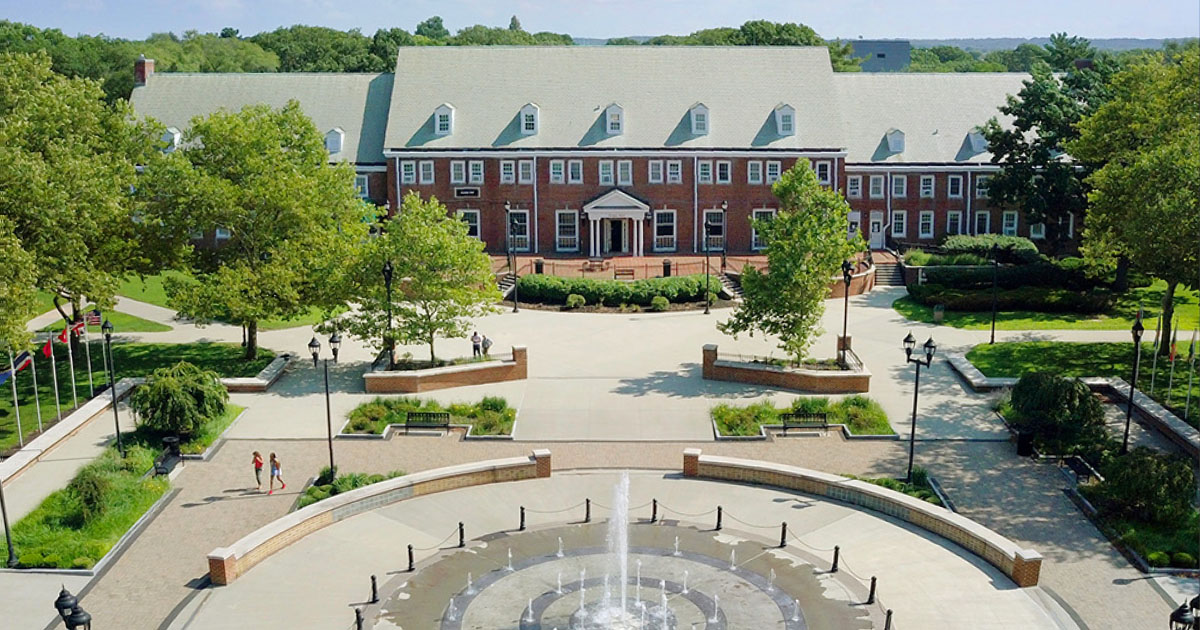
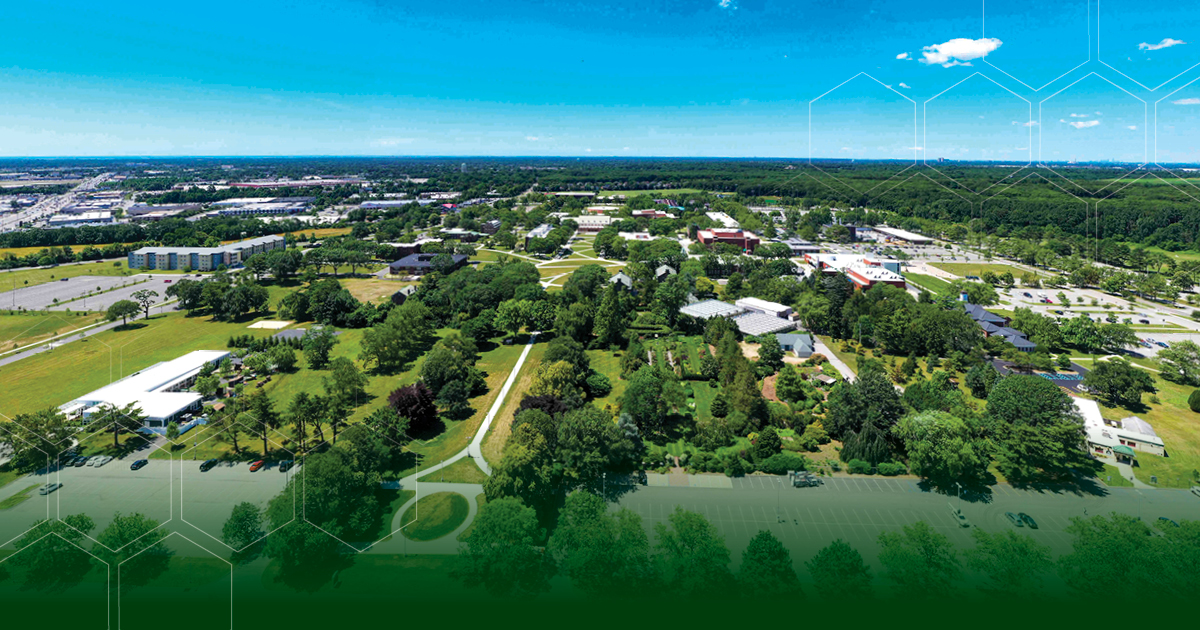
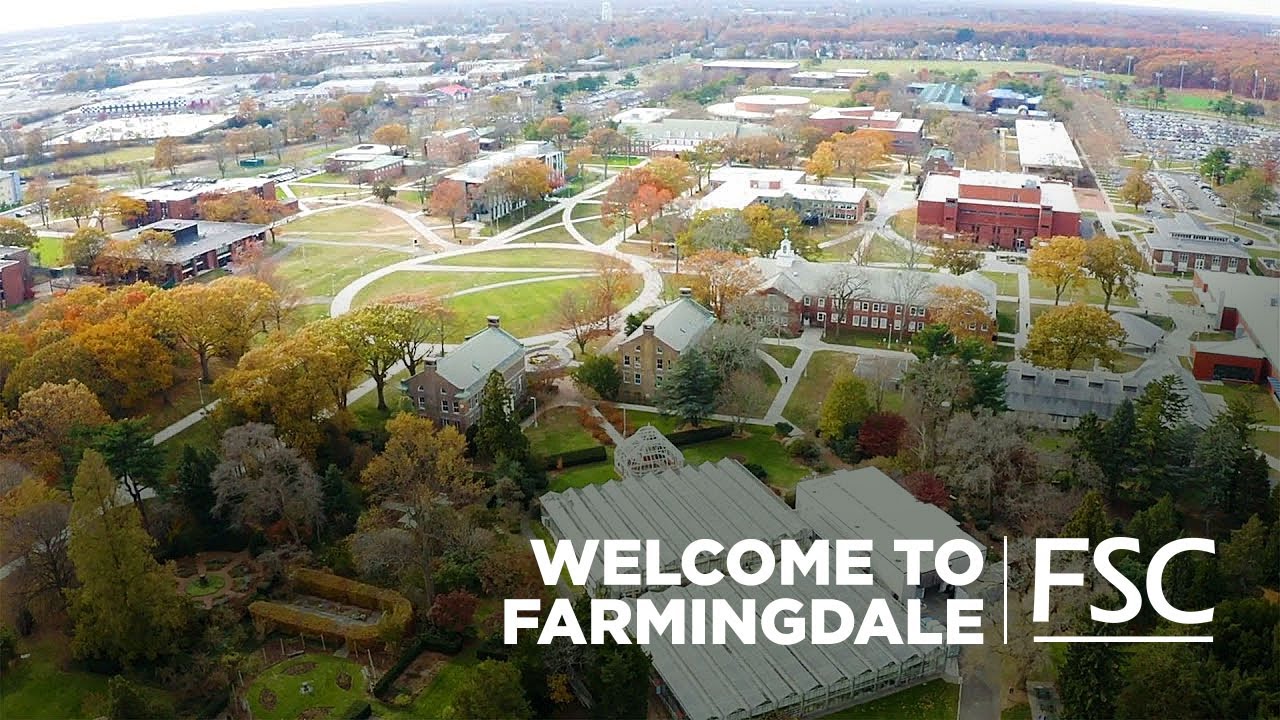
Farmingdale State College seal · sourceFarmingdale State College · sourceFSCNOW | A Campus Transformed · sourceWelcome to Farmingdale State College · source
.jpg?width=1600)