Admit rate has ranged 21%–36% over the last 5 years — notably volatile, though the latest figure above (21%) falls outside that window. Source: IPEDS via Urban Institute.
Acceptance & SAT from Common Data Set / IPEDS; net price, earnings & graduation from the U.S. Dept. of Education College Scorecard. Figures lag ~1–2 years — verify with the school.
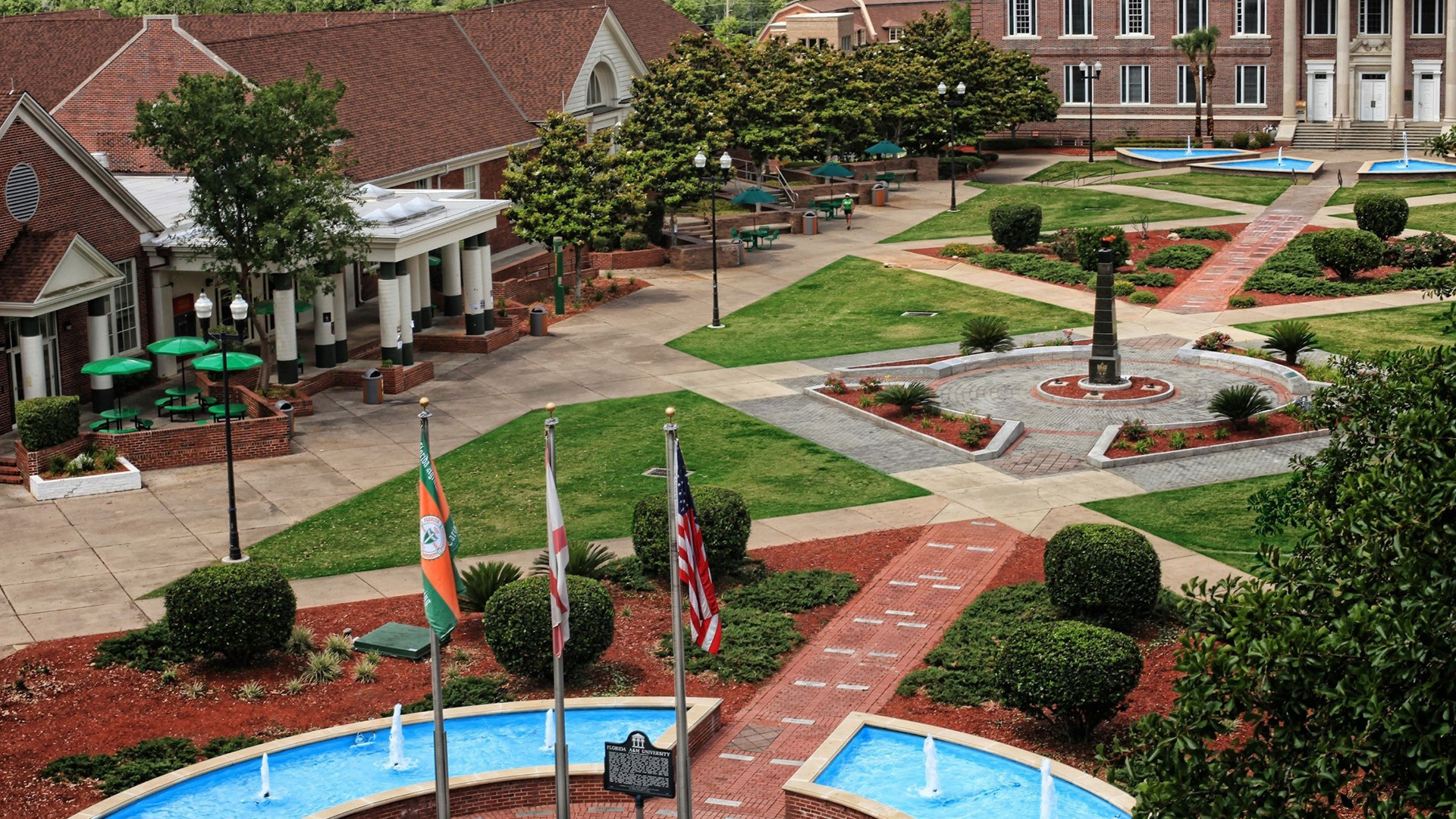
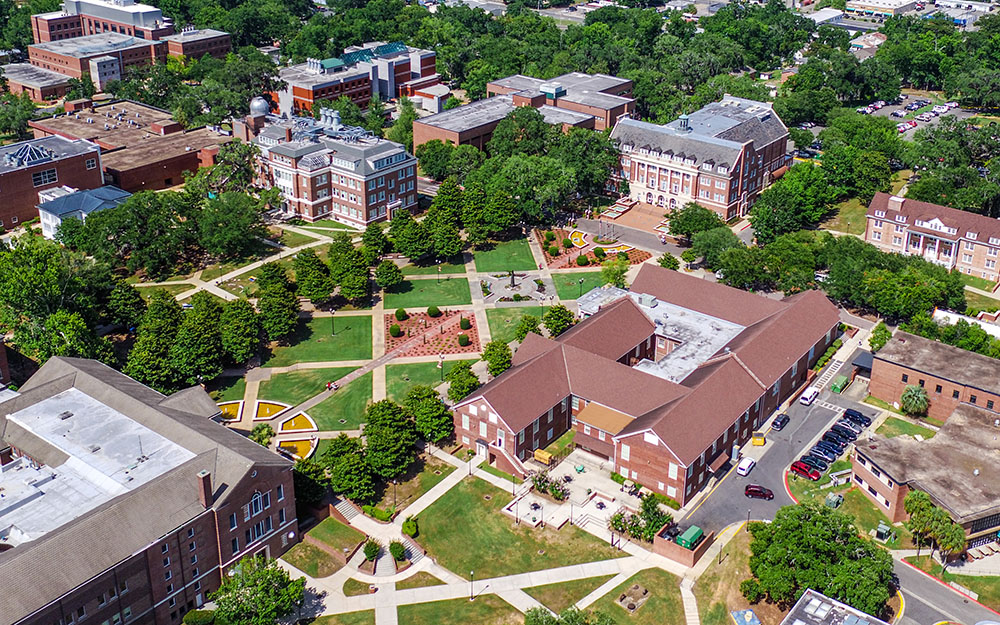
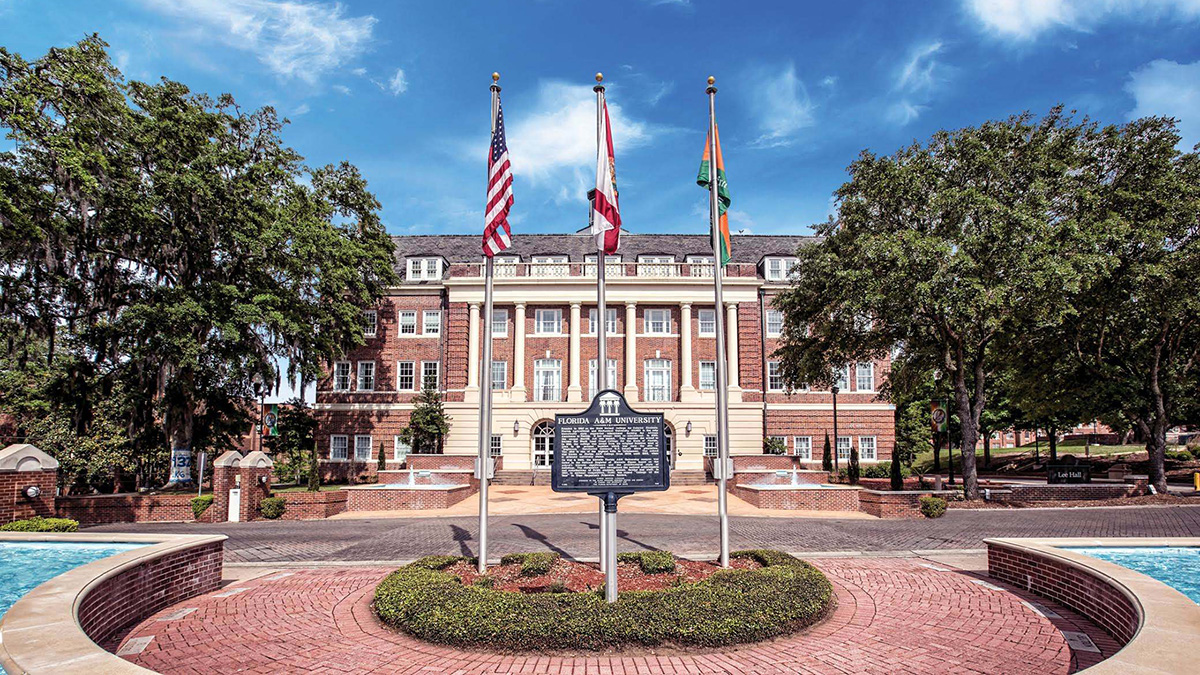
Florida A&M University isn't just an HBCU; it's a cultural institution and an engine of professional opportunity, where 'Rattler Pride' is a palpable force on campus and in the alumni network. With over 100 degree programs across 14 colleges, FAMU blends a rigorous academic environment—particularly in health professions and business—with a vibrant, tradition-steeped student life that defines the Tallahassee experience. It's a place where the graduation rate tells a story of transformation, and the outcomes speak to its role as a critical pipeline for Black professionals.
Admission requirements
Test scores required
Required
High school transcript
Grade point average
Letters of recommendation
Test scores (SAT/ACT)
College-prep program
TOEFL (non-native English)
Considered (not required)
Class rank
Demonstrated competencies
Source: IPEDS Admissions survey (2022) via Urban Institute. Covers formal factors only — it does not reflect essays, extracurriculars, or other holistic criteria.
More details
Undergrad enrollment
7,582
In-state tuition
$5,785
Out-of-state tuition
$17,725
Graduation Rate
53%
Median Earnings (10yr)
$44,349
First-Year Retention Rate
90.7%
Students Receiving Grant/Scholarship Aid
81%
Outcomes & value
Outcomes & value
Median earnings (10 yr)
$44,349
Value (earnings ÷ net price)
3.2×
Median debt at graduation
$23,548
Graduation rate
53%
First-year retention
89%
Reducing loan balance (3 yr)
34%
Pell (lower-income) share
54%
First-gen share (among federal-aid recipients)
37%
Top-earning majors
Median earnings by field of study (highest credential), ~2 years after completion.
Construction Engineering Technology/Technician$61,814
Registered Nursing, Nursing Administration, Nursing Research and Clinical Nursing$58,919
Allied Health Diagnostic, Intervention, and Treatment Professions$56,979
Computer and Information Sciences, General$53,608
Accounting and Related Services$44,170
Business Administration, Management and Operations
Campus & location
Campus safety
On-campus violent crimes (2024)
3
Per 1,000 students
0.33
On-campus criminal offenses classed as violent (murder/non-negligent manslaughter, rape, robbery, aggravated assault) for the most recent reported year. Source: U.S. Dept. of Education Campus Safety and Security (Clery Act). Counts reflect what’s reported to the school, and urban campuses often report more partly due to non-student incidents nearby — read alongside campus size and setting, not as a standalone safety verdict.
Climate
Pleasant days / yr
124
Summer high
89°F
Winter low
48°F
Annual rain
54.9"
Natural-hazard risk
Relatively Moderate
Pleasant days counts days per year with a mean temperature of 55–75°F, a high at or below 90°F, a low at or above 45°F, and little precipitation — a transparent comfort measure, not a weighting we invented. Computed from Open-Meteo ERA5 daily history (2019–2023). Natural-hazard risk is the county’s composite rating from the FEMA National Risk Index.
Deep dive — research, future-scholar output & economic mobility▾
Research output
Institutional h-index
174
Scholarly works
8,944
Institutional research volume and impact from OpenAlex. The h-index reflects large research universities and will be low for teaching-focused liberal-arts colleges — not a measure of undergraduate quality.
Economic mobility
Mobility rate
3.3%
Bottom → top quintile
21%
From bottom quintile
15%
Mobility rate = the share of students who both start in the bottom household-income quintile and reach the top quintile; bottom → top is that chance conditional on starting at the bottom. Source: Opportunity Insights Mobility Report Cards (Chetty, Friedman, Saez, Turner & Yagan). Reflects 1980–82 birth cohorts, so it’s directional, not current.
Quick answers
What is the acceptance rate at Florida Agricultural and Mechanical University?
Florida Agricultural and Mechanical University's acceptance rate is approximately 21% (Tallahassee, FL), based on the most recent figures we compiled from public and primary sources.
What SAT score do you need for Florida Agricultural and Mechanical University?
Admitted students at Florida Agricultural and Mechanical University typically score 1030–1180 on the SAT (the middle-50% range). Scores outside this band are still admitted, especially with strong applications.
How much does Florida Agricultural and Mechanical University cost?
At Florida Agricultural and Mechanical University, the average net price (after aid) is about $13,739 per year. Actual cost varies with financial aid and residency.
How many undergraduates attend Florida Agricultural and Mechanical University?
Florida Agricultural and Mechanical University enrolls approximately 7,582 undergraduate students.
Where is Florida Agricultural and Mechanical University located?
Florida Agricultural and Mechanical University is located in Tallahassee, FL.
Admissions
Gaining admission to FAMU is a competitive proposition, with the university accepting only about one in five applicants. The process is holistic, though academic performance in high school carries significant weight. For the Fall 2025 admitted class, the middle 50% of students had a weighted core GPA between 3.69 and 4.24. Standardized test scores are required, with the middle 50% SAT range for admitted students reported as 1080–1230, though other sources cite a slightly lower range. The university received over 22,000 applications for a recent cycle, admitting just under 4,700. While the outlines the factors considered in admission decisions, specific details on the consideration of demonstrated interest or the share of the class filled via Early Decision are not provided in the available sources. The admissions office can be reached at (850) 599-3000.
Earnings = median of students working ~10 years after entry; debt = median of graduates. Value divides 10-yr earnings by one year’s net price — read it as earnings per dollar of annual cost, not a full lifetime ROI; it favors lower-cost schools. Source: U.S. Dept. of Education College Scorecard. Figures lag ~2 years and reflect all students, not your intended major.
$43,197
Teacher Education and Professional Development, Specific Levels and Methods$40,821
Agricultural Business and Management$38,289
Source: U.S. Dept. of Education College Scorecard (field-of-study earnings). Figures cover graduates who received federal aid and lag ~2 years; not all programs report data.
FAMU offers a comprehensive academic portfolio designed for both depth and relevance. The university provides 54 bachelor's degrees, 29 master's degrees, 3 professional degrees, and 12 doctoral degrees across its 14 colleges and schools, totaling over 100 degree programs. It continuously evaluates this portfolio for strength and alignment with student success. The most popular undergraduate majors cluster in Health Professions and Related Programs and Business, Management, Marketing, and Related Support Services. The curriculum is built to provide a strong foundation, with particular acclaim for its accredited engineering programs. This academic breadth ensures students can find a path that matches their ambitions, from the sciences to the humanities, all within the supportive framework of an HBCU.
Life at FAMU is defined by an intense, celebratory community spirit—'Rattler Pride'—that manifests in a rich tapestry of traditions, organizations, and daily interactions. The campus is a hub of activity with a broad range of clubs, organizations, and extracurricular activities catering to diverse interests, from athletics and Greek life to cultural and academic groups. Key elements of student life include:
Housing, Dining & Meal Plans
Fraternities & Sororities
Health Services
Parking & Transportation
The university's identity is deeply rooted in its vibrant traditions and spirited events, most notably its homecoming, which embodies the essence of campus culture. It's a place where academic pursuit meets a vibrant celebration of historic Black culture, creating a unique and enveloping environment.
FAMU measures student achievement through several key metrics: retention rates, graduation rates, degree productivity among African Americans, job placement rates, and licensure exam pass rates. The university's six-year graduation rate has been reported at 63%, which sits above the national midpoint for four-year colleges. However, internal analysis indicates its four-year graduation rate lags behind some peers, prompting academic restructuring of programs to improve student success. For graduates, the median earnings ten years after entry provide a tangible return on investment. The university's mission includes a focus on degree productivity for African American students, making these outcomes central to its institutional purpose.
As a public institution, FAMU offers a relatively accessible after aid. A significant majority—81% of full-time beginning undergraduates—receive grant or scholarship aid. The university provides a Net Price Calculator for families to estimate their actual cost. All federal Stafford Loans are processed through the Direct Loan program, so students do not need to select a lender. The university has a financial aid plan that aims to offer Florida-resident, first-time-in-college students less loans and more institutional funds, provided they complete their financial aid file by the priority deadline. This indicates a institutional effort to reduce debt burden, though the available sources do not describe a formal 'no-loan' policy or a commitment to meet 100% of demonstrated financial need for all admitted students.
FAMU stands out not merely as a university but as a cornerstone of Black excellence and community. It is recognized as a leading HBCU due to its unwavering commitment to academic excellence, cultural heritage, student success, innovative research, and community engagement. The campus culture is its most distinctive feature—a place where the of the past fuels ambition for the future. This is where world-class research happens alongside timeless homecoming rituals. It's an institution that produces a high number of African American graduates and professionals, particularly in fields like pharmacy, business, and engineering, making it a critical pipeline. For students seeking an education that combines rigorous academics with an unapologetically vibrant and supportive cultural identity, FAMU offers a powerful, singular experience.
Florida Agricultural and Mechanical University seal · sourceAbout FAMU · sourceMission and History · sourceFAMU Welcome Center | Maps, Tours, & Campus Directions · source