Admit rate has ranged 48%–56% over the last 5 years — notably volatile, though the latest figure above (39%) falls outside that window. Source: IPEDS via Urban Institute.
Acceptance & SAT from Common Data Set / IPEDS; net price, earnings & graduation from the U.S. Dept. of Education College Scorecard. Figures lag ~1–2 years — verify with the school.
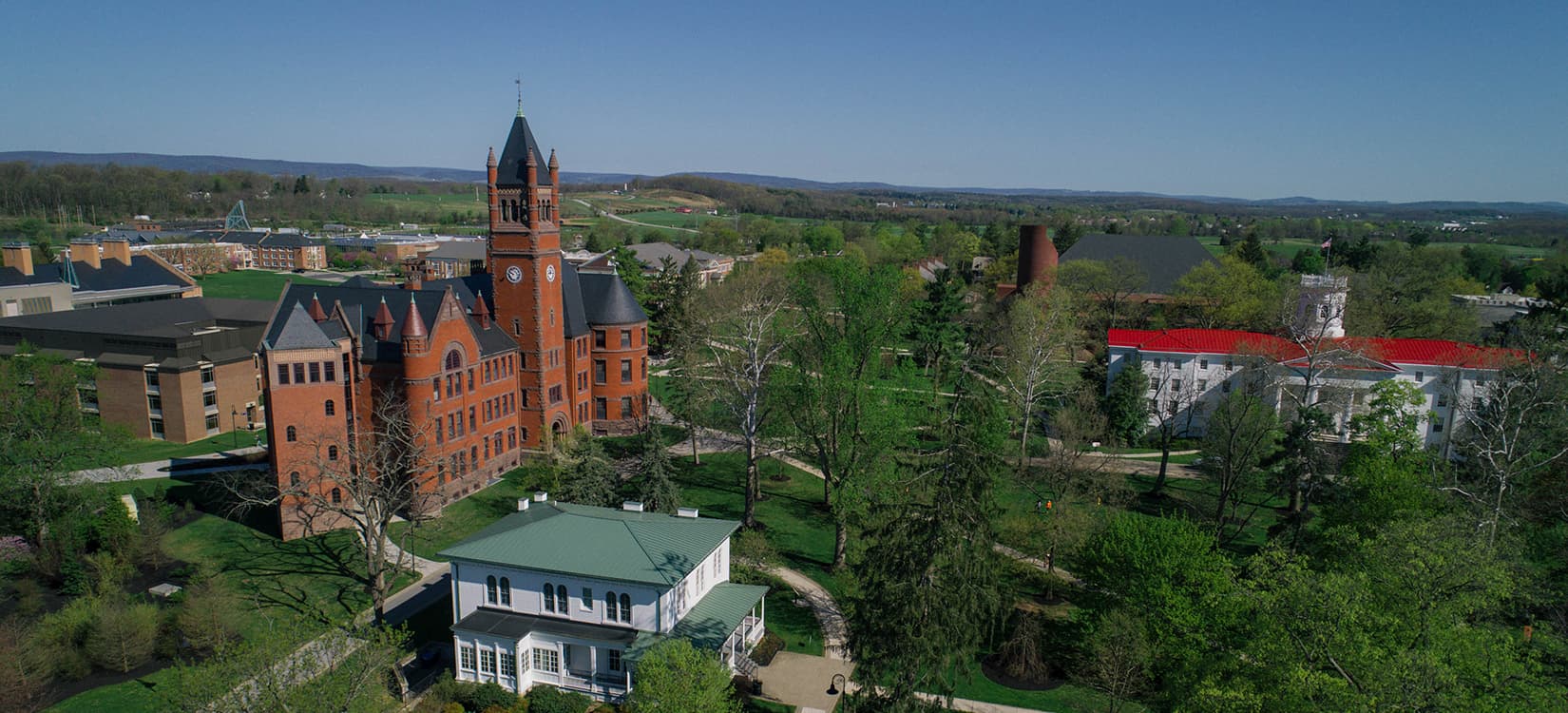
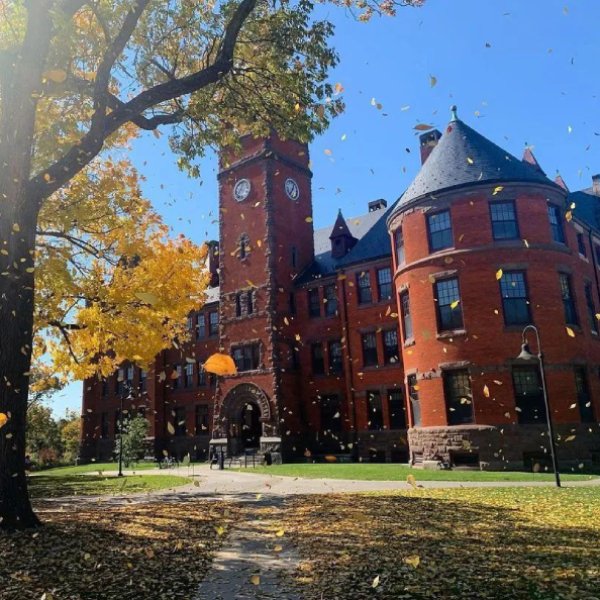
Gettysburg College is a small, private liberal arts school where history is not just studied—it's walked upon. Its campus sits adjacent to the Gettysburg National Military Park, making the Civil War battlefield a literal extension of its academic grounds. The college cultivates a culture of close mentorship and leadership development, where students are known for being politically engaged, athletically competitive, and deeply involved in a dense web of campus traditions and organizations. It’s a place for students who want a classic, residential liberal arts experience with a distinctly American historical consciousness.
Admission requirements
Test-optional — scores considered if submitted
Required
High school transcript
Grade point average
Class rank
Letters of recommendation
College-prep program
TOEFL (non-native English)
Considered (not required)
Test scores (SAT/ACT)
Demonstrated competencies
Source: IPEDS Admissions survey (2022) via Urban Institute. Covers formal factors only — it does not reflect essays, extracurriculars, or other holistic criteria.
More details
Undergrad enrollment
2,099
In-state tuition
$66,640
Out-of-state tuition
$66,640
Graduation Rate
83%
Meets Full Need
Yes
Demonstrated Interest
Not considered
Median Earnings (10yr)
$71,517
First-Year Retention Rate
90-91%
Early Decision Share of Class
~40%
Employed/Grad School Within 1 Year
97%
Students Receiving Grant/Scholarship Aid
98%
Outcomes & value
Outcomes & value
Median earnings (10 yr)
$71,517
Value (earnings ÷ net price)
2.3×
Median debt at graduation
$26,999
Graduation rate
83%
First-year retention
91%
Reducing loan balance (3 yr)
90%
Pell (lower-income) share
21%
First-gen share (among federal-aid recipients)
14%
Financial health
2.4 / 3.0Meets the federal financial-responsibility standard
U.S. Dept. of Education Financial Responsibility Composite Score (FY2022-23). Scale −1.0 to 3.0; ≥1.5 meets the standard. Reported for private nonprofit & for-profit institutions only — public universities are state-backed and not scored, so this is a stability signal, not a ranking.
Top-earning majors
Median earnings by field of study (highest credential), ~2 years after completion.
Economics$55,964
Business Administration, Management and Operations$47,595
Political Science and Government$39,369
Psychology, General$36,560
English Language and Literature, General$34,348
Biology, General$32,391
Applicants here also applied to
The schools that most often appear alongside Gettysburg College on applicants’ lists, from our self-reported outcomes corpus.
Co-application frequency from self-reported results — directional peer discovery, not a recommendation.
Campus & location
Campus safety
On-campus violent crimes (2024)
12
Per 1,000 students
4.28
On-campus criminal offenses classed as violent (murder/non-negligent manslaughter, rape, robbery, aggravated assault) for the most recent reported year. Source: U.S. Dept. of Education Campus Safety and Security (Clery Act). Counts reflect what’s reported to the school, and urban campuses often report more partly due to non-student incidents nearby — read alongside campus size and setting, not as a standalone safety verdict.
Climate
Pleasant days / yr
84
Summer high
86°F
Winter low
29°F
Annual rain
43.6"
Annual snow
17.1"
Natural-hazard risk
Relatively Low
Pleasant days counts days per year with a mean temperature of 55–75°F, a high at or below 90°F, a low at or above 45°F, and little precipitation — a transparent comfort measure, not a weighting we invented. Computed from Open-Meteo ERA5 daily history (2019–2023). Natural-hazard risk is the county’s composite rating from the FEMA National Risk Index.
Deep dive — research, future-scholar output & economic mobility▾
Research output
Institutional h-index
127
Scholarly works
6,137
Institutional research volume and impact from OpenAlex. The h-index reflects large research universities and will be low for teaching-focused liberal-arts colleges — not a measure of undergraduate quality.
Economic mobility
Mobility rate
0.8%
Bottom → top quintile
44%
From bottom quintile
2%
Mobility rate = the share of students who both start in the bottom household-income quintile and reach the top quintile; bottom → top is that chance conditional on starting at the bottom. Source: Opportunity Insights Mobility Report Cards (Chetty, Friedman, Saez, Turner & Yagan). Reflects 1980–82 birth cohorts, so it’s directional, not current.
Quick answers
What is the acceptance rate at Gettysburg College?
Gettysburg College's acceptance rate is approximately 39% (Gettysburg, PA), based on the most recent figures we compiled from public and primary sources.
What SAT score do you need for Gettysburg College?
Admitted students at Gettysburg College typically score 1270–1460 on the SAT (the middle-50% range). Scores outside this band are still admitted, especially with strong applications.
How much does Gettysburg College cost?
At Gettysburg College, the average net price (after aid) is about $31,490 per year. Actual cost varies with financial aid and residency.
How many undergraduates attend Gettysburg College?
Gettysburg College enrolls approximately 2,099 undergraduate students.
Where is Gettysburg College located?
Gettysburg College is located in Gettysburg, PA.
Admissions
Gettysburg's admissions process is selective, but its binding Early Decision program is a powerful pathway for committed applicants. The college received 7,929 applications for the Class of 2029 and enrolled 497 students. In recent years, about 40% of the first-year class has been filled through Early Decision, a significant portion that shapes the incoming cohort. While the overall is 39%, sources suggest the Early Decision acceptance rate is notably higher, with one source indicating rates typically around 45-55% for EDI. The middle 50% SAT range for admitted students is 1270–1460, and the middle 50% ACT range is 28-32.
In evaluating applicants, the college places high importance on academic rigor, class rank, GPA, and standardized test scores. It considers application essays, recommendations, extracurricular activities, and character/personal qualities as important. Notably, the college does not consider demonstrated interest, religious affiliation/commitment, or an interview in its admissions decisions. Volunteer work is rated as important, while work experience is considered. The admissions office emphasizes a , but the data reveals a clear strategic advantage for students willing to commit via Early Decision.
Earnings = median of students working ~10 years after entry; debt = median of graduates. Value divides 10-yr earnings by one year’s net price — read it as earnings per dollar of annual cost, not a full lifetime ROI; it favors lower-cost schools. Source: U.S. Dept. of Education College Scorecard. Figures lag ~2 years and reflect all students, not your intended major.
Natural Resources Conservation and Research
$31,305
Physiology, Pathology and Related Sciences$31,305
Source: U.S. Dept. of Education College Scorecard (field-of-study earnings). Figures cover graduates who received federal aid and lag ~2 years; not all programs report data.
Gettysburg offers a rigorous, traditional liberal arts curriculum built on close faculty-student mentorship and an emphasis on leadership development. Students can choose from a wide array of majors, minors, and programs listed in an extensive A-to-Z directory. The college highlights five signature programs that set its curriculum apart: interdisciplinary learning, advanced scholarship, and global leadership. Popular majors include History (8% of degrees), Environmental Studies (5%), English Language and Literature (5%), and Biology/Biological Sciences.
The academic environment is defined by its small size and dedicated faculty. The college promotes a culture where students are expected to engage deeply with their studies and their professors. This model of 'consequential education' is designed to connect classroom learning directly to future impact and career readiness. The curriculum is structured to encourage students to make connections across disciplines, preparing them for complex problem-solving.
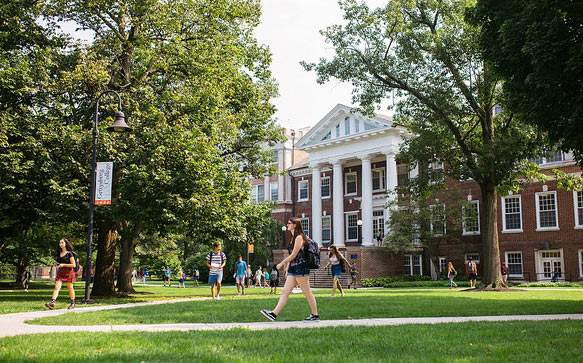
Life at Gettysburg is intensely residential and participatory. The campus culture is rich with over 1,000 events held annually, providing constant access to performances, lectures, and social activities. Students describe a 'family atmosphere' in the dorms, which are conveniently located and foster strong community bonds. With so many on-campus opportunities, staying engaged is a fundamental part of the experience.
The College Life Division provides structured support for students' personal and interpersonal growth. Student life is built around a dense network of clubs, organizations, leadership programs, and service opportunities. Athletics are a major component of campus culture, and the college promotes a balanced lifestyle that integrates academic work with a vibrant social and co-curricular calendar. The setting itself—adjacent to a national park—offers a unique backdrop for recreation and reflection.
Gettysburg delivers strong post-graduation results, a point of pride for the institution. Within one year of graduating, 97% of the Class of 2024 were employed or attending graduate school/pursuing further education. The college also boasts high retention and graduation rates, with 90-91% of first-year students returning for their sophomore year and an 83% graduation rate, placing it among the top 10% of institutions nationally.
Earnings data shows solid financial returns on the Gettysburg education. The median earnings five years after graduation are reported at $71,373 per year. The college actively promotes these outcomes as evidence that its 'consequential education' model delivers tangible results, contrasting its graduates' prospects with national trends where many new college graduates earn less than $28,000 a year.
Gettysburg College is committed to making its education accessible through need-based financial aid. A remarkable 98% of full-time, first-year undergraduates receive grant or scholarship aid. The college states it has a financial aid program for 'worthy and promising students who are unable to finance their education from personal and/or family resources.' Most financial aid is awarded based on demonstrated financial need and can come in the form of grants, loans, or work-study employment.
Prospective families are encouraged to use the Calculator to get a personalized, preliminary estimate of . While the college meets 100% of demonstrated need for admitted students, its aid packages may include loans as part of the solution. The average aid package is substantial, and the net price—the cost after grants and scholarships—makes the college competitive with its peers.
Gettysburg College's singular identity is inextricably linked to its physical and historical context. It’s not just a liberal arts college; it’s a liberal arts college on a Civil War battlefield. This location isn't merely scenic—it fundamentally informs the campus ethos, fostering a deep sense of civic engagement, historical consciousness, and responsibility. The college leverages this through unique academic programming and a pervasive narrative about 'consequential education.'
Beyond location, Gettysburg stands out for its potent Early Decision culture. Filling roughly 40% of its class through ED creates a cohort of students who are deeply committed from day one, fostering a strong, cohesive community. Combined with its exceptional first-year retention rate (90-91%) and the fact that 97% of graduates are employed or in grad school within a year, Gettysburg demonstrates a clear, effective pipeline from admission through to successful launch. It’s a classic, all-in residential experience where tradition, mentorship, and a clear-eyed focus on outcomes converge.
Gettysburg College seal · sourceGettysburg College in Pennsylvania - 'Do Great Work' · sourceGettysburg College - Wikipedia · sourceVisit Gettysburg - Gettysburg.edu · source