Admit rate has ranged 62%–76% over the last 5 years — notably volatile, though the latest figure above (82%) falls outside that window. Source: IPEDS via Urban Institute.
Acceptance & SAT from Common Data Set / IPEDS; net price, earnings & graduation from the U.S. Dept. of Education College Scorecard. Figures lag ~1–2 years — verify with the school.
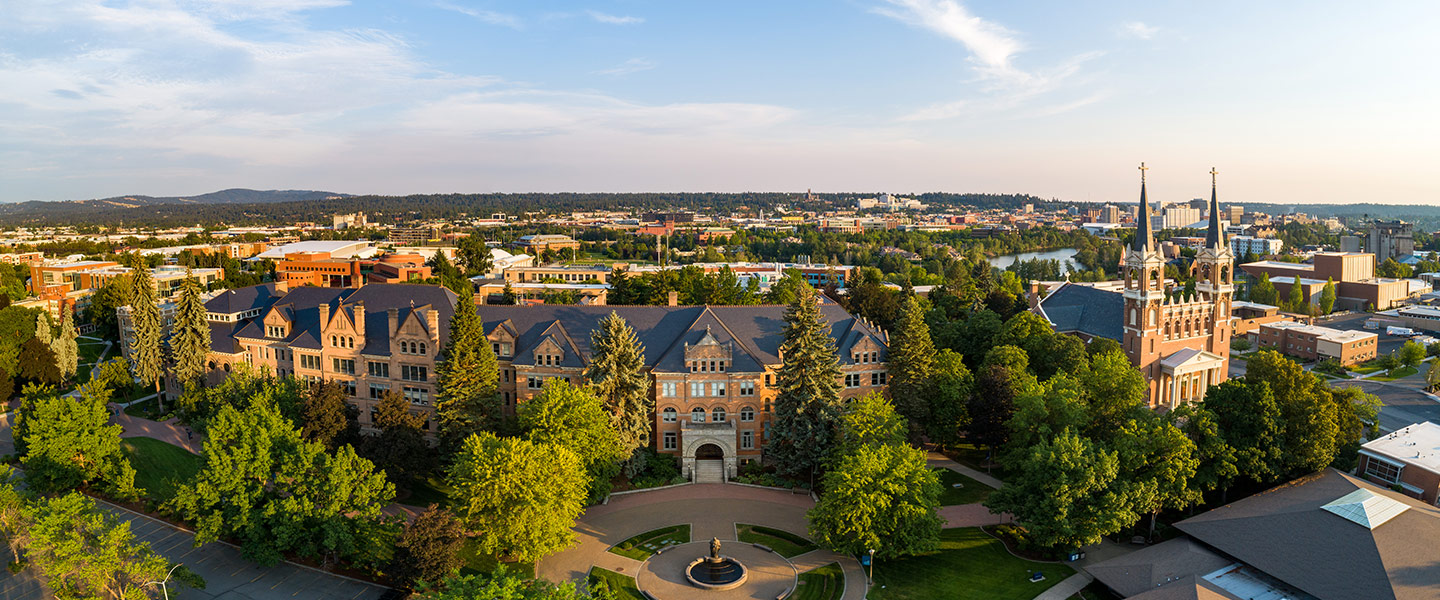
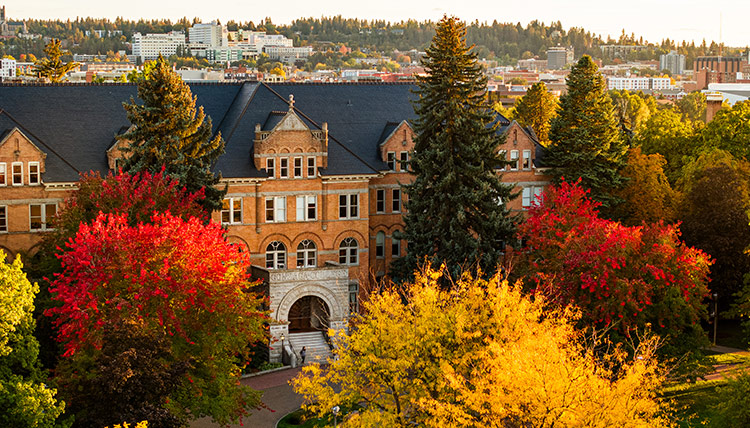
Gonzaga University is a private Jesuit institution in Spokane, Washington, that has cultivated a national reputation far beyond its Pacific Northwest roots, largely thanks to its powerhouse men's basketball program. But beneath the 'Zag Nation' fervor lies a serious, community-focused academic environment offering 53 majors, where the Jesuit emphasis on educating the whole person translates into exceptionally high graduation rates and a tight-knit campus culture. It's a place where strong pre-professional programs, especially in business, meet a mission-driven commitment to service, producing graduates who are both employable and, the university hopes, purpose-driven.
Admission requirements
Test-optional — scores considered if submitted
Required
High school transcript
Grade point average
Letters of recommendation
College-prep program
TOEFL (non-native English)
Considered (not required)
Test scores (SAT/ACT)
Source: IPEDS Admissions survey (2022) via Urban Institute. Covers formal factors only — it does not reflect essays, extracurriculars, or other holistic criteria.
More details
Undergrad enrollment
5,198
In-state tuition
$55,480
Out-of-state tuition
$55,480
Popular Major
Business/Commerce, General (27% of grads)
No-Loan Policy
Not stated in sources
Graduation Rate
86%
Meets Full Need
Not stated in sources; analysis suggests may not meet full need for all
ED Share of Class
Not stated in sources
First-Year Retention
Not stated in sources
Demonstrated Interest
Policy not stated in sources
Median Earnings (10yr)
$78,892
Outcomes & value
Outcomes & value
Median earnings (10 yr)
$78,892
Value (earnings ÷ net price)
2.2×
Median debt at graduation
$24,454
Graduation rate
86%
First-year retention
93%
Reducing loan balance (3 yr)
85%
Pell (lower-income) share
14%
First-gen share (among federal-aid recipients)
13%
Financial health
2.6 / 3.0Meets the federal financial-responsibility standard
U.S. Dept. of Education Financial Responsibility Composite Score (FY2022-23). Scale −1.0 to 3.0; ≥1.5 meets the standard. Reported for private nonprofit & for-profit institutions only — public universities are state-backed and not scored, so this is a stability signal, not a ranking.
Top-earning majors
Median earnings by field of study (highest credential), ~2 years after completion.
Registered Nursing, Nursing Administration, Nursing Research and Clinical Nursing$71,930
Electrical, Electronics, and Communications Engineering$69,338
Computer Science$67,447
Civil Engineering$62,260
Mechanical Engineering$61,859
Accounting and Related Services
Campus & location
Campus safety
On-campus violent crimes (2024)
2
Per 1,000 students
0.27
On-campus criminal offenses classed as violent (murder/non-negligent manslaughter, rape, robbery, aggravated assault) for the most recent reported year. Source: U.S. Dept. of Education Campus Safety and Security (Clery Act). Counts reflect what’s reported to the school, and urban campuses often report more partly due to non-student incidents nearby — read alongside campus size and setting, not as a standalone safety verdict.
Climate
Pleasant days / yr
92
Summer high
83°F
Winter low
24°F
Annual rain
18.4"
Annual snow
34.3"
Natural-hazard risk
Relatively Moderate
Pleasant days counts days per year with a mean temperature of 55–75°F, a high at or below 90°F, a low at or above 45°F, and little precipitation — a transparent comfort measure, not a weighting we invented. Computed from Open-Meteo ERA5 daily history (2019–2023). Natural-hazard risk is the county’s composite rating from the FEMA National Risk Index.
Deep dive — research, future-scholar output & economic mobility▾
Research output
Institutional h-index
120
Scholarly works
4,976
Institutional research volume and impact from OpenAlex. The h-index reflects large research universities and will be low for teaching-focused liberal-arts colleges — not a measure of undergraduate quality.
Economic mobility
Mobility rate
0.8%
Bottom → top quintile
30%
From bottom quintile
3%
Mobility rate = the share of students who both start in the bottom household-income quintile and reach the top quintile; bottom → top is that chance conditional on starting at the bottom. Source: Opportunity Insights Mobility Report Cards (Chetty, Friedman, Saez, Turner & Yagan). Reflects 1980–82 birth cohorts, so it’s directional, not current.
Quick answers
What is the acceptance rate at Gonzaga University?
Gonzaga University's acceptance rate is approximately 82% (Spokane, WA), based on the most recent figures we compiled from public and primary sources.
What SAT score do you need for Gonzaga University?
Admitted students at Gonzaga University typically score 1190–1380 on the SAT (the middle-50% range). Scores outside this band are still admitted, especially with strong applications.
How much does Gonzaga University cost?
At Gonzaga University, the average net price (after aid) is about $35,119 per year. Actual cost varies with financial aid and residency.
How many undergraduates attend Gonzaga University?
Gonzaga University enrolls approximately 5,198 undergraduate students.
Where is Gonzaga University located?
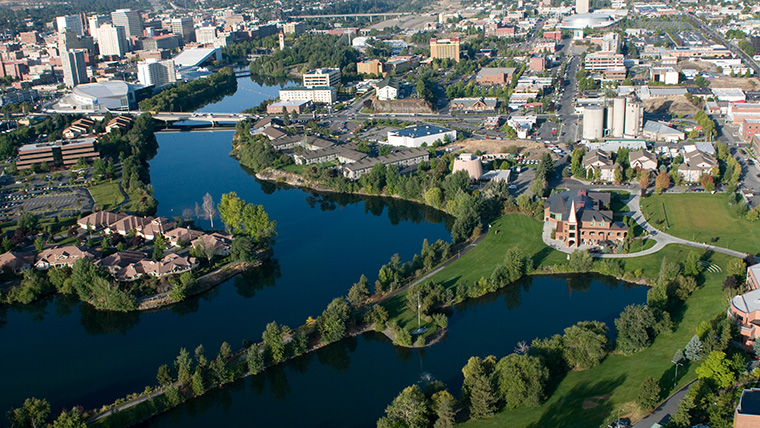
Gonzaga University is located in Spokane, WA.
Admissions
Gonzaga's admissions process is best described as moderately selective and holistic. While the is relatively high, the enrolled student profile is solidly academic. The university reports that the incoming class of 2025 had a mid-50% SAT score range of 1280-1410 and an ACT range of 29-32. Other sources note average high school GPAs for admitted students around 3.66 to 3.72. The process is holistic, considering grades, test scores, and other factors. Notably, a significant portion of the incoming class is filled through early decision plans, though the specific acceptance rate for early decision is not detailed in the provided sources. The university's rate—the percentage of admitted students who enroll—has been reported around 17.48%, which is typical for institutions with acceptance rates in this range. Demonstrated interest is a factor that some colleges track, and its consideration at Gonzaga would be detailed in the (Section C7), though the provided sources do not explicitly state Gonzaga's policy.
Earnings = median of students working ~10 years after entry; debt = median of graduates. Value divides 10-yr earnings by one year’s net price — read it as earnings per dollar of annual cost, not a full lifetime ROI; it favors lower-cost schools. Source: U.S. Dept. of Education College Scorecard. Figures lag ~2 years and reflect all students, not your intended major.
$60,298
Business/Commerce, General$52,524
Public Relations, Advertising, and Applied Communication$46,620
Source: U.S. Dept. of Education College Scorecard (field-of-study earnings). Figures cover graduates who received federal aid and lag ~2 years; not all programs report data.
Gonzaga offers a comprehensive undergraduate education through 16 undergraduate degrees, 53 majors, 68 minors, and 73 concentrations, alongside 23 master's and 5 doctoral programs. The curriculum is broad, but the student body shows clear pre-professional leanings. The most popular major by far is Business/Commerce, General, with Business, Management, Marketing, and Related Support Services accounting for 27% of 2024 graduates. Social Sciences (11%) and Biological and Biomedical Sciences are also among the top choices. This academic structure is delivered within the context of the Jesuit educational tradition, which emphasizes educating the whole person. As noted in student discussions, this leads to a focus on well-rounded graduates and fosters a "close-knit, supportive academic environment" where students work with faculty, ask tough questions, and find creative solutions.
Life at Gonzaga is defined by an intense and pervasive sense of community. The Division of Student Development is explicitly committed to fostering this strong sense of community and an academically rich environment. The campus offers a fully equipped and supportive setting for personal and professional growth. Athletics, particularly the nationally renowned men's basketball team, are a major part of campus identity and social life; one review notes that 30% of students feel varsity sports are a big part of campus life. The culture is often described as friendly and welcoming, though some student discussions online indicate it can feel homogeneous, with concerns from self-described "alternative" students about fitting in with predominant social norms around activities like drinking. Ultimately, the experience is marked by forming close connections, with many students citing meeting future roommates and lifelong friends as a key part of their Gonzaga story.
Gonzaga's investment in a supportive, completion-focused environment pays off in outstanding graduation rates. The university reports a 74% four-year graduation rate, which it notes is significantly above the 41% national average. The six-year graduation rate is consistently strong, reported at 86% and 87% in different sources, placing Gonzaga in the top 10% of institutions nationally. For the Class of 2024-25, the university's First Destination Survey reports a 94% overall success rate (combining employment, graduate school, and other pursuits) for undergraduates and graduates. The reported average salary for that class is $82,000. These figures underscore the institution's effectiveness in preparing students for next steps, a point it highlights as a key return on investment.
Attending Gonzaga requires a significant financial commitment, but the university works to offset costs with widespread merit and . A vast majority—98%—of incoming students receive some form of merit scholarship. Financial aid is determined using the FAFSA to calculate eligibility for federal, state, and institutional need-based aid. Grant aid, which does not require repayment, is provided based on demonstrated financial need. However, it's important to note that outside analysis suggests Gonzaga may not meet the full demonstrated financial need for all families; one example indicated the university met 52% of a particular family's calculated need. The average financial aid package is reported to be $43,817, bringing the average after grants and scholarships to figures reported between $35,770 and $38,727. Students and families are encouraged to use the university's Net Price Calculator for a personalized estimate.
Gonzaga stands out for its powerful and rare combination: the spirited, all-in community feel of a Division I basketball school fused with the serious academic outcomes and student support structure of a private Jesuit university. While the 'Zags' basketball brand provides incredible energy and identity, the core of the institution is the Jesuit commitment to cura personalis (care for the whole person). This translates into a remarkably high graduation rate—nearly double the national average at four years—and a documented 94% post-graduation success rate. It's a place where you can major in business alongside a quarter of your class, cheer wildly in the Kennel, and still engage in the reflective, service-oriented questions at the heart of its mission. The result is a loyal, connected alumni network and graduates who are not only employable but also shaped by a specific ethos of community and purpose.