Admit rate has ranged 75%–84% over the last 5 years — notably volatile. Source: IPEDS via Urban Institute.
Acceptance & SAT from Common Data Set / IPEDS; net price, earnings & graduation from the U.S. Dept. of Education College Scorecard. Figures lag ~1–2 years — verify with the school.
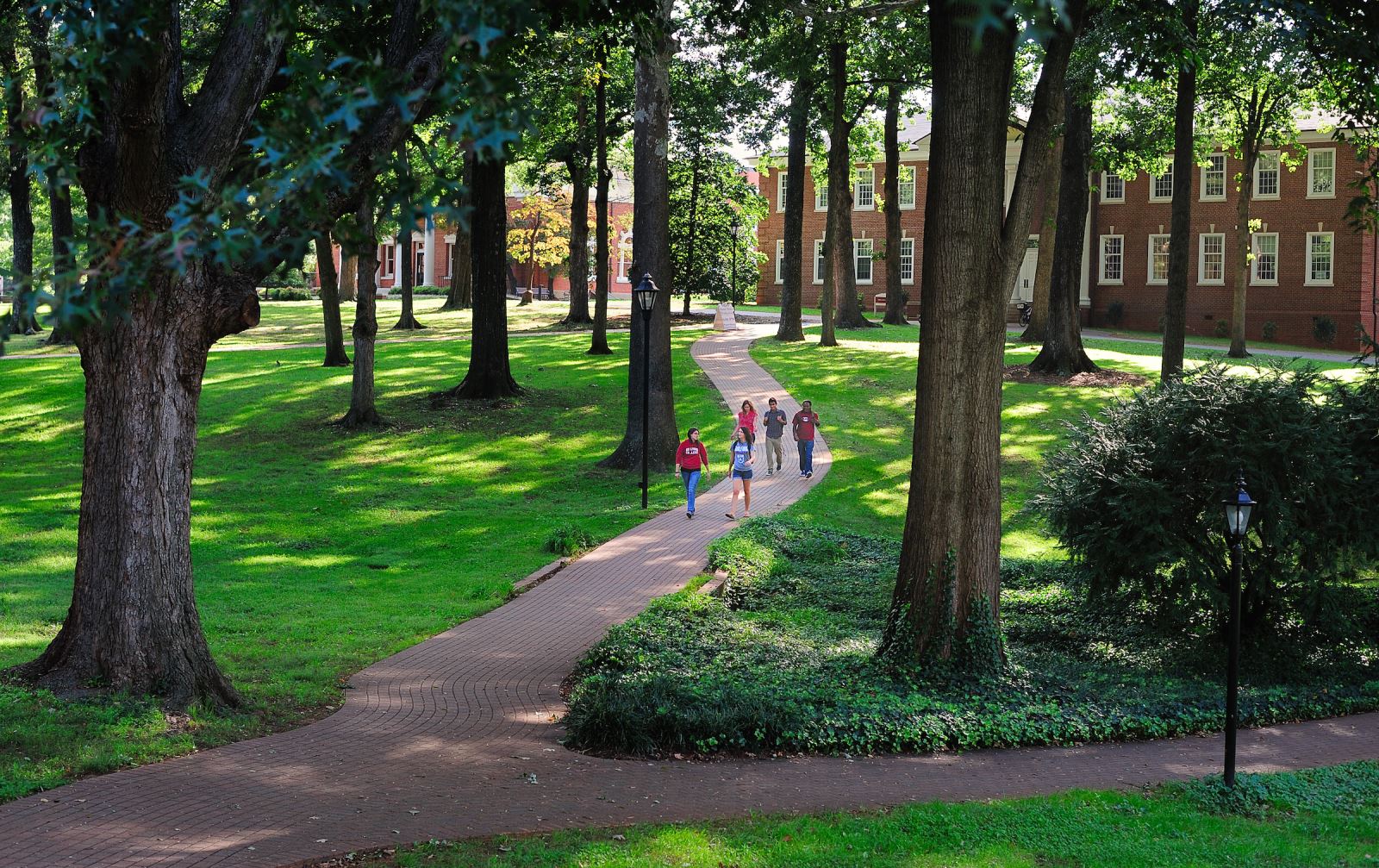
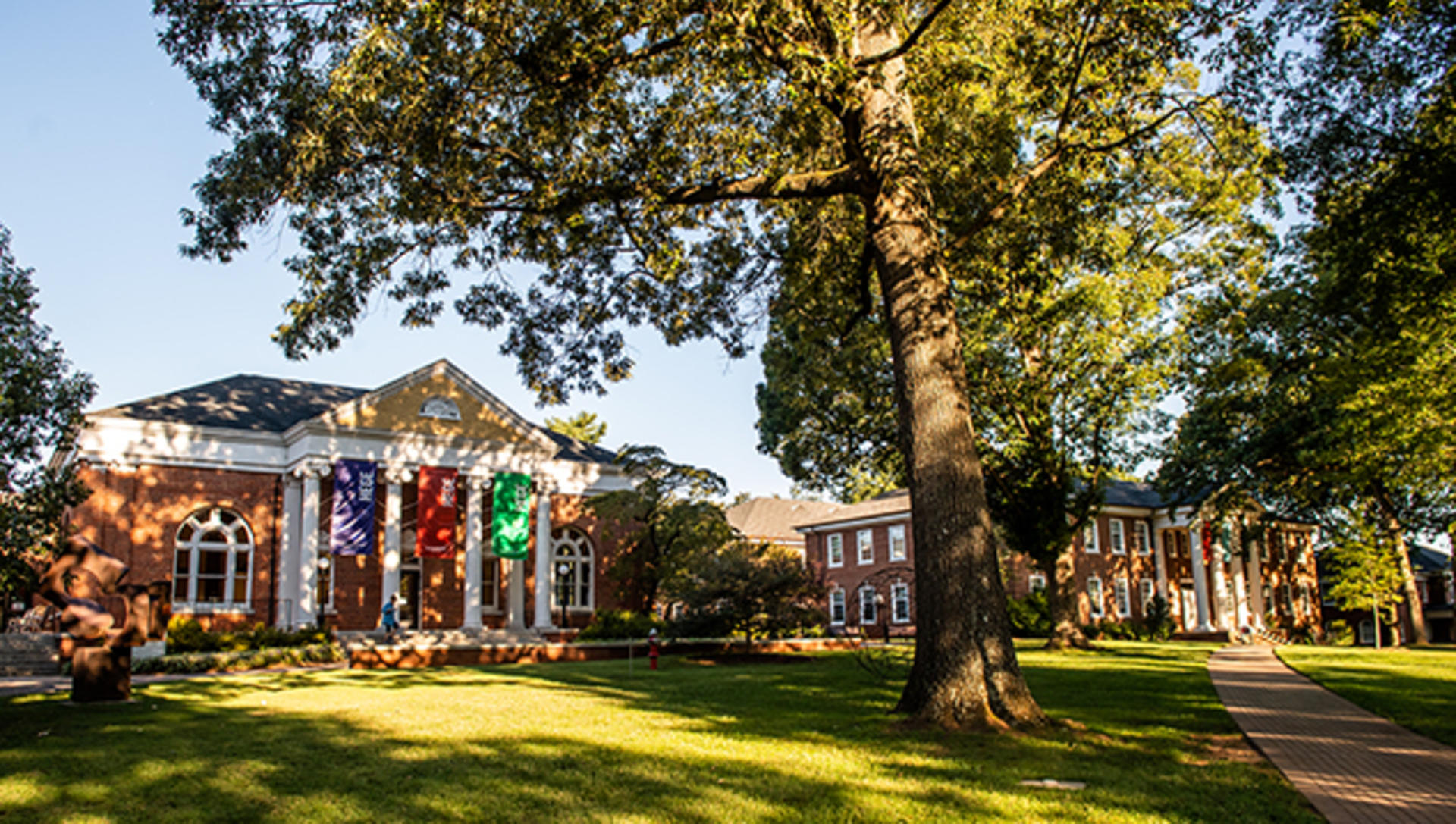
Guilford College is a small, private liberal arts school in Greensboro, North Carolina, with a Quaker heritage that still informs its community-focused, principled-problem-solving ethos. It's a place where the 349-acre wooded campus fosters a tight-knit, intentionally diverse environment, but one that has faced significant academic and financial challenges in recent years. The college offers a traditional liberal arts curriculum with notable flexibility, though its graduation and retention rates signal a student experience that can be uneven.
Admission requirements
Test-optional — scores considered if submitted
Required
High school transcript
TOEFL (non-native English)
Considered (not required)
Grade point average
Class rank
Letters of recommendation
Test scores (SAT/ACT)
College-prep program
Demonstrated competencies
Source: IPEDS Admissions survey (2022) via Urban Institute. Covers formal factors only — it does not reflect essays, extracurriculars, or other holistic criteria.
More details
Undergrad enrollment
1,001
In-state tuition
$41,362
Out-of-state tuition
$41,362
Campus Size
349 acres
Early Decision
Offered
Graduation Rate
46%
Typical Student Debt
$26,000
Student-Faculty Ratio
12:1
Median Earnings (10yr)
$47,590
First-Year Retention Rate
63%
Outcomes & value
Outcomes & value
Median earnings (10 yr)
$47,590
Value (earnings ÷ net price)
2.1×
Median debt at graduation
$26,000
Graduation rate
46%
First-year retention
65%
Reducing loan balance (3 yr)
51%
Pell (lower-income) share
44%
First-gen share (among federal-aid recipients)
26%
Top-earning majors
Median earnings by field of study (highest credential), ~2 years after completion.
Computer and Information Sciences, General$49,214
Accounting and Related Services$46,790
Business Administration, Management and Operations$45,305
Teacher Education and Professional Development, Specific Levels and Methods$37,748
Biological and Biomedical Sciences, Other$35,416
History
Campus & location
Campus safety
On-campus violent crimes (2024)
0
Per 1,000 students
0.00
On-campus criminal offenses classed as violent (murder/non-negligent manslaughter, rape, robbery, aggravated assault) for the most recent reported year. Source: U.S. Dept. of Education Campus Safety and Security (Clery Act). Counts reflect what’s reported to the school, and urban campuses often report more partly due to non-student incidents nearby — read alongside campus size and setting, not as a standalone safety verdict.
Climate
Pleasant days / yr
99
Summer high
87°F
Winter low
35°F
Annual rain
44.8"
Annual snow
4.9"
Natural-hazard risk
Relatively Moderate
Pleasant days counts days per year with a mean temperature of 55–75°F, a high at or below 90°F, a low at or above 45°F, and little precipitation — a transparent comfort measure, not a weighting we invented. Computed from Open-Meteo ERA5 daily history (2019–2023). Natural-hazard risk is the county’s composite rating from the FEMA National Risk Index.
Deep dive — research, future-scholar output & economic mobility▾
Research output
Institutional h-index
110
Scholarly works
1,234
Institutional research volume and impact from OpenAlex. The h-index reflects large research universities and will be low for teaching-focused liberal-arts colleges — not a measure of undergraduate quality.
Economic mobility
Mobility rate
0.8%
Bottom → top quintile
20%
From bottom quintile
4%
Mobility rate = the share of students who both start in the bottom household-income quintile and reach the top quintile; bottom → top is that chance conditional on starting at the bottom. Source: Opportunity Insights Mobility Report Cards (Chetty, Friedman, Saez, Turner & Yagan). Reflects 1980–82 birth cohorts, so it’s directional, not current.
Quick answers
What is the acceptance rate at Guilford College?
Guilford College's acceptance rate is approximately 80% (Greensboro, NC), based on the most recent figures we compiled from public and primary sources.
What SAT score do you need for Guilford College?
Admitted students at Guilford College typically score 1120–1260 on the SAT (the middle-50% range). Scores outside this band are still admitted, especially with strong applications.
How much does Guilford College cost?
At Guilford College, the average net price (after aid) is about $22,270 per year. Actual cost varies with financial aid and residency.
How many undergraduates attend Guilford College?
Guilford College enrolls approximately 1,001 undergraduate students.
Where is Guilford College located?
Guilford College is located in Greensboro, NC.
Admissions
Guilford College operates with an accessible admissions process, admitting a significant majority of its applicants. The college offers an Early Decision option, which requires admitted students to withdraw applications elsewhere and submit an enrollment deposit by December, indicating a binding commitment. For the class profile, the middle 50% of admitted students score between 1120 and 1260 on the SAT, or between 18 and 24 on the ACT. The admissions office considers a range of factors, though the specific weight given to demonstrated interest—a common metric tracked by many colleges—is not detailed in the provided sources. The overall rate, or the percentage of admitted students who enroll, is a critical metric for the college's planning, though Guilford's specific rate is not stated in the sources.
Academics at Guilford are defined by a 12:1 student-faculty ratio and a curriculum built around the concept of 'Principled Problem Solving.' Students can browse a wide range of majors and minors, mix majors freely, or even design their own with faculty mentorship. The college organizes its courses through academic departments, which provide coherent patterns for completing major requirements. Historically, the college has been known for its small class sizes and accessible professors. However, the institution has undergone deep cuts to its academic offerings, impacting core liberal arts departments like Philosophy and Mathematics, as well as signature programs such as Peace and Conflict Studies. The most popular degrees, based on first majors, include General Education and General Biology/Biological Sciences. A notable challenge is the average first-year retention rate, which is reported at 63%, an indicator of student satisfaction and academic integration.
Earnings = median of students working ~10 years after entry; debt = median of graduates. Value divides 10-yr earnings by one year’s net price — read it as earnings per dollar of annual cost, not a full lifetime ROI; it favors lower-cost schools. Source: U.S. Dept. of Education College Scorecard. Figures lag ~2 years and reflect all students, not your intended major.
$33,993
Criminal Justice and Corrections$30,926
Psychology, General$28,870
Source: U.S. Dept. of Education College Scorecard (field-of-study earnings). Figures cover graduates who received federal aid and lag ~2 years; not all programs report data.
Life on Guilford's 349 wooded acres is that of a close community. The college actively promotes itself as a proudly diverse and welcoming campus for people of all races, religions, cultures, sexual orientations, and backgrounds, intentionally creating spaces for people from different experiences to learn alongside one another. This includes a multifaith approach that encourages spiritual exploration for people of all faith and non-faith expressions. Students can engage with dozens of clubs and participate in Quaker Athletics. Descriptions of campus life note a 'very active drug and party culture' exists for those seeking it, alongside the generally appreciated atmosphere of freedom and inclusivity. The campus environment and community are frequently cited as strengths by those who attend.
Post-graduation outcomes at Guilford present a mixed picture. The six-year graduation rate is a central metric, with sources reporting figures of 46%, 47%, 48%, and 53%. The first-year retention rate is reported at 65%. Financially, typical earnings for graduates vary by source and timeframe: one year after graduation, earnings are reported at $31,217, while five years after, they rise to $48,340. Alumni debt is a factor, with a typical graduate carrying about $26,000 in student debt. The college's outcomes data, including graduation rates, are publicly reported through IPEDS and the College Scorecard.
Guilford College is a private institution with a published annual cost of $60,320 for tuition and fees. However, the average —the cost after scholarships and grants are applied—is significantly lower. The college reports investing a generous $12.5 million in scholarships and grant aid for first-year students. Financial aid is prevalent, with 46% of students receiving it, and the average aid package is $31,490. Students can use the college's net price calculator to estimate their individual out-of-pocket costs. All institutional scholarships and grants require recipients to maintain full-time enrollment (12 credit hours per semester) and remain in good academic standing; failure to do so can result in the loss of both institutional and federal aid.
Guilford stands out for its deep-rooted Quaker identity, which manifests not as religious doctrine but as a foundational commitment to community, consensus, and 'Principled Problem Solving' woven throughout its curriculum. Its 349-acre wooded campus in Greensboro provides a distinct, secluded environment that fosters the tight-knit community it promotes. The college makes a pronounced, active effort to be a diverse and inclusive space, intentionally bringing together students from vastly different backgrounds. Furthermore, it offers notable academic flexibility, allowing students to freely mix majors or design their own with faculty guidance. However, it also stands out for the stark challenges it has faced, including deep cuts to academic departments and programs that were once central to its liberal arts mission, coupled with retention and graduation rates that lag behind national averages for four-year colleges. It is a college of significant contrasts: between its serene setting and active social scene, its communal ideals and its institutional struggles, and its open-armed admissions and the subsequent academic journey of its students.
Guilford College seal · sourceYour Visit to Guilford College - No Class option · sourceBonner / Guilford College Campus Profile · sourceGuilford College - Admissions, Rankings, and Acceptance Rate | Varsity Tutors · source