Admit rate has ranged 57%–65% over the last 5 years — notably volatile, though the latest figure above (70%) falls outside that window. Source: IPEDS via Urban Institute.
Acceptance & SAT from Common Data Set / IPEDS; net price, earnings & graduation from the U.S. Dept. of Education College Scorecard. Figures lag ~1–2 years — verify with the school.
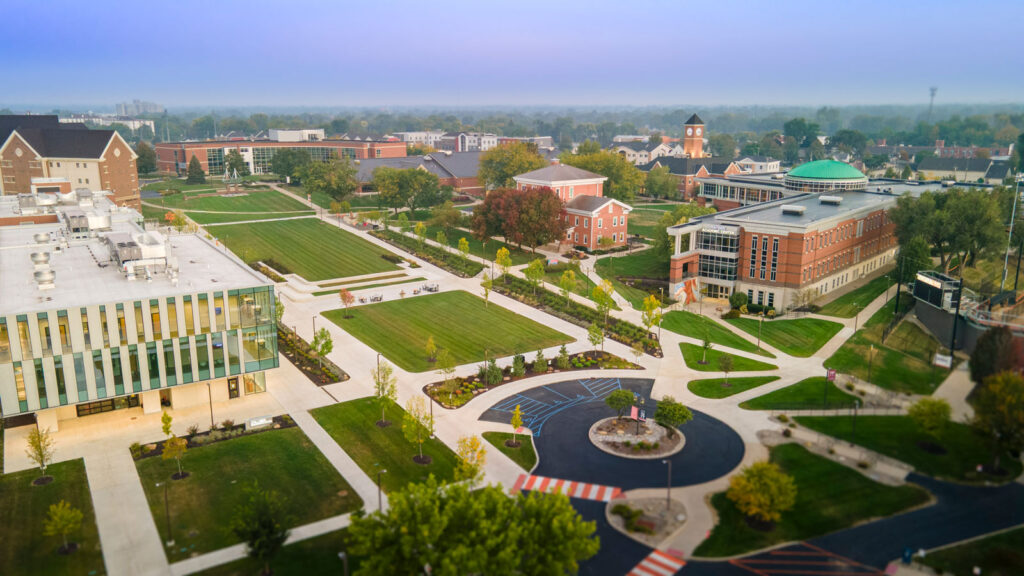
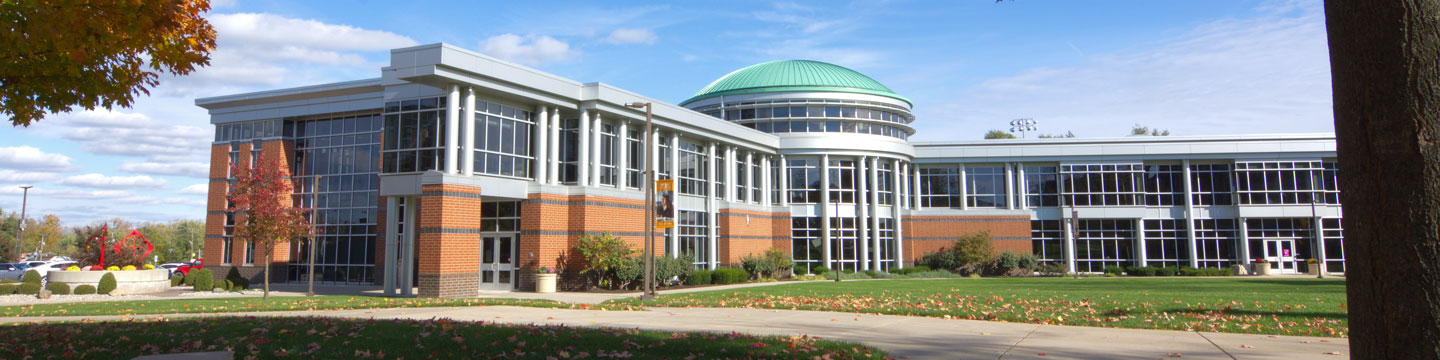
Indiana Institute of Technology is a private, career-focused university in Fort Wayne that operates like a technical trade school crossed with a small liberal arts college. Its identity is built squarely on applied, hands-on learning in engineering, computer science, and business, delivered in small classes by field-experienced faculty. While its graduation rate signals challenges, its approachable admissions and strong early-career earnings for graduates paint a picture of a pragmatic, no-frills institution for students who know exactly what job they want to land.
Admission requirements
Test-blind — scores not considered
Required
High school transcript
Grade point average
Considered (not required)
Letters of recommendation
College-prep program
Source: IPEDS Admissions survey (2022) via Urban Institute. Covers formal factors only — it does not reflect essays, extracurriculars, or other holistic criteria.
More details
Undergrad enrollment
1,441
In-state tuition
$31,361
Out-of-state tuition
$31,361
No-Loan Policy
No
Graduation Rate
48%
Meets Full Need
No
On-Campus Housing
54%
Demonstrated Interest
Considered
Median Earnings (10yr)
$47,327
Outcomes & value
Outcomes & value
Median earnings (10 yr)
$47,327
Value (earnings ÷ net price)
2.0×
Median debt at graduation
$26,391
Graduation rate
48%
First-year retention
59%
Reducing loan balance (3 yr)
32%
Pell (lower-income) share
35%
First-gen share (among federal-aid recipients)
53%
Financial health
2.4 / 3.0Meets the federal financial-responsibility standard
U.S. Dept. of Education Financial Responsibility Composite Score (FY2022-23). Scale −1.0 to 3.0; ≥1.5 meets the standard. Reported for private nonprofit & for-profit institutions only — public universities are state-backed and not scored, so this is a stability signal, not a ranking.
Top-earning majors
Median earnings by field of study (highest credential), ~2 years after completion.
Industrial Engineering$69,338
Biomedical/Medical Engineering$62,260
Mechanical Engineering$60,771
Computer and Information Sciences and Support Services, Other$58,221
Business Administration, Management and Operations$43,178
Accounting and Related Services
Campus & location
Campus safety
On-campus violent crimes (2024)
8
Per 1,000 students
3.12
On-campus criminal offenses classed as violent (murder/non-negligent manslaughter, rape, robbery, aggravated assault) for the most recent reported year. Source: U.S. Dept. of Education Campus Safety and Security (Clery Act). Counts reflect what’s reported to the school, and urban campuses often report more partly due to non-student incidents nearby — read alongside campus size and setting, not as a standalone safety verdict.
Climate
Pleasant days / yr
87
Summer high
83°F
Winter low
24°F
Annual rain
37.1"
Annual snow
24.2"
Natural-hazard risk
Relatively Moderate
Pleasant days counts days per year with a mean temperature of 55–75°F, a high at or below 90°F, a low at or above 45°F, and little precipitation — a transparent comfort measure, not a weighting we invented. Computed from Open-Meteo ERA5 daily history (2019–2023). Natural-hazard risk is the county’s composite rating from the FEMA National Risk Index.
Deep dive — research, future-scholar output & economic mobility▾
Economic mobility
Mobility rate
1.3%
Bottom → top quintile
12%
From bottom quintile
10%
Mobility rate = the share of students who both start in the bottom household-income quintile and reach the top quintile; bottom → top is that chance conditional on starting at the bottom. Source: Opportunity Insights Mobility Report Cards (Chetty, Friedman, Saez, Turner & Yagan). Reflects 1980–82 birth cohorts, so it’s directional, not current.
Quick answers
What is the acceptance rate at Indiana Institute of Technology?
Indiana Institute of Technology's acceptance rate is approximately 70% (Fort Wayne, IN), based on the most recent figures we compiled from public and primary sources.
How much does Indiana Institute of Technology cost?
At Indiana Institute of Technology, the average net price (after aid) is about $23,206 per year. Actual cost varies with financial aid and residency.
How many undergraduates attend Indiana Institute of Technology?
Indiana Institute of Technology enrolls approximately 1,441 undergraduate students.
Where is Indiana Institute of Technology located?
Indiana Institute of Technology is located in Fort Wayne, IN.
Admissions
Indiana Tech's admissions process is characterized by its accessibility. The university is less selective, with an of 70%. For the Fall 2024 cycle, it received applications from 6,187 first-time, first-year students, admitted 3,520, and enrolled 443, resulting in a rate of approximately 12.6%. Admitted students who submit test scores typically present an SAT range between 875 and 1140, or an ACT range between 16 and 23. The average high school GPA of enrolled freshmen is reported as 3.76. The university does not appear to offer an Early Decision program, and its application priorities, as indicated by practices, likely categorize factors like demonstrated interest as 'Considered' rather than 'Very Important.' The process is straightforward, with a focus on proving a student can handle the coursework, and admitted students must typically reply by May 1st or within a few weeks of notification.
Earnings = median of students working ~10 years after entry; debt = median of graduates. Value divides 10-yr earnings by one year’s net price — read it as earnings per dollar of annual cost, not a full lifetime ROI; it favors lower-cost schools. Source: U.S. Dept. of Education College Scorecard. Figures lag ~2 years and reflect all students, not your intended major.
$41,565
Criminal Justice and Corrections$35,274
Human Services, General$35,060
Source: U.S. Dept. of Education College Scorecard (field-of-study earnings). Figures cover graduates who received federal aid and lag ~2 years; not all programs report data.
Academics at Indiana Tech are unapologetically practical and industry-focused. The university offers degree and certificate programs concentrated in business, engineering, arts and sciences, computer sciences, and criminal justice. Its most specialized and prominent majors are in Engineering Technologies and Business, which together account for a significant portion of degrees awarded. The school heavily promotes its 42 engineering and computer science programs, which are taught by expert, field-experienced faculty in a well-equipped, state-of-the-art learning environment. A key feature of the academic experience is small class sizes, which the university claims contribute to meaningful interactions and tailored academic support. This hands-on, career-ready approach extends to online bachelor's programs in areas like psychology and criminal justice. The overall intellectual culture is less about theoretical exploration and more about applied skill-building for immediate workforce entry.
Life on Indiana Tech's Fort Wayne campus revolves around a compact, residential community where just over half (54%) of students live in college-owned, -operated, or -affiliated housing, with the remaining 46% living off-campus. The university promotes an active student life with fun events, dozens of clubs and organizations, and a robust intramural program. On-campus housing offers apartment- and suite-like options, and the dining hall is marketed as serving great food. The campus is in Fort Wayne, which provides access to local bars, restaurants, and athletics. The university also engages with the broader community, offering fun, immersive learning opportunities for middle and high schoolers. While not a large, traditional residential university with a sprawling Greek life scene, it aims to create a student-centered environment with engaging activities and programs.
Outcomes for Indiana Tech graduates are a mixed bag, defined by solid early-career earnings but concerning graduation rates. The median earnings for alumni ten years after entry are $47,327. Graduates in fields like Accounting and Related Services can earn above this median. However, the university's overall six-year graduation rate is low, reported at 31% in some sources and 39% in others, with a six-year graduation rate for Pell Grant recipients at 39%. This suggests significant challenges with student retention and completion. The university publicly discloses student achievement data for its College of Professional Studies and for students receiving athletically related aid. The return on investment analysis suggests that for every dollar spent, there is a return of $23.7 over 20 years, with debt paid back in under a year, indicating that graduates who persist and complete their degrees often find financially sustainable careers quickly.
Indiana Tech positions itself as keeping college 'highly affordable' through institutional merit scholarships, offering up to $15,000 in such awards. The average —the out-of-pocket cost after scholarships and grants—is reported variably between sources, but the canonical figure is $23,206. Other sources cite net prices of $22,148, $24,208, and an average cost after aid of $42,458. The average financial aid package is reported as $20,028. The university encourages all students to use its Net Price Calculator to get an early estimate of their actual cost. There is no indication from the provided sources that Indiana Tech meets 100% of demonstrated financial need or has a no-loan policy; one analysis suggests its financial aid policy may be 'relatively weak,' with grants not always covering the total cost. The school's FAFSA code is 001805.
Indiana Tech stands out as a singularly pragmatic institution for students who view college as direct career training. It lacks the pretension of liberal arts exploration, instead doubling down on what it does best: delivering hands-on, industry-relevant education in engineering, tech, and business through small classes led by practitioners. Its high and focus on applied learning make it an accessible on-ramp for students who may not fit the mold of highly selective universities but are determined to build technical skills. The trade-off is evident in its low graduation rates, suggesting the model doesn't work for everyone, but for those who persist, the payoff is clear in strong early-career earnings that often outpace the national average for college graduates. It’s a university built for the student who already has a job title in mind and wants the most direct path to getting it.
Indiana Institute of Technology seal · sourceIndiana Tech · sourceIndiana Tech (Indiana Tech) - Profile, Rankings and Data | US News Best Colleges · sourceGet to Know IT – On-Campus Admissions – Indiana Tech · source