Admit rate has ranged 67%–76% over the last 5 years — notably volatile, though the latest figure above (79%) falls outside that window. Source: IPEDS via Urban Institute.
Acceptance & SAT from Common Data Set / IPEDS; net price, earnings & graduation from the U.S. Dept. of Education College Scorecard. Figures lag ~1–2 years — verify with the school.
Juniata College is a small, private liberal arts school in rural Huntingdon, Pennsylvania that punches far above its weight in the sciences and career outcomes. Its defining feature is the 'Program of Emphasis' (POE), a self-designed major system that gives students remarkable curricular freedom, supported by a culture of close mentorship. While not a party school, its tight-knit, residential community—where 95% of students live on campus—fosters intense engagement through traditions, clubs, and a commitment to civil discourse.
Admission requirements
Test-optional — scores considered if submitted
Required
High school transcript
Grade point average
Letters of recommendation
College-prep program
TOEFL (non-native English)
Considered (not required)
Test scores (SAT/ACT)
Source: IPEDS Admissions survey (2022) via Urban Institute. Covers formal factors only — it does not reflect essays, extracurriculars, or other holistic criteria.
More details
Undergrad enrollment
1,191
In-state tuition
$58,580
Out-of-state tuition
$58,580
No-Loan Policy
Yes
Graduation Rate
74%
Meets Full Need
Yes, with loan-free packages
ED Share of Class
Substantial portion (source indicates a large percentage)
On-Campus Housing
95% of students
First-Year Retention
Not explicitly stated in provided sources
Demonstrated Interest
Considered
Median Earnings (10yr)
$56,918
Post-Grad Success (6 months)
Outcomes & value
Outcomes & value
Median earnings (10 yr)
$56,918
Value (earnings ÷ net price)
2.4×
Median debt at graduation
$27,000
Graduation rate
74%
First-year retention
83%
Reducing loan balance (3 yr)
81%
Pell (lower-income) share
29%
First-gen share (among federal-aid recipients)
20%
Financial health
2.4 / 3.0Meets the federal financial-responsibility standard
U.S. Dept. of Education Financial Responsibility Composite Score (FY2022-23). Scale −1.0 to 3.0; ≥1.5 meets the standard. Reported for private nonprofit & for-profit institutions only — public universities are state-backed and not scored, so this is a stability signal, not a ranking.
Top-earning majors
Median earnings by field of study (highest credential), ~2 years after completion.
Computer and Information Sciences, General$52,107
Business/Commerce, General$36,848
Natural Resources Conservation and Research$30,409
Communication and Media Studies$26,739
Natural Resources and Conservation, Other$24,421
Biology, General$24,421
Campus & location
Campus safety
On-campus violent crimes (2024)
4
Per 1,000 students
3.15
On-campus criminal offenses classed as violent (murder/non-negligent manslaughter, rape, robbery, aggravated assault) for the most recent reported year. Source: U.S. Dept. of Education Campus Safety and Security (Clery Act). Counts reflect what’s reported to the school, and urban campuses often report more partly due to non-student incidents nearby — read alongside campus size and setting, not as a standalone safety verdict.
Climate
Pleasant days / yr
91
Summer high
83°F
Winter low
25°F
Annual rain
38.6"
Annual snow
23.3"
Natural-hazard risk
Relatively Low
Pleasant days counts days per year with a mean temperature of 55–75°F, a high at or below 90°F, a low at or above 45°F, and little precipitation — a transparent comfort measure, not a weighting we invented. Computed from Open-Meteo ERA5 daily history (2019–2023). Natural-hazard risk is the county’s composite rating from the FEMA National Risk Index.
Deep dive — research, future-scholar output & economic mobility▾
Research output
Institutional h-index
159
Scholarly works
1,965
Institutional research volume and impact from OpenAlex. The h-index reflects large research universities and will be low for teaching-focused liberal-arts colleges — not a measure of undergraduate quality.
Economic mobility
Mobility rate
2.2%
Bottom → top quintile
48%
From bottom quintile
5%
Mobility rate = the share of students who both start in the bottom household-income quintile and reach the top quintile; bottom → top is that chance conditional on starting at the bottom. Source: Opportunity Insights Mobility Report Cards (Chetty, Friedman, Saez, Turner & Yagan). Reflects 1980–82 birth cohorts, so it’s directional, not current.
Quick answers
What is the acceptance rate at Juniata College?
Juniata College's acceptance rate is approximately 79% (Huntingdon, PA), based on the most recent figures we compiled from public and primary sources.
What SAT score do you need for Juniata College?
Admitted students at Juniata College typically score 1130–1320 on the SAT (the middle-50% range). Scores outside this band are still admitted, especially with strong applications.
How much does Juniata College cost?
At Juniata College, the average net price (after aid) is about $23,988 per year. Actual cost varies with financial aid and residency.
How many undergraduates attend Juniata College?
Juniata College enrolls approximately 1,191 undergraduate students.
Where is Juniata College located?
Juniata College is located in Huntingdon, PA.
Admissions
Juniata's admissions process is notably accessible, with a high that reflects its mission to educate a broad range of students. The college practices need-blind admissions, meaning a family's financial situation is not considered during the initial admission decision. Demonstrated interest in the college is considered as part of the selection process, as indicated in its . The most strategic path for applicants is Early Decision: the ED acceptance rate is significantly higher than the overall rate, and the college fills a substantial portion of its class through this binding option. The admitted student profile shows solid academic preparation, with a middle 50% SAT range indicative of a capable, though not hyper-competitive, applicant pool.
Early Decision Advantage: Applying Early Decision (deadline November 15) is a powerful strategy. Sources indicate the ED acceptance rate is substantially higher than the Regular Decision rate, and the college fills a large percentage of its incoming class through ED applicants.
Selection Factors: Beyond grades and test scores, the admissions office gives special consideration to students with demonstrated talent or abilities in areas of interest to the institution, such as sports, the arts, or languages. Level of applicant's interest is also a considered factor.
Earnings = median of students working ~10 years after entry; debt = median of graduates. Value divides 10-yr earnings by one year’s net price — read it as earnings per dollar of annual cost, not a full lifetime ROI; it favors lower-cost schools. Source: U.S. Dept. of Education College Scorecard. Figures lag ~2 years and reflect all students, not your intended major.
Psychology, General$22,329
Source: U.S. Dept. of Education College Scorecard (field-of-study earnings). Figures cover graduates who received federal aid and lag ~2 years; not all programs report data.
Juniata's academic identity is built on two pillars: exceptional strength in the sciences and business, and an extraordinary degree of student agency through its signature 'Program of Emphasis' (POE) system. Instead of choosing from a standard list of majors, students craft their own POE—a customized course of study that can combine disciplines in unique ways, guided by faculty mentors. This isn't a loose, unstructured experiment; it's supported by the nationally recognized 'Academic and Career Exploration' program that helps students align their studies with their skills and goals. The curriculum is rigorous, particularly in STEM and business fields, which are major draws for the student body. The college also offers accelerated 3+1 dual-degree programs for students seeking an efficient path to advanced credentials.
The POE System: This is the heart of a Juniata education. It allows for a unique and customized approach to majoring, where students shape their studies to match their interests.
Program Strengths: The college is explicitly known for 'exceptionally strong academic programs in the sciences, business, arts, and humanities.'
Areas of Study: Available paths include Accounting, Art and Design, Business Analytics, Business Information Technology, Chemistry, Communication, and many more, alongside the self-designed POEs.
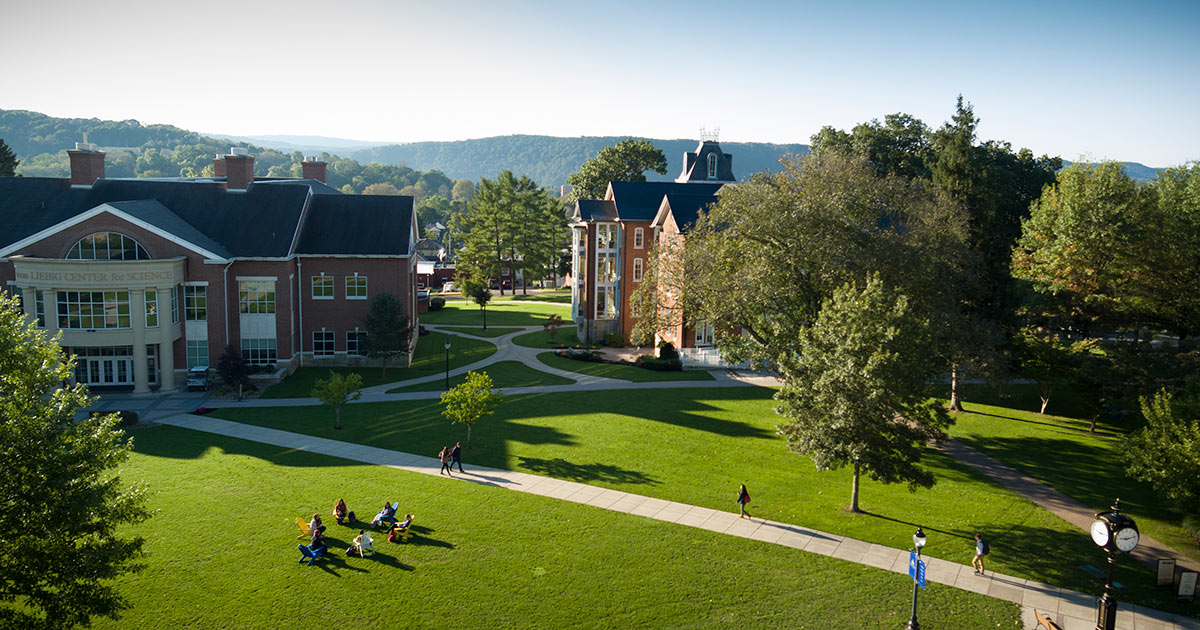
Life at Juniata is intensely residential and community-oriented, with 95% of students living in college-owned, -operated, or -affiliated housing. The campus is described as an 'active environment' where involvement is the norm, not the exception. Students engage through a wide array of clubs, cultural events, lectures, and social activities—from movie nights and late-night breakfasts to bingo and surprise events. It's not known as a party school; social life revolves more around organized campus events and shared interests. The college actively fosters a campus culture that values 'ideological diversity' and 'civil discourse,' aiming to create a respectful and inclusive community. The setting in Huntingdon is rural, which concentrates student life on campus and strengthens the bonds within this small community.
Juniata delivers remarkably strong post-graduate results for a college of its size and selectivity. A standout 96% of graduates were employed or enrolled in graduate school within six months of graduation last year. The college also boasts a high four-year graduation rate, with 94% of students graduating in four or fewer years. Furthermore, an impressive 95% of students participated in some form of high-impact experiential learning (like internships, research, or study abroad) during their time at Juniata. These figures point to an educational model that is highly effective at preparing students for immediate next steps and long-term career success, likely fueled by the close mentorship inherent in the POE system and the career-focused exploration programs.
Juniata is committed to making its education affordable through a robust combination of merit and . The college awards more than $45 million in scholarships and grants annually. Crucially, Juniata practices need-blind admissions and states it awards loan-free financial aid packages (grants and work-study) that meet the full demonstrated need of admitted students. On average, the college meets 88% of a student's demonstrated financial need with its aid resources. Merit-based academic scholarships are significant, ranging from $16,000 to $25,000 per year and are renewable. The —the average cost after grants and scholarships—varies by source, but the college provides a net price calculator for families to get a personalized estimate.
Juniata College stands out for offering a rare combination: the intimate, self-directed curriculum of an experimental liberal arts college with the career preparedness and strong outcomes of a more pre-professional institution. The POE system is its crown jewel—a legitimate, supported pathway for students to design their own major, which is almost unheard of at the undergraduate level outside of a handful of elite colleges. This fosters incredible ownership and close faculty relationships. Yet, this intellectual freedom is anchored by a strikingly effective career services apparatus (96% placement rate) and a deeply residential, engaged community where almost everyone lives on campus. Add to this a need-blind, no-loan financial aid policy for qualifying students, and you have a school that delivers high value and personalized attention without the cutthroat admissions or sticker shock of its more famous peers. It’s a college for the independent-minded student who wants to build their own academic path but doesn’t want to sacrifice post-graduate security to do it.
Juniata College seal · sourceJuniata College | A Top Liberal Arts College · sourceJuniata College – Colleges That Change Lives · sourceVirtual Visit | Juniata College · source