Admit rate has ranged 69%–83% over the last 5 years — notably volatile. Source: IPEDS via Urban Institute.
Acceptance & SAT from Common Data Set / IPEDS; net price, earnings & graduation from the U.S. Dept. of Education College Scorecard. Figures lag ~1–2 years — verify with the school.
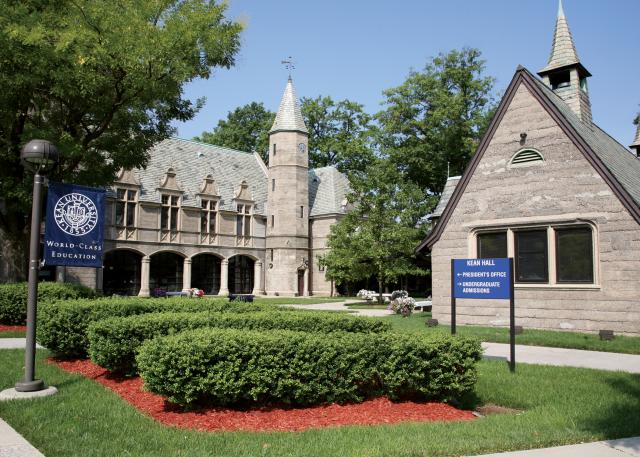
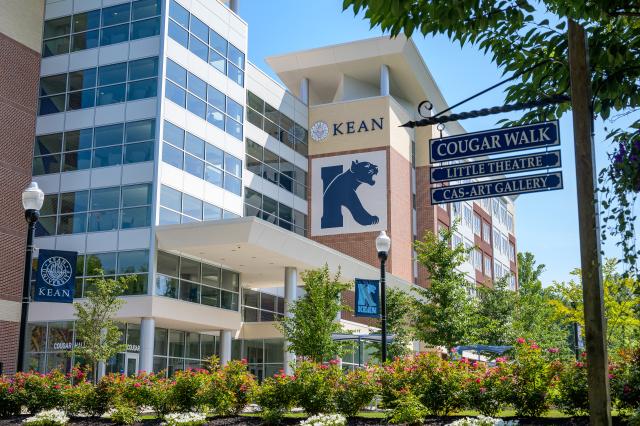
Kean University is a large, public institution in Union, New Jersey, that operates as a practical, accessible engine of upward mobility for its predominantly in-state student body. With an acceptance rate hovering around 76%, it's a school where admission is within reach for a broad swath of applicants, though its 47% graduation rate signals the challenges many face in crossing the finish line. The vibe is commuter-heavy and urban-adjacent, with academics anchored in career-ready fields like business, criminal justice, and psychology, and a campus life that actively promotes involvement through clubs, Greek life, and community engagement to combat the gravitational pull of off-campus living.
Admission requirements
Test-optional — scores considered if submitted
Required
High school transcript
Grade point average
College-prep program
TOEFL (non-native English)
Considered (not required)
Class rank
Letters of recommendation
Test scores (SAT/ACT)
Demonstrated competencies
Source: IPEDS Admissions survey (2022) via Urban Institute. Covers formal factors only — it does not reflect essays, extracurriculars, or other holistic criteria.
More details
Undergrad enrollment
11,433
In-state tuition
$14,299
Out-of-state tuition
$22,446
Graduation Rate
47%
On-Campus Housing
15%
Most Popular Major
Psychology (15%)
Application Deadline
August 15
Median Earnings (10yr)
$57,237
First-Year Retention Rate
76%
Outcomes & value
Outcomes & value
Median earnings (10 yr)
$57,237
Value (earnings ÷ net price)
4.6×
Median debt at graduation
$23,250
Graduation rate
47%
First-year retention
76%
Reducing loan balance (3 yr)
52%
Pell (lower-income) share
48%
First-gen share (among federal-aid recipients)
46%
Top-earning majors
Median earnings by field of study (highest credential), ~2 years after completion.
Registered Nursing, Nursing Administration, Nursing Research and Clinical Nursing$82,238
Mathematics$52,107
Geological and Earth Sciences/Geosciences$52,107
Special Education and Teaching$49,855
Computer and Information Sciences, General$49,436
Teacher Education and Professional Development, Specific Levels and Methods
Campus & location
Campus safety
On-campus violent crimes (2024)
3
Per 1,000 students
0.22
On-campus criminal offenses classed as violent (murder/non-negligent manslaughter, rape, robbery, aggravated assault) for the most recent reported year. Source: U.S. Dept. of Education Campus Safety and Security (Clery Act). Counts reflect what’s reported to the school, and urban campuses often report more partly due to non-student incidents nearby — read alongside campus size and setting, not as a standalone safety verdict.
Climate
Pleasant days / yr
90
Summer high
83°F
Winter low
29°F
Annual rain
53.7"
Annual snow
18"
Natural-hazard risk
Relatively High
Pleasant days counts days per year with a mean temperature of 55–75°F, a high at or below 90°F, a low at or above 45°F, and little precipitation — a transparent comfort measure, not a weighting we invented. Computed from Open-Meteo ERA5 daily history (2019–2023). Natural-hazard risk is the county’s composite rating from the FEMA National Risk Index.
Deep dive — research, future-scholar output & economic mobility▾
Research output
Institutional h-index
115
Scholarly works
4,434
Institutional research volume and impact from OpenAlex. The h-index reflects large research universities and will be low for teaching-focused liberal-arts colleges — not a measure of undergraduate quality.
Economic mobility
Mobility rate
3.4%
Bottom → top quintile
31%
From bottom quintile
11%
Mobility rate = the share of students who both start in the bottom household-income quintile and reach the top quintile; bottom → top is that chance conditional on starting at the bottom. Source: Opportunity Insights Mobility Report Cards (Chetty, Friedman, Saez, Turner & Yagan). Reflects 1980–82 birth cohorts, so it’s directional, not current.
Quick answers
What is the acceptance rate at Kean University?
Kean University's acceptance rate is approximately 76% (Union, NJ), based on the most recent figures we compiled from public and primary sources.
What SAT score do you need for Kean University?
Admitted students at Kean University typically score 930–1150 on the SAT (the middle-50% range). Scores outside this band are still admitted, especially with strong applications.
How much does Kean University cost?
At Kean University, the average net price (after aid) is about $12,447 per year. Actual cost varies with financial aid and residency.
How many undergraduates attend Kean University?
Kean University enrolls approximately 11,433 undergraduate students.
Where is Kean University located?
Kean University is located in Union, NJ.
Admissions
Kean's admissions process is characterized by its accessibility. The university admits about three out of every four applicants, a rate that positions it as "less selective" or "somewhat selective" in the landscape of four-year institutions. For the Fall 2024 cycle, the undergraduate was reported at 75.9%, with 10,578 admissions from 13,936 applications. The middle 50% of admitted students who submitted test scores fall within an SAT range of 930–1150, and the average high school GPA of incoming freshmen is a 3.3. Kean employs a superscoring policy for both the SAT and ACT, considering the highest scores from the Evidence-Based Reading and Writing and Math sections across all test dates. While the university receives a significant number of applications—figures cited range from 13,936 to 18,842—the rate, or the percentage of admitted students who enroll, is notably lower, reported at 23.3% in one source, indicating that many admitted students choose other options. The admissions deadline is August 15.
Earnings = median of students working ~10 years after entry; debt = median of graduates. Value divides 10-yr earnings by one year’s net price — read it as earnings per dollar of annual cost, not a full lifetime ROI; it favors lower-cost schools. Source: U.S. Dept. of Education College Scorecard. Figures lag ~2 years and reflect all students, not your intended major.
$45,305
Computer Systems Networking and Telecommunications$44,170
Accounting and Related Services$42,012
Source: U.S. Dept. of Education College Scorecard (field-of-study earnings). Figures cover graduates who received federal aid and lag ~2 years; not all programs report data.
Kean's academic portfolio is built around practical, hands-on preparation for careers and further study. The university promotes "world-class instruction, meaningful research and practical hands-on experiences in every field." Its most popular majors reflect this career-oriented focus: Psychology (15% of graduates), Business Administration and Management (11%), and Criminal Justice/Law Enforcement Administration (8%). The university offers a wide array of undergraduate programs, from traditional liberal arts to professional fields like Architectural Studies, Art Therapy, Artificial Intelligence, and Athletic Training. Student and external reviews often highlight specific departments, such as design and business, for their quality and supportive faculty. The academic structure is organized into several colleges, though the provided sources do not detail them exhaustively. The emphasis is squarely on applied learning and direct pathways to employment or graduate school.
Life at Kean is defined by its urban setting in Union, New Jersey, and its status as a largely commuter campus. Only about 15% of undergraduates live in college-owned, -operated, or -affiliated housing, with the overwhelming majority—85%—living off-campus. The university actively promotes an "active and engaged campus" as essential, offering a range of activities including fraternity and sorority life, community volunteering, theater, and athletics. Campus housing, while utilized by a minority, is presented as offering "an enhanced educational experience and easy access to Kean's world-class cultural, recreational and instructional facilities." The undergraduate student body is substantial, with over 11,000 students. The Office of Student Life and Services aims to provide a "seamless blend between living and learning," offering various resources and support systems. The campus atmosphere is one where involvement is encouraged to foster community among a student population that is often balancing academics with off-campus lives and responsibilities.
Student outcomes at Kean present a mixed picture, with graduation rates being a central point of concern and post-graduate earnings showing solid returns for a public institution. The six-year graduation rate is 47%. The first-year retention rate—a indicator of how many students return for a second year—is reported at 76%. For those who do graduate, the financial payoff appears meaningful. The median earnings ten years after entry are $57,237. Other sources cite average annual wages for graduates at approximately $61,311, with some figures suggesting alumni can earn an average of $83,745 annually at certain career stages. The university has been recognized on external lists evaluating factors like graduation rates and alumni success, indicating a focus on improving these metrics.
Kean University positions itself as an affordable public option, especially for New Jersey residents, with a significant majority of students receiving financial assistance. The average after grants and scholarships is $10,747. More than 50% of full-time, first-year undergraduates receive aid through scholarships and grants, with one source noting 79% of first-year students receive . The average need-based scholarship or grant awarded to first-year students is $15,748, and the overall average financial aid package is reported as $23,269. All students receiving aid must meet Satisfactory Academic Progress (SAP) standards. The university also promotes a "Kean Tuition Promise" program, which may cover up to full tuition and fees not already covered by federal and state aid and other scholarships. The university participates in federal loan programs, including offering loans up to $20,500 for graduate students. Campus housing costs an average of $19,560 per year.
Kean University stands out as a classic example of a broad-access public institution serving a diverse, largely commuter population with a no-nonsense, career-focused education. Its identity is not built on exclusivity, but on opportunity—a 76% opens doors for many college students and those seeking a practical return on investment. The academic strengths in psychology, business, and criminal justice directly align with stable career paths. What defines the Kean experience is the tension between its commuter-school reality—where only 15% live on campus—and its active efforts to build community through over 100 student organizations, Greek life, and campus events. The "Kean Tuition Promise" is a notable attempt to enhance affordability. Ultimately, Kean's story is one of access and outcome: it gets many students in the door at a reasonable , but its 47% graduation rate underscores the very real challenges of supporting them through to completion, making its support services and retention efforts as critical as its admissions office.