Admit rate has ranged 69%–80% over the last 5 years — notably volatile. Source: IPEDS via Urban Institute.
Acceptance & SAT from Common Data Set / IPEDS; net price, earnings & graduation from the U.S. Dept. of Education College Scorecard. Figures lag ~1–2 years — verify with the school.
Lewis & Clark College is a Pacific Northwest liberal arts institution defined by its spectacular, forested campus in Portland, its deep connection to the outdoors, and a fiercely independent, intellectually curious student body. It offers a classic liberal arts curriculum with notable strength in the sciences and international affairs, wrapped in a laid-back, environmentally-conscious culture that prizes hands-on exploration over cutthroat competition. While its admissions are more accessible than many of its peers, its sticker price is steep, making its generous merit scholarships a critical part of the financial picture for many families.
Admission requirements
Test-optional — scores considered if submitted
Required
High school transcript
Letters of recommendation
TOEFL (non-native English)
Considered (not required)
Grade point average
Class rank
Test scores (SAT/ACT)
College-prep program
Source: IPEDS Admissions survey (2022) via Urban Institute. Covers formal factors only — it does not reflect essays, extracurriculars, or other holistic criteria.
More details
Undergrad enrollment
2,120
In-state tuition
$64,828
Out-of-state tuition
$64,828
Graduation Rate
75%
On-Campus Housing
68%
Average Class Size
19
Demonstrated Interest
Not considered
Student-Faculty Ratio
12:1
Median Earnings (10yr)
$62,205
First-Year Retention Rate
89%
Outcomes & value
Outcomes & value
Median earnings (10 yr)
$62,205
Value (earnings ÷ net price)
1.7×
Median debt at graduation
$19,500
Graduation rate
75%
First-year retention
89%
Reducing loan balance (3 yr)
82%
Pell (lower-income) share
20%
First-gen share (among federal-aid recipients)
17%
Financial health
3.0 / 3.0Meets the federal financial-responsibility standard
U.S. Dept. of Education Financial Responsibility Composite Score (FY2022-23). Scale −1.0 to 3.0; ≥1.5 meets the standard. Reported for private nonprofit & for-profit institutions only — public universities are state-backed and not scored, so this is a stability signal, not a ranking.
Top-earning majors
Median earnings by field of study (highest credential), ~2 years after completion.
Economics$36,848
Political Science and Government$36,848
Communication and Media Studies$34,704
English Language and Literature, General$31,133
Psychology, General$30,119
Biology, General$26,585
Applicants here also applied to
The schools that most often appear alongside Lewis & Clark College on applicants’ lists, from our self-reported outcomes corpus.
Co-application frequency from self-reported results — directional peer discovery, not a recommendation.
Campus & location
Campus safety
On-campus violent crimes (2024)
5
Per 1,000 students
1.43
On-campus criminal offenses classed as violent (murder/non-negligent manslaughter, rape, robbery, aggravated assault) for the most recent reported year. Source: U.S. Dept. of Education Campus Safety and Security (Clery Act). Counts reflect what’s reported to the school, and urban campuses often report more partly due to non-student incidents nearby — read alongside campus size and setting, not as a standalone safety verdict.
Climate
Pleasant days / yr
110
Summer high
82°F
Winter low
36°F
Annual rain
48.6"
Annual snow
14"
Natural-hazard risk
Relatively High
Pleasant days counts days per year with a mean temperature of 55–75°F, a high at or below 90°F, a low at or above 45°F, and little precipitation — a transparent comfort measure, not a weighting we invented. Computed from Open-Meteo ERA5 daily history (2019–2023). Natural-hazard risk is the county’s composite rating from the FEMA National Risk Index.
Deep dive — research, future-scholar output & economic mobility▾
Research output
Institutional h-index
142
Scholarly works
4,272
Institutional research volume and impact from OpenAlex. The h-index reflects large research universities and will be low for teaching-focused liberal-arts colleges — not a measure of undergraduate quality.
Economic mobility
Mobility rate
1.4%
Bottom → top quintile
27%
From bottom quintile
5%
Mobility rate = the share of students who both start in the bottom household-income quintile and reach the top quintile; bottom → top is that chance conditional on starting at the bottom. Source: Opportunity Insights Mobility Report Cards (Chetty, Friedman, Saez, Turner & Yagan). Reflects 1980–82 birth cohorts, so it’s directional, not current.
Quick answers
What is the acceptance rate at Lewis & Clark College?
Lewis & Clark College's acceptance rate is approximately 78% (Portland, OR), based on the most recent figures we compiled from public and primary sources.
How much does Lewis & Clark College cost?
At Lewis & Clark College, the average net price (after aid) is about $36,013 per year. Actual cost varies with financial aid and residency.
How many undergraduates attend Lewis & Clark College?
Lewis & Clark College enrolls approximately 2,120 undergraduate students.
Where is Lewis & Clark College located?
Lewis & Clark College is located in Portland, OR.
Admissions
Lewis & Clark operates with a notably higher than many national liberal arts colleges, positioning itself as a more accessible option within the sector. The indicates that while academic factors like rigor of secondary school record, GPA, and standardized test scores are "important," the college also "considers" factors like extracurricular activities, talent/ability, character/personal qualities, and status. Demonstrated interest, however, is listed as "not considered" in the admissions process. For students certain of their choice, applying Early Decision provides a statistical advantage; sources report an Early Decision acceptance rate of 71%, compared to the overall rate. The middle 50% SAT range for admitted students is reported as 1210–1390, with an average GPA around 3.9. The rate—the percentage of admitted students who enroll—is reported as 11.8%, suggesting many admitted students have other attractive options.
Earnings = median of students working ~10 years after entry; debt = median of graduates. Value divides 10-yr earnings by one year’s net price — read it as earnings per dollar of annual cost, not a full lifetime ROI; it favors lower-cost schools. Source: U.S. Dept. of Education College Scorecard. Figures lag ~2 years and reflect all students, not your intended major.
Natural Resources Conservation and Research
$26,353
International Relations and National Security Studies$26,121
Source: U.S. Dept. of Education College Scorecard (field-of-study earnings). Figures cover graduates who received federal aid and lag ~2 years; not all programs report data.
The college offers a traditional Bachelor of Arts degree across 29 majors and 38 minors, with a student-to-faculty ratio of 12:1 and an average class size of 19. There are no graduate teaching assistants in undergraduate classrooms. Popular majors, according to U.S. News, include Psychology, Biology/Biological Sciences, Sociology and Anthropology, and International Relations and Affairs. The academic environment is described as one that encourages exploration across disciplines, with a curriculum designed to allow students to take a wide variety of classes. The college emphasizes that majors and minors must be supported by sufficient on-campus expertise to guide students. Annual degrees awarded are highest in Psychology.
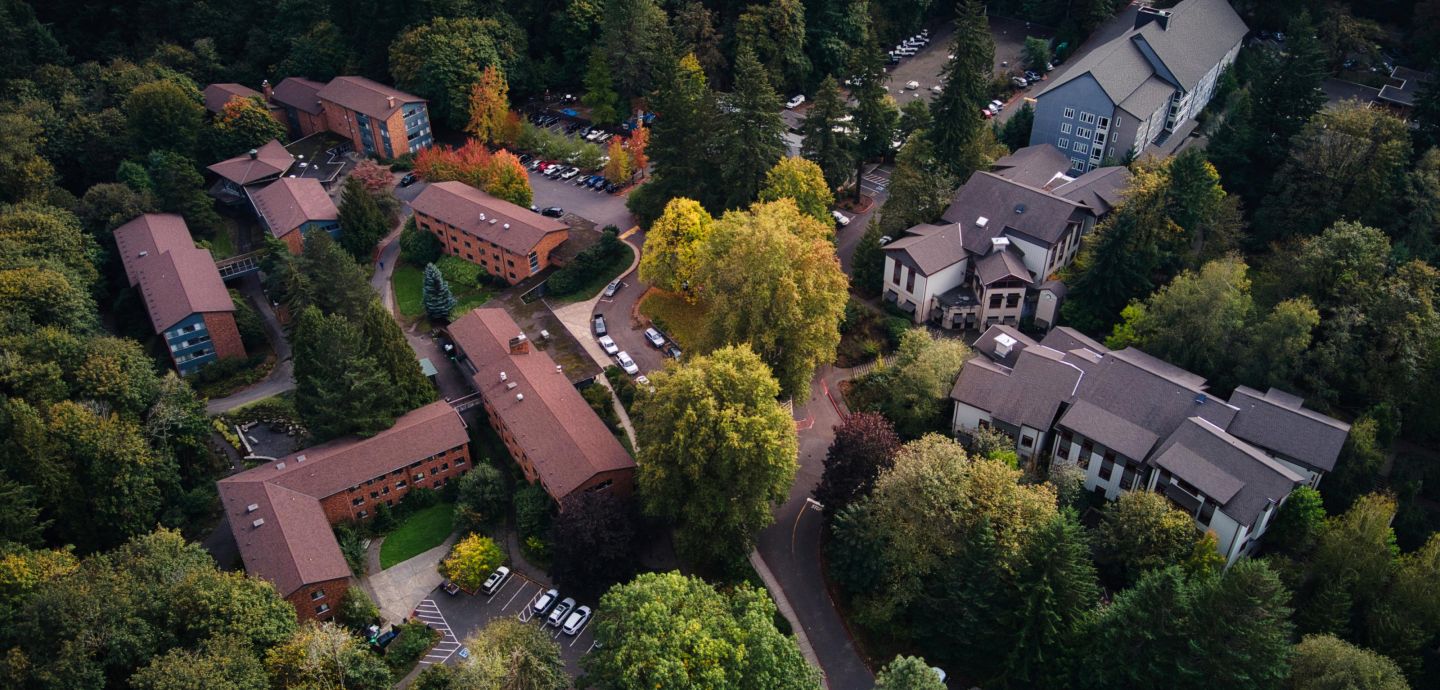
Life on the wooded, suburban campus is active and community-oriented, with over 110 student clubs and organizations. There is not a dominant Greek life or party scene; social life tends toward small dorm parties, off-campus gatherings, and events organized by athletic teams. The student body of just over 2,100 undergraduates fosters a close-knit feel. A significant 68% of students live in college-owned, -operated, or -affiliated housing. The culture is heavily influenced by the Pacific Northwest location, with many students engaged in outdoor activities like rock climbing, and active clubs focused on environmentalism, sustainability (like SEED), and beekeeping. The campus is described as a "thriving and diverse community."
Lewis & Clark reports a strong four-year graduation rate and a six-year graduation rate that places it in the top 25% nationally. The first-year retention rate is a healthy 89%, indicating high student satisfaction after the initial year. The median earnings for students ten years after entry is notably above the peer midpoint for similar institutions. One year after graduation, reported earnings are lower, as many graduates pursue service, graduate school, or lower-paying entry-level positions, but earnings show strong growth by the five- and ten-year marks.
The stated comprehensive cost (tuition and fees) for the 2026-27 academic year is $71,092. However, the college is aggressive with , automatically considering all admitted students for scholarships starting at $24,000 per year. is also available, with the majority of financial aid described as "need-based," awarded based on demonstrated financial need and overall applicant strength. The college's —the average cost after grants and scholarships—is reported by sources. The financial aid office emphasizes that need-based grants and scholarships do not need to be repaid, but federal loans (both subsidized and unsubsidized) are part of many aid packages. The college does not advertise a "no-loan" policy for low-income students; its aid packages typically include a combination of grants, scholarships, and loans.
Lewis & Clark carves out a distinct niche as the liberal arts college for the Pacific Northwest ethos. It's not a pre-professional pressure cooker nor a purely traditional New England-style campus; it's a place where academic rigor meets environmental consciousness and outdoor adventure. The 12:1 student-faculty ratio and 19-person average class size guarantee a highly personalized education, while the lack of graduate student instructors means undergraduates work directly with professors. Its location—on a stunning, forested campus minutes from downtown Portland—provides unparalleled access to both pristine nature and a vibrant, progressive city. The college attracts self-directed, intellectually adventurous students who are as likely to debate environmental policy in class as they are to organize a weekend hiking trip. Its combination of a high with strong post-graduation outcomes and significant makes it a compelling value proposition for students who thrive in its specific, engaged, and independent community.
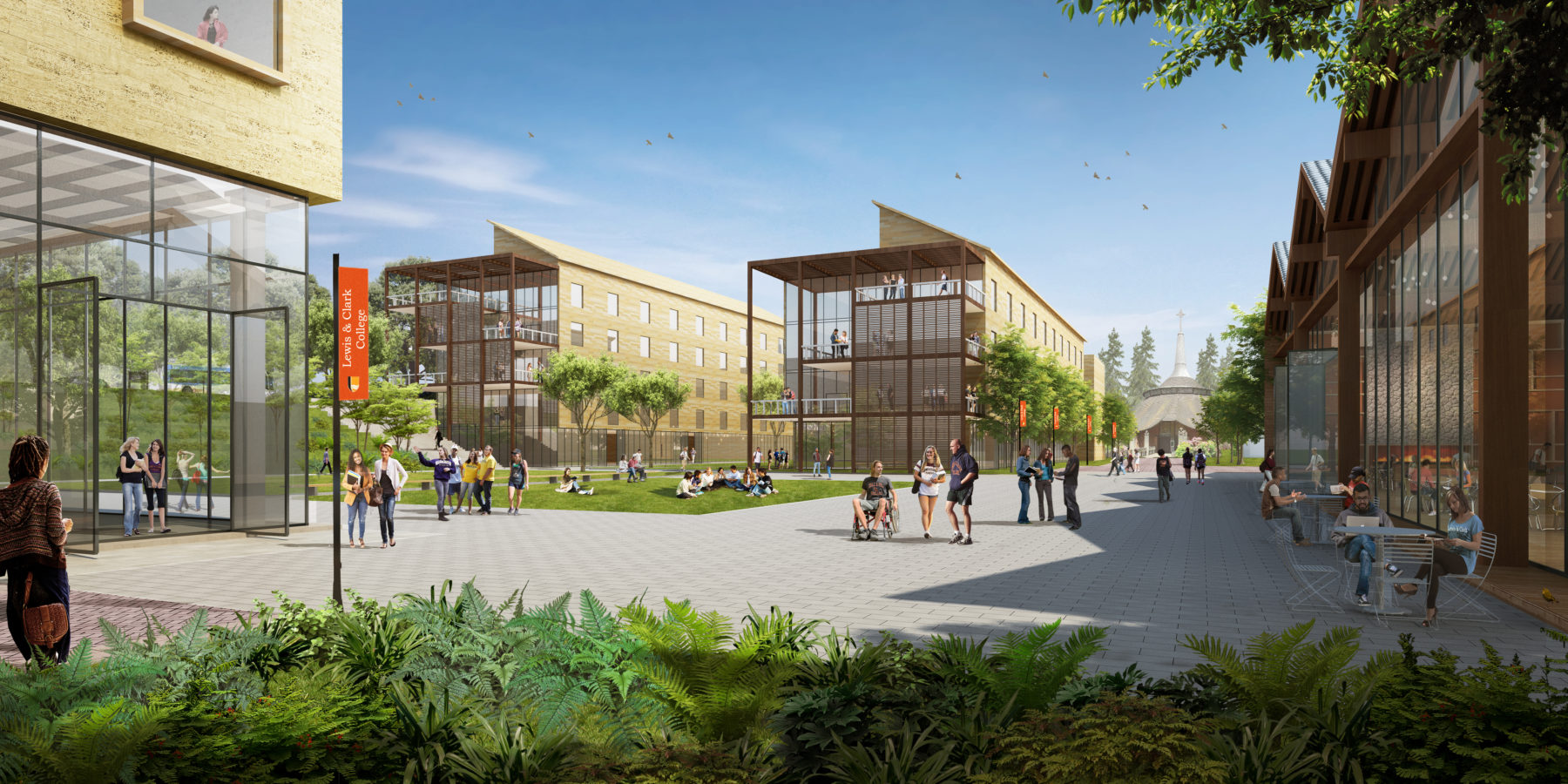
Lewis & Clark College seal · sourceVisit Campus • Lewis & Clark, Portland, Oregon · sourceCampus Living • Lewis & Clark College, Portland, Oregon · sourceLewis & Clark College Facilities Plan – Sasaki · source