Admit rate has ranged 74%–82% over the last 5 years — notably volatile. Source: IPEDS via Urban Institute.
Acceptance & SAT from Common Data Set / IPEDS; net price, earnings & graduation from the U.S. Dept. of Education College Scorecard. Figures lag ~1–2 years — verify with the school.
Manhattan University is a private, experience-driven institution in Riverdale, New York, that operates like a career accelerator with a Jesuit-inflected conscience. Its identity is split between a pragmatic, ROI-focused powerhouse in engineering and business—where students often land high-paying jobs before they graduate—and a tight-knit, residential campus community that actively promotes dialogue on diversity and social justice. This isn't a theoretical liberal arts college; it's a place where you choose a major, get your hands dirty, and walk out with a clear path to a paycheck.
Admission requirements
Test-optional — scores considered if submitted
Required
High school transcript
Grade point average
Letters of recommendation
TOEFL (non-native English)
Considered (not required)
Class rank
Test scores (SAT/ACT)
College-prep program
Source: IPEDS Admissions survey (2022) via Urban Institute. Covers formal factors only — it does not reflect essays, extracurriculars, or other holistic criteria.
More details
Undergrad enrollment
2,744
In-state tuition
$53,400
Out-of-state tuition
$53,400
Graduation Rate
64%
Meets Full Need
No
Most Popular Major
Engineering (30%)
Demonstrated Interest
Considered
Student:Faculty Ratio
15:1
Median Earnings (10yr)
$86,316
First-Year Students Receiving Aid
99%
Outcomes & value
Outcomes & value
Median earnings (10 yr)
$86,316
Value (earnings ÷ net price)
3.2×
Median debt at graduation
$26,000
Graduation rate
64%
First-year retention
76%
Reducing loan balance (3 yr)
79%
Pell (lower-income) share
36%
First-gen share (among federal-aid recipients)
25%
Top-earning majors
Median earnings by field of study (highest credential), ~2 years after completion.
Civil Engineering$71,351
Electrical, Electronics, and Communications Engineering$68,219
Allied Health Diagnostic, Intervention, and Treatment Professions$67,660
Business Administration, Management and Operations$67,660
Chemical Engineering$67,324
Computer and Information Sciences, General
Campus & location
Campus safety
On-campus violent crimes (2024)
1
Per 1,000 students
0.31
On-campus criminal offenses classed as violent (murder/non-negligent manslaughter, rape, robbery, aggravated assault) for the most recent reported year. Source: U.S. Dept. of Education Campus Safety and Security (Clery Act). Counts reflect what’s reported to the school, and urban campuses often report more partly due to non-student incidents nearby — read alongside campus size and setting, not as a standalone safety verdict.
Climate
Pleasant days / yr
91
Summer high
83°F
Winter low
29°F
Annual rain
54.3"
Annual snow
19.6"
Natural-hazard risk
Relatively High
Pleasant days counts days per year with a mean temperature of 55–75°F, a high at or below 90°F, a low at or above 45°F, and little precipitation — a transparent comfort measure, not a weighting we invented. Computed from Open-Meteo ERA5 daily history (2019–2023). Natural-hazard risk is the county’s composite rating from the FEMA National Risk Index.
Deep dive — research, future-scholar output & economic mobility▾
Research output
Institutional h-index
134
Scholarly works
4,146
Institutional research volume and impact from OpenAlex. The h-index reflects large research universities and will be low for teaching-focused liberal-arts colleges — not a measure of undergraduate quality.
Quick answers
What is the acceptance rate at Manhattan University?
Manhattan University's acceptance rate is approximately 79% (Riverdale, NY), based on the most recent figures we compiled from public and primary sources.
What SAT score do you need for Manhattan University?
Admitted students at Manhattan University typically score 1180–1358 on the SAT (the middle-50% range). Scores outside this band are still admitted, especially with strong applications.
How much does Manhattan University cost?
At Manhattan University, the average net price (after aid) is about $27,256 per year. Actual cost varies with financial aid and residency.
How many undergraduates attend Manhattan University?
Manhattan University enrolls approximately 2,744 undergraduate students.
Where is Manhattan University located?
Manhattan University is located in Riverdale, NY.
Admissions
Manhattan University's admissions process is best described as accessible and straightforward, with a high that reflects its mission to provide broad access to its career-focused education. The university is less selective, with an acceptance rate of 79%.
For the middle 50% of admitted students, SAT scores range from 1180 to 1358. The admissions committee considers SAT or ACT scores as a tool to gauge university readiness. While academic factors are primary, the university also considers the level of an applicant's interest as part of its evaluation, as indicated in its reporting.
A notable feature of the admissions landscape is the Early Decision (ED) option. Data suggests that applying ED can be a significant advantage, with one source reporting an Early Decision acceptance rate of 100%, compared to the overall rate. However, it's important to note that the university does not have an open admission policy; a high school diploma or GED is required.
Earnings = median of students working ~10 years after entry; debt = median of graduates. Value divides 10-yr earnings by one year’s net price — read it as earnings per dollar of annual cost, not a full lifetime ROI; it favors lower-cost schools. Source: U.S. Dept. of Education College Scorecard. Figures lag ~2 years and reflect all students, not your intended major.
$64,493
Social Sciences, General$64,493
Mechanical Engineering$62,260
Source: U.S. Dept. of Education College Scorecard (field-of-study earnings). Figures cover graduates who received federal aid and lag ~2 years; not all programs report data.
Academics at Manhattan are defined by a pragmatic, hands-on approach built on close faculty mentorship. The university structures its offerings around professional schools and high-demand fields, with a clear emphasis on experiential and real-world learning.
The curriculum is dominated by career-oriented majors. For the 2024 graduating class, the most popular majors were:
Engineering (30%)
Business, Management, Marketing, and Related Support Services (24%)
Education (7%)
Communication, Journalism, and Related Programs (6%)
Students choose from dozens of majors and minors across business, engineering, arts, and the sciences. The university's professional schools hold significant accreditations, including AACSB for business and ABET for engineering, signaling a focus on industry standards and outcomes. The overall student-to-faculty ratio is 15:1, which supports the institutional emphasis on mentorship and personalized attention.
Life on the Riverdale campus offers a distinct blend of traditional collegiate community and engagement with the vast resources of New York City. The university fosters a tight-knit residential environment where discussions on identity, diversity, and social justice are actively encouraged.
A central hub for this dialogue is The Multicultural Center, which promotes cultural awareness and meaningful conversation through educational programs and events. The university offers a space for all to discuss issues of race, religion, diversity, and identity, supported by a variety of cultural student clubs. While Greek life exists, it is reported to be "pretty low-key," with 57% of students characterizing it as such. The overall vibe is one of a supportive, engaged campus community that leverages its NYC proximity for internships and social opportunities without being consumed by the city's anonymity.
Outcomes are where Manhattan University makes its strongest case, positioning itself as a high-return investment. The university is ranked in the top 3% nationally for ROI and has been recognized for its significant "salary impact," with Washington Monthly giving it a score of 99/100 in that category and ranking it 20th nationally.
The median earnings for graduates ten years after entry are $86,316. More immediate post-graduate data is even more striking: the average salary for the Class of 2023 was $96,645, according to the university's own career outcomes report, which noted an 89% response rate from the School of Science. This focus on strong earnings is major-dependent, with the university itself noting that earnings "vary significantly by major." The graduation rate is 64%.
Manhattan University is proactive in providing financial assistance to make attendance feasible. A remarkable 99% of full-time beginning undergraduates receive grant or scholarship aid. The average financial aid award is over $33,000, with some sources reporting an average package as high as $35,872.
The average after aid is $27,256. The university offers a net price calculator for estimates and administers various forms of aid, including federal Pell Grants (with a maximum annual award of $7,395 for 2023-2024) and institutional scholarships like the Jasper Guarantee. It's important to note that while the university awards institutional, federal, and state aid, it does not promise to meet full demonstrated financial need. Students must also maintain academic standards, as all undergraduates are required to maintain a 2.0 GPA to retain most institutional aid.
Manhattan University stands out for its unapologetic fusion of career pragmatism and community ethos. It rejects the idea that a high-value education must be hyper-selective or purely theoretical. Instead, it delivers a specific proposition: a supportive, discussion-oriented campus life in Riverdale paired with rigorous, accredited programs in engineering, business, and health that are designed to fast-track students into the professional world.
The proof is in the outcomes. With an average starting salary approaching $100,000 for recent graduates in key schools and a top-tier national ranking for salary impact, Manhattan operates as a highly effective career launchpad. It’s a university for doers—students who want mentorship, hands-on experience, and a direct line to a robust first job, all within the ecosystem of New York City but without getting lost in it. This clear, ROI-focused mission, backed by near-universal financial aid, defines its singular position in the landscape.
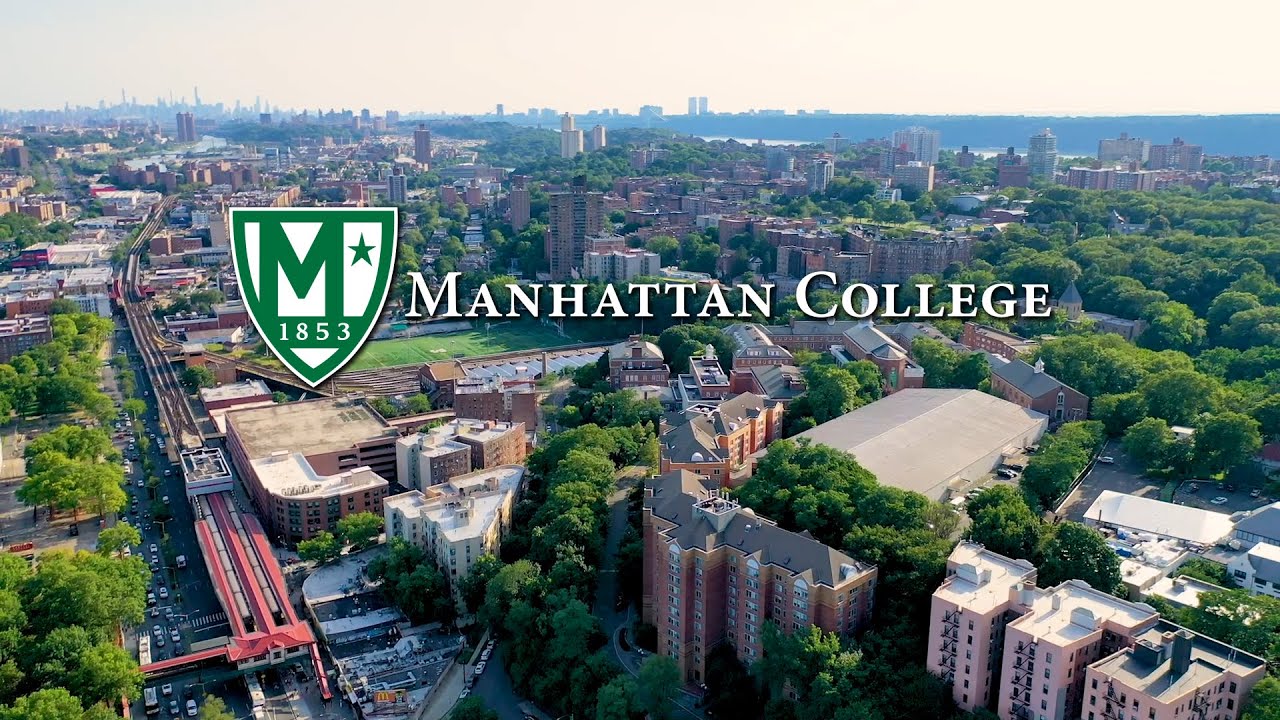
Manhattan University seal · sourceManhattan University - Profile, Rankings and Data | US News Best Colleges · sourceA Walking Tour of Manhattan College · sourceWhy I chose Manhattan College · source