Admit rate has ranged 82%–87% over the last 5 years, though the latest figure above (81%) falls outside that window. Source: IPEDS via Urban Institute.
Acceptance & SAT from Common Data Set / IPEDS; net price, earnings & graduation from the U.S. Dept. of Education College Scorecard. Figures lag ~1–2 years — verify with the school.
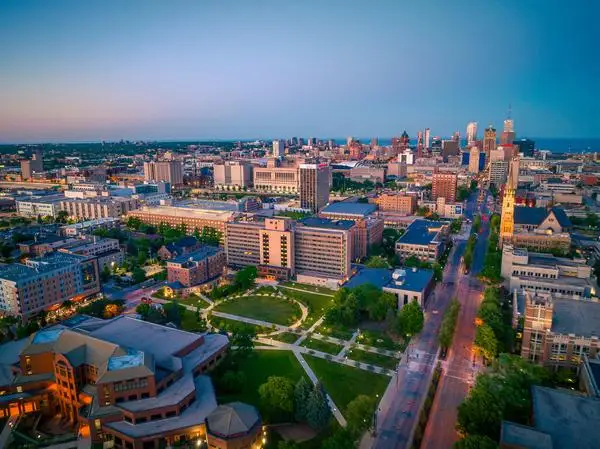
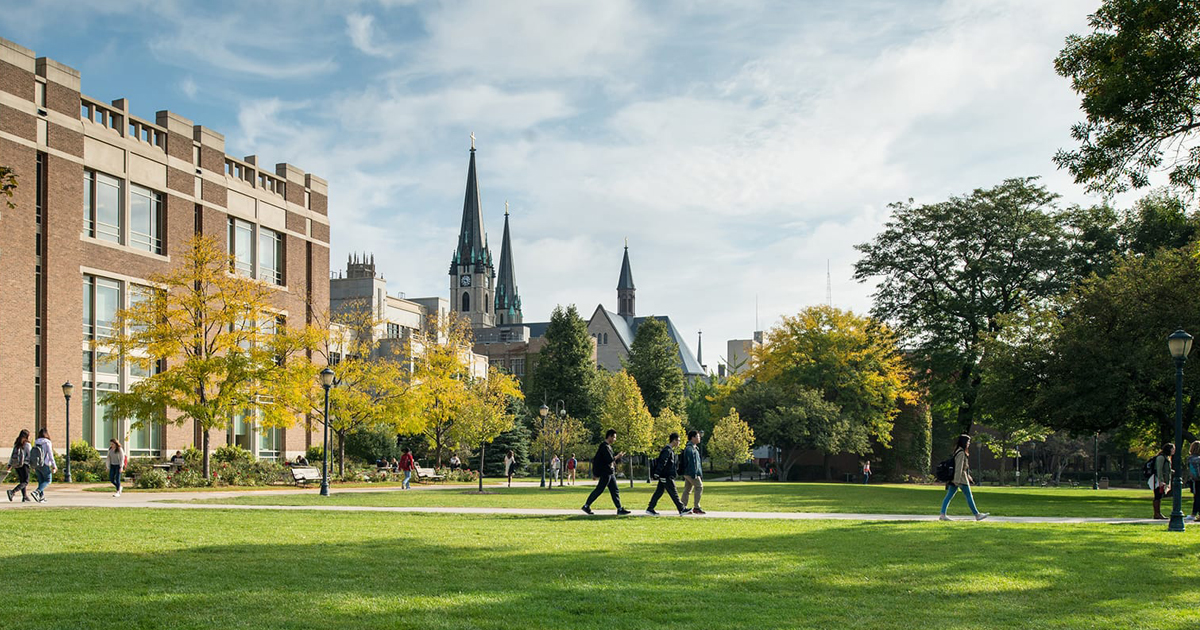
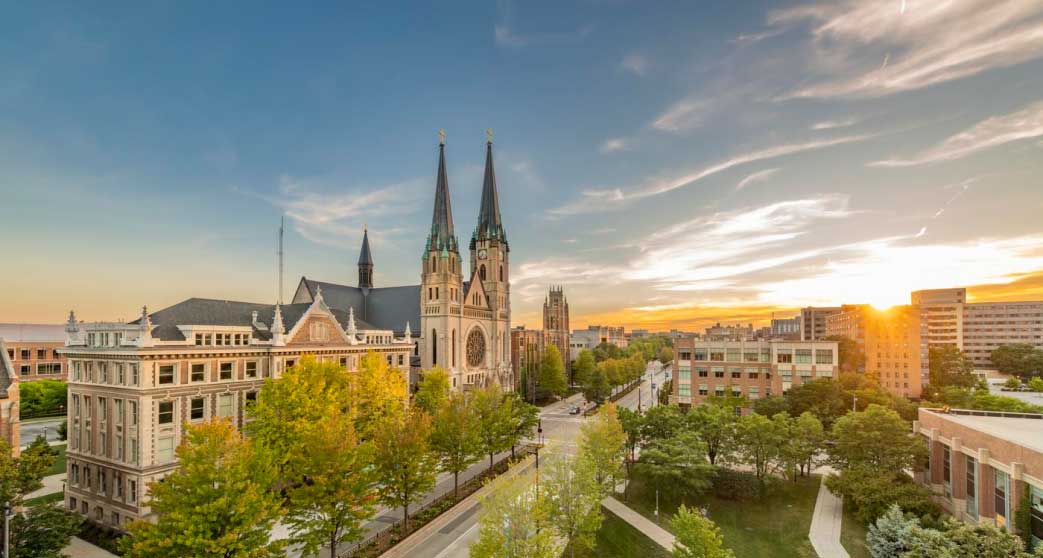
Marquette University is a Jesuit, Catholic institution in Milwaukee that blends a deeply practical, career-focused education with a commitment to social justice and community engagement. Known for its strong business, engineering, and health sciences programs, Marquette operates with an accessible admissions policy while delivering robust post-graduate outcomes, anchored by a campus culture that is both spirited and service-oriented. It’s a place where faith, leadership, and real-world preparation converge in an urban setting.
Admission requirements
Test-optional — scores considered if submitted
Required
High school transcript
Grade point average
TOEFL (non-native English)
Considered (not required)
Class rank
Letters of recommendation
Test scores (SAT/ACT)
College-prep program
Source: IPEDS Admissions survey (2022) via Urban Institute. Covers formal factors only — it does not reflect essays, extracurriculars, or other holistic criteria.
More details
Undergrad enrollment
7,660
In-state tuition
$51,170
Out-of-state tuition
$51,170
No-Loan Policy
No
Graduation Rate
83%
Meets Full Need
No
ED Share of Class
N/A (No Early Decision)
First-Year Retention
Not stated in sources
Demonstrated Interest
Not considered
Median Earnings (10yr)
$78,257
Outcomes & value
Outcomes & value
Median earnings (10 yr)
$78,257
Value (earnings ÷ net price)
2.5×
Median debt at graduation
$23,940
Graduation rate
83%
First-year retention
91%
Reducing loan balance (3 yr)
80%
Pell (lower-income) share
18%
First-gen share (among federal-aid recipients)
19%
Financial health
3.0 / 3.0Meets the federal financial-responsibility standard
U.S. Dept. of Education Financial Responsibility Composite Score (FY2022-23). Scale −1.0 to 3.0; ≥1.5 meets the standard. Reported for private nonprofit & for-profit institutions only — public universities are state-backed and not scored, so this is a stability signal, not a ranking.
Top-earning majors
Median earnings by field of study (highest credential), ~2 years after completion.
Construction Engineering$73,949
Computer Engineering$73,446
Electrical, Electronics, and Communications Engineering$68,592
Biomedical/Medical Engineering$66,611
Mechanical Engineering$65,698
Civil Engineering$63,817
Applicants here also applied to
The schools that most often appear alongside Marquette University on applicants’ lists, from our self-reported outcomes corpus.
Co-application frequency from self-reported results — directional peer discovery, not a recommendation.
Campus & location
Campus safety
On-campus violent crimes (2024)
6
Per 1,000 students
0.53
On-campus criminal offenses classed as violent (murder/non-negligent manslaughter, rape, robbery, aggravated assault) for the most recent reported year. Source: U.S. Dept. of Education Campus Safety and Security (Clery Act). Counts reflect what’s reported to the school, and urban campuses often report more partly due to non-student incidents nearby — read alongside campus size and setting, not as a standalone safety verdict.
Climate
Pleasant days / yr
92
Summer high
79°F
Winter low
20°F
Annual rain
38.3"
Annual snow
38.1"
Natural-hazard risk
Relatively High
Pleasant days counts days per year with a mean temperature of 55–75°F, a high at or below 90°F, a low at or above 45°F, and little precipitation — a transparent comfort measure, not a weighting we invented. Computed from Open-Meteo ERA5 daily history (2019–2023). Natural-hazard risk is the county’s composite rating from the FEMA National Risk Index.
Deep dive — research, future-scholar output & economic mobility▾
Research output
Institutional h-index
311
Scholarly works
35,834
Institutional research volume and impact from OpenAlex. The h-index reflects large research universities and will be low for teaching-focused liberal-arts colleges — not a measure of undergraduate quality.
Economic mobility
Mobility rate
1.1%
Bottom → top quintile
42%
From bottom quintile
3%
Mobility rate = the share of students who both start in the bottom household-income quintile and reach the top quintile; bottom → top is that chance conditional on starting at the bottom. Source: Opportunity Insights Mobility Report Cards (Chetty, Friedman, Saez, Turner & Yagan). Reflects 1980–82 birth cohorts, so it’s directional, not current.
Quick answers
What is the acceptance rate at Marquette University?
Marquette University's acceptance rate is approximately 81% (Milwaukee, WI), based on the most recent figures we compiled from public and primary sources.
What SAT score do you need for Marquette University?
Admitted students at Marquette University typically score 1200–1360 on the SAT (the middle-50% range). Scores outside this band are still admitted, especially with strong applications.
How much does Marquette University cost?
At Marquette University, the average net price (after aid) is about $31,487 per year. Actual cost varies with financial aid and residency.
How many undergraduates attend Marquette University?
Marquette University enrolls approximately 7,660 undergraduate students.
Where is Marquette University located?
Marquette University is located in Milwaukee, WI.
Admissions
Marquette’s admissions process is notably accessible, with an of 81%. The university is for all applicants, including homeschooled students, Division I athletes, and international students. For the incoming fall 2025 class, Marquette surpassed 20,000 applications, a more than 30% increase from previous benchmarks. The middle 50% SAT range for admitted students is 1200–1360, with an average of 1250; the middle 50% ACT range spans from under 25 to above 30, with an average of 27.5. The average high school GPA of admitted students is 3.65, with 25% reporting a GPA under 3.4 and 25% above 3.85. While selective, the rate—the percentage of admitted students who enroll—is reported as low, at around 14%. The university does not charge an application fee, and admitted students secure their spot with a $200 enrollment deposit. There is no Early Decision program, and the does not list demonstrated interest as a considered factor in admissions decisions.
Earnings = median of students working ~10 years after entry; debt = median of graduates. Value divides 10-yr earnings by one year’s net price — read it as earnings per dollar of annual cost, not a full lifetime ROI; it favors lower-cost schools. Source: U.S. Dept. of Education College Scorecard. Figures lag ~2 years and reflect all students, not your intended major.
Finance and Financial Management Services
$63,115
Entrepreneurial and Small Business Operations$63,005
Source: U.S. Dept. of Education College Scorecard (field-of-study earnings). Figures cover graduates who received federal aid and lag ~2 years; not all programs report data.
Marquette offers more than 80 majors, with a curriculum built on a comprehensive course of study requiring a minimum of 30 semester hours in a chosen discipline. The university distinguishes itself by emphasizing undergraduate research, where students work side-by-side with faculty. The most popular majors cluster in professional fields: Business, Management, Marketing, and Related Support Services accounted for 24% of 2024 graduates, followed by Biological and Biomedical Sciences (13%) and Engineering. Specific programs frequently highlighted for strength include Business, Education, Nursing, and the interdisciplinary ISAT (Information Systems, Analytics, and Technology) majors; its entrepreneurship program is nationally ranked (#19). This practical focus is underpinned by the Jesuit educational tradition, which seeks to provide a well-rounded education based on excellence, faith, leadership, and service.
Life on Marquette’s urban Milwaukee campus is defined by a strong residential community and a wide array of organizations. The university fosters an intellectual, cultural, and social environment that respects human dignity and equity. A majority of students (57%) live in college-owned, -operated, or -affiliated housing, with the university offering on-campus, university-owned apartments for juniors and seniors. The remaining 43% live off-campus. The undergraduate student body numbers 7,660. Campus culture is active and engaged, with students cautioning each other about the perils of dating within tight-knit clubs, teams, and organizations—a testament to the involved, interconnected nature of campus life. Housing costs average $16,900 per year.
Marquette prides itself on strong graduate outcomes, with the Class of 2025 achieving an 87% career outcomes rate within six months of graduation; 93% of those employed full-time reported their job was related to their career goals. The university ranks among the top institutions in the country for graduate outcomes, with undergraduates reporting median earnings of nearly $80,000. Specific business school data reveals solid placement and starting salaries: Accounting graduates see a 97% placement rate with an average base salary of $75,985; Business Analytics, 85% at $73,714; Finance, 93% at $73,214. The six-year graduation rate is 83%, significantly above the national midpoint for four-year colleges.
Marquette is a significant investment, but the university commits substantial resources to financial aid. For the current academic year, 99% of undergraduate students received some form of financial aid, with the university distributing more than $170 million in scholarships. Specifically, 90% of full-time, first-year undergraduates received assistance through scholarships and grants. The average financial aid package is reported as $43,919. However, Marquette does not have a 'no-loan' policy that replaces loans with grants for low-income students; its aid packages typically include loans and work-study for those who demonstrate need, and loans are offered even to those who don't demonstrate need. The —the average cost after aid and scholarships—is $31,487.
Marquette carves out a distinctive niche as a Jesuit university that successfully marries principle with practicality. Its identity is rooted in the Jesuit mission of educating the whole person for a life of leadership and service, which permeates campus culture and academic inquiry. Yet, it is decidedly not an ivory tower; its academic strengths are intensely career-oriented, from its top-ranked business and engineering programs to its direct pipeline into healthcare through nursing and biomedical sciences. This blend creates a graduate who is both professionally prepared and ethically grounded. The urban Milwaukee location provides immediate access to internships and professional networks, while the high graduation rate and strong career outcomes underscore the return on investment. It’s a community where faith, service, and a fierce focus on post-graduate success aren’t in tension—they’re the integrated core of the experience.
Marquette University seal · sourceVisit Marquette // Marquette University · sourceMarquette University // Be The Difference · sourceTop 10 things you may not know about Marquette University // Marquette University · source