Admit rate has ranged 80%–96% over the last 5 years — notably volatile, though the latest figure above (68%) falls outside that window. Source: IPEDS via Urban Institute.
Acceptance & SAT from Common Data Set / IPEDS; net price, earnings & graduation from the U.S. Dept. of Education College Scorecard. Figures lag ~1–2 years — verify with the school.
Northern Kentucky University is a public regional powerhouse that thrives on its practical, accessible identity. It's a commuter-centric campus where the classroom experience is intentionally flexible, designed to serve a diverse student body of traditional undergraduates, working adults, and career-changers from the Greater Cincinnati area. The vibe is unpretentious and career-focused, with academic strengths in business, nursing, and the liberal arts feeding directly into the local economy.
Admission requirements
Test-optional — scores considered if submitted
Required
High school transcript
Grade point average
College-prep program
Considered (not required)
Test scores (SAT/ACT)
TOEFL (non-native English)
Source: IPEDS Admissions survey (2022) via Urban Institute. Covers formal factors only — it does not reflect essays, extracurriculars, or other holistic criteria.
More details
Undergrad enrollment
8,246
In-state tuition
$11,088
Out-of-state tuition
$21,912
Top Major
Business Administration (18%)
Median Earnings (10yr)
$50,220
Six-Year Graduation Rate
52%
First-Year Retention Rate
76%
Four-Year Graduation Rate
36%
Students Living On-Campus
14%
Students Receiving Grant/Scholarship Aid
98%
Outcomes & value
Outcomes & value
Median earnings (10 yr)
$50,220
Value (earnings ÷ net price)
6.1×
Median debt at graduation
$23,000
Graduation rate
52%
First-year retention
76%
Reducing loan balance (3 yr)
55%
Pell (lower-income) share
25%
First-gen share (among federal-aid recipients)
38%
Top-earning majors
Median earnings by field of study (highest credential), ~2 years after completion.
Industrial Production Technologies/Technicians$67,420
Construction Management$63,005
Computer and Information Sciences, General$59,071
Management Information Systems and Services$56,867
Registered Nursing, Nursing Administration, Nursing Research and Clinical Nursing$55,301
Health Services/Allied Health/Health Sciences, General
Campus & location
Campus safety
On-campus violent crimes (2024)
3
Per 1,000 students
0.22
On-campus criminal offenses classed as violent (murder/non-negligent manslaughter, rape, robbery, aggravated assault) for the most recent reported year. Source: U.S. Dept. of Education Campus Safety and Security (Clery Act). Counts reflect what’s reported to the school, and urban campuses often report more partly due to non-student incidents nearby — read alongside campus size and setting, not as a standalone safety verdict.
Climate
Pleasant days / yr
89
Summer high
85°F
Winter low
29°F
Annual rain
45.5"
Annual snow
13.3"
Natural-hazard risk
Relatively Low
Pleasant days counts days per year with a mean temperature of 55–75°F, a high at or below 90°F, a low at or above 45°F, and little precipitation — a transparent comfort measure, not a weighting we invented. Computed from Open-Meteo ERA5 daily history (2019–2023). Natural-hazard risk is the county’s composite rating from the FEMA National Risk Index.
Deep dive — research, future-scholar output & economic mobility▾
Research output
Institutional h-index
144
Scholarly works
5,177
Institutional research volume and impact from OpenAlex. The h-index reflects large research universities and will be low for teaching-focused liberal-arts colleges — not a measure of undergraduate quality.
Economic mobility
Mobility rate
0.9%
Bottom → top quintile
14%
From bottom quintile
7%
Mobility rate = the share of students who both start in the bottom household-income quintile and reach the top quintile; bottom → top is that chance conditional on starting at the bottom. Source: Opportunity Insights Mobility Report Cards (Chetty, Friedman, Saez, Turner & Yagan). Reflects 1980–82 birth cohorts, so it’s directional, not current.
Quick answers
What is the acceptance rate at Northern Kentucky University?
Northern Kentucky University's acceptance rate is approximately 68% (Highland Heights, KY), based on the most recent figures we compiled from public and primary sources.
What SAT score do you need for Northern Kentucky University?
Admitted students at Northern Kentucky University typically score 953–1150 on the SAT (the middle-50% range). Scores outside this band are still admitted, especially with strong applications.
How much does Northern Kentucky University cost?
At Northern Kentucky University, the average net price (after aid) is about $8,191 per year. Actual cost varies with financial aid and residency.
How many undergraduates attend Northern Kentucky University?
Northern Kentucky University enrolls approximately 8,246 undergraduate students.
Where is Northern Kentucky University located?
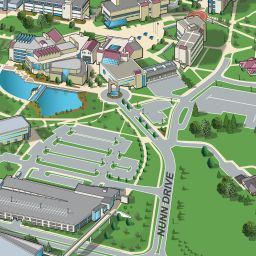
Northern Kentucky University is located in Highland Heights, KY.
Admissions
NKU's admissions process is designed for accessibility, reflecting its mission as a public regional university. The process is not highly selective, with a focus on admitting students who are prepared for college-level work. Standardized test scores (SAT/ACT) are considered in admissions decisions. The university requires a high school diploma and accepts the GED. While specific data on the importance of factors like class rank, recommendations, or demonstrated interest isn't provided in the sources, the overall profile suggests a holistic but inclusive review. The rate—the percentage of admitted students who enroll—is reported at 36.8%, indicating that many admitted students choose other options. There is no mention of an Early Decision program in the provided sources, suggesting admissions operate on a regular decision timeline.
NKU rejects a one-size-fits-all approach, instead emphasizing flexibility and student agency in shaping their education. This is realized through online courses, flexible class options, and credit for prior learning. The academic structure includes associate degrees (requiring a minimum of 60 semester hours), bachelor's, and graduate programs. The largest undergraduate-serving college is the College of Arts and Sciences, which offers majors in 45 different, nationally recognized programs and provides many of the university's general education courses.
Earnings = median of students working ~10 years after entry; debt = median of graduates. Value divides 10-yr earnings by one year’s net price — read it as earnings per dollar of annual cost, not a full lifetime ROI; it favors lower-cost schools. Source: U.S. Dept. of Education College Scorecard. Figures lag ~2 years and reflect all students, not your intended major.
$54,653
Accounting and Related Services$51,781
Business/Managerial Economics$49,683
Source: U.S. Dept. of Education College Scorecard (field-of-study earnings). Figures cover graduates who received federal aid and lag ~2 years; not all programs report data.
The most popular majors, which account for a significant portion of degrees conferred, are deeply practical and aligned with regional workforce needs:
Business Administration and Management, General (18%)
Registered Nursing/Registered Nurse (12%)
Psychology, General (7%)
Elementary Education and Teaching (4%)
Other notable programs include Speech Communication and Rhetoric and Liberal Arts and Sciences/Liberal Studies. The curriculum is built to provide both broad foundational knowledge and specific career-ready skills.
Campus life at NKU is characterized by its commuter-heavy nature, with only 14% of students living in college-owned, -operated, or -affiliated housing; the overwhelming majority—86%—live off-campus. The university promotes a welcoming community with endless ways for students to get involved, grow skills, and build connections. Student life extends beyond the classroom, with activities including general career fairs and cultural festivals. The campus's unique location in the Greater Cincinnati region contributes to a diverse student body with varied life experiences. Social media content showcases a vibrant campus life with events, academic highlights, and student experiences, blending technical and social elements.
Graduation rates at NKU show a pattern typical of many public regional universities, with a significant number of students taking six years to complete their degrees. The four-year graduation rate is 36%, while the six-year rate is higher. There is a notable gap in outcomes based on socioeconomic status: non-Pell Grant recipients graduate at a rate 14.2 percentage points higher than Pell Grant recipients. Post-graduation, early career earnings for graduates are reported to be about $35,000 on average. The median salary for graduates six years after graduation is $42,105. The university's first-year retention rate is 76%, indicating that the majority of students return for their sophomore year.
NKU is proactive in providing financial guidance, offering an Undergraduate Calculator as a tool to help families plan for educational costs and estimate their Student Aid Index. The university emphasizes that 98% of full-time, first-year undergraduates receive grant or scholarship aid. The average financial aid package is $8,481. However, a significant portion of students take on debt; 60% of all NKU students take out federal loans, a rate that is 3 percentage points higher than the average for public schools. The net price—the average cost after aid and scholarships—is reported as $17,427 in one source. The university's Office of Student Financial Assistance provides support through the entire financial aid process, and detailed policies and consumer information are available. The provided sources do not indicate that NKU has a "no-loan" policy or that it meets 100% of demonstrated financial need without loans.
Northern Kentucky University stands out for its unwavering commitment to serving its region with pragmatic, flexible education. Its identity is inextricably linked to the Greater Cincinnati area, drawing strength from the diverse experiences of its largely commuter student body. Unlike universities that cling to a traditional residential model, NKU leans into its role as an engine of social mobility and workforce development for northern Kentucky and southwestern Ohio. The academic portfolio is a direct reflection of regional needs, with business, nursing, and education dominating the list of most popular majors. The campus culture is built on accessibility—in admissions, in class scheduling (with robust online and flexible options), and in its community engagement. It’s a place where the boundary between campus and community is porous, where success is measured not in prestigious graduate school placements but in the steady pipeline of teachers, nurses, managers, and professionals who strengthen the local economy. For students seeking a no-frills, career-oriented path without leaving the region, NKU offers a clear and practical value proposition.