Admit rate has ranged 81%–89% over the last 5 years — notably volatile, though the latest figure above (78%) falls outside that window. Source: IPEDS via Urban Institute.
Acceptance & SAT from Common Data Set / IPEDS; net price, earnings & graduation from the U.S. Dept. of Education College Scorecard. Figures lag ~1–2 years — verify with the school.
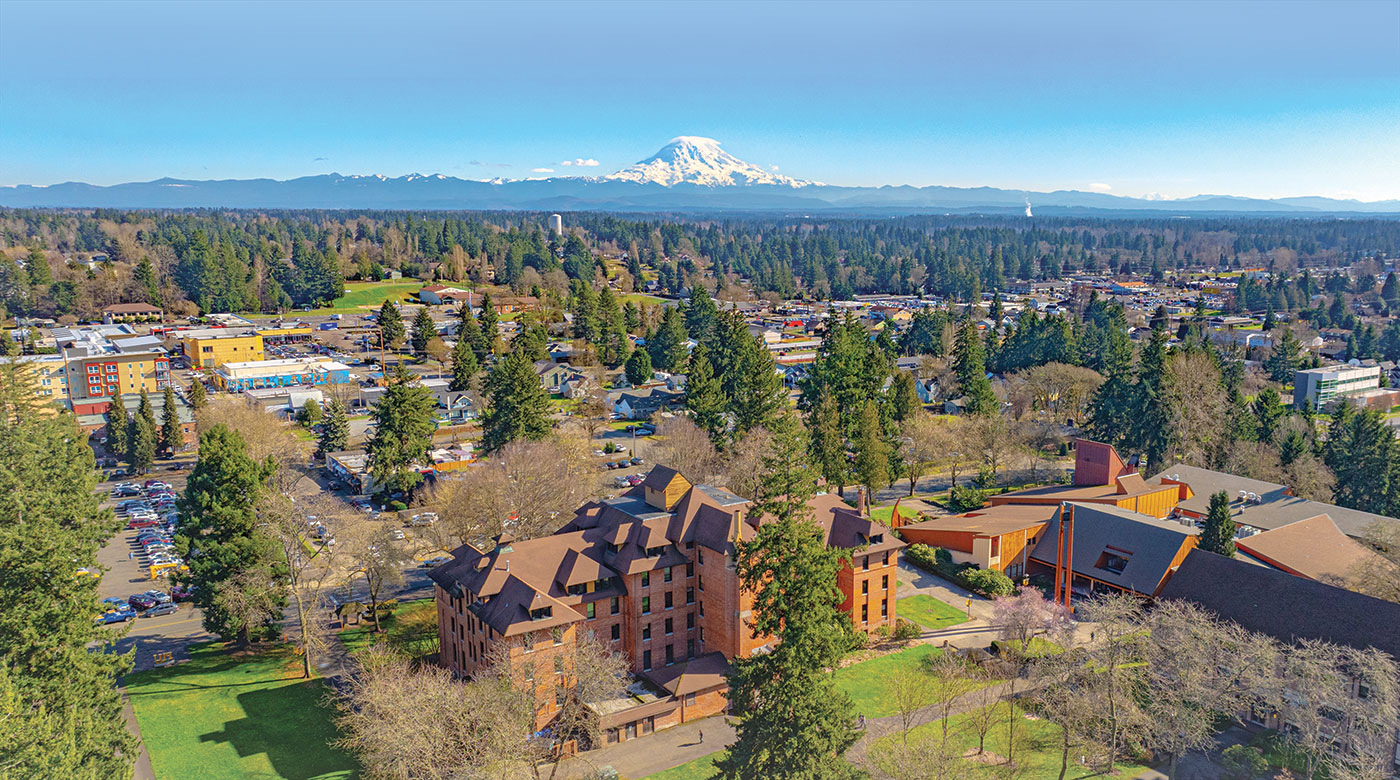
Pacific Lutheran University is a small, private liberal arts university in Tacoma, Washington, that operates like a well-kept secret in the Pacific Northwest. It combines a Scandinavian Lutheran heritage with a distinctly hands-on, community-focused approach to education, where small classes and a 'holistic development' ethos are the norm. The vibe is collaborative and earnest, with a campus life built around getting involved and a set of outcomes that suggest its graduates punch above their weight.
Admission requirements
Test-optional — scores considered if submitted
Required
High school transcript
Grade point average
Letters of recommendation
Considered (not required)
Class rank
Test scores (SAT/ACT)
College-prep program
TOEFL (non-native English)
Source: IPEDS Admissions survey (2022) via Urban Institute. Covers formal factors only — it does not reflect essays, extracurriculars, or other holistic criteria.
More details
Undergrad enrollment
2,401
In-state tuition
$52,254
Out-of-state tuition
$52,254
Graduation Rate
69%
Median Earnings (10yr)
$66,990
First-Year Retention Rate
80.2%
Outcomes & value
Outcomes & value
Median earnings (10 yr)
$66,990
Value (earnings ÷ net price)
3.4×
Median debt at graduation
$22,578
Graduation rate
69%
First-year retention
82%
Reducing loan balance (3 yr)
75%
Pell (lower-income) share
35%
First-gen share (among federal-aid recipients)
30%
Top-earning majors
Median earnings by field of study (highest credential), ~2 years after completion.
Computer and Information Sciences, General$69,338
Registered Nursing, Nursing Administration, Nursing Research and Clinical Nursing$68,875
Business Administration, Management and Operations$46,556
Teacher Education and Professional Development, Specific Levels and Methods$45,082
Teacher Education and Professional Development, Specific Subject Areas$44,551
Campus & location
Campus safety
On-campus violent crimes (2024)
7
Per 1,000 students
2.54
On-campus criminal offenses classed as violent (murder/non-negligent manslaughter, rape, robbery, aggravated assault) for the most recent reported year. Source: U.S. Dept. of Education Campus Safety and Security (Clery Act). Counts reflect what’s reported to the school, and urban campuses often report more partly due to non-student incidents nearby — read alongside campus size and setting, not as a standalone safety verdict.
Climate
Pleasant days / yr
113
Summer high
76°F
Winter low
34°F
Annual rain
50.2"
Annual snow
15.3"
Natural-hazard risk
Relatively High
Pleasant days counts days per year with a mean temperature of 55–75°F, a high at or below 90°F, a low at or above 45°F, and little precipitation — a transparent comfort measure, not a weighting we invented. Computed from Open-Meteo ERA5 daily history (2019–2023). Natural-hazard risk is the county’s composite rating from the FEMA National Risk Index.
Deep dive — research, future-scholar output & economic mobility▾
Research output
Institutional h-index
106
Scholarly works
2,544
Institutional research volume and impact from OpenAlex. The h-index reflects large research universities and will be low for teaching-focused liberal-arts colleges — not a measure of undergraduate quality.
Economic mobility
Mobility rate
0.9%
Bottom → top quintile
29%
From bottom quintile
3%
Mobility rate = the share of students who both start in the bottom household-income quintile and reach the top quintile; bottom → top is that chance conditional on starting at the bottom. Source: Opportunity Insights Mobility Report Cards (Chetty, Friedman, Saez, Turner & Yagan). Reflects 1980–82 birth cohorts, so it’s directional, not current.
Quick answers
What is the acceptance rate at Pacific Lutheran University?
Pacific Lutheran University's acceptance rate is approximately 78% (Tacoma, WA), based on the most recent figures we compiled from public and primary sources.
What SAT score do you need for Pacific Lutheran University?
Admitted students at Pacific Lutheran University typically score 1040–1260 on the SAT (the middle-50% range). Scores outside this band are still admitted, especially with strong applications.
How much does Pacific Lutheran University cost?
At Pacific Lutheran University, the average net price (after aid) is about $19,589 per year. Actual cost varies with financial aid and residency.
How many undergraduates attend Pacific Lutheran University?
Pacific Lutheran University enrolls approximately 2,401 undergraduate students.
Where is Pacific Lutheran University located?
Pacific Lutheran University is located in Tacoma, WA.
Admissions
PLU's admissions process is moderately selective, with an of 78%. The university is , meaning submitting SAT or ACT scores is not required for most applicants. For those who do submit, the middle 50% SAT range for admitted students is reported as 1163–1380, though the university's own published average SAT score is 1196. Academics are the primary focus; the average weighted GPA of incoming students is 3.70. The rate—the percentage of admitted students who choose to enroll—is notably low at 14%, indicating that many admitted students ultimately choose other options. The university does not appear to have a binding Early Decision program; sources reference an Early Action option, but a specific Early Decision acceptance rate is not available. Demonstrated interest—such as campus visits or contact with admissions—is a factor some colleges weigh heavily, but PLU's stance on it is not explicitly detailed in the provided snippets.
Earnings = median of students working ~10 years after entry; debt = median of graduates. Value divides 10-yr earnings by one year’s net price — read it as earnings per dollar of annual cost, not a full lifetime ROI; it favors lower-cost schools. Source: U.S. Dept. of Education College Scorecard. Figures lag ~2 years and reflect all students, not your intended major.
Mathematics$43,426
Psychology, General$37,054
Geological and Earth Sciences/Geosciences$36,848
Source: U.S. Dept. of Education College Scorecard (field-of-study earnings). Figures cover graduates who received federal aid and lag ~2 years; not all programs report data.
PLU offers a classic liberal arts curriculum with a practical, career-oriented edge. The university provides more than 40 undergraduate majors alongside graduate programs in fields like business, creative writing, education, and kinesiology. Popular undergraduate majors include Communication Sciences and Disorders, General; Business Administration and Management, General; and Kinesiology and Exercise Science. The School of Business is explicitly noted as 'top-ranked.' The academic environment is characterized by small classes and a focus on teaching, with faculty praised for their dedication. This close-knit academic setting is designed to foster deep engagement and prepare students not just for a first job, but for advanced study; one source notes that a higher percentage of PLU graduates earn doctorates (Medical, Dental, and Ph.D.) than graduates from some other institutions.
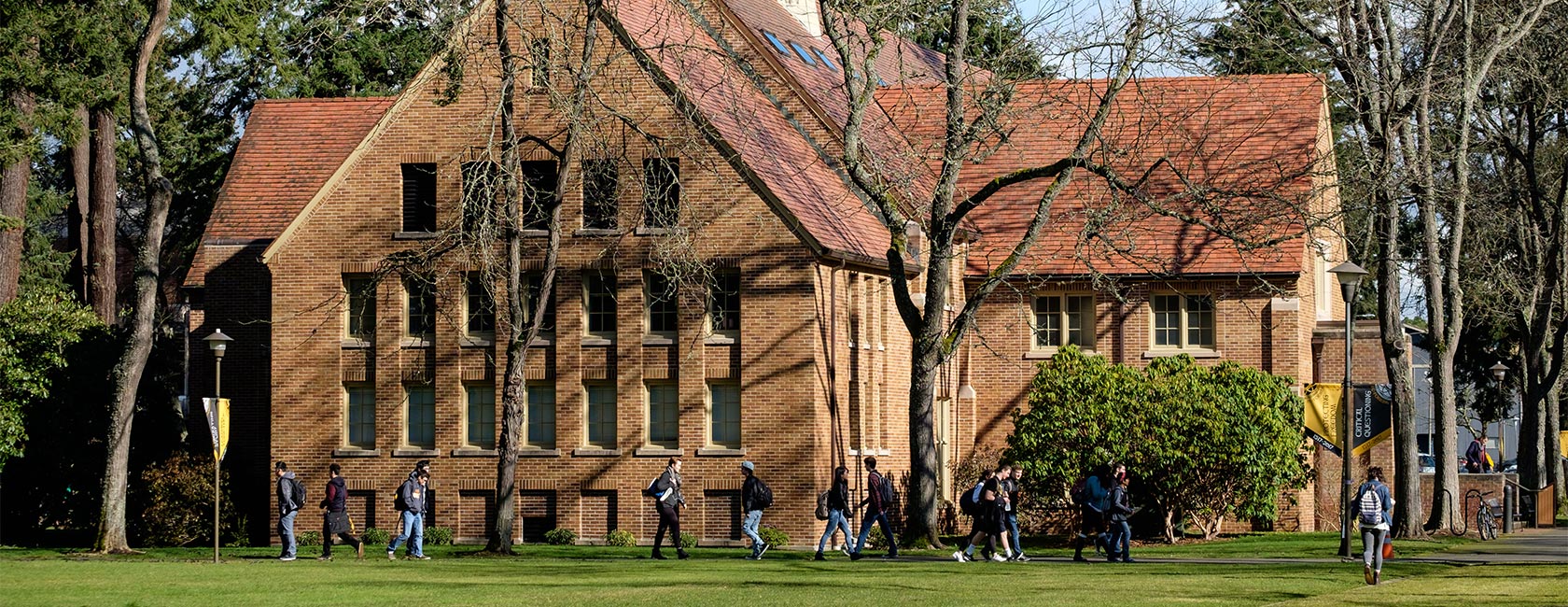
Campus life at PLU is intentionally crafted around involvement, relationship-building, and holistic development. The Division of Student Life aims to cultivate an 'inclusive and supportive' climate that nurtures students in 'mind, body and spirit.' A key part of this is a vibrant network of over 30 student organizations, clubs, fraternities, and sororities, which range from service clubs and academic societies to cultural groups. Campus Ministry plays a significant role, welcoming and engaging the diverse spiritual and faith traditions of the community. Students describe the campus as 'full of people with different gender, ethnicity, and cultural backgrounds,' creating a socially diverse setting. The overall feel is one of a close, engaged community where participation is encouraged and facilitated.
PLU graduates show solid post-graduate outcomes. The six-year graduation rate is reported at 64% for a recent cohort, with a four-year graduation rate of 45.7%. The first-year retention rate is a strong 80.2%, indicating students are generally satisfied and persist after their initial year. For recent graduates, median earnings are reported at $45,409, with 80% earning more than a typical high school graduate. For all alumni, the average full-time salary for bachelor's degree holders is $62,743, while those with master's degrees report an average of $87,051. These figures suggest a tangible return on the PLU education, with advanced degree holders seeing a significant earnings premium.
PLU is a private institution with a significant sticker price, but it uses institutional aid aggressively to improve affordability. The average —the cost after scholarships and grants—for students receiving financial aid is reported by various sources between $12,983 and $24,825, with 62.14% of students receiving aid. The university automatically considers all applicants for academic scholarships, which range from $8,000 to $32,000 per year. is also available, but it is not automatically renewed; students must reapply each year. PLU states that outside scholarships or grants may require it to reduce a student's need-based aid package. Federal loan options are available for both undergraduate and graduate students, with aggregate limits for undergraduates and Parent PLUS loans available up to the full .
Pacific Lutheran University stands out for its distinctive blend of intimate, teaching-focused liberal arts education and a pragmatic, outcomes-oriented approach. It’s not a cutthroat academic factory; it’s a place where the 'holistic development' of students is a stated mission, manifested in a supportive campus climate and a wealth of ways to get involved. The connection between its small classes and its notable rate of graduates who go on to earn doctorates suggests it successfully prepares students for advanced scholarship. Furthermore, its School of Business carries a 'top-ranked' designation, indicating strength in a pre-professional field. The low rate (14%) hints that it may be a 'safety' or 'match' school for many high-achieving applicants, but for those who enroll, it offers a cohesive, community-driven experience with a surprisingly strong earnings potential for its graduates, especially those who pursue graduate studies. It’s a university that believes in educating the whole person for both meaningful work and life.
Pacific Lutheran University seal · sourceParkland's University: PLU and Parkland share history, common bonds and a vibrant future | News | PLU · sourcePacific Lutheran University | PLU | PLU · sourcePacific Lutheran University · source