Admit rate has ranged 66%–73% over the last 5 years. Source: IPEDS via Urban Institute.
Acceptance & SAT from Common Data Set / IPEDS; net price, earnings & graduation from the U.S. Dept. of Education College Scorecard. Figures lag ~1–2 years — verify with the school.
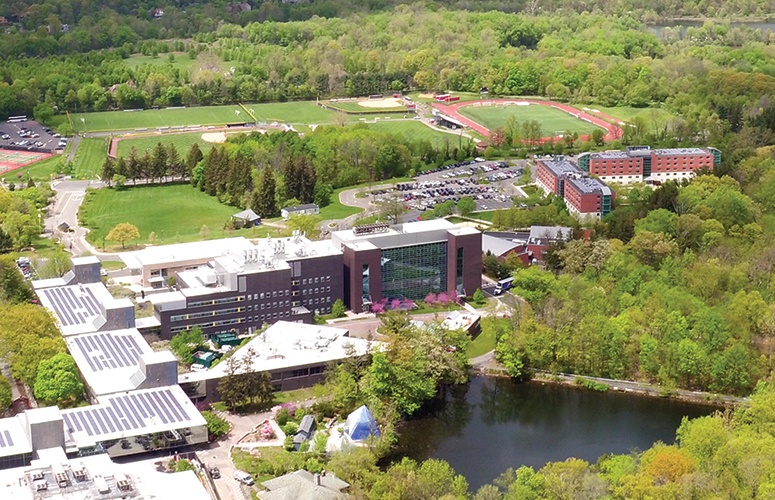
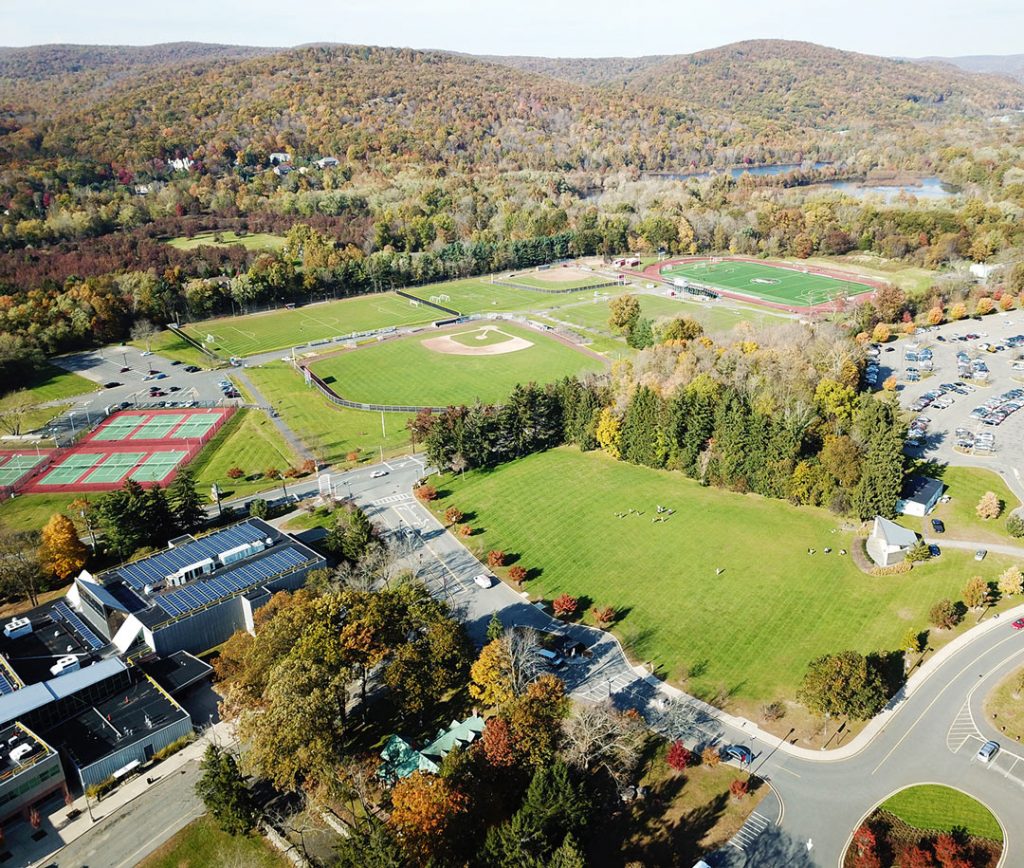
Ramapo College of New Jersey is a public liberal arts college that operates less like a sprawling state university and more like a focused, residential academic community tucked into the wooded hills of Mahwah. It’s known for its quiet, green campus, modern dorms, and a pragmatic, career-oriented approach to education that yields surprisingly strong financial outcomes for graduates. While it flies under the radar nationally, its combination of accessibility, value, and a tight-knit campus vibe makes it a compelling ‘best-kept secret’ for New Jersey students.
Admission requirements
Test-optional — scores considered if submitted
Required
High school transcript
Grade point average
Letters of recommendation
College-prep program
TOEFL (non-native English)
Considered (not required)
Class rank
Test scores (SAT/ACT)
Source: IPEDS Admissions survey (2022) via Urban Institute. Covers formal factors only — it does not reflect essays, extracurriculars, or other holistic criteria.
More details
Undergrad enrollment
4,898
In-state tuition
$16,777
Out-of-state tuition
$27,708
Graduation Rate
70%
On-Campus Housing
38%
Median Earnings (10yr)
$67,541
Student Clubs & Organizations
80+
Students Receiving Grant/Scholarship Aid
70%
Outcomes & value
Outcomes & value
Median earnings (10 yr)
$67,541
Value (earnings ÷ net price)
3.7×
Median debt at graduation
$21,000
Graduation rate
70%
First-year retention
84%
Reducing loan balance (3 yr)
73%
Pell (lower-income) share
28%
First-gen share (among federal-aid recipients)
31%
Earnings = median of students working ~10 years after entry; debt = median of graduates. divides 10-yr earnings by net price — read it as earnings per dollar of annual cost, not a full lifetime ROI; it favors lower-cost schools. Source: U.S. Dept. of Education College Scorecard. Figures lag ~2 years and reflect all students, not your intended major.
Top-earning majors
Median earnings by field of study (highest credential), ~2 years after completion.
Registered Nursing, Nursing Administration, Nursing Research and Clinical Nursing$79,631
Computer and Information Sciences, General$73,635
Accounting and Related Services$59,666
Information Science/Studies$55,547
Economics$47,260
Business Administration, Management and Operations
Campus & location
Campus safety
On-campus violent crimes (2024)
0
Per 1,000 students
0.00
On-campus criminal offenses classed as violent (murder/non-negligent manslaughter, rape, robbery, aggravated assault) for the most recent reported year. Source: U.S. Dept. of Education Campus Safety and Security (Clery Act). Counts reflect what’s reported to the school, and urban campuses often report more partly due to non-student incidents nearby — read alongside campus size and setting, not as a standalone safety verdict.
Climate
Pleasant days / yr
94
Summer high
82°F
Winter low
27°F
Annual rain
54.3"
Annual snow
26.9"
Natural-hazard risk
Relatively High
Pleasant days counts days per year with a mean temperature of 55–75°F, a high at or below 90°F, a low at or above 45°F, and little precipitation — a transparent comfort measure, not a weighting we invented. Computed from Open-Meteo ERA5 daily history (2019–2023). Natural-hazard risk is the county’s composite rating from the FEMA National Risk Index.
Deep dive — research, future-scholar output & economic mobility▾
Economic mobility
Mobility rate
2.5%
Bottom → top quintile
40%
From bottom quintile
6%
Mobility rate = the share of students who both start in the bottom household-income quintile and reach the top quintile; bottom → top is that chance conditional on starting at the bottom. Source: Opportunity Insights Mobility Report Cards (Chetty, Friedman, Saez, Turner & Yagan). Reflects 1980–82 birth cohorts, so it’s directional, not current.
Quick answers
What is the acceptance rate at Ramapo College of New Jersey?
Ramapo College of New Jersey's acceptance rate is approximately 71% (Mahwah, NJ), based on the most recent figures we compiled from public and primary sources.
What SAT score do you need for Ramapo College of New Jersey?
Admitted students at Ramapo College of New Jersey typically score 1130–1300 on the SAT (the middle-50% range). Scores outside this band are still admitted, especially with strong applications.
How much does Ramapo College of New Jersey cost?
At Ramapo College of New Jersey, the average net price (after aid) is about $18,173 per year. Actual cost varies with financial aid and residency.
How many undergraduates attend Ramapo College of New Jersey?
Ramapo College of New Jersey enrolls approximately 4,898 undergraduate students.
Where is Ramapo College of New Jersey located?
Ramapo College of New Jersey is located in Mahwah, NJ.
Admissions
Ramapo’s admissions process is characterized by its accessibility and straightforward, student-centered approach. The college is 'less selective' or 'somewhat selective,' with a broad admissions funnel that welcomes a significant majority of applicants. For those who apply via binding Early Decision, the odds are particularly favorable, with an notably higher than the regular decision pool. The college does not have an open admission policy, but its places significant weight on academic factors like GPA and course rigor. While standardized test scores are considered, they are not the sole determinant; the middle 50% SAT range for admitted students who submit scores falls between 1130 and 1300. The admissions office can be reached at 201-884-7300 or [email protected], and applications are submitted through the college's website.
Liberal Arts and Sciences, General Studies and Humanities$40,318
Source: U.S. Dept. of Education College Scorecard (field-of-study earnings). Figures cover graduates who received federal aid and lag ~2 years; not all programs report data.
Ramapo offers a flexible, career-focused education built around more than 40 undergraduate majors, concentrations, and minors. The academic model is described as a 'flexible roadmap' that combines General Education requirements with a major and any specialized concentrations. The most popular majors cluster in practical, high-demand fields: Business, Management, Marketing, and Related Support Services; Health Professions; and programs in Computers & Technology, Math & Sciences, and Energy & Environment. The college also offers selective, high-achiever pathways like the Medical Early Acceptance Program, which requires a 1340 SAT or 28 ACT score and a 3.5 unweighted GPA for application. Graduate programs include a Master of Science in Accounting, a Master of Arts in Special Education, and a Master of Science in Data Science. The overall academic environment is often described by students as 'nice,' 'quiet,' and 'comfortable,' with a focus on preparing students for a 'lifetime of success.'
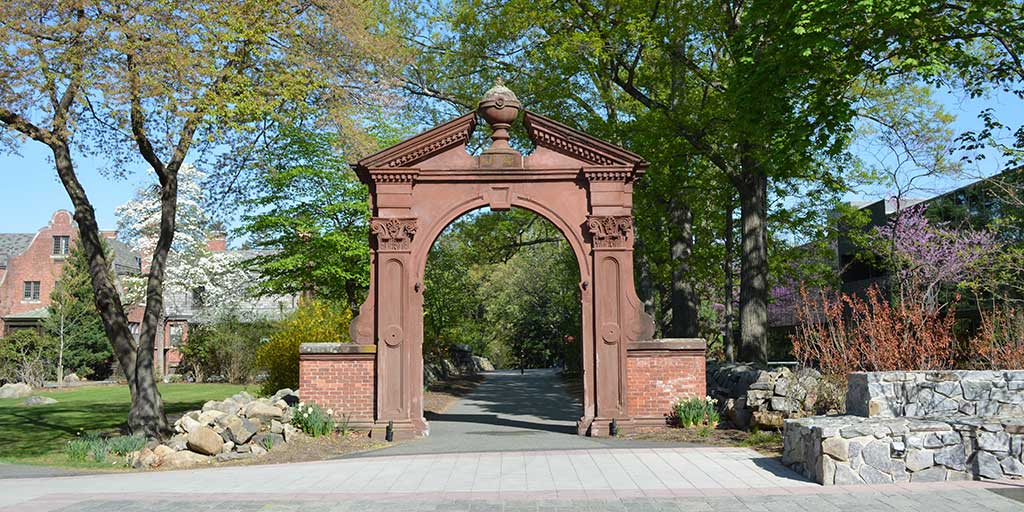
Life at Ramapo is defined by a strong on-campus community, despite a majority of students living off-campus. Approximately 38% of students live in college-owned, -operated, or -affiliated housing, which is noted for being among 'the best dorms' available in the state. The college fosters a vibrant extracurricular scene with more than 80 student-run clubs and organizations spanning cultural, academic, religious, recreational, entertainment, political, and special interest groups. Examples include the Culture Club, which explores global cultures through guest speakers and an annual Cultural Exhibit. Residence hall living is promoted as a key component of the experience, providing opportunities that 'supplement and complement formal classroom learning.' The campus itself is frequently praised for being 'very green,' 'small,' 'quiet,' and 'minimalist,' offering a focused environment away from urban distractions.
Ramapo College distinguishes itself with strong post-graduation outcomes that underscore the value of its degree. According to institutional accolades, Ramapo graduates pay off their degrees 40% faster (in 3.8 years) than the average graduate in New Jersey (6.3 years), and the return on investment (ROI) for a Ramapo degree is reported to be 79% above the state average. Earnings data shows solid progression: one year after graduation, median earnings are reported at $45,619, climbing to $64,395 after five years. The college's graduation rate is a key strength, significantly exceeding the midpoint for four-year colleges. These metrics collectively paint a picture of a college that effectively prepares students for the workforce and financial stability.
Ramapo positions itself as a relatively affordable public option, with a significant majority of students receiving financial aid. About 67% of Ramapo's students receive more than $40 million in aid collectively, which includes grants and scholarships. For first-year students, 70% receive grant or scholarship aid from all sources, averaging $12,580; 64% receive institutional grants and scholarships, averaging $6,546. The —the cost after grants and scholarships—is a central figure in the college's value proposition. The financial aid office emphasizes that the priority filing deadline for full aid consideration is February 1st. While the college provides substantial aid, there is no indication in the provided sources of a 'no-loan' policy or a guarantee to meet 100% of demonstrated financial need for all qualifying students.
Ramapo College carves out a distinctive niche by blending the feel of a small, residential liberal arts college with the affordability and career focus of a public institution. Its standout feature isn't ultra-selectivity, but rather its high-impact outcomes: graduates pay off their degrees far faster than the state average, and the ROI is significantly above par. This is achieved on a campus consistently described as serene, green, and well-maintained, with some of the best residence halls in New Jersey fostering a strong community for the significant portion of students who live on campus. It’s a place where 'less selective' admissions does not translate to lesser results; instead, it offers a clear, value-driven pathway to career readiness and financial stability. The college's own marketing as 'New Jersey's best kept secret' seems less like hype and more like an accurate descriptor of its balanced offering of accessibility, quality of life, and powerful post-graduate payoff.
Ramapo College of New Jersey seal · sourceRamapo College of New Jersey - New Jersey's Public Liberal Arts College · sourceRamapo College of New Jersey - New Jersey Business Magazine · sourceCampus - Ramapo College Admitted Students || Ramapo College of New Jersey · source