Admit rate has ranged 71%–84% over the last 5 years — notably volatile. Source: IPEDS via Urban Institute.
Acceptance & SAT from Common Data Set / IPEDS; net price, earnings & graduation from the U.S. Dept. of Education College Scorecard. Figures lag ~1–2 years — verify with the school.
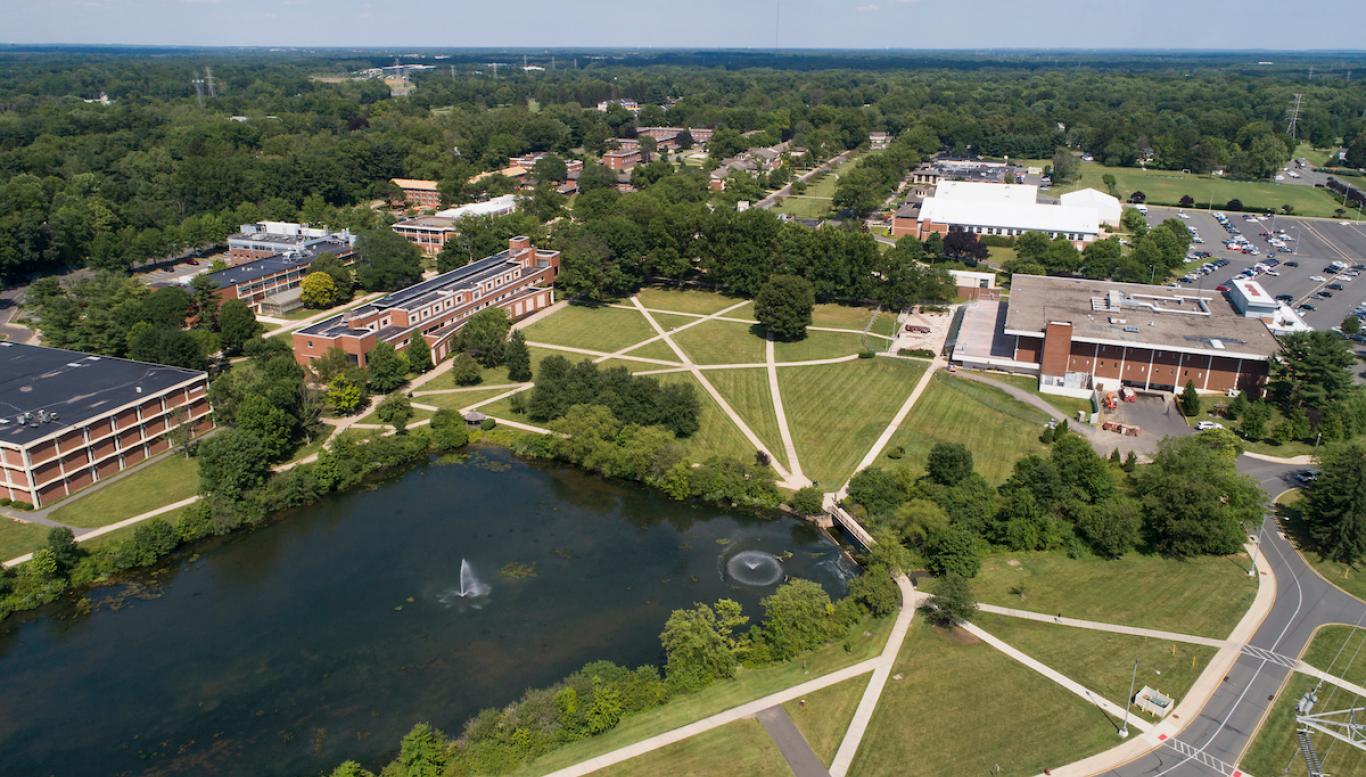
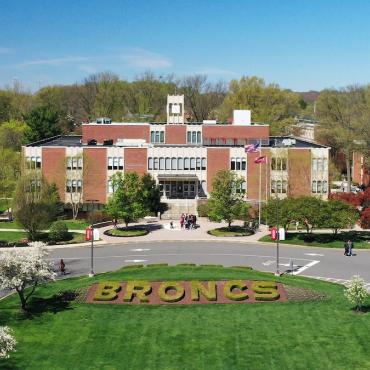
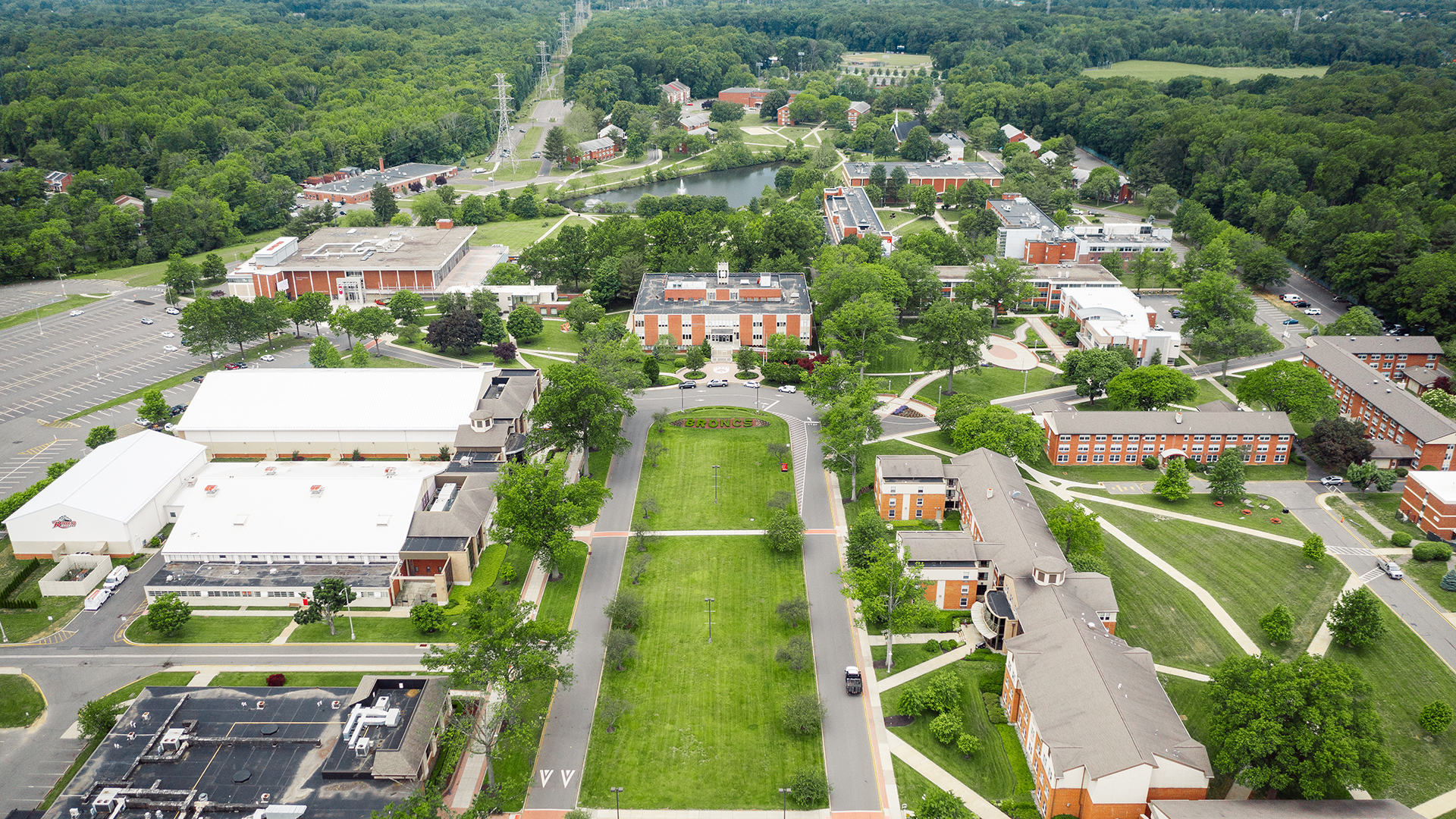
Rider University is a private liberal arts institution in suburban New Jersey that operates like a small liberal arts college with a surprisingly robust business school grafted onto it. Its identity is split between the creative, expressive energy of its Westminster Choir College campus (acquired in the 1990s) and the pragmatic, career-focused culture of its main Lawrenceville business and education programs. The vibe is 'practical liberal arts'—where finance majors are encouraged to take poetry classes and biology students regularly go on to doctorates, all while participating in a dense calendar of campus traditions and a surprisingly active Greek life.
Admission requirements
Test-optional — scores considered if submitted
Required
High school transcript
Grade point average
Letters of recommendation
College-prep program
Considered (not required)
Test scores (SAT/ACT)
Source: IPEDS Admissions survey (2022) via Urban Institute. Covers formal factors only — it does not reflect essays, extracurriculars, or other holistic criteria.
More details
Undergrad enrollment
3,106
In-state tuition
$41,120
Out-of-state tuition
$41,120
Top Major
Business (34%)
Graduation Rate
61%
On-Campus Housing
53%
Early Action Policy
Non-binding, decision by Dec 20
Demonstrated Interest
Not considered
Student-Faculty Ratio
12:1
Median Earnings (10yr)
$62,208
Students Receiving Aid
100%
Outcomes & value
Outcomes & value
Median earnings (10 yr)
$62,208
Value (earnings ÷ net price)
2.5×
Median debt at graduation
$26,130
Graduation rate
61%
First-year retention
78%
Reducing loan balance (3 yr)
71%
Pell (lower-income) share
35%
First-gen share (among federal-aid recipients)
29%
Financial health
0.2 / 3.0Below the federal standard — financial stress
U.S. Dept. of Education Financial Responsibility Composite Score (FY2022-23). Scale −1.0 to 3.0; ≥1.5 meets the standard. Reported for private nonprofit & for-profit institutions only — public universities are state-backed and not scored, so this is a stability signal, not a ranking.
Top-earning majors
Median earnings by field of study (highest credential), ~2 years after completion.
Accounting and Related Services$52,107
Entrepreneurial and Small Business Operations$52,107
Business Administration, Management and Operations$51,899
Mathematics$49,729
International Business$49,644
Teacher Education and Professional Development, Specific Levels and Methods
Campus & location
Campus safety
On-campus violent crimes (2024)
2
Per 1,000 students
0.50
On-campus criminal offenses classed as violent (murder/non-negligent manslaughter, rape, robbery, aggravated assault) for the most recent reported year. Source: U.S. Dept. of Education Campus Safety and Security (Clery Act). Counts reflect what’s reported to the school, and urban campuses often report more partly due to non-student incidents nearby — read alongside campus size and setting, not as a standalone safety verdict.
Climate
Pleasant days / yr
88
Summer high
85°F
Winter low
29°F
Annual rain
51.2"
Annual snow
14.7"
Natural-hazard risk
Relatively High
Pleasant days counts days per year with a mean temperature of 55–75°F, a high at or below 90°F, a low at or above 45°F, and little precipitation — a transparent comfort measure, not a weighting we invented. Computed from Open-Meteo ERA5 daily history (2019–2023). Natural-hazard risk is the county’s composite rating from the FEMA National Risk Index.
Deep dive — research, future-scholar output & economic mobility▾
Research output
Institutional h-index
140
Scholarly works
3,817
Institutional research volume and impact from OpenAlex. The h-index reflects large research universities and will be low for teaching-focused liberal-arts colleges — not a measure of undergraduate quality.
Economic mobility
Mobility rate
2.2%
Bottom → top quintile
37%
From bottom quintile
6%
Mobility rate = the share of students who both start in the bottom household-income quintile and reach the top quintile; bottom → top is that chance conditional on starting at the bottom. Source: Opportunity Insights Mobility Report Cards (Chetty, Friedman, Saez, Turner & Yagan). Reflects 1980–82 birth cohorts, so it’s directional, not current.
Quick answers
What is the acceptance rate at Rider University?
Rider University's acceptance rate is approximately 79% (Lawrenceville, NJ), based on the most recent figures we compiled from public and primary sources.
What SAT score do you need for Rider University?
Admitted students at Rider University typically score 1100–1320 on the SAT (the middle-50% range). Scores outside this band are still admitted, especially with strong applications.
How much does Rider University cost?
At Rider University, the average net price (after aid) is about $24,792 per year. Actual cost varies with financial aid and residency.
How many undergraduates attend Rider University?
Rider University enrolls approximately 3,106 undergraduate students.
Where is Rider University located?
Rider University is located in Lawrenceville, NJ.
Admissions
Rider is a classic 'more likely than not' school, with an that hovers around the high 70s to low 80s, making it a realistic target for a wide range of students. The process is straightforward and , though submitting scores within the middle 50% SAT range of 1100–1320 is common among those who do. The university offers a non-binding Early Action plan with a December 20 decision deadline, which is marketed as a way to secure and reduce senior-year stress. Demonstrated interest—tracking whether applicants visit, open emails, or engage with the school—is not considered in admissions decisions, according to analyses, which means students won't be penalized for a passive approach. The rate—the percentage of admitted students who enroll—is reported at 9.1%, indicating that many admitted students ultimately choose other options.
Earnings = median of students working ~10 years after entry; debt = median of graduates. Value divides 10-yr earnings by one year’s net price — read it as earnings per dollar of annual cost, not a full lifetime ROI; it favors lower-cost schools. Source: U.S. Dept. of Education College Scorecard. Figures lag ~2 years and reflect all students, not your intended major.
$48,864
Computer and Information Sciences, General$47,260
Teacher Education and Professional Development, Specific Subject Areas$46,589
Source: U.S. Dept. of Education College Scorecard (field-of-study earnings). Figures cover graduates who received federal aid and lag ~2 years; not all programs report data.
Rider's academic profile is defined by a sharp duality. On one hand, it's a comprehensive liberal arts institution where, as the school boasts, 'finance majors fall in love with poetry, bio students go on to doctorates and law degrees, and musical theatre enthusiasts continue on to Broadway.' On the other, its most popular programs are unapologetically career-oriented. Over a third of undergraduates (34%) major in Business, Management, Marketing, and Related Support Services, making it by far the dominant academic force on campus. Visual and Performing Arts follows at 14%, a figure heavily influenced by the of Westminster Choir College, which Rider absorbed. Education (9%) and Psychology (8%) round out the top majors. The university offers over 100 majors, minors, and certificates across its colleges, with a student-faculty ratio of 12:1 that supports a more personalized classroom experience than many larger regional universities. The curriculum encourages cross-pollination, but the gravitational pull towards business and professional outcomes is unmistakable.
Life at Rider is intensely campus-centric, with just over half (53%) of students living in college-owned, -operated, or -affiliated housing. The Office of Campus Life orchestrates a packed calendar of activities, traditions, and over 100 clubs and organizations, ranging from Cranberry Fest and dodgeball tournaments to the History Club and literary magazines. Greek life is a visible part of the social fabric. The Instagram account @riderstudentlife showcases a steady stream of wellness events, community service projects, social gatherings, and cultural celebrations, painting a picture of an administration working hard to foster engagement. The campus culture, as glimpsed through student-made content, appears to be a mix of traditional collegiate experiences—club fairs, dorm events, athletic gatherings—with a strong undercurrent of career preparation and networking. It's a 'get involved or get bored' kind of place, where the onus is on students to tap into the organized activities to find their community.
Rider's outcomes tell a story of a university whose graduates land solidly in the middle class, often outperforming the average college graduate financially. The median earnings 10 years after entry are $62,208, which is 26% higher than the national average for college graduates ($49,219). The six-year graduation rate sits at 61%, a figure that has been reported as 63% in some recent data. This places Rider's completion rate near or slightly above the national midpoint for four-year colleges (59%). For students who receive Pell Grants, the six-year graduation rate is 57%, indicating a notable—though not closed—gap in outcomes based on economic background. The rate (the percentage of admitted students who enroll) is 9.1%, suggesting that while many are admitted, Rider often competes for students who have other, sometimes more selective, options.
Rider's sticker price is steep, with total annual costs (tuition, fees, room, and board) reported at $63,945. However, the university emphasizes that 'nearly all Rider students receive scholarships and aid,' and data shows 100% of full-time beginning undergraduates receive grant or scholarship aid. The average after aid—what families actually pay—is $24,792. The average financial aid package is reported to be $35,035. Rider uses the FAFSA as the foundation for all aid awards and offers need-based 'Rider Grants,' though the amount can vary year to year based on demonstrated need. There is a notable state program for New Jersey residents: Public New Jersey students can attend Rider University for free if they meet certain financial and academic eligibility requirements. The university does not advertise a universal 'no-loan' policy or a commitment to meet 100% of demonstrated need for all students; its aid approach is a mix of merit scholarships and need-based grants, with loans typically part of the package.
Rider's distinctiveness lies in its unresolved, and perhaps intentional, tension. It's a liberal arts college that doesn't behave like one, with business as its undisputed academic king. It's a suburban New Jersey campus with a world-renowned choir college (Westminster) embedded within it, creating pockets of intense artistic specialization amid broader career-focused studies. It's accessible, with a high , yet its graduates often achieve above-average earnings. The student experience is highly structured and activity-driven—if you want the classic 'college life,' with clubs, Greek life, and campus traditions, it's all there for the taking. But the underlying drive is pragmatic: this is a place where the liberal arts are often in service to professional outcomes. For a certain student—one who wants the close-knit feel and faculty attention of a small college but is unequivocally focused on business, education, or the arts as a career path—Rider offers a specific, no-nonsense value proposition that more expensive or diffuse liberal arts colleges often cannot.
Rider University seal · sourceVirtual Tour and Campus Maps | Rider University · sourceFirst-Year Visit Options | Rider University · sourceVisit Options | Rider University · source