Admit rate has ranged 64%–68% over the last 5 years. Source: IPEDS via Urban Institute.
Acceptance & SAT from Common Data Set / IPEDS; net price, earnings & graduation from the U.S. Dept. of Education College Scorecard. Figures lag ~1–2 years — verify with the school.
Sacred Heart University is a private Catholic institution in Fairfield, Connecticut, that has evolved from a local commuter school into a residential university with a surprisingly robust athletic and pre-professional identity. It's a place where a 'real-world' curriculum meets a vibrant, socially-driven campus life, attracting students who want the hands-on training of a career-focused school within the supportive framework of a traditional college community. While its sticker price is steep, its admissions process is accessible, creating a distinctive bridge for students aiming for practical outcomes without the cutthroat selectivity of its New England peers.
Admission requirements
Test-blind — scores not considered
Required
High school transcript
Grade point average
Letters of recommendation
TOEFL (non-native English)
Considered (not required)
Class rank
College-prep program
Demonstrated competencies
Source: IPEDS Admissions survey (2022) via Urban Institute. Covers formal factors only — it does not reflect essays, extracurriculars, or other holistic criteria.
More details
Undergrad enrollment
7,087
In-state tuition
$50,404
Out-of-state tuition
$50,404
Early Decision
Available, Binding
Graduation Rate
73%
Application Platform
Common Application
Median Earnings (10yr)
$75,059
Regular Decision Deadline
February 1
Outcomes & value
Outcomes & value
Median earnings (10 yr)
$75,059
Value (earnings ÷ net price)
1.6×
Median debt at graduation
$25,000
Graduation rate
73%
First-year retention
83%
Reducing loan balance (3 yr)
74%
Pell (lower-income) share
16%
First-gen share (among federal-aid recipients)
23%
Financial health
3.0 / 3.0Meets the federal financial-responsibility standard
U.S. Dept. of Education Financial Responsibility Composite Score (FY2022-23). Scale −1.0 to 3.0; ≥1.5 meets the standard. Reported for private nonprofit & for-profit institutions only — public universities are state-backed and not scored, so this is a stability signal, not a ranking.
Top-earning majors
Median earnings by field of study (highest credential), ~2 years after completion.
Registered Nursing, Nursing Administration, Nursing Research and Clinical Nursing$74,929
Computer and Information Sciences, General$61,516
Economics$58,943
Accounting and Related Services$56,641
Finance and Financial Management Services$55,348
Marketing
Campus & location
Campus safety
On-campus violent crimes (2024)
4
Per 1,000 students
0.37
On-campus criminal offenses classed as violent (murder/non-negligent manslaughter, rape, robbery, aggravated assault) for the most recent reported year. Source: U.S. Dept. of Education Campus Safety and Security (Clery Act). Counts reflect what’s reported to the school, and urban campuses often report more partly due to non-student incidents nearby — read alongside campus size and setting, not as a standalone safety verdict.
Climate
Pleasant days / yr
94
Summer high
81°F
Winter low
27°F
Annual rain
57.2"
Annual snow
23.6"
Pleasant days counts days per year with a mean temperature of 55–75°F, a high at or below 90°F, a low at or above 45°F, and little precipitation — a transparent comfort measure, not a weighting we invented. Computed from Open-Meteo ERA5 daily history (2019–2023).
Deep dive — research, future-scholar output & economic mobility▾
Research output
Institutional h-index
96
Scholarly works
2,494
Institutional research volume and impact from OpenAlex. The h-index reflects large research universities and will be low for teaching-focused liberal-arts colleges — not a measure of undergraduate quality.
Economic mobility
Mobility rate
2.0%
Bottom → top quintile
42%
From bottom quintile
5%
Mobility rate = the share of students who both start in the bottom household-income quintile and reach the top quintile; bottom → top is that chance conditional on starting at the bottom. Source: Opportunity Insights Mobility Report Cards (Chetty, Friedman, Saez, Turner & Yagan). Reflects 1980–82 birth cohorts, so it’s directional, not current.
Quick answers
What is the acceptance rate at Sacred Heart University?
Sacred Heart University's acceptance rate is approximately 65% (Fairfield, CT), based on the most recent figures we compiled from public and primary sources.
How much does Sacred Heart University cost?
At Sacred Heart University, the average net price (after aid) is about $46,174 per year. Actual cost varies with financial aid and residency.
How many undergraduates attend Sacred Heart University?
Sacred Heart University enrolls approximately 7,087 undergraduate students.
Where is Sacred Heart University located?
Sacred Heart University is located in Fairfield, CT.
Admissions
Sacred Heart's admissions process is characterized by its accessibility and clear, pathway. With an of 65%, the university is somewhat selective but far from inaccessible, admitting a clear majority of its over 16,000 applicants. The process is streamlined through the Common Application, with a regular decision deadline of February 1. Academically, the admitted student profile is solid: the average high school GPA is a 3.65 on a 4.0 scale, and for those who submit test scores, the middle 50% SAT range falls between 1190 and 1340, with an average around 1205 (605 EBRW and 612 Math). The ACT composite average is 27, with a range of 25–29. The university explicitly operates as a test-optional institution, meaning students can elect to submit SAT or ACT scores but are not required to do so. A significant strategic element is its binding Early Decision program, which allows committed students to apply early and secure their place. While the overall rate is 65%, data suggests the ED acceptance rate is notably higher, and the program fills a substantial portion of the incoming class—one analysis indicated it could fill just under 72% of the class. The university also offers more than 30 direct-admit dual degree programs that fast-track students from undergraduate to graduate study.
Earnings = median of students working ~10 years after entry; debt = median of graduates. Value divides 10-yr earnings by one year’s net price — read it as earnings per dollar of annual cost, not a full lifetime ROI; it favors lower-cost schools. Source: U.S. Dept. of Education College Scorecard. Figures lag ~2 years and reflect all students, not your intended major.
$47,406
Business Administration, Management and Operations$43,922
Communication and Media Studies$33,993
Source: U.S. Dept. of Education College Scorecard (field-of-study earnings). Figures cover graduates who received federal aid and lag ~2 years; not all programs report data.
SHU's academic identity is firmly pre-professional and hands-on, designed for what the university calls 'real-world relevance.' All students build a foundation through a well-considered core curriculum focused on communication, critical thinking, scientific reasoning, and social awareness. The university emphasizes high-impact practices: 100% of students complete writing-intensive courses in their disciplines, 88% participate in first-year experiences, and a significant portion engage in undergraduate research or creative projects. Majors are comprehensive, requiring between 30 and 58 credits within the field, and span from business and nursing to the arts and sciences. The learning environment is collaborative, with students working alongside faculty in cutting-edge labs, simulation centers, and creative studios. This practical focus extends to fields like finance, AI, healthcare, and cybersecurity. The academic structure supports focused career pathways, including direct-admit options into graduate programs in occupational therapy, physical therapy, and other fields.
Life at Sacred Heart is described as vibrant and welcoming, built deliberately around connection and community. The university fosters an environment where students can easily jump into activities, find their niche, or take time to explore. The campus is a multicultural space where students from diverse backgrounds cooperate and learn from one another. While specific details on the number of clubs or major events aren't provided in the sources, the Office of Student Life is a central hub, operating weekdays from 9 a.m. to 5 p.m. to support student engagement. The overall vibe suggests a typical, active residential college experience where social life and campus involvement are key components of the undergraduate years.
Sacred Heart University prides itself on preparing students for success beyond the classroom, with outcomes tracked by the Center for Career and Professional Development. The university's graduation rate is 73%, which is notably above the midpoint for four-year colleges (59%). In terms of earnings, graduates report a median income of $75,059 ten years after entry. Earlier career earnings are also strong: one year after graduation, the average is $56,028, and five years out, it rises to $73,671. These figures indicate that SHU graduates generally enter the workforce with solid earning potential. Program-specific outcomes can be exceptional; for example, the Master of Science in Occupational Therapy program boasts a 93% graduation rate within 150% of the program's timeline.
Attending Sacred Heart University requires a significant financial investment. The published tuition and fees are $52,410. However, the average —the cost after grants and scholarships are applied—is $46,174. Approximately 54.57% of students receive financial aid, with the average aid package totaling $28,942. The university offers both merit-based and need-based institutional scholarships and grants, with need-based awards determined using data from the CSS Profile. It is important to note that Sacred Heart is not described in the provided sources as having a 'no-loan' policy that meets full need for all qualifying students. Instead, federal loan programs (both subsidized and unsubsidized) are actively presented as standard financing options for undergraduates who need to bridge the gap between aid and the total cost. Students are encouraged to use the university's official Net Price Calculator for a personalized estimate.
Sacred Heart University carves out a distinctive niche by blending the supportive, community-oriented feel of a Catholic institution with the aggressive, practical drive of a modern career-training center. It's not a liberal arts college pondering existential questions; it's a university where labs, simulation centers, and direct-admit graduate pathways are front and center. This practical bent is matched by a surprisingly dominant athletics presence (NCAA Division I) and a social campus life that defines the student experience. The result is a school for doers—students who want a clear, hands-on path to a profession within a traditional collegiate environment that values connection. Its strategic use of a binding Early Decision program allows it to secure a committed class early, making the regular decision pool more competitive than the 65% overall might imply. While the cost is high, its outcomes in terms of graduation rates and mid-career earnings suggest a return on investment that resonates with its career-focused student body.
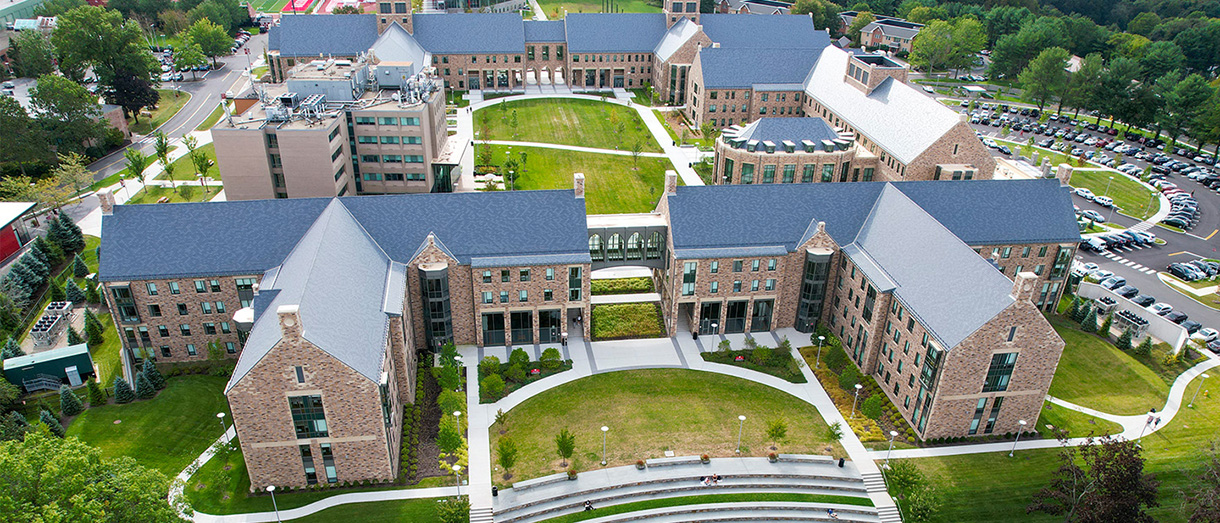
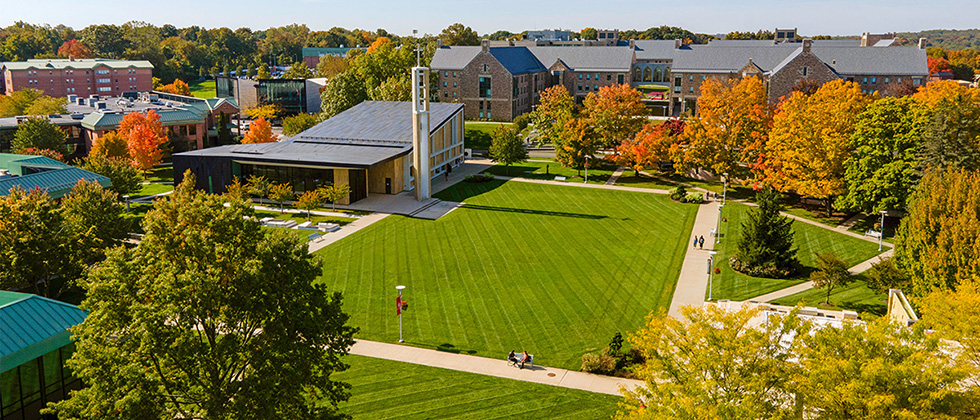
Sacred Heart University seal · sourceSHU Recognized as Having One of the Best Campuses on the East Coast | Sacred Heart University · sourceAbout SHU | Sacred Heart University · sourceWhat to Expect at Admitted Student Days: Your Ultimate Guide | Sacred Heart University · source
_(cropped).jpg?width=1600)