Admit rate has ranged 59%–77% over the last 5 years — notably volatile. Source: IPEDS via Urban Institute.
Acceptance & SAT from Common Data Set / IPEDS; net price, earnings & graduation from the U.S. Dept. of Education College Scorecard. Figures lag ~1–2 years — verify with the school.
Saint Francis University carves out a distinct identity as a small, career-focused Catholic university anchored in Franciscan values on a sprawling 600-acre campus in rural Pennsylvania. It operates less as a high-pressure academic hothouse and more as a practical launchpad, with a notably accessible admissions process and a curriculum heavily tilted toward in-demand health professions and business, yielding solid graduation rates and early-career earnings that punch above its selectivity weight.
Admission requirements
Test-optional — scores considered if submitted
Required
High school transcript
Grade point average
TOEFL (non-native English)
Considered (not required)
Letters of recommendation
Test scores (SAT/ACT)
Demonstrated competencies
Source: IPEDS Admissions survey (2022) via Urban Institute. Covers formal factors only — it does not reflect essays, extracurriculars, or other holistic criteria.
2.3 / 3.0Meets the federal financial-responsibility standard
U.S. Dept. of Education Financial Responsibility Composite Score (FY2022-23). Scale −1.0 to 3.0; ≥1.5 meets the standard. Reported for private nonprofit & for-profit institutions only — public universities are state-backed and not scored, so this is a stability signal, not a ranking.
Top-earning majors
Median earnings by field of study (highest credential), ~2 years after completion.
Registered Nursing, Nursing Administration, Nursing Research and Clinical Nursing$58,866
Accounting and Related Services$46,087
Marketing$43,798
Computer and Information Sciences, General$36,674
Business Administration, Management and Operations$33,993
Source: U.S. Dept. of Education College Scorecard (field-of-study earnings). Figures cover graduates who received federal aid and lag ~2 years; not all programs report data.
Compare on earnings:
Campus & location
Campus safety
On-campus violent crimes (2024)
1
Per 1,000 students
0.51
On-campus criminal offenses classed as violent (murder/non-negligent manslaughter, rape, robbery, aggravated assault) for the most recent reported year. Source: U.S. Dept. of Education Campus Safety and Security (Clery Act). Counts reflect what’s reported to the school, and urban campuses often report more partly due to non-student incidents nearby — read alongside campus size and setting, not as a standalone safety verdict.
Climate
Pleasant days / yr
98
Summer high
77°F
Winter low
23°F
Annual rain
46"
Annual snow
41.5"
Natural-hazard risk
Relatively Low
Pleasant days counts days per year with a mean temperature of 55–75°F, a high at or below 90°F, a low at or above 45°F, and little precipitation — a transparent comfort measure, not a weighting we invented. Computed from Open-Meteo ERA5 daily history (2019–2023). Natural-hazard risk is the county’s composite rating from the FEMA National Risk Index.
Deep dive — research, future-scholar output & economic mobility▾
Research output
Institutional h-index
155
Scholarly works
2,670
Institutional research volume and impact from OpenAlex. The h-index reflects large research universities and will be low for teaching-focused liberal-arts colleges — not a measure of undergraduate quality.
Economic mobility
Mobility rate
2.2%
Bottom → top quintile
35%
From bottom quintile
6%
Mobility rate = the share of students who both start in the bottom household-income quintile and reach the top quintile; bottom → top is that chance conditional on starting at the bottom. Source: Opportunity Insights Mobility Report Cards (Chetty, Friedman, Saez, Turner & Yagan). Reflects 1980–82 birth cohorts, so it’s directional, not current.
Quick answers
What is the acceptance rate at Saint Francis University?
Saint Francis University's acceptance rate is approximately 77% (Loretto, PA), based on the most recent figures we compiled from public and primary sources.
What SAT score do you need for Saint Francis University?
Admitted students at Saint Francis University typically score 1050–1230 on the SAT (the middle-50% range). Scores outside this band are still admitted, especially with strong applications.
How much does Saint Francis University cost?
At Saint Francis University, the average net price (after aid) is about $23,526 per year. Actual cost varies with financial aid and residency.
How many undergraduates attend Saint Francis University?
Saint Francis University enrolls approximately 1,557 undergraduate students.
Where is Saint Francis University located?
Saint Francis University is located in Loretto, PA.
Admissions
Saint Francis University is decidedly accessible, with an admissions process that is more about finding a fit than filtering out the masses. The university admitted 77% of its 2,623 applicants for a recent cycle, a rate that underscores its mission of providing opportunity. The middle 50% of admitted students who submitted test scores posted SAT scores between 1050 and 1230 or ACT scores between 21 and 27. While the university emphasizes evidence of an applicant's ability to complete college-level work based on previous academic performance, its process is not characterized by cutthroat competition. There is no application fee, and the regular application deadline extends into August, offering flexibility. The admitted class is modest in size, with traditional first-time freshman enrollment figures hovering around 350-400 students in recent years.
Earnings = median of students working ~10 years after entry; debt = median of graduates. Value divides 10-yr earnings by one year’s net price — read it as earnings per dollar of annual cost, not a full lifetime ROI; it favors lower-cost schools. Source: U.S. Dept. of Education College Scorecard. Figures lag ~2 years and reflect all students, not your intended major.
The academic identity of Saint Francis is unmistakably pragmatic and career-oriented. The university offers flexible, career-focused degrees designed by industry experts, with a heavy emphasis on fields that lead directly to stable, well-compensated professions. The most popular majors reflect this focus: Physician Associate/Assistant, Registered Nursing/Registered Nurse, Behavioral Sciences, and Psychology. The curriculum is organized across eight broad divisions: Art and Humanities, Business, Education, Engineering and Computing, Health Care, Public Services, Sciences, and Social Sciences. This structure supports the university's stated goal of graduating students who carry Franciscan values into fulfilling careers as accountants, chemists, doctors, engineers, lawyers, nurses, pilots, and physician assistants. The approach is less about theoretical exploration and more about skill acquisition for the workforce.
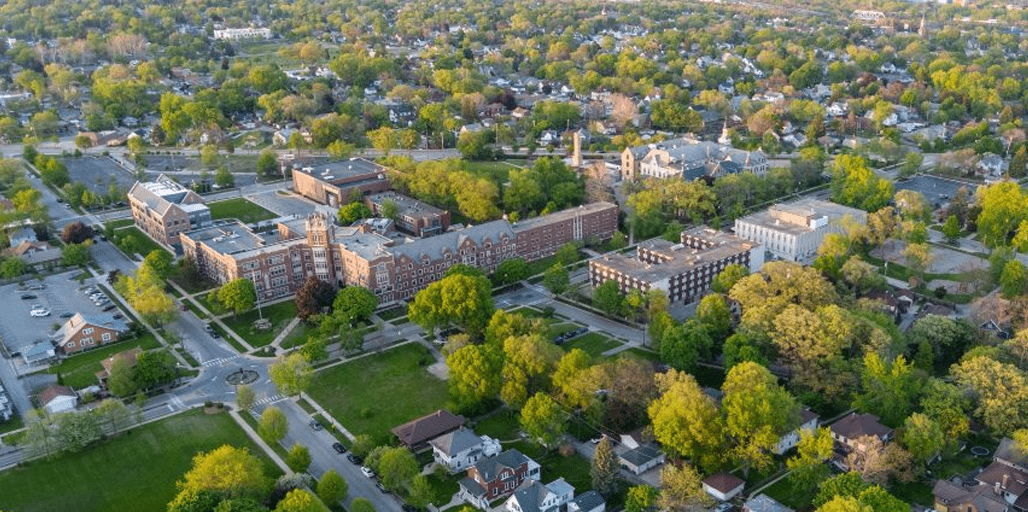
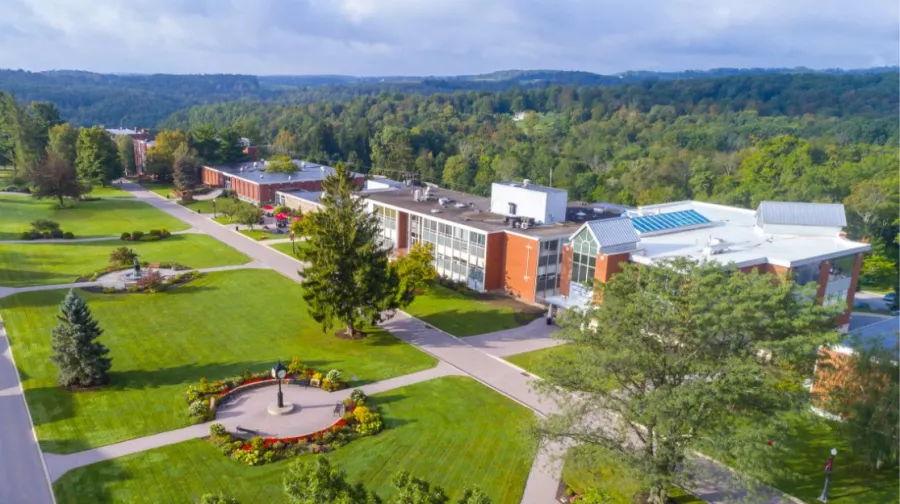
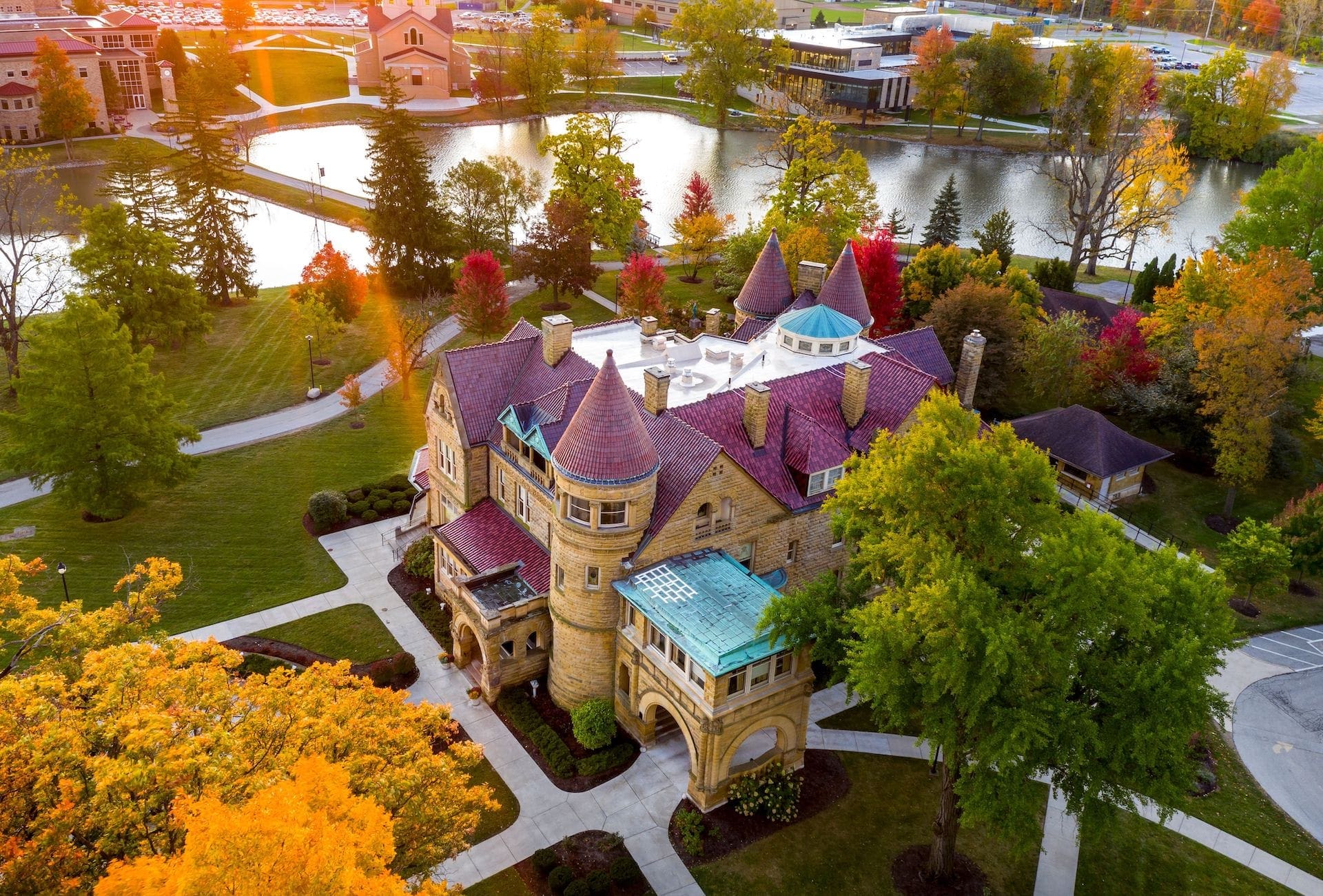
Life at Saint Francis unfolds on a stunning campus covering over 600 acres in Loretto, Pennsylvania, offering a classic, secluded college-town experience. The university prides itself on providing a safe campus, comfortable and clean residence halls, and thoughtful campus programming. However, it is not a predominantly residential campus; only about 24% of students live in college-owned, -operated, or -affiliated housing, with the vast majority—76%—living off campus. The Office of Campus Culture works to foster an environment where a variety of cultural systems are acknowledged, respected, and valued. Student opinions highlight aspects of campus life including housing, food, athletics, clubs, bars and restaurants, and Greek life. Living on campus is promoted as a chance to live, learn, meet new friends, and engage in campus activities first-hand on what the university describes as its safe, award-winning campus.
Outcomes are where Saint Francis University's career-focused model pays measurable dividends. The university reports a strong 99.6% career outcomes rate for its Class of 2025, meaning nearly every graduate was employed or in further education shortly after commencement. This aligns with solid longer-term earnings data; the university has been recognized for the strong career outcomes and earning potential of its graduates, ranking No. 132 in "Best Salaries" in one national review. The graduation rate is 74%, a figure that significantly outpaces the midpoint for four-year colleges (59%). This combination of high completion rates and strong early-career placement underscores the effectiveness of its practical, directed academic approach.
The average after aid—the amount a family can expect to pay out-of-pocket for one year—is $23,526. Financial aid is widely available, with 99% of full-time beginning undergraduates receiving grant or scholarship aid. The university currently offers five different merit-based scholarships. All students seeking must complete the Free Application for Federal Student Aid (FAFSA), and the verification process is critical; if not completed, a student will not be considered for need-based financial aid. Federal and state programs for full-time undergraduates have award ranges from $840 to $8,400 annually. It's important to note that students become ineligible for financial assistance if they attempt more than 150% of the credits required for their degree.
Saint Francis University stands out for its potent combination of high access and high return. It is not a highly selective institution, yet it achieves graduation rates and early-career earnings that rival or exceed those of many more exclusive schools. This is the direct result of a clearly defined, no-nonsense philosophy: provide a values-based, supportive environment on a vast, beautiful campus, and deliver a rigorously practical education laser-focused on high-demand fields like health sciences and business. The result is a student body that largely commutes, a culture that emphasizes professional readiness over prestige, and an outcomes profile—99.6% employed or in grad school—that validates the model entirely. It’s a school for students who know what they want to do and are looking for a direct, effective path to do it.
Saint Francis University seal · sourceCampuses - University of St. Francis · sourceSaint Francis University | Saint Francis University · sourceVisit Saint Francis Orig - University of Saint Francis, Fort Wayne · source