Loading…
← All schools
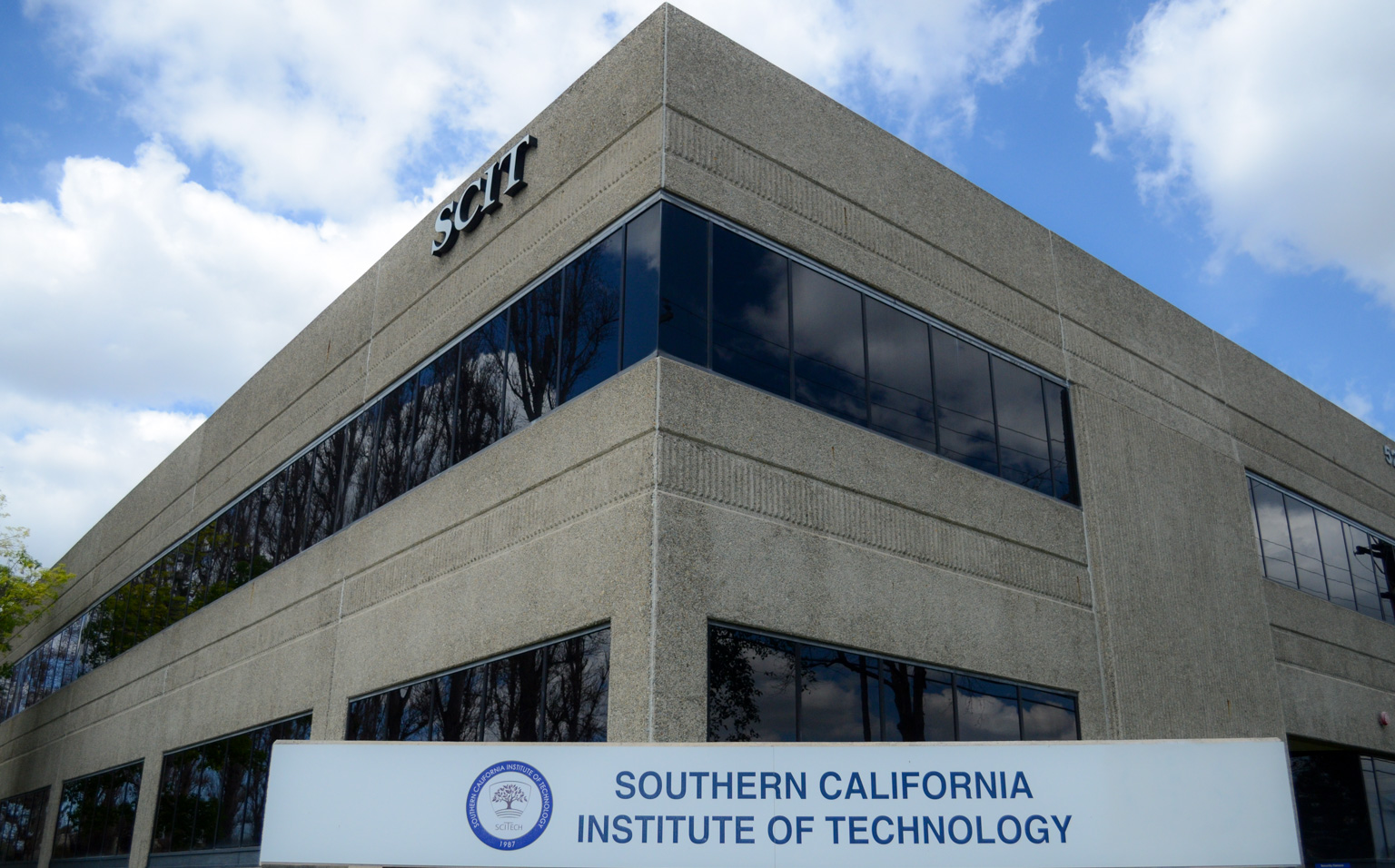
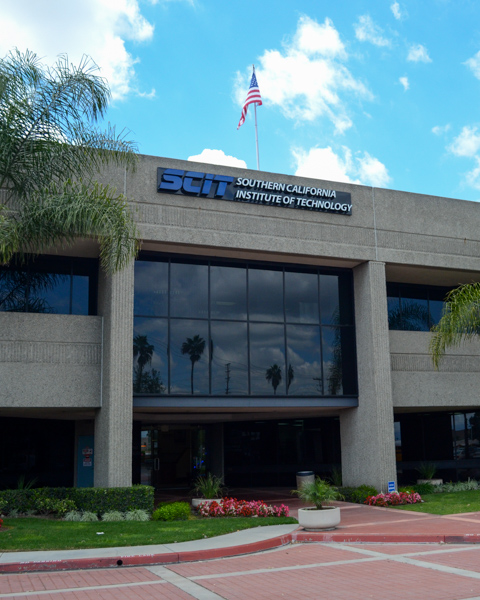
Southern California Institute of Technology
Anaheim, CAprivate forprofitscitech.edu
Acceptance
74%
Avg net price
$33,392
Earnings (10 yr)
$53,598
Graduation rate
74%
Acceptance & SAT from Common Data Set / IPEDS; net price, earnings & graduation from the U.S. Dept. of Education College Scorecard. Figures lag ~1–2 years — verify with the school.
The Southern California Institute of Technology is a specialized, hands-on technical institute in Anaheim that operates with a straightforward, accessible admissions process and a sharp focus on career-ready engineering and technology outcomes. It’s a school for students who want to bypass the hyper-selective admissions circus of elite tech schools and get straight to work—a no-frills, high-output alternative where a 74% graduation rate translates directly into a median salary of $53,598 a decade out.
More details
- Undergrad enrollment
- 508
- Testing policy
- Required
- In-state tuition
- $20,515
- Out-of-state tuition
- $20,515
- Graduation Rate
- 74%
- First-Year Retention
- 100%
- Demonstrated Interest
- Not Considered
- Median Earnings (10yr)
- $53,598
Outcomes & value
Outcomes & value
- Median earnings (10 yr)
- $53,598
- Value (earnings ÷ net price)
- 1.6×
- Median debt at graduation
- $10,798
- Graduation rate
- 74%
- First-year retention
- 100%
- Reducing loan balance (3 yr)
- 43%
- Pell (lower-income) share
- 62%
- First-gen share (among federal-aid recipients)
- 62%
Financial health
3.0 / 3.0Meets the federal financial-responsibility standard
U.S. Dept. of Education Financial Responsibility Composite Score (FY2022-23). Scale −1.0 to 3.0; ≥1.5 meets the standard. Reported for private nonprofit & for-profit institutions only — public universities are state-backed and not scored, so this is a stability signal, not a ranking.
Top-earning majors
Median earnings by field of study (highest credential), ~2 years after completion.
- Electrical, Electronics, and Communications Engineering$58,673
- Biomedical/Medical Engineering$58,221
- Computer Science$45,529
Source: U.S. Dept. of Education College Scorecard (field-of-study earnings). Figures cover graduates who received federal aid and lag ~2 years; not all programs report data.
Compare on earnings: best colleges for Electrical Engineering · best colleges for Communications · best colleges for Biomedical Engineering · best colleges for Computer Science
Campus & location
Campus safety
- On-campus violent crimes (2024)
- 0
On-campus criminal offenses classed as violent (murder/non-negligent manslaughter, rape, robbery, aggravated assault) for the most recent reported year. Source: U.S. Dept. of Education Campus Safety and Security (Clery Act). Counts reflect what’s reported to the school, and urban campuses often report more partly due to non-student incidents nearby — read alongside campus size and setting, not as a standalone safety verdict.
Climate
- Pleasant days / yr
- 252
- Summer high
- 84°F
- Winter low
- 48°F
- Annual rain
- 17.9"
- Natural-hazard risk
- Very High
Pleasant days counts days per year with a mean temperature of 55–75°F, a high at or below 90°F, a low at or above 45°F, and little precipitation — a transparent comfort measure, not a weighting we invented. Computed from Open-Meteo ERA5 daily history (2019–2023). Natural-hazard risk is the county’s composite rating from the FEMA National Risk Index.
Quick answers
- What is the acceptance rate at Southern California Institute of Technology?
- Southern California Institute of Technology's acceptance rate is approximately 74% (Anaheim, CA), based on the most recent figures we compiled from public and primary sources.
- How much does Southern California Institute of Technology cost?
- At Southern California Institute of Technology, the average net price (after aid) is about $33,392 per year. Actual cost varies with financial aid and residency.
- How many undergraduates attend Southern California Institute of Technology?
- Southern California Institute of Technology enrolls approximately 508 undergraduate students.
- Is Southern California Institute of Technology test-optional?
- Southern California Institute of Technology requires SAT or ACT scores for admission.
- Where is Southern California Institute of Technology located?
- Southern California Institute of Technology is located in Anaheim, CA.
Admissions
SCIT’s admissions process is notably less selective than its elite, world-famous namesake in Pasadena. While Caltech famously reports under 5% and middle-50% SAT scores in the 1530-1580 range, SCIT presents a far more accessible profile. The institute is , allowing applicants to submit SAT or ACT scores only if they strengthen the application. The admissions office does not consider demonstrated interest as a factor in its evaluation process, focusing instead on the academic record. Early Action and Regular Decision acceptance rates are reported to be similarly low at peer elite institutions, but SCIT’s overall admit rate is significantly higher, creating a more straightforward path for technically-minded students.
Compare Southern California Institute of Technology
See colleges similar to Southern California Institute of Technology →Sources
- [PDF] Common Data Set 2024-2025 - Institutional Research Office - Caltech
- Common Data Set - Financial Services - Caltech
- Common Data Set Repository - College Transitions
- Common Data Set: Home
- California Institute of Technology 2026 Common Data Set - GradGPT
- The Common Data Set: What It Is & How to Use It In College ...
- Southern California Institute of Technology Admissions & Acceptance
- Complete Guide: Caltech SAT Scores and GPA - PrepScholar
- Understanding Caltech's Acceptance Rate: What You Need to Know
- Standardized Tests - Undergraduate Admissions
- Cal Tech Acceptance Rate | Stats, Scores & Requirements