Loading…
← All schools
Strayer University-Maryland
Baltimore, MDprivate forprofitwww.strayer.edu/campus-locations/maryland/prince-georges
Earnings (10 yr)
$40,092
Graduation rate
38%
Acceptance & SAT from Common Data Set / IPEDS; net price, earnings & graduation from the U.S. Dept. of Education College Scorecard. Figures lag ~1–2 years — verify with the school.
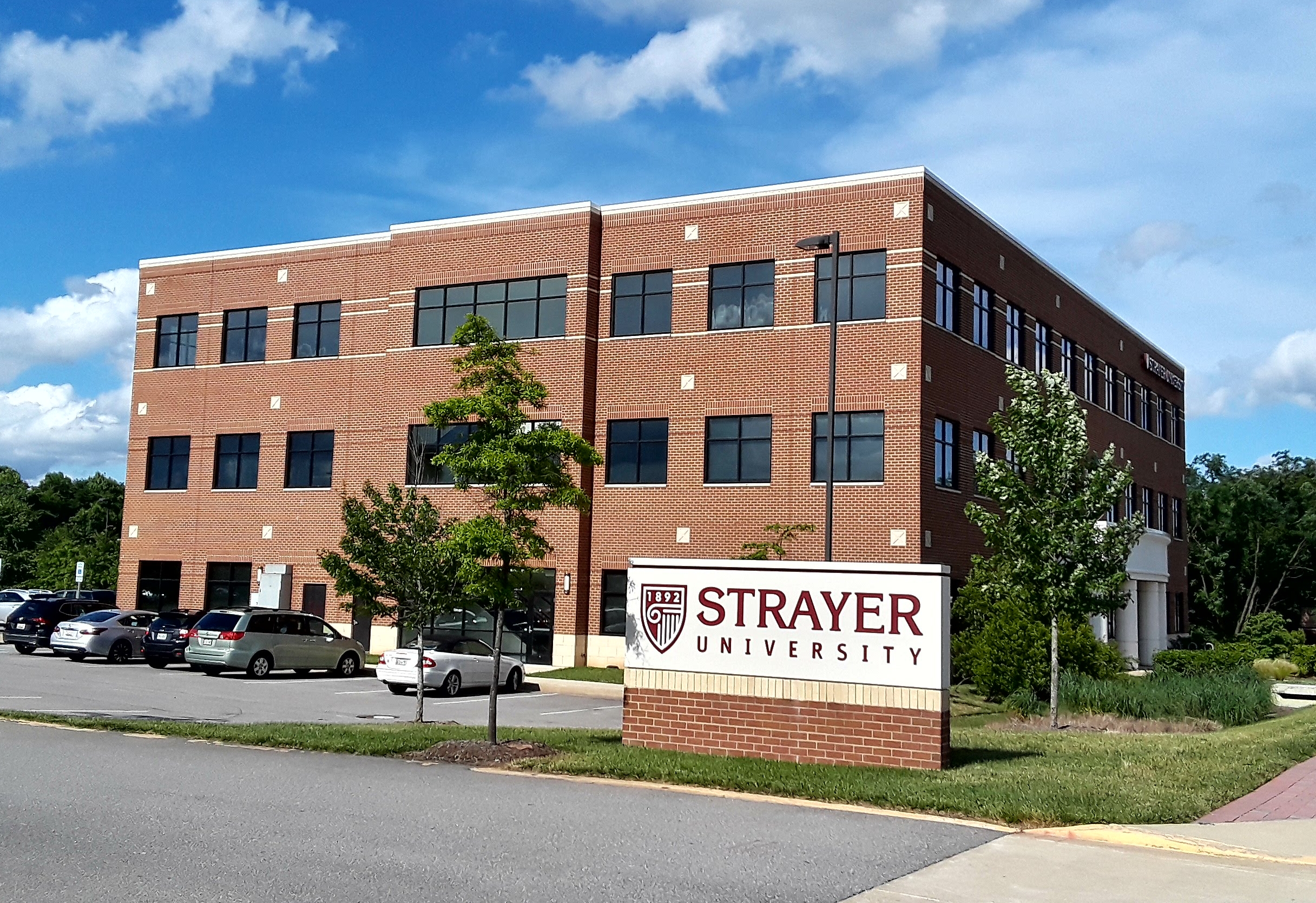
Strayer University-Maryland is a for-profit, career-focused institution in Baltimore that operates on a fundamentally different model than traditional liberal arts colleges. With a 100% acceptance rate and rolling admissions, it serves a predominantly adult, working student body seeking flexible, industry-relevant degrees, primarily online or at its commuter campus. The university's identity is defined by its pragmatic, accessible approach to higher education, though this comes with graduation rates and post-graduate earnings that reflect the significant challenges its non-traditional student population faces.
More details
- Undergrad enrollment
- 1,043
- In-state tuition
- $13,920
- Out-of-state tuition
- $13,920
- Graduation Rate
- 38%
- Standardized Tests
- SAT/ACT optional
- Application Deadline
- Rolling
- Median Earnings (10yr)
- $40,092
- Student Gender Distribution
- 21.3% male, 78.7% female
- First-Year Students Receiving Aid
- 88%
Outcomes & value
Outcomes & value
- Median earnings (10 yr)
- $40,092
- Median debt at graduation
- $40,621
- Graduation rate
- 38%
- First-year retention
- 100%
- Reducing loan balance (3 yr)
- 24%
- Pell (lower-income) share
- 63%
- First-gen share (among federal-aid recipients)
- 54%
Earnings = median of students working ~10 years after entry; debt = median of graduates. Value divides 10-yr earnings by one year’s net price — read it as earnings per dollar of annual cost, not a full lifetime ROI; it favors lower-cost schools. Source: U.S. Dept. of Education College Scorecard. Figures lag ~2 years and reflect all students, not your intended major.
Top-earning majors
Median earnings by field of study (highest credential), ~2 years after completion.
- Information Science/Studies$65,355
- Computer and Information Sciences, General$61,144
- Business Administration, Management and Operations$51,516
- Business/Commerce, General$50,096
- Accounting and Related Services$44,407
- Criminal Justice and Corrections
Campus & location
Campus safety
- On-campus violent crimes (2024)
- 0
- Per 1,000 students
- 0.00
On-campus criminal offenses classed as violent (murder/non-negligent manslaughter, rape, robbery, aggravated assault) for the most recent reported year. Source: U.S. Dept. of Education Campus Safety and Security (Clery Act). Counts reflect what’s reported to the school, and urban campuses often report more partly due to non-student incidents nearby — read alongside campus size and setting, not as a standalone safety verdict.
Climate
- Pleasant days / yr
- 96
- Summer high
- 86°F
- Winter low
- 33°F
- Annual rain
- 38.4"
- Annual snow
- 9.8"
- Natural-hazard risk
- Relatively Moderate
Pleasant days counts days per year with a mean temperature of 55–75°F, a high at or below 90°F, a low at or above 45°F, and little precipitation — a transparent comfort measure, not a weighting we invented. Computed from Open-Meteo ERA5 daily history (2019–2023). Natural-hazard risk is the county’s composite rating from the FEMA National Risk Index.
Quick answers
- How many undergraduates attend Strayer University-Maryland?
- Strayer University-Maryland enrolls approximately 1,043 undergraduate students.
- Where is Strayer University-Maryland located?
- Strayer University-Maryland is located in Baltimore, MD.
Admissions
Admissions at Strayer University-Maryland are defined by open access. The university reports a 100% , with a rolling admissions deadline and no Early Decision or Early Action programs. The process is designed for accessibility: the SAT or ACT is optional, though recommended to improve application chances, and there is no pre-application form required. The university admits all students who meet its basic admission requirements, which focus on prior educational attainment rather than competitive selection. This policy starkly contrasts with the highly selective processes of nearby public and private institutions in Maryland, reflecting Strayer's mission to serve a broad, non-traditional student population.
Compare Strayer University-Maryland
See colleges similar to Strayer University-Maryland →Sources
- Common Data Sets - Loyola University Maryland
- Common Data Set: Home
- Common Data Set (CDS) - [email protected] - University of Maryland
- Common Data Set Repository - College Transitions
- The Common Data Set: What It Is & How to Use It In College ...
- Common Data Set | Office of Planning, Assessment, and ... - opair
- Strayer University - Maryland Admissions & Acceptance
- Strayer University - Washington Campus Admission ...
- Strayer University-Global Region - Sallie
- Strayer University Admissions - US News Best Colleges