Loading…
← All schools
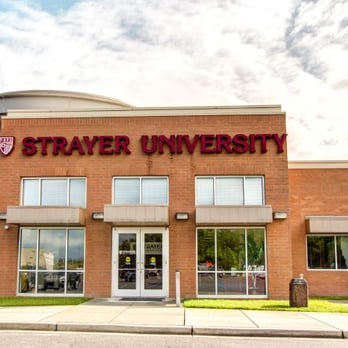
Strayer University-South Carolina
Greenville, SCprivate forprofitwww.strayer.edu/campus-locations/south-carolina/greenville
Avg net price
$17,979
Earnings (10 yr)
$40,092
Graduation rate
17%
Acceptance & SAT from Common Data Set / IPEDS; net price, earnings & graduation from the U.S. Dept. of Education College Scorecard. Figures lag ~1–2 years — verify with the school.
Strayer University's Greenville campus is a for-profit, open-access institution built for working adults seeking career-oriented credentials, not a traditional college experience. Its identity is defined by extreme flexibility, a singular focus on business and IT fields, and a student body that is almost entirely part-time and older. The trade-offs are stark: a graduation rate that lags far behind national averages, but a pragmatic, no-frills path to a degree for those who need to fit education around existing jobs and responsibilities.
More details
- Undergrad enrollment
- 1,868
- In-state tuition
- $13,920
- Out-of-state tuition
- $13,920
- Top Major
- Business
- No-Loan Policy
- No
- Graduation Rate
- 17%
- Meets Full Need
- No
- Demonstrated Interest
- Not considered
- Student-Faculty Ratio
- 47:1
- Median Earnings (10yr)
- $40,092
- % Receiving Financial Aid
- 96%
- First-Year Retention (Full-Time)
- 76%
Outcomes & value
Outcomes & value
- Median earnings (10 yr)
- $40,092
- Value (earnings ÷ net price)
- 2.2×
- Median debt at graduation
- $40,621
- Graduation rate
- 17%
- First-year retention
- 100%
- Reducing loan balance (3 yr)
- 24%
- Pell (lower-income) share
- 82%
- First-gen share (among federal-aid recipients)
- 54%
Top-earning majors
Median earnings by field of study (highest credential), ~2 years after completion.
- Information Science/Studies$65,355
- Computer and Information Sciences, General$61,144
- Business Administration, Management and Operations$51,516
- Business/Commerce, General$50,096
- Accounting and Related Services$44,407
- Criminal Justice and Corrections
Campus & location
Campus safety
- On-campus violent crimes (2024)
- 0
- Per 1,000 students
- 0.00
On-campus criminal offenses classed as violent (murder/non-negligent manslaughter, rape, robbery, aggravated assault) for the most recent reported year. Source: U.S. Dept. of Education Campus Safety and Security (Clery Act). Counts reflect what’s reported to the school, and urban campuses often report more partly due to non-student incidents nearby — read alongside campus size and setting, not as a standalone safety verdict.
Climate
- Pleasant days / yr
- 103
- Summer high
- 86°F
- Winter low
- 37°F
- Annual rain
- 51.3"
- Annual snow
- 2.5"
- Natural-hazard risk
- Relatively Moderate
Pleasant days counts days per year with a mean temperature of 55–75°F, a high at or below 90°F, a low at or above 45°F, and little precipitation — a transparent comfort measure, not a weighting we invented. Computed from Open-Meteo ERA5 daily history (2019–2023). Natural-hazard risk is the county’s composite rating from the FEMA National Risk Index.
Quick answers
- How much does Strayer University-South Carolina cost?
- At Strayer University-South Carolina, the average net price (after aid) is about $17,979 per year. Actual cost varies with financial aid and residency.
- How many undergraduates attend Strayer University-South Carolina?
- Strayer University-South Carolina enrolls approximately 1,868 undergraduate students.
- Where is Strayer University-South Carolina located?
- Strayer University-South Carolina is located in Greenville, SC.
Admissions
Strayer University-South Carolina operates with an open admissions policy, making it one of the least selective post-secondary institutions in the country. Multiple sources confirm an of 100%, meaning all applicants who meet the basic requirements are admitted. This aligns with its mission as an access-oriented institution for working adults. The university does not appear to have an Early Decision or Early Action program, and demonstrated interest is not a factor in its admissions process. The rate—the percentage of admitted students who enroll—is reported at 8.34%, which is low but typical for open-access institutions where applicants are often weighing multiple options or timing their enrollment around life circumstances. Standardized test scores (SAT/ACT) are not required for admission, removing a common barrier for non-traditional students.
Compare Strayer University-South Carolina
See colleges similar to Strayer University-South Carolina →Sources
- Common Data Set - Institutional Research, Assessment, ...
- Common Data Set Explorer 2026: Compare 100 Colleges
- Common Data Set: Home
- Common Data Sets
- Common Data Set 2021-2022
- The Common Data Set: What It Is & How to Use It In ...
- Strayer University - South Carolina
- Strayer University - Washington Campus Admission ...
- What is the Strayer University Acceptance Rate? - Learn.org
- Strayer University - Greenville Campus SAT Scores, ACT ...