Admit rate has ranged 67%–86% over the last 5 years — notably volatile. Source: IPEDS via Urban Institute.
Acceptance & SAT from Common Data Set / IPEDS; net price, earnings & graduation from the U.S. Dept. of Education College Scorecard. Figures lag ~1–2 years — verify with the school.
SUNY Buffalo State University is a public, urban-engaged campus in Buffalo, New York, offering a practical, career-focused education with a distinctly accessible admissions philosophy. It's a place where the classroom extends into the city, with popular majors in business, criminal justice, and education, and a student body where more than 60% live off campus. While its graduation rates are a noted challenge within the SUNY system, its low average net price and test-optional policy make it a pragmatic entry point to a four-year degree for many New Yorkers.
Admission requirements
Test-optional — scores considered if submitted
Required
High school transcript
Grade point average
College-prep program
Demonstrated competencies
TOEFL (non-native English)
Considered (not required)
Letters of recommendation
Test scores (SAT/ACT)
Source: IPEDS Admissions survey (2022) via Urban Institute. Covers formal factors only — it does not reflect essays, extracurriculars, or other holistic criteria.
More details
Undergrad enrollment
5,097
In-state tuition
$8,533
Out-of-state tuition
$19,653
Campus Housing
~37% of students
Graduation Rate
33%
Average Class Size
15 students
Median Earnings (10yr)
$52,334
Full-time Faculty with Doctorates
79%
Outcomes & value
Outcomes & value
Median earnings (10 yr)
$52,334
Value (earnings ÷ net price)
4.6×
Median debt at graduation
$21,028
Graduation rate
33%
First-year retention
58%
Reducing loan balance (3 yr)
57%
Pell (lower-income) share
56%
First-gen share (among federal-aid recipients)
34%
Top-earning majors
Median earnings by field of study (highest credential), ~2 years after completion.
Mechanical Engineering Related Technologies/Technicians$58,522
Information Science/Studies$46,254
Industrial Production Technologies/Technicians$44,942
Dietetics and Clinical Nutrition Services$42,682
Chemistry
Campus & location
Campus safety
On-campus violent crimes (2024)
14
Per 1,000 students
2.32
On-campus criminal offenses classed as violent (murder/non-negligent manslaughter, rape, robbery, aggravated assault) for the most recent reported year. Source: U.S. Dept. of Education Campus Safety and Security (Clery Act). Counts reflect what’s reported to the school, and urban campuses often report more partly due to non-student incidents nearby — read alongside campus size and setting, not as a standalone safety verdict.
Climate
Pleasant days / yr
99
Summer high
77°F
Winter low
25°F
Annual rain
45.3"
Annual snow
43.1"
Natural-hazard risk
Relatively High
Pleasant days counts days per year with a mean temperature of 55–75°F, a high at or below 90°F, a low at or above 45°F, and little precipitation — a transparent comfort measure, not a weighting we invented. Computed from Open-Meteo ERA5 daily history (2019–2023). Natural-hazard risk is the county’s composite rating from the FEMA National Risk Index.
Quick answers
What is the acceptance rate at SUNY Buffalo State University?
SUNY Buffalo State University's acceptance rate is approximately 73% (Buffalo, NY), based on the most recent figures we compiled from public and primary sources.
What SAT score do you need for SUNY Buffalo State University?
Admitted students at SUNY Buffalo State University typically score 980–1240 on the SAT (the middle-50% range). Scores outside this band are still admitted, especially with strong applications.
How much does SUNY Buffalo State University cost?
At SUNY Buffalo State University, the average net price (after aid) is about $11,346 per year. Actual cost varies with financial aid and residency.
How many undergraduates attend SUNY Buffalo State University?
SUNY Buffalo State University enrolls approximately 5,097 undergraduate students.
Where is SUNY Buffalo State University located?
SUNY Buffalo State University is located in Buffalo, NY.
Admissions
Buffalo State operates with a highly accessible, non-selective admissions process, accepting the majority of its applicants. For the fall 2024 cycle, the for first-time applicants was approximately 84.5%. The university is , meaning submission of SAT or ACT scores is not required. For those who do submit, the middle 50% SAT range for admitted students is 980–1240, and the average high school GPA of incoming students is approximately 78.4 (on a 100-point scale) or a 2.91 on a 4.0 scale. The admissions office saw a 14.4% increase in applications for the 2024–2025 academic year, partly attributed to its partnership with the Common App's Direct Admissions program. The university does not offer a binding Early Decision program; its 'Early Admission' program is designed for highly-qualified high school juniors to begin college coursework during their senior year. The priority application date is February 1, and admitted students must typically reply by May 1 or within two weeks of acceptance, with a tuition deposit of $150.
Earnings = median of students working ~10 years after entry; debt = median of graduates. Value divides 10-yr earnings by one year’s net price — read it as earnings per dollar of annual cost, not a full lifetime ROI; it favors lower-cost schools. Source: U.S. Dept. of Education College Scorecard. Figures lag ~2 years and reflect all students, not your intended major.
$38,289
Business Administration, Management and Operations$36,873
Economics$36,488
Source: U.S. Dept. of Education College Scorecard (field-of-study earnings). Figures cover graduates who received federal aid and lag ~2 years; not all programs report data.
Buffalo State offers a broad range of undergraduate programs through its School of Arts and Sciences and other units, with a strong emphasis on practical, career-oriented education. The most popular majors include Business Administration, Psychology, Criminal Justice, Computer Information Systems, Biology, and Childhood Education. The academic environment is characterized by moderately sized classes; 90% of classes have fewer than 40 students, with an average undergraduate class size of 15. The faculty is largely credentialed, with 79% of full-time faculty holding doctoral or terminal degrees. The curriculum is designed to be hands-on, with traditional preparatory majors like history, English, and political science offered alongside more applied fields. The university's 'civic, urban-engaged campus' ethos means many programs incorporate internships and connections to the Buffalo community.
Life at Buffalo State is defined by its commuter-heavy, urban setting. Only about 37% of students live in college-owned, -operated, or -affiliated housing, meaning nearly two-thirds live off campus. More than 1,600 students reside in on-campus residence halls. The Division of Student Affairs focuses on supporting 'student success, connection, and community,' with the Office of Student Leadership and Engagement (SLE) serving as a central hub for social, cultural, academic, and recreational activities. Students describe the campus community as diverse, inclusive, and fostering a welcoming atmosphere. The campus's location in Buffalo provides ample opportunities for internships and cultural experiences, reinforcing its identity as a civic, urban-engaged institution.
Graduation rates are a significant challenge and area of focus for Buffalo State. Its four-year graduation rate is 25%, and its six-year rate is 48%. An analysis of SUNY schools found Buffalo State had the lowest graduation rates among 20 SUNY comprehensive colleges, with the system-wide six-year average being 68%. For those who do graduate, median earnings one year after graduation are approximately $35,096. The median federal loan debt for graduating students who borrowed is $26,028. These figures underscore the university's profile as an institution serving many students who may face non-academic barriers to completion, and they highlight the importance of its support services and the economic value of its low .
Buffalo State's defining financial characteristic is its low , making it one of the more affordable four-year public options. The average annual net price after aid is $11,346. The university offers a variety of financial aid, with an average institutional aid award of $12,933. Aid packages are built using a 'Federal Aid First' philosophy, prioritizing grants like the Federal Pell Grant for students who demonstrate need. The university administers over 160 Buffalo State scholarships, totaling more than $1.7 million in institutional awards. Students are offered a total of $180 million in financial aid. Importantly, Buffalo State does not have a 'no-loan' policy that replaces loans with grants for low-income students; federal Direct Subsidized and Unsubsidized Loans are standard components of aid packages for those who qualify or apply for them. All students are encouraged to complete the FAFSA annually to determine eligibility for federal, state, and institutional aid.
Buffalo State stands out as an unapologetically practical and accessible public university. It doesn't chase prestige through selectivity; instead, it opens doors, accepting over 70% of applicants and charging a that is thousands below the national average for four-year colleges. Its identity is inextricably linked to its city—this is not a secluded liberal arts campus but a 'civic, urban-engaged' institution where internships and local connections are part of the educational fabric. While its low graduation rates are a serious concern, they also reflect its mission to serve a broad population, including many and non-traditional students. For a student seeking an affordable, hands-on education in fields like criminal justice, business, or education, with the city of Buffalo as a backdrop and classroom, Buffalo State represents a straightforward, low-risk pathway to a bachelor's degree.
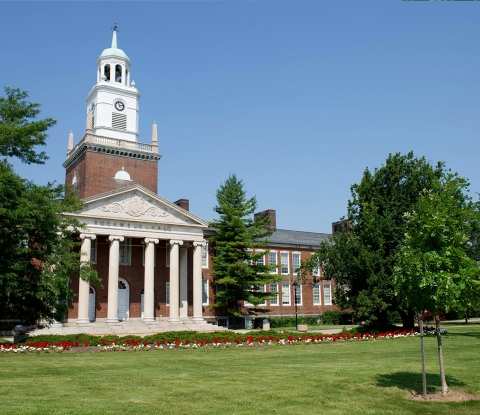
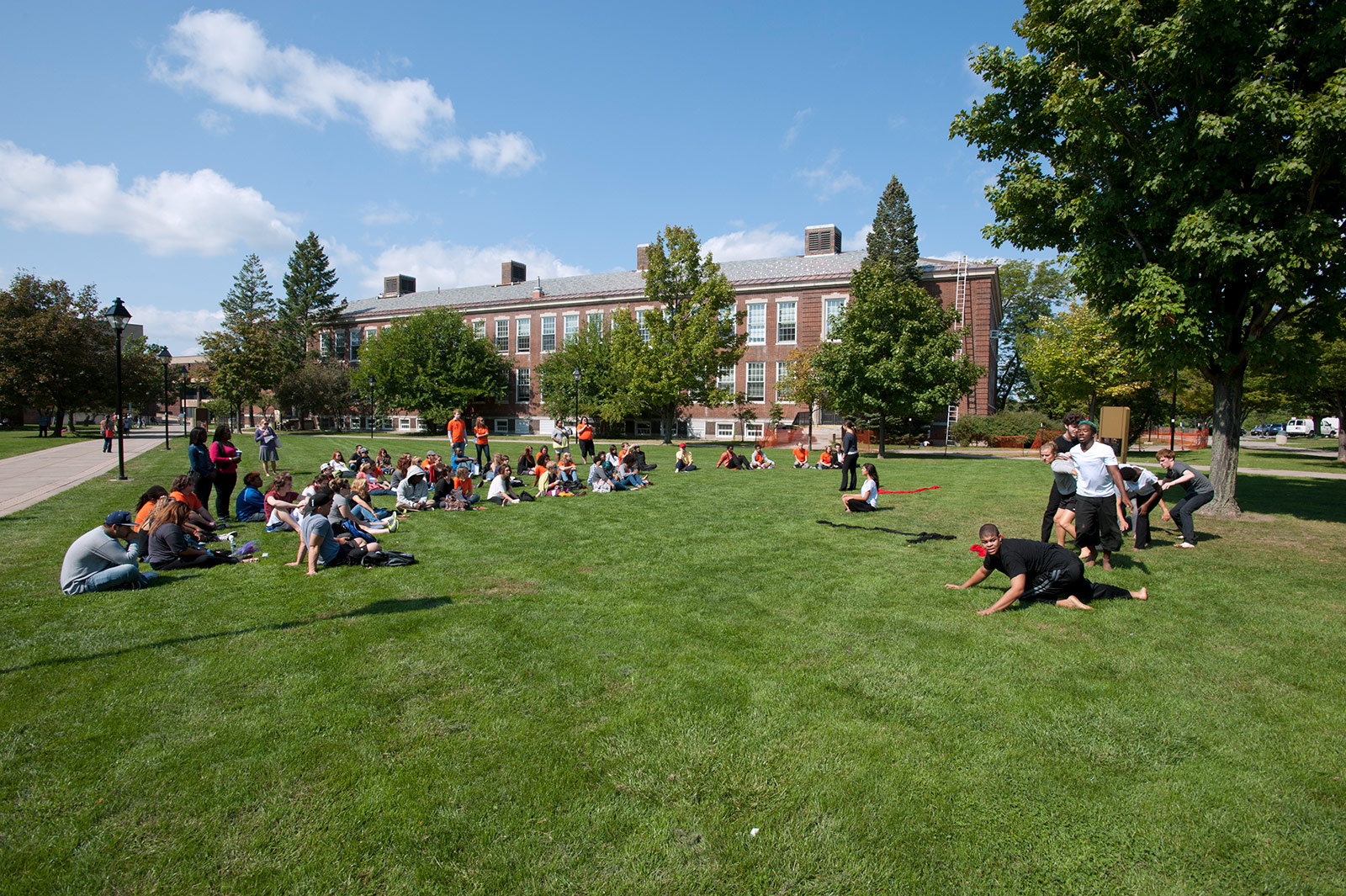
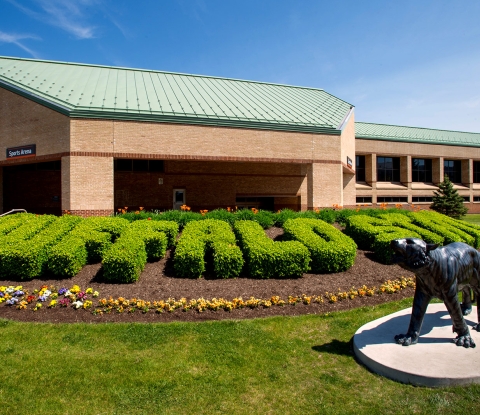
SUNY Buffalo State University seal · sourceOur Campus | SUNY Buffalo State University · sourceOur Campus | SUNY Buffalo State University · sourceOur Campus | SUNY Buffalo State University · source