Admit rate has ranged 78%–83% over the last 5 years, though the latest figure above (76%) falls outside that window. Source: IPEDS via Urban Institute.
Acceptance & SAT from Common Data Set / IPEDS; net price, earnings & graduation from the U.S. Dept. of Education College Scorecard. Figures lag ~1–2 years — verify with the school.
Tennessee Technological University is a public, STEM-centric powerhouse in Cookeville that operates less like a traditional liberal arts college and more like a high-efficiency career launchpad. Its identity is anchored in a pragmatic, hands-on curriculum—particularly in engineering, nursing, and education—that yields graduates with strong early-career earnings. The campus vibe is welcoming and focused, offering a classic college experience in a mid-sized Tennessee town without the overwhelming pressure or price tag of flagship institutions.
Admission requirements
Test-optional — scores considered if submitted
Required
High school transcript
Grade point average
College-prep program
TOEFL (non-native English)
Considered (not required)
Test scores (SAT/ACT)
Source: IPEDS Admissions survey (2022) via Urban Institute. Covers formal factors only — it does not reflect essays, extracurriculars, or other holistic criteria.
More details
Undergrad enrollment
8,698
In-state tuition
$11,376
Out-of-state tuition
$15,576
Graduation Rate
58%
First-Year Retention
Highest among Tennessee public Locally Governed Institutions (LGIs)
Demonstrated Interest
Not considered
Median Earnings (10yr)
$48,501
Outcomes & value
Outcomes & value
Median earnings (10 yr)
$48,501
Value (earnings ÷ net price)
3.4×
Median debt at graduation
$15,650
Graduation rate
58%
First-year retention
78%
Reducing loan balance (3 yr)
64%
Pell (lower-income) share
31%
First-gen share (among federal-aid recipients)
38%
Top-earning majors
Median earnings by field of study (highest credential), ~2 years after completion.
Electrical, Electronics, and Communications Engineering$70,296
On-campus criminal offenses classed as violent (murder/non-negligent manslaughter, rape, robbery, aggravated assault) for the most recent reported year. Source: U.S. Dept. of Education Campus Safety and Security (Clery Act). Counts reflect what’s reported to the school, and urban campuses often report more partly due to non-student incidents nearby — read alongside campus size and setting, not as a standalone safety verdict.
Climate
Pleasant days / yr
87
Summer high
85°F
Winter low
34°F
Annual rain
71.4"
Annual snow
7.3"
Natural-hazard risk
Relatively Low
Pleasant days counts days per year with a mean temperature of 55–75°F, a high at or below 90°F, a low at or above 45°F, and little precipitation — a transparent comfort measure, not a weighting we invented. Computed from Open-Meteo ERA5 daily history (2019–2023). Natural-hazard risk is the county’s composite rating from the FEMA National Risk Index.
Deep dive — research, future-scholar output & economic mobility▾
Research output
Institutional h-index
165
Scholarly works
10,220
Institutional research volume and impact from OpenAlex. The h-index reflects large research universities and will be low for teaching-focused liberal-arts colleges — not a measure of undergraduate quality.
Economic mobility
Mobility rate
2.3%
Bottom → top quintile
24%
From bottom quintile
10%
Mobility rate = the share of students who both start in the bottom household-income quintile and reach the top quintile; bottom → top is that chance conditional on starting at the bottom. Source: Opportunity Insights Mobility Report Cards (Chetty, Friedman, Saez, Turner & Yagan). Reflects 1980–82 birth cohorts, so it’s directional, not current.
Quick answers
What is the acceptance rate at Tennessee Technological University?
Tennessee Technological University's acceptance rate is approximately 76% (Cookeville, TN), based on the most recent figures we compiled from public and primary sources.
What SAT score do you need for Tennessee Technological University?
Admitted students at Tennessee Technological University typically score 1048–1310 on the SAT (the middle-50% range). Scores outside this band are still admitted, especially with strong applications.
How much does Tennessee Technological University cost?
At Tennessee Technological University, the average net price (after aid) is about $14,246 per year. Actual cost varies with financial aid and residency.
How many undergraduates attend Tennessee Technological University?
Tennessee Technological University enrolls approximately 8,698 undergraduate students.
Where is Tennessee Technological University located?
Tennessee Technological University is located in Cookeville, TN.
Admissions
Tennessee Tech's admissions process is notably accessible, prioritizing academic preparation over hyper-selectivity. The university encourages students to apply early, up to a year in advance, to secure better orientation and housing options. While test scores are considered, the process appears to weigh high school GPA and rigor heavily; a source notes that 58.7% of admitted students had a GPA of 3.75 or higher. The admissions office does not track or consider 'demonstrated interest' as a factor in its decisions, focusing instead on the academic record. This results in an admissions landscape where well-prepared students from Tennessee and beyond have a strong chance of acceptance, making it a strategic target for those seeking a return-on-investment-focused education.
Academics at Tennessee Tech are unapologetically geared toward career readiness, built on a 'Tech-unique' general education curriculum designed to produce 'technologically adept, analytically capable' graduates. The university is organized into several colleges, including Agriculture and Human Ecology, Arts and Sciences, Business, and Engineering. Its reputation is strongest in applied fields: it's widely considered by students to be 'the best engineering school in the state,' and its nursing and education programs are frequently praised as 'great' and 'amazing.' The College of Education and Human Sciences achieved a notable 100% pass rate for education licensure exams. Popular majors reflect this practical focus, with Nursing, Mechanical Engineering, and Computer Science consistently at the top. The academic environment emphasizes developing individual strengths through research, leadership, and civic engagement within the framework of a major.
Earnings = median of students working ~10 years after entry; debt = median of graduates. Value divides 10-yr earnings by one year’s net price — read it as earnings per dollar of annual cost, not a full lifetime ROI; it favors lower-cost schools. Source: U.S. Dept. of Education College Scorecard. Figures lag ~2 years and reflect all students, not your intended major.
Civil Engineering$53,202
Registered Nursing, Nursing Administration, Nursing Research and Clinical Nursing$51,907
Source: U.S. Dept. of Education College Scorecard (field-of-study earnings). Figures cover graduates who received federal aid and lag ~2 years; not all programs report data.
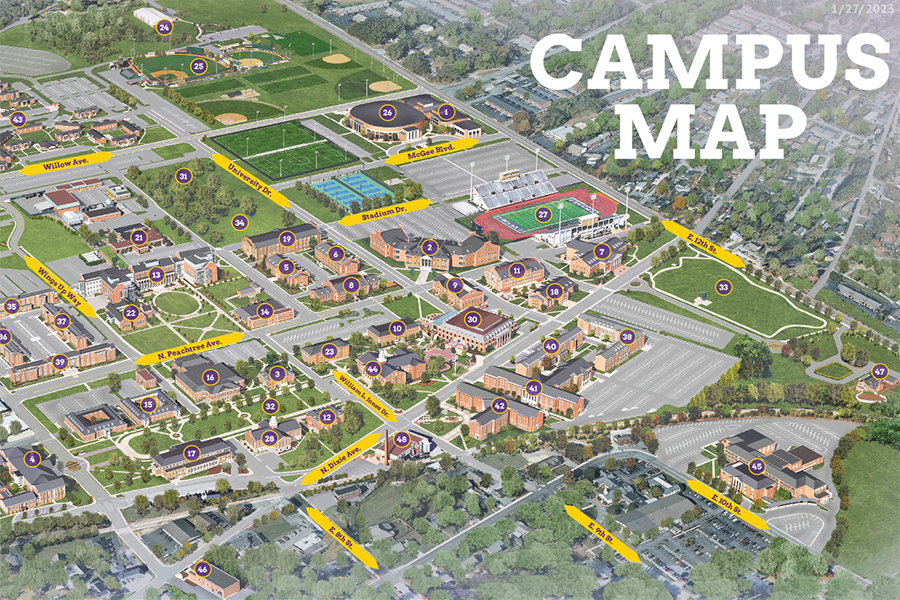
Life on Tennessee Tech's Cookeville campus offers a balanced, engaged college experience. About 27% of students live in college-owned or affiliated housing, with the majority (73%) living off-campus. The culture is described as 'welcoming and inclusive,' with ample opportunities for social interaction outside of a heavy party scene. Student life is supported by a full suite of services covering health and wellness, campus events, Greek life, and safety. The campus itself is portrayed as active and full of places for students to spend their time, fostering a sense of community. This combination of a supportive environment and a focus on academics over intense social pressure defines the Tech student experience.
Tennessee Tech's value proposition is crystallized in its outcomes data. The university boasts the highest freshman retention rate and the highest four-year graduation rate among all Tennessee public universities outside the University of Tennessee system. Graduates see a strong financial return; one analysis suggests that graduating in four years instead of five provides a positive financial impact of more than $77,000 on average. Early-career earnings are solid, with reported averages of $43,112 one year after graduation and $51,599 after five years. These figures underscore Tech's mission: efficiently moving students from enrollment to degree to gainful employment with minimal debt drag.
Tennessee Tech positions itself as an affordable pathway to a high-value degree. The university provides a calculator to help families estimate costs after grants and scholarships. While the sources do not indicate that Tech has a formal 'no-loan' policy or a commitment to meet 100% of demonstrated financial need for all admitted students, its average net price is significantly lower than many public institutions. Financial aid packages typically include a mix of grants, loans, scholarships, and work-study jobs. The focus is on delivering a strong return on investment, as evidenced by the earnings data, making the net cost a calculated investment rather than a prohibitive barrier.
Tennessee Tech stands out for its singular, no-nonsense focus on delivering career-ready graduates at a public-school price. It doesn't try to be everything to everyone; instead, it doubles down on its strengths in engineering, nursing, education, and applied sciences. This focus translates into tangible results: leading retention and graduation rates among its Tennessee public peers, and graduates who command strong early-career salaries. The environment is supportive and inclusive without being coddling, preparing students for professional life. In a higher education landscape often obsessed with prestige and selectivity, Tech offers a compelling alternative—a high-efficiency, high-value engine for social and economic mobility in the heart of Tennessee.
Tennessee Technological University seal · sourceTennessee Tech University · sourceTennessee Tech makes plans for 'iconic' tower in the heart of campus - News · sourceStudent Life - Safety & Security · source