Admit rate has ranged 81%–93% over the last 5 years — notably volatile, though the latest figure above (80%) falls outside that window. Source: IPEDS via Urban Institute.
Acceptance & SAT from Common Data Set / IPEDS; net price, earnings & graduation from the U.S. Dept. of Education College Scorecard. Figures lag ~1–2 years — verify with the school.
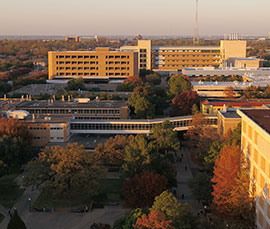
The University of Texas at Arlington is a sprawling, pragmatic public research university in the heart of the Dallas-Fort Worth metroplex, where ambition meets accessibility. It’s a place defined by its commuter-school reality, a vast and career-focused academic portfolio, and a student body that largely comes to work hard and get a degree, not to live in a traditional residential bubble. With an acceptance rate of 80%, it serves as a critical engine of social mobility for Texas, though its 54% graduation rate hints at the challenges many of its students face balancing school with life.
Admission requirements
Test-optional — scores considered if submitted
Required
High school transcript
Grade point average
Class rank
TOEFL (non-native English)
Considered (not required)
Test scores (SAT/ACT)
College-prep program
Source: IPEDS Admissions survey (2022) via Urban Institute. Covers formal factors only — it does not reflect essays, extracurriculars, or other holistic criteria.
More details
Undergrad enrollment
32,294
In-state tuition
$11,950
Out-of-state tuition
$29,582
No-Loan Policy
No policy stated
Graduation Rate
54%
Meets Full Need
No policy stated
ED Share of Class
Not offered
First-Year Retention
Not stated in sources
Demonstrated Interest
Not considered (per CDS inference)
Median Earnings (10yr)
$63,199
Outcomes & value
Outcomes & value
Median earnings (10 yr)
$63,199
Value (earnings ÷ net price)
4.5×
Median debt at graduation
$17,527
Graduation rate
54%
First-year retention
73%
Reducing loan balance (3 yr)
58%
Pell (lower-income) share
42%
First-gen share (among federal-aid recipients)
44%
Top-earning majors
Median earnings by field of study (highest credential), ~2 years after completion.
Registered Nursing, Nursing Administration, Nursing Research and Clinical Nursing$72,515
Computer Engineering$71,225
Computer Science$69,897
Industrial Engineering$67,202
Electrical, Electronics, and Communications Engineering$66,461
Mechanical Engineering
Campus & location
Campus safety
On-campus violent crimes (2024)
11
Per 1,000 students
0.25
On-campus criminal offenses classed as violent (murder/non-negligent manslaughter, rape, robbery, aggravated assault) for the most recent reported year. Source: U.S. Dept. of Education Campus Safety and Security (Clery Act). Counts reflect what’s reported to the school, and urban campuses often report more partly due to non-student incidents nearby — read alongside campus size and setting, not as a standalone safety verdict.
Climate
Pleasant days / yr
91
Summer high
94°F
Winter low
41°F
Annual rain
47.4"
Annual snow
1.2"
Natural-hazard risk
Relatively High
Pleasant days counts days per year with a mean temperature of 55–75°F, a high at or below 90°F, a low at or above 45°F, and little precipitation — a transparent comfort measure, not a weighting we invented. Computed from Open-Meteo ERA5 daily history (2019–2023). Natural-hazard risk is the county’s composite rating from the FEMA National Risk Index.
Deep dive — research, future-scholar output & economic mobility▾
Research output
Institutional h-index
491
Scholarly works
50,101
Institutional research volume and impact from OpenAlex. The h-index reflects large research universities and will be low for teaching-focused liberal-arts colleges — not a measure of undergraduate quality.
Quick answers
What is the acceptance rate at The University of Texas at Arlington?
The University of Texas at Arlington's acceptance rate is approximately 80% (Arlington, TX), based on the most recent figures we compiled from public and primary sources.
What SAT score do you need for The University of Texas at Arlington?
Admitted students at The University of Texas at Arlington typically score 1010–1240 on the SAT (the middle-50% range). Scores outside this band are still admitted, especially with strong applications.
How much does The University of Texas at Arlington cost?
At The University of Texas at Arlington, the average net price (after aid) is about $13,951 per year. Actual cost varies with financial aid and residency.
How many undergraduates attend The University of Texas at Arlington?
The University of Texas at Arlington enrolls approximately 32,294 undergraduate students.
Where is The University of Texas at Arlington located?
The University of Texas at Arlington is located in Arlington, TX.
Admissions
UT Arlington’s admissions process is characterized by high volume and high access, reflecting its mission as a major public university. The university is less selective, with an 80% . Between 2023 and 2024, the number of applicants grew by 6.47%, while admissions grew by 4.66%. The middle 50% SAT range for admitted students is 1010–1240, with an average score around 1110; the average ACT score is 21. Approximately 70% of admitted students provided SAT results. The average high school GPA of admitted students is 3.37. Students are advised to apply as early as possible, though the university does not have an Early Decision program. The rate—the percentage of admitted students who enroll—has historically averaged around 32.82%, but for the class of 2025, it was 26.44%, indicating a significant decline in enrollment conversion over recent years. The university utilizes a wide variety of data for reporting and predictive analysis, but there is no indication from the provided sources that demonstrated interest is a formal factor in admissions decisions.
Earnings = median of students working ~10 years after entry; debt = median of graduates. Value divides 10-yr earnings by one year’s net price — read it as earnings per dollar of annual cost, not a full lifetime ROI; it favors lower-cost schools. Source: U.S. Dept. of Education College Scorecard. Figures lag ~2 years and reflect all students, not your intended major.
$64,824
Civil Engineering$62,534
Information Science/Studies$57,110
Source: U.S. Dept. of Education College Scorecard (field-of-study earnings). Figures cover graduates who received federal aid and lag ~2 years; not all programs report data.
UT Arlington’s academic identity is one of breadth, scale, and practical focus. The university offers more than 180 bachelor’s, master’s, and doctoral degree programs across nine colleges, making it the third-largest producer of college graduates in Texas. The curriculum is heavily tilted toward fields that feed directly into the region’s economy. For the 2024 graduating class, the most popular majors were overwhelmingly in professional tracks: Health Professions and Related Programs accounted for a dominant 38% of graduates, followed by Business, Management, Marketing, and Related Support Services at 15%. This vocational emphasis doesn’t preclude quality; the university is home to nationally ranked graduate programs, and students in departments like English praise professors as "fanatics for their subject" deeply committed to student progress. The sheer size and variety of programs mean students can find a path, but the experience is often one of navigating a large system.
Life at UT Arlington is fundamentally shaped by its identity as a commuter school. The social scene isn't handed to you; it’s something you have to seek out. Students consistently note that joining clubs is the best way to make friends, and the university facilitates this with over 300 student organizations centered on academics, religion, service, and professional passions. The campus community is designed to be inclusive and inspire connection where students "live, learn, and grow together." Traditions help forge a shared identity, most notably International Week, a week-long celebration of the cultures of UTA’s international student population featuring a parade of banners, an international food fair, and a fashion show. The student body is diverse, providing a rich cultural and social environment that students appreciate. While the residential experience exists, the vibe is less of a 24/7 collegiate bubble and more of a daytime hub for ambitious students who often balance studies with work and family commitments off-campus.
UT Arlington’s outcomes tell a story of substantial economic payoff mixed with the challenges of serving a large, non-traditional student population. The median earnings for graduates ten years after entry is $63,199. The six-year median salary for graduates is reported as $60,902. The graduation rate is a critical metric here. The four-year graduation rate is 34%, while the six-year rate is reported variably as 58% and 51.11% across different sources; the university itself has set a goal for its six-year graduation rate for first-time, full-time students to reach 60% by 2024. A significant portion of students (26%) transfer out, which impacts these figures. The university tracks pass rates for certain programs, which are generally high (e.g., 93%, 94%). For many graduates, a UTA degree is a powerful tool for upward mobility, but the path to completion can be longer and more complex than at more residential institutions.
Affordability is a central part of UT Arlington’s value proposition. The average after aid is $13,951. A significant majority of students receive financial support, with 88% of full-time beginning undergraduates receiving grant or scholarship aid. The university commits substantial resources to this effort, offering over $500 million each year in total financial aid, which includes over $40 million in scholarships. Need-based grants are available for Texas residents who meet specific academic criteria and demonstrate financial need. For federal student loans, UTA will offer a student's maximum eligibility as part of their financial aid package, but students are not required to accept the full amount. New federal loan rules allow students to borrow up to $20,500 per year and $100,000 total. The published price is about $23,178 a year, but families earning under $30,000 paid about $11,893 on average after grants and scholarships.
UT Arlington stands out as a powerhouse of access and scale in one of the nation's most dynamic economic regions. It doesn't have the manicured quads or rah-rah spirit of a classic state flagship; instead, its distinction lies in its sheer operational heft and no-nonsense commitment to career preparation. It's an academic city unto itself, funneling thousands of graduates—especially in health professions and business—directly into the Dallas-Fort Worth job market. The campus vibe is pragmatic and self-directed: social life is what you make of it through hundreds of clubs, and the celebrated International Week reflects a genuinely global student body. For students who are often the first in their family to attend college, who work, or who have families, UTA provides a crucial on-ramp to the middle class, backed by half a billion dollars in annual aid. It’s a university built for getting you where you want to go, not for preserving a cloistered collegiate experience.
The University of Texas at Arlington seal · sourceUTA to build major new campus in west Fort Worth, with sights on 2028 opening | Fort Worth Report · sourceThe University of Texas at Arlington - Full Episode | The College Tour · sourceArlington and the Region – College Park Center – The University of Texas at Arlington · source